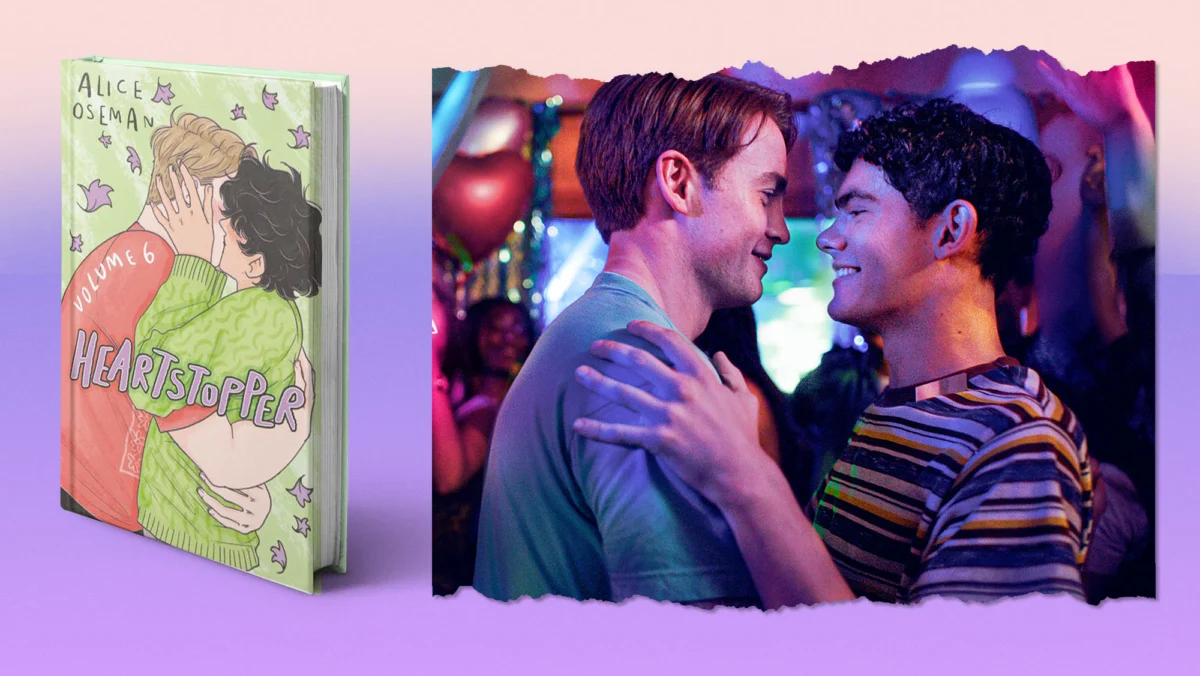
The highly anticipated cinematic conclusion to Alice Oseman’s beloved graphic novel series, Heartstopper Forever, has arrived on Netflix, marking a poignant farewell to the cherished characters and their journeys. This feature-length film, directed by Wash Westmoreland and penned by Oseman herself, navigates the complexities of young adulthood, deepening relationships, and the ongoing fight for LGBTQ+ acceptance, while confronting unique adaptation challenges. The release represents a significant milestone for a franchise that has evolved from a popular webcomic to a best-selling graphic novel series, and then into a critically acclaimed television show, becoming a global phenomenon celebrated for its earnest and affirming portrayal of queer youth.
Heartstopper first captivated audiences as a webcomic on platforms like Tumblr and Tapas, quickly garnering a dedicated fanbase for its tender depiction of Nick Nelson and Charlie Spring’s burgeoning romance. Its subsequent publication as graphic novels by Hachette Children’s Group solidified its literary success, with each volume consistently topping bestseller lists and earning critical praise for its sensitive handling of themes like mental health, self-discovery, and queer identity. The leap to a Netflix series in 2022 propelled Heartstopper into the mainstream, earning widespread acclaim for its authentic casting, faithful adaptation, and heartwarming narrative. The show’s success underscored a growing demand for diverse, positive LGBTQ+ representation in young adult media, a demand Heartstopper met with unparalleled charm and sincerity.
A Cinematic Evolution: Adapting the Final Chapters
The decision to conclude the narrative with a film, Heartstopper Forever, rather than a traditional eight-episode season, presented both opportunities and challenges for the creative team. Director Wash Westmoreland expressed enthusiasm for the cinematic format, noting his desire for the film to "feel more cinematic from the outset." This shift allowed for a more focused, visually expansive storytelling approach, moving beyond the established episodic rhythm of the television series.

However, the adaptation process for Heartstopper Forever was unique. Alice Oseman, serving as both writer and artist for the original graphic novels and screenwriter for the film, faced an unusual chronological hurdle. "For the first time, the book isn’t complete before we’ve started filming," Oseman revealed during a July 2025 set visit. This meant that certain scenes in the film were shot before their corresponding panels had even been drawn in Heartstopper Volume Six, which was still being written at the time. This unprecedented workflow demanded immense trust and coordination between Oseman’s creative vision for the source material and its on-screen realization, requiring the team to operate without the visual references that typically guide adaptations.
Beyond this sequential challenge, Oseman also contended with the necessity of condensing the extensive narrative of Heartstopper Volume Six into a two-hour film. This forced a rigorous editing process, demanding precision in story selection. "Having less screen time to work with in a film was a big challenge, and it forced me to have to be really precise about what’s in the story and to get rid of anything that’s not necessary," Oseman explained. This constraint ultimately led to a more concentrated focus on the central duo, Nick and Charlie, allowing for "much longer periods of time" with the main characters, a departure from the broader ensemble focus of the TV series.
The film’s plot sees the confident Truham Grammar School head boy, Charlie (Joe Locke), grappling with his boyfriend Nick’s (Kit Connor) increasing withdrawal. As university decisions loom, Nick battles anxieties and questions about his future, and whether Charlie will be a part of it. The film tracks the entire friend group through significant milestones: prom, Pride, graduation, and even an unexpected breakup that tests their bonds. Westmoreland emphasized the film’s visual maturation, stating, "Right at the beginning, when Charlie plays with the dogs in the garden, surrounded by both practical falling autumn leaves and the animated leaves that have always been part of Heartstopper — for me, it quietly announces what the film is trying to do: honour the visual language of the series while taking it into a more grounded, realistic world." He noted that as the characters mature, the filmmaking itself evolves to reflect their deepening emotional complexity.
Deepening Intimacy: Nick and Charlie’s Evolving Relationship
While Heartstopper has always been lauded for its earnest and often saccharine tone, Heartstopper Forever embraces a more mature depiction of its protagonists’ romantic journey. Alice Oseman acknowledges the inherent sweetness of the series, stating, "I think sometimes people can cringe away from that a little bit, and they’re like, ‘It’s too much,’ but I love that about it." However, with Nick and Charlie firmly in their young adulthood, the film ventures into new territory, exploring their physical relationship with a realism that reflects evolving teen sexuality.

Director Westmoreland elaborated on the intentionality behind the film’s intimate scenes. "There are four main scenes of physical intimacy in the film, and each one reveals a different stage in Nick and Charlie’s relationship. We felt it was very important that none of them existed simply for their own sake. Each scene had to carry the story forward and reflect where the characters were emotionally at that particular moment," he explained. These sequences are designed to portray healthy, sex-positive experiences, emphasizing equal partnership and challenging traditional stereotypes about roles in queer relationships, particularly the emotional engagement of men.
Oseman’s clear directive that "Nick and Charlie are sexually versatile" guided the portrayal, ensuring a nuanced and inclusive representation. Westmoreland clarified the film’s approach to explicitness, balancing authenticity with the series’ younger audience. "Our focus was always on the emotional truth of the scenes — so that the physical intimacy expressed what they couldn’t yet put into words," he stated, highlighting moments where physical closeness became a way for Nick to avoid difficult conversations. The collaboration with intimacy coordinator Robbie Taylor Hunt, along with actors Kit Connor and Joe Locke, ensured that these scenes were handled with professionalism and thoughtfulness. This progression in their physical relationship serves as a culmination of their half-decade romantic journey, offering a compelling response to any past criticisms regarding the series’ perceived lack of realism in this area.
A Dramatic Shift: Role Reversal and a Pivotal Breakup
Beyond physical intimacy, Heartstopper Forever delves into the emotional and relationship dynamics of its central couple, introducing a significant role reversal and a dramatic breakup that was not directly present in Heartstopper Volume Six. This narrative pivot was inspired by Oseman’s 2015 novella, Nick and Charlie, predating the main Heartstopper graphic novels. Oseman explained the decision: "I felt like when I was making Volume Six, that scenario just didn’t make sense for those characters, whereas with the film, we’re always looking to push the tension and angst just a little bit more, so it felt like an idea that could work really well for the film."
The breakup stems from Charlie’s profound transformation and Nick’s unexpected vulnerability. Kit Connor reflected on this shift, noting Charlie’s journey from "an underdog who’s been bullied and suffered from mental health issues" to "someone to look up to." Conversely, Nick, who has traditionally been portrayed as "strong and wise beyond his years; a very mature and emotionally intelligent character," becomes withdrawn and struggles to articulate his anxieties about the future.

Director Westmoreland detailed the adaptation of this pivotal moment, setting the breakup at Harry Greene’s party. "Harry has always represented a more toxic side of their teenage world. We leaned into that by creating a kind of teenage manosphere — a basement rave full of young men, pounding dubstep, vivid lighting and huge projections of Mako sharks. It’s an environment that’s visually arresting but emotionally quite hostile," he told THR. This backdrop amplified the emotional intensity, providing a perfect stage for Locke and Connor to deliver "two extraordinary performances." The heartbreaking aspect, Westmoreland noted, is that despite their enduring love, their communication, which has always been their "superpower," suddenly fails them, leaving them out of sync.
While the film draws from the 2015 novella, Oseman made deliberate changes to the argument and breakup to align with the screen incarnations of Nick and Charlie. "I think it really makes sense for Nick and Charlie on screen, where they’ve both got their own issues that they’ve been dealing with, and are feeling so anxious about the future. They love each other so much that they talk themselves into the idea that the other person is probably better off without them, which I think is a very Nick and Charlie argument to have," she clarified. This plot point enriches both characters, demonstrating their human fallibility and capacity for growth. Connor added that it reminds audiences that "the person who you think has everything sorted out might not have everything worked out," and that someone who has struggled can indeed "achieve amazing things and move past things."
Championing Diversity: LGBTQ+ Advocacy in Heartstopper Forever
A cornerstone of the Heartstopper universe has always been its unwavering advocacy for LGBTQ+ rights and experiences, a thread that Heartstopper Forever continues with profound impact. Following the transphobia storyline introduced in season three concerning Charlie’s friend Elle, the film deepens this narrative. Elle (Yasmin Finney) not only leads a vibrant Pride parade float, surrounded by a diverse community of trans individuals and allies, but also delivers a powerful, emotionally charged speech that grounds the teenage heartbreak within the larger context of societal challenges faced by LGBTQ+ youth.
Westmoreland shared that he and Oseman discussed expanding Elle’s storyline to reflect contemporary realities for trans young people. "During preproduction, she wrote an incredibly moving scene in which Elle articulates everything she’s carrying, and on the day, Yasmin Finney absolutely nailed it," he stated. Oseman highlighted the significance of Elle’s speech in Charlie’s bedroom, where she vocalizes her fears and constant struggles, offering a poignant reminder that for many LGBTQ+ teens, personal romantic woes often coexist with broader systemic anxieties. To ensure the authenticity of this moment, Oseman engaged in extensive collaboration with Finney, combining their respective drafts to create a speech that truly resonated.

The colorful and celebratory Pride parade sequence was one of the film’s most ambitious undertakings. Rather than attaching to an existing event, the team secured Burnham Town Council’s High Street for a Sunday, transforming it with banners and Pride bunting. The sequence required approximately 600 supporting artists, recruited through an Instagram call from Oseman that saw over 5,000 applications within an hour. Westmoreland described the filming experience as having "a genuine sense of celebration in the air," with the emotion shared by cast, crew, and hundreds of Heartstopper fans who volunteered. He proudly declared it "genuinely queer, genuinely wonderful, and genuinely something AI cannot replicate."
Beyond Elle’s story, Heartstopper Forever continues to champion the diversity of LGBTQ+ identities. Characters like Nick’s friend Imogen (Rhea Norwood), Charlie’s friend Isaac (Tobie Donovan), and Charlie’s sister Tori (Jenny Walser) further illustrate the show’s commitment to self-discovery and comfort with one’s sexuality. Tori’s conversation about her asexuality with Charlie is a particularly affirming moment, validating identities that are often underrepresented. Crucially, the film also maintains that not everyone needs to ascribe to a specific label. Oseman emphasized, "We do have a lot of characters who have an identity label… but we have other characters who are just queer and they don’t need to explain, and we don’t even need to know the specifics." This approach celebrates the spectrum of queer experiences without imposing rigid definitions, reinforcing the show’s message of acceptance and understanding.
The Bittersweet Farewell: Character Endings and Open Futures
Crafting satisfying conclusions for the diverse ensemble of characters in Heartstopper Forever was a considerable challenge, as Oseman admits, "there’s just not enough room to do big sweeping storylines for every single one of the characters." The film addresses this by featuring a montage that depicts various couples and friends connecting or reconnecting, offering glimpses into their near futures. Director Westmoreland described the montage as a logistically complex sequence shot across multiple locations, but linked by "flowing horizontal and vertical camera moves so it would feel like one continuous emotional journey rather than a collection of separate scenes." This visual technique aimed to show the Heartstopper gang stepping out into the world, moving forward individually with a stronger sense of self, while emphasizing the unbreakable bonds between them.
Charlie and Nick’s long-time friends, Tara (Corinna Brown) and Darcy (Kizzy Edgell), choose a path together that diverges from conventional expectations, opting for a gap year and travel instead of immediate college enrollment. Corinna Brown articulated Tara’s journey: "Tara has always lived her life as a people pleaser, but now she’s found herself and really steps into that. She doesn’t need any grade to define her." This decision underscores a theme of self-prioritization and valuing lived experience over academic pursuits, leaving their future wide open for discovery.

Tao (William Gao) and Elle (Yasmin Finney) ultimately decide that a long-distance relationship during university is not feasible for them, leading to a split. However, Oseman intentionally crafted their ending to be open-ended and ambiguous. "We see them come back together one final time at the end. Does this mean they’re actually getting back together, or are they just friends? We don’t really know, and I don’t even really know for sure what I want the answer to be," Oseman reflected. This ambiguity serves a broader message: "your story doesn’t end when you leave school. There’s the whole rest of your life to live, and that story can continue into adulthood." Oseman personally envisions Tao and Elle’s story continuing to evolve, highlighting Elle’s blossoming love for art, intertwined with her enduring affection for Tao, as depicted in her painting of him in the final scene.
For Nick and Charlie, their ending, while not explicitly detailing a "happily ever after" in the traditional sense, is unequivocally a positive one. Joe Locke confirmed, "we always knew that they were going to end up together. It was always going to be a happy ending." He also expressed satisfaction that the film "doesn’t sugarcoat any of that," referencing their temporary breakup. Kit Connor elaborated on the beauty of this nuanced conclusion: "One of the beauties of this ending is the fact that it doesn’t necessarily say that they’re going to be together forever… The beauty is that they may end up together, and they may not, but they’ve had this amazing formative time together." He emphasized their ability to "exist independently, but we love being together even more." Westmoreland concurred, stating the ending conveys that "through everything they’d experienced in the break-up, they had reached a place where they were ready to make a deeper commitment to each other." While the future remains unwritten, Nick and Charlie choose to face it together.
The enduring impact of Heartstopper as a cultural touchstone for queer youth and allies is undeniable. When asked about potential future returns to the Heartstopper universe, both Locke and Connor expressed a cautious openness. Locke stated he wouldn’t return "for the sake of it," but if "there was a good story and Alice wanted to, then never say never." Connor expressed interest in an executive producer role if a compelling narrative emerged. Heartstopper Forever not only provides a fitting conclusion to a beloved narrative but also solidifies the franchise’s legacy as a trailblazer in inclusive and emotionally resonant storytelling for a new generation.
Heartstopper Forever is now streaming globally on Netflix, offering fans a heartfelt and mature farewell to the characters who have profoundly shaped the landscape of young adult fiction and television.