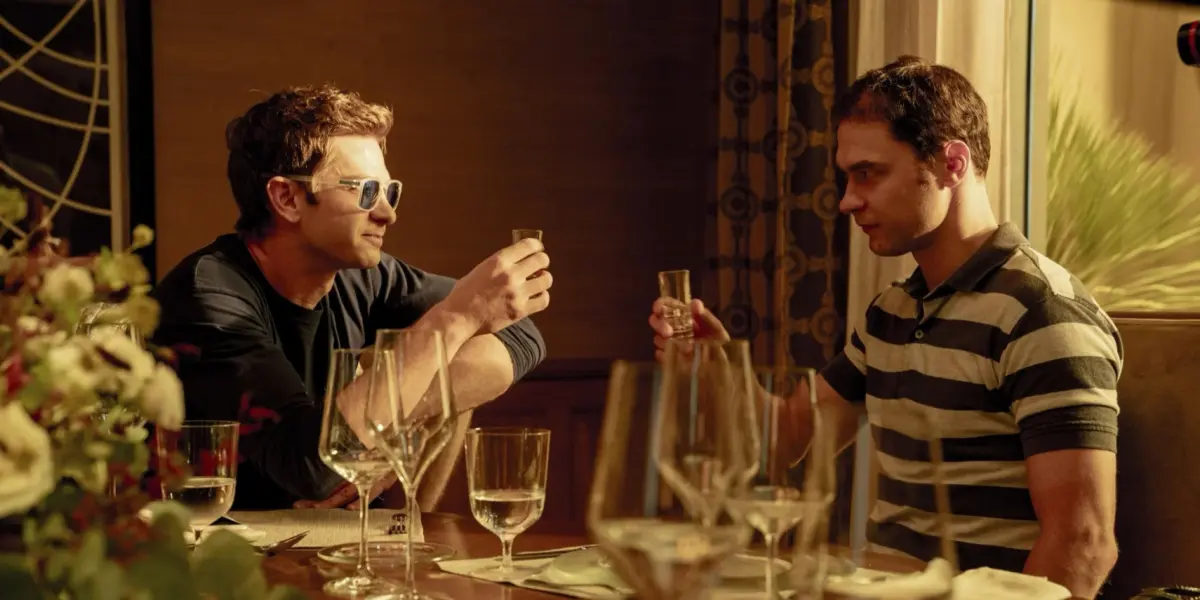
The turbulent history of OpenAI, highlighted by the dramatic corporate coup and rapid reinstatement of Chief Executive Officer Sam Altman, has officially transitioned from the tech sector to the cinematic landscape. Directed by acclaimed Italian filmmaker Luca Guadagnino and penned by screenwriter Simon Rich, the feature-length drama Artificial chronicles the meteoric rise of generative artificial intelligence, the complex personalities steering its trajectory, and the controversial governance battles that nearly upended one of the world’s most influential technology firms.
Carrying a 140-minute runtime, the film boasts an ensemble cast led by Andrew Garfield as Sam Altman, Yura Borisov as co-founder Ilya Sutskever, and Mark Rylance as pioneering researcher Geoffrey Hinton. The project also features performances by Monica Barbaro as Mira Murati, Cooper Hoffman as Greg Brockman, Jason Schwartzman, Chris O’Dowd, Ike Barinholtz as Elon Musk, and a supporting cast rounding out the Silicon Valley ecosystem. Following a distribution pivot that saw the film transition from Amazon MGM Studios to independent distributor NEON, Artificial makes its world premiere at the New York Film Festival ahead of a planned theatrical release.
From Academic Research to Corporate Ambition
The narrative framework of Artificial establishes its foundation in 2003 at the University of Toronto, tracing the early theoretical foundations of modern machine learning. In the film’s opening act, a young and intensely focused Ilya Sutskever—portrayed by Borisov—approaches Geoffrey Hinton, widely recognized as a foundational figure in deep learning. This academic genesis underscores the initial, idealistic motivations behind neural network research, which Sutskever and his peers initially envisioned as a mechanism for addressing systemic global challenges, including disease eradication and environmental remediation.
However, the narrative pivots sharply as academic research collides with venture capital and commercial scalability. Andrew Garfield’s portrayal of Sam Altman captures the charismatic charm and calculated pragmatism required to navigate high-stakes fundraising. As the narrative progresses, Altman steers the altruistic framework originally envisioned by researchers into a high-stakes corporate enterprise. The film details the establishment of OpenAI as a hybrid structure—initially formed as a non-profit artificial intelligence research laboratory in December 2015 before transitioning to a capped-profit model to secure the immense capital necessary for computational infrastructure.
Supporting performances further contextualize the insular culture of the tech elite. Cooper Hoffman portrays Greg Brockman, capturing the early operational dynamics of the firm, while Monica Barbaro depicts Mira Murati, the chief technology officer caught between foundational safety research and rapid commercial deployment. Ike Barinholtz assumes the role of Elon Musk, whose early financial backing and subsequent departure from the organization are framed through a satirical, high-energy lens. Jason Schwartzman appears as an industry Cassandra, issuing persistent warnings regarding the unmitigated acceleration toward Artificial General Intelligence (AGI)—a hypothetical milestone where machine intelligence matches or surpasses human cognitive capabilities across all economically valuable tasks.
The November 2023 Boardroom Crisis
At the narrative and structural core of Artificial is the unprecedented governance crisis that engulfed OpenAI in November 2023. The film dramatizes the intense ideological friction between the commercial imperatives championed by Altman and the strict safety and ethical oversight mandated by the non-profit board of directors.
On November 17, 2023, in a sudden and stunning move, the OpenAI board of directors abruptly terminated Altman, stating in an official release that he was "not consistently candid in his communications with the board." The immediate aftermath triggered a severe corporate rebellion. Within days, more than 900 of OpenAI’s approximately 770 employees signed an open letter threatening to resign and join Microsoft—OpenAI’s primary financial backer—unless the board resigned and reinstated Altman. Simultaneously, major institutional investors, led by Microsoft CEO Satya Nadella, applied intense pressure behind the scenes to stabilize the company.
By November 22, just five days after his dismissal, Altman was reinstated as CEO, and the members of the board who engineered his removal—including Helen Toner, Tasha McCauley, and primary instigator Ilya Sutskever—either stepped down or were replaced by seasoned corporate figures such as former Treasury Secretary Lawrence Summers and Salesforce CEO Bret Taylor. Artificial utilizes this chaotic cycle of firing and rehiring as a dramatic climax, illustrating the immense leverage held by corporate leadership over traditional oversight mechanisms within the tech sector.
Production Hurdles and Distribution Shifts
The journey of Artificial to the screen faced logistical hurdles reflective of the volatile political and economic landscape surrounding the tech industry. Initially developed under the umbrella of Amazon MGM Studios, the production encountered sudden friction following Amazon’s strategic multi-billion-dollar partnership and cloud-computing agreements with OpenAI and other major AI developers. Industry analysts noted the delicate positioning of major studios owned by technology conglomerates when films scrutinize contemporary corporate titans.
The intervention of independent distributor NEON ensured the film’s completion and festival distribution. Cinematographer Malik Hassan Sayeed employs invasive close-ups and stark visual framing to evoke psychological thrillers, comparing Altman’s pervasive industry influence to adversarial cinematic figures. Complementing the visual tone, electronic artist Damon Albarn delivers a dynamic score that transitions from accessible, modern frequencies to unsettling, atmospheric compositions that underscore the narrative’s underlying dread.
Broader Implications and Industry Reception
Artificial arrives at a critical juncture in the global discourse surrounding technological governance. As regulatory bodies in the United States, the European Union, and Asia grapple with the rapid deployment of large language models and autonomous systems, the film reflects growing public anxiety regarding accountability, transparency, and the concentration of power among a small cohort of private entities.
By avoiding traditional Hollywood sentimentality, Guadagnino and Rich present a sobering perspective on the integration of machine learning into daily life. The recurring visual motifs of infrastructure, such as the Golden Gate Bridge, serve as metaphors for human ingenuity that paradoxically bridges communities while introducing systemic vulnerabilities. As Artificial transitions from festival screenings to commercial theaters, it prompts audiences and policymakers alike to reexamine the speed of technological advancement and the adequacy of existing institutional safeguards designed to govern the future of human intelligence.