The contemporary landscape of superhero cinema presents a paradoxical economic reality. On one hand, blockbuster franchises continue to shatter records at the global box office; recent marquee titles like Spider-Man: Brand New Day have crossed the $2.4 billion threshold, positioning themselves among the highest-grossing films in cinematic history. Concurrently, upcoming event features such as Avengers: Doomsday command tens of millions of dollars in domestic ticket presales months ahead of their official theatrical debuts. These milestones suggest a resurgent public appetite for comic book adaptations, drawing parallels to the golden era of 2019 box-office dominance.
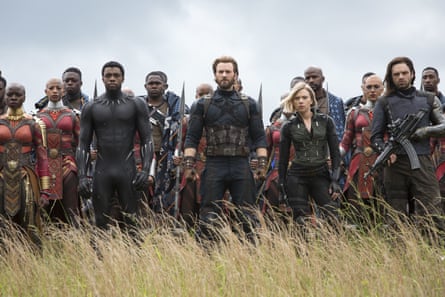
However, beneath these staggering aggregate figures lies a systemic vulnerability for industry leaders like Marvel Studios. This apparent renaissance masks a turbulent transition period following a challenging 2025 box-office cycle. During that previous calendar year, several high-profile studio releases underperformed relative to their substantial production expenditures. Notably, Captain America: Brave New World grossed $415 million worldwide, Thunderbolts* stalled at $382 million, and the critically well-received The Fantastic Four: First Steps managed $521 million against a reported $200 million baseline budget. While these returns avoid the catastrophic commercial failures seen in competing franchises, they underscore a persistent structural dilemma: how to effectively commercialize secondary characters who lack the drawing power to independently sustain $300 million multiversal extravaganzas.
The Evolution of Studio Strategy and Actor-Driven Pitches
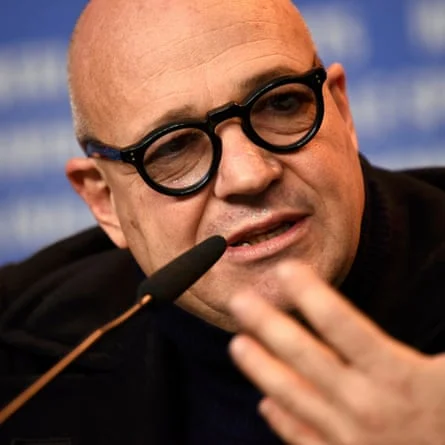
Amid these financial recalibrations, internal creative proposals are beginning to surface from within the Marvel Cinematic Universe (MCU) talent pool. Sebastian Stan, known for his portrayal of Bucky Barnes (the Winter Soldier), recently outlined an unconventional approach to studio leadership. In an interview with industry publications, Stan revealed that he pitched Marvel Studios President Kevin Feige a significantly scaled-down, genre-specific framework for his character’s future narrative arc.
Describing the concept as a "Sicario-esque" thriller, Stan proposed a production model defined by a modest fiscal footprint. The narrative framework centers on an internal psychological conflict: a traumatized operative who believes he recognizes an individual connected to his past period of state-sponsored brainwashing, culminating in a focused, obsessive pursuit. Rather than leveraging cosmic stakes or reality-altering technology, the story functions as a grounded psychological mystery.

This pitch arrives at a distinct juncture in Stan’s professional trajectory. Bolstered by critical acclaim—including an Academy Award nomination for his work in The Apprentice and a Golden Globe victory for A Different Man—Stan possesses heightened industry leverage. His proposition addresses a recognized fatigue among audiences regarding standardized, CGI-heavy ensemble spectacles. While Stan’s performance in the ensemble feature Thunderbolts* met standard expectations, industry analysts note that secondary characters in such massive casts frequently function as interchangeable elements rather than narrative focal points.
Chronology and Historical Context of MCU Genre Shifts
To understand the viability of Stan’s proposal, industry historians point to previous instances where Marvel successfully diverged from traditional formulaic structures. Historically, the studio’s most critically praised entries have often borrowed heavily from established non-superhero genres:
- 2014: Captain America: The Winter Soldier utilized the aesthetic and narrative pacing of 1970s political conspiracy thrillers.
- 2015: Ant-Man adopted the tropes and structural beats of a classic caper heist film.
- 2022: Doctor Strange in the Multiverse of Madness incorporated distinct horror elements, influenced by director Sam Raimi’s cinematic background.
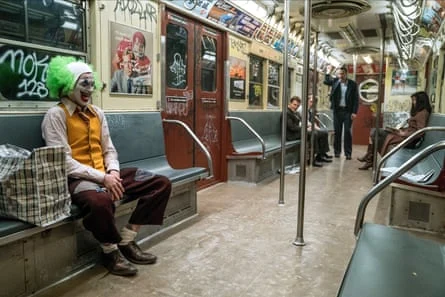
Furthermore, outside the traditional MCU continuity, major comic book adaptations have repeatedly demonstrated the financial viability of character-driven, low-budget genre exercises. 2016’s Logan successfully transposed the Western genre onto an aging superhero framework, focusing on an intimate cross-country journey rather than global destruction. Similarly, 2019’s Joker drew heavily from gritty 1970s and 1980s urban character studies, bypassing traditional superhero tropes entirely. Combined, these two distinct releases generated nearly $1.7 billion globally, proving that mature, scaled-down narratives can achieve immense commercial success without relying on interconnected cinematic universes.
Financial Implications and Production Economics
The economic logic behind smaller-scale superhero films rests on risk mitigation and profit margins. A traditional MCU tentpole requires massive capital expenditure, frequently exceeding $200 to $250 million in production costs alone, not including global marketing campaigns that often match production budgets. To break even, these mega-budget releases must clear roughly $500 million to $600 million globally simply to turn a profit.
Conversely, a controlled-budget model—such as a $50 million thriller focusing on a single character—fundamentally alters the financial equation. At a $50 million production spend, marketing outlays can be proportionately reduced, and the break-even threshold drops significantly. This financial flexibility allows studios to greenlight riskier narrative premises that might otherwise be rejected by committee.
Industry observers argue that this approach could be systematically applied across Marvel’s expansive roster of underutilized characters. Proposals currently discussed among critics and fans include:
- Ghost: A stripped-down espionage heist narrative utilizing stealth mechanics for tactical, ground-level break-ins.
- Red Guardian: A satirical Cold War spy comedy exploring the character’s dubious historical claims and covert operations.
- Wong: An occult detective procedural centered on localized magical artifacts and restricted investigations rather than dimensional portals.
Broader Industry Impact and Future Outlook
As major studios navigate changing consumer preferences and rising production costs, the pressure to innovate away from homogenous blockbuster templates has intensified. While tentpole crossover films like Avengers: Doomsday will undoubtedly remain the primary financial engine for major studios, the long-term sustainability of the genre may depend on narrative diversification.
Allowing veteran actors like Sebastian Stan to spearhead intimate, genre-focused character studies offers a dual benefit: it revitalizes flagging audience interest through creative unpredictability while safeguarding studio bottom lines against the diminishing returns of bloated budgets. Whether Marvel Studios will officially adopt this decentralized production strategy remains to be seen, but the economic and creative arguments for smaller-scale storytelling have never been more pronounced.