The Return of a Modern Classic
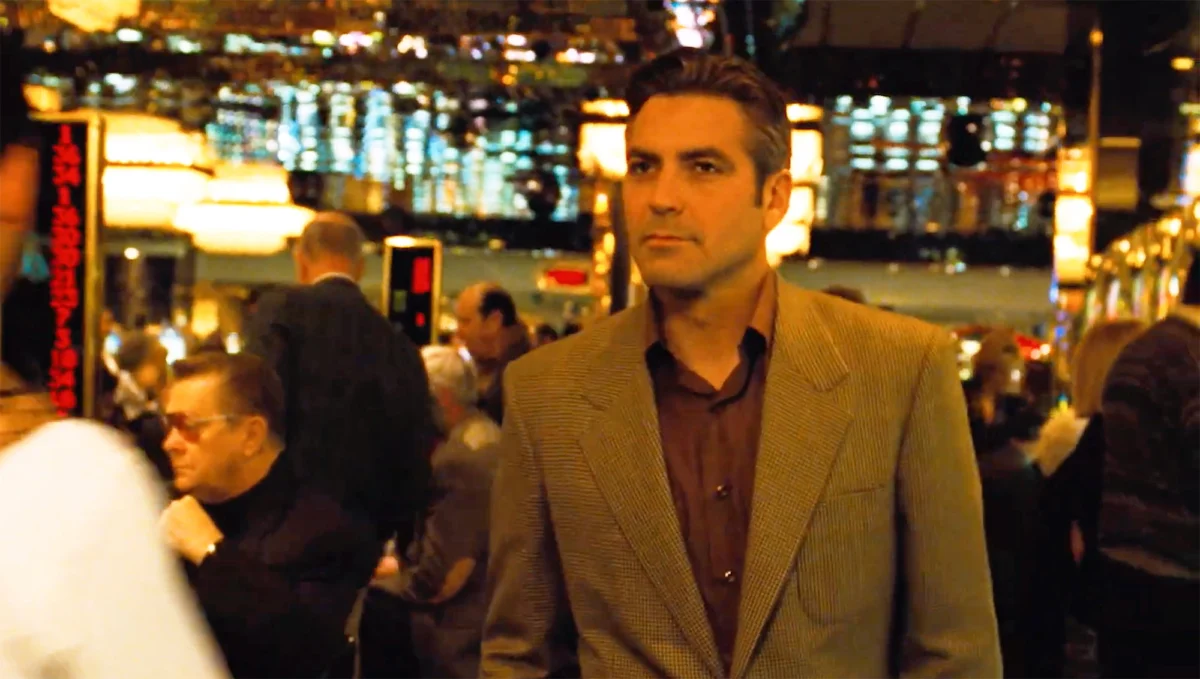
The 2001 iteration of Ocean’s Eleven was more than a simple remake of the 1960 Rat Pack film; it was a cultural phenomenon that successfully blended the dapper sensibilities of mid-century Las Vegas with a sharp, contemporary wit. Directed by Steven Soderbergh, the film follows Danny Ocean, portrayed by George Clooney, who violates his parole almost immediately upon release to orchestrate the most ambitious heist in history. His target is the vault shared by three of the most prominent casinos in Las Vegas—the Bellagio, the MGM Grand, and the Mirage—all owned by the ruthless Terry Benedict.
The narrative is structured around the recruitment and deployment of a specialized eleven-man team. Each member brings a unique skill set to the operation, from master pickpockets and electronics experts to demolition geniuses and veteran con artists. The upcoming 25th-anniversary screenings will highlight the film’s meticulous pacing and Soderbergh’s signature visual style, which helped the film earn its place as one of the definitive entries in the heist genre.
Historical Context and Production Background
When Ocean’s Eleven premiered in December 2001, the film industry was in a state of transition. Steven Soderbergh was at the height of his creative influence, having just come off a historic double-nomination for Best Director at the Academy Awards for Traffic and Erin Brockovich in 2000. Ocean’s Eleven represented a shift toward high-concept, star-driven entertainment that did not sacrifice intellectual rigor or technical craftsmanship.
The production was a massive undertaking, filmed on location in Las Vegas with unprecedented access to the Bellagio. The film’s screenplay, written by Ted Griffin, updated the 1960 original by Harry Brown and Charles Lederer by focusing less on the military background of the characters and more on the intricate mechanics of the "long con." Produced by Jerry Weintraub, the film became a benchmark for how to manage an ensemble cast of A-list talent, a feat that remains difficult to replicate in modern Hollywood.
Box Office Success and Critical Reception
The financial performance of Ocean’s Eleven solidified its status as a blockbuster. Upon its initial release, the film earned $38.1 million in its opening weekend, eventually grossing $183.4 million domestically and $267.3 million internationally. With a total worldwide box office haul of $450.7 million against an $85 million production budget, it was the fifth highest-grossing film of 2001.

Critically, the film was praised for its "cool" factor and the palpable chemistry among its cast. Reviewers at the time noted that Soderbergh managed to make a movie that was both a commercial crowd-pleaser and a stylish piece of art. The film currently holds high approval ratings on various aggregate platforms, with critics often citing its re-watchability as its greatest strength. The decision by Fathom Events to bring the film back to theaters reflects this enduring popularity, as the title continues to perform well on streaming platforms and home media decades after its release.
The Power of the Ensemble Cast
One of the primary draws of Ocean’s Eleven is its legendary cast. In 2001, bringing together George Clooney, Brad Pitt, Matt Damon, and Julia Roberts in a single film was considered a monumental achievement in casting. The chemistry between Clooney’s Danny Ocean and Pitt’s Rusty Ryan became the emotional and comedic backbone of the movie, establishing a shorthand that would carry through two sequels.
The supporting cast was equally vital to the film’s success. The late Bernie Mac provided much of the film’s humor as Frank Catton, while veteran actors Carl Reiner and Elliott Gould added a layer of old-school gravitas to the crew. The inclusion of rising stars at the time, such as Casey Affleck and Scott Caan, alongside international talent like Qin Shaobo, created a diverse and dynamic group of specialists. Andy García’s portrayal of Terry Benedict remains one of the most effective "corporate" villains in cinema, providing a cold, calculating foil to the charismatic thieves.
Technical Mastery and Aesthetic Influence
Beyond the star power, Ocean’s Eleven is celebrated for its technical execution. Steven Soderbergh, acting as his own cinematographer under the pseudonym Peter Andrews, utilized a warm, saturated color palette that captured the neon-lit allure of the Las Vegas Strip. The film’s editing, handled by Stephen Mirrione, used jump cuts and split screens to mirror the frantic yet organized nature of the heist.
The soundtrack, composed by David Holmes, played a crucial role in establishing the film’s identity. Blending 1960s-style lounge music with modern electronic beats and funk, Holmes created an atmosphere that felt both nostalgic and forward-looking. The "cool" aesthetic of Ocean’s Eleven influenced a decade of crime films and commercials, setting a new standard for how "caper" movies should look and sound.
Fathom Events and the Re-release Strategy
Fathom Events has become a leader in the "event cinema" space, specializing in bringing classic films back to theaters for limited engagements. These screenings often include "The Big Screen Classics" branding, offering audiences a high-quality projection and sound experience that rivals modern premieres.

The inclusion of Leonard Maltin for the 25th-anniversary screenings follows a successful tradition of adding educational and retrospective value to these events. Maltin’s commentary is expected to cover the film’s legacy, its impact on the heist genre, and anecdotes from the production. This strategy aims to attract both older fans who remember the 2001 premiere and younger audiences who have only ever seen the film on small screens.
The Broader Impact on the Ocean’s Franchise
The success of Ocean’s Eleven spawned a lucrative franchise, including Ocean’s Twelve (2004) and Ocean’s Thirteen (2007), both directed by Soderbergh. While the sequels explored different tones and locations—from the European art-heist vibe of Twelve to the return-to-Vegas revenge plot of Thirteen—the original remains the most critically acclaimed and beloved entry.
In 2018, the franchise was revitalized with the female-led Ocean’s 8, starring Sandra Bullock and Cate Blanchett, which proved that the "Ocean’s" formula still resonated with modern audiences. Rumors of a prequel starring Margot Robbie and Ryan Gosling have circulated in recent years, further proving that the intellectual property remains one of Warner Bros.’ most valuable assets. The 25th-anniversary re-release serves as a reminder of the foundation upon which this multi-billion-dollar franchise was built.
Chronology of the Ocean’s Eleven Legacy
- 1960: The original Ocean’s 11 starring Frank Sinatra and the Rat Pack is released.
- January 2000: Steven Soderbergh and producer Jerry Weintraub begin development on a modern remake.
- December 7, 2001: Ocean’s Eleven premieres in U.S. theaters, becoming an instant hit.
- 2002-2007: The film’s success leads to two direct sequels, completing the "Soderbergh Trilogy."
- 2018: Ocean’s 8 expands the universe, grossing nearly $300 million worldwide.
- May 13, 2026: Fathom Entertainment officially announces the 25th-anniversary theatrical re-release.
- June 21 & 24, 2026: The film returns to theaters for a two-night special engagement.
Implications for the Film Industry
The re-release of Ocean’s Eleven highlights a growing trend in the film industry: the reliance on "legacy" content to drive theatrical attendance. As streaming services dominate the home viewing market, studios and exhibitors are increasingly turning to celebrated classics to provide "event" experiences that cannot be replicated at home.
Furthermore, the anniversary serves as a retrospective on the "middle-budget" star vehicle—a type of film that has become increasingly rare in a landscape dominated by superhero franchises and low-budget horror. Ocean’s Eleven proved that a movie driven by dialogue, character chemistry, and clever plotting could compete with the largest action spectacles. Its return to theaters allows the industry to reflect on a period when star power and directorial vision were the primary drivers of the global box office.
As the dates for the June screenings approach, industry analysts expect strong turnout, particularly in major metropolitan areas where the "cinema-going" culture remains robust. For many, the chance to see the Bellagio fountains dance to the sounds of Debussy’s "Clair de Lune" on a forty-foot screen is an opportunity too enticing to miss. Whether for the nostalgia of the early 2000s or the appreciation of a perfectly executed heist, Ocean’s Eleven continues to prove that, in the world of cinema, Danny Ocean and his crew are always a safe bet.