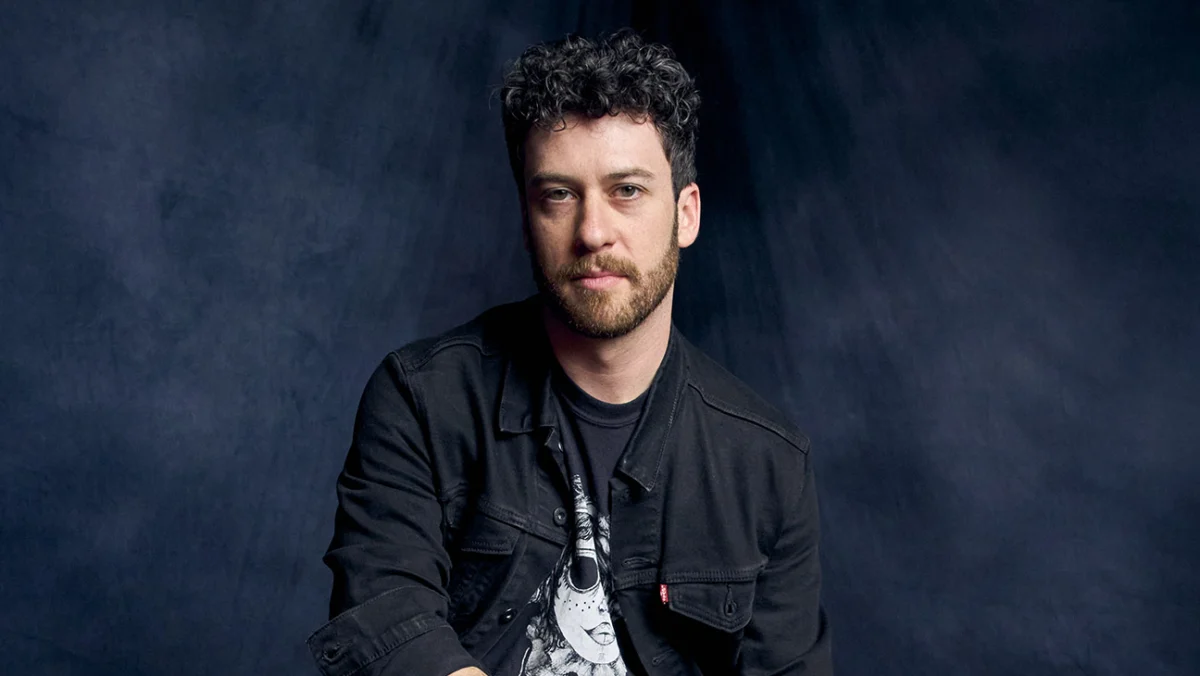
Phillips’ journey to mainstream recognition is a testament to the democratizing power of online content creation. His breakthrough came in 2018 with the release of Other Side Of The Box, a chilling horror short that quickly transcended niche internet circles to become a global viral sensation. Amassing over 30 million views across various platforms since its debut, the film captivated audiences with its unsettling premise: a seemingly innocuous gift box that unleashes catastrophic consequences upon its unsuspecting recipients. The short, praised for its minimalist yet profoundly effective tension and psychological dread, served as an undeniable calling card for Phillips. During this period, Phillips was not merely creating; he was concurrently immersing himself in the practicalities of filmmaking, working diligently as a crewmember on diverse productions. This hands-on experience provided him with an invaluable understanding of the intricacies of the filmmaking process, from pre-production logistics to on-set execution, even as his directorial vision was gaining international traction.
Building on the momentum of Other Side Of The Box, Phillips continued to explore the boundaries of genre filmmaking with Play Me. This follow-up short presented a compelling narrative centered on a woman who awakens in a car, disoriented and devoid of memory, only to discover a man bound in the backseat. Beside her, a voice recorder, accompanied by a cryptic note simply stating "play me," sets the stage for a tense and enigmatic unfolding of events. Play Me further showcased Phillips’ ability to craft suspenseful narratives with limited resources, relying on strong characterization, atmospheric tension, and psychological intrigue to engage viewers. These early works, distributed primarily through digital channels, allowed Phillips to experiment with storytelling, refine his directorial style, and build a substantial following, demonstrating a clear aptitude for creating impactful, high-concept genre content that resonates widely.
The culmination of Phillips’ independent work arrived with the South by Southwest (SXSW) debut of his feature film, Imposters. A testament to his growth as both a writer and director, Imposters premiered to critical acclaim within the festival’s highly competitive Midnighter section, known for showcasing boundary-pushing genre cinema. The film stars Jessica Rothe as a mother consumed by a desperate quest to recover her infant son after he is inexplicably taken. Her journey takes a dark turn when she uncovers a means to bring her child home, but the subsequent return of a baby leads her husband, portrayed by Charlie Barnett, to harbor chilling suspicions that the child is not, in fact, theirs. This genre-bending narrative, weaving elements of psychological thriller with unsettling domestic drama, immediately garnered significant attention. The film’s critical reception was stellar, achieving a perfect 100 percent score on Rotten Tomatoes based on reviews emerging from the festival circuit. Such a strong endorsement from critics at a prestigious festival like SXSW is a powerful indicator of a film’s quality and a director’s potential, often serving as a launchpad for wider distribution and industry recognition.
The Strategic Imperative of Major Agency Representation
The decision by WME to sign Caleb Phillips is not merely a recognition of his individual talent but also a strategic move within an evolving industry landscape. WME, or William Morris Endeavor, stands as one of the most powerful and influential talent agencies globally, representing a vast array of artists across film, television, music, theater, digital media, and publishing. For a filmmaker, securing representation with an agency of WME’s caliber is transformative. It provides access to unparalleled industry networks, including studio executives, producers, financiers, and established talent. WME’s agents are adept at identifying and negotiating opportunities, ranging from major studio projects to independent features, television series, and even brand partnerships. They provide strategic career guidance, assist with packaging projects (bringing together writers, directors, and actors), and handle complex contractual negotiations, allowing filmmakers like Phillips to focus on their creative work while their business interests are expertly managed.
Furthermore, Phillips’ concurrent signing with Underground, a management firm, highlights the synergistic relationship between agencies and management in modern Hollywood. While agencies primarily focus on securing employment and negotiating deals, management firms often play a more hands-on role in shaping a client’s long-term career trajectory, providing creative guidance, developing projects, and acting as a central hub for their client’s various professional endeavors. The collaboration between WME and Underground suggests a comprehensive strategy to maximize Phillips’ opportunities, ensuring he is well-positioned for both immediate projects and sustainable career growth within a competitive industry. This dual representation offers a robust support system, combining the extensive reach and deal-making power of a major agency with the personalized, developmental focus of a dedicated management team.
The Rise of the Digital-First Filmmaker
Phillips’ journey is emblematic of a profound shift in how talent is discovered and cultivated in Hollywood. In an era where digital content platforms have democratized access to filmmaking tools and distribution channels, a new generation of creators is emerging from online spaces directly into the mainstream. These "digital-first" filmmakers often bypass traditional film school routes or entry-level industry positions, instead building their portfolios and fan bases through viral shorts, web series, and independent online productions. Their success proves that compelling storytelling and unique vision, rather than expensive equipment or established connections, are the true currency of the digital age.
This phenomenon is strikingly illustrated by the recent successes of other online creators who have transitioned to feature filmmaking with unprecedented impact. Kane Parsons, the prodigious talent behind Backrooms, provides a compelling example. Parsons, who gained widespread recognition for his unsettling horror shorts based on the internet mythos of the "Backrooms," became the youngest filmmaker ever to helm a feature film that opened at number one at the domestic box office. His feature adaptation, produced by A24, not only achieved this remarkable feat but has also quickly ascended to become A24’s highest-grossing film domestically, a staggering accomplishment for a director making his feature debut. The Backrooms phenomenon underscores the immense power of a pre-existing online fanbase and a director’s proven ability to tap into contemporary anxieties and digital folklore.
Similarly, Curry Barker, a client of Underground and now a peer of Phillips, has achieved monumental success with Obsession. This film, another testament to the power of compelling genre storytelling, has become Focus Features’ top-grossing movie of all time domestically. What makes Barker’s achievement even more remarkable is the film’s incredibly rare second and third-weekend increases at the box office. In an industry where films typically see sharp declines after their opening weekend, Obsession‘s sustained performance is a powerful indicator of strong word-of-mouth and genuine audience engagement, qualities often cultivated by creators who understand how to connect directly with viewers through digital channels. These examples are not isolated incidents but rather harbingers of a new era where the internet serves as a vital proving ground and launchpad for cinematic talent.
Industry Recognition and Future Implications
The growing influence of digital-first filmmakers has not gone unnoticed by the traditional gatekeepers of Hollywood. The Hollywood Reporter, a leading industry publication, recently conducted an informal survey among agents, managers, and executives to identify online creators poised for a significant breakout. Caleb Phillips was prominently featured on this list, a clear indication that his trajectory is being closely watched by key decision-makers across the industry. This kind of recognition from established industry figures is crucial, as it validates the artistic merit and commercial viability of content originating outside traditional studio systems.
The implications of Phillips’ signing with WME are far-reaching, not just for his individual career but for the broader ecosystem of film production and talent acquisition. For Phillips, this partnership opens doors to larger budgets, more ambitious projects, and collaboration with A-list talent and seasoned production teams. Given his proven aptitude for horror and genre-bending thrillers, it is highly probable that his future projects will continue to explore these territories, potentially bringing his unique brand of psychological tension and unsettling narratives to a wider, global audience through major studio distribution. His success with Imposters and its perfect Rotten Tomatoes score positions him as a director capable of delivering both critical acclaim and commercial appeal within a popular genre.
More broadly, this trend signifies a permanent shift in how Hollywood identifies and nurtures talent. Agencies and studios are increasingly looking beyond traditional film school graduates or industry protégés, actively scouting platforms like YouTube, Vimeo, and TikTok for compelling voices and innovative storytellers. This democratized talent pipeline forces established institutions to adapt, fostering an environment where a compelling short film or web series can serve as a direct audition for a major feature film. It also encourages a more diverse range of voices and perspectives to enter the industry, potentially leading to a richer and more varied cinematic landscape.
The success stories of Phillips, Parsons, and Barker demonstrate that the internet is no longer merely a distribution channel for amateur content but a legitimate development lab for future blockbusters and critically acclaimed films. As technology continues to evolve, making high-quality filmmaking more accessible, the convergence of digital and traditional Hollywood will only deepen. Agencies like WME, by embracing talents like Caleb Phillips, are actively shaping this future, ensuring they remain at the forefront of talent representation in an ever-changing entertainment world. Phillips’ journey from viral short creator to a WME-represented filmmaker stands as a powerful narrative of ambition, innovation, and the transformative potential of the digital age in cinema. His next moves will undoubtedly be closely watched as he embarks on this new chapter, poised to leave an indelible mark on the landscape of contemporary filmmaking.