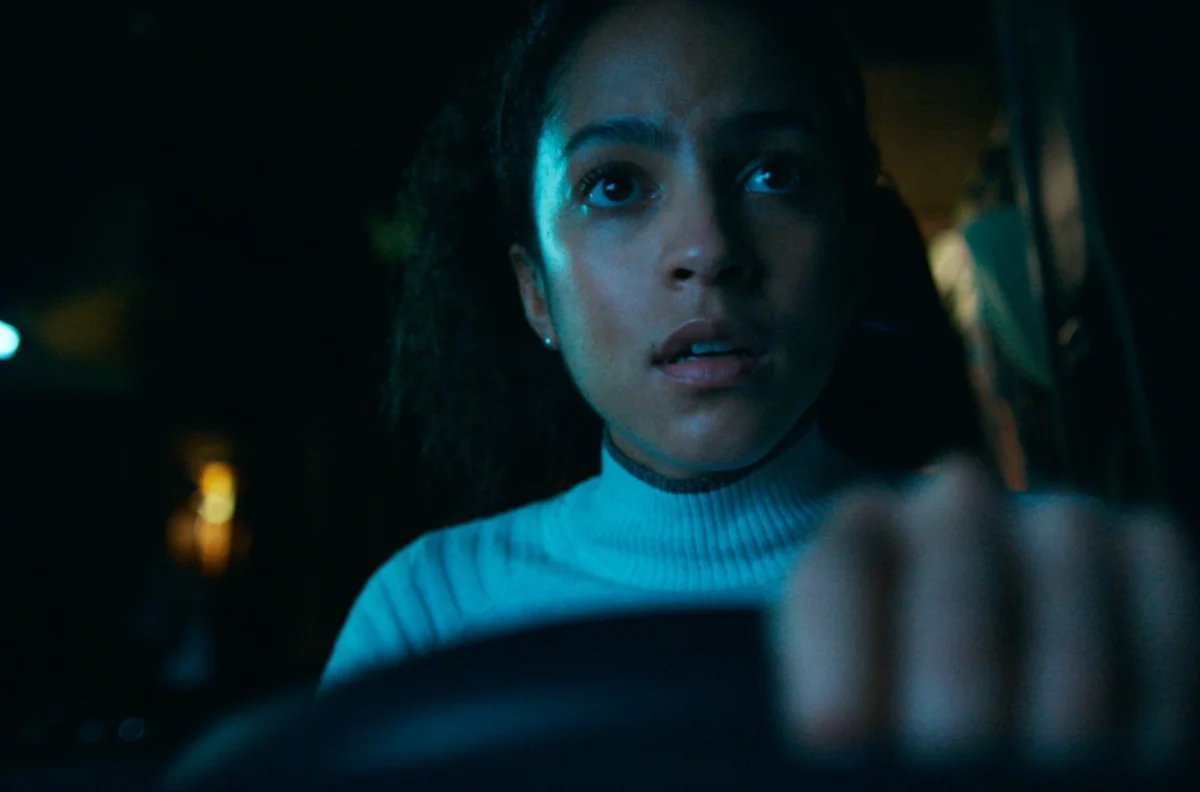
A chilling new horror film, Passenger, is slated to arrive in theaters on May 22, 2026, promising a terrifying descent into the perils of modern-day road travel. The film’s recently released trailer has ignited considerable buzz, hinting at a narrative that preys on the inherent vulnerabilities of those who venture onto the open road. With a logline that succinctly encapsulates its ominous premise, Passenger plunges a young couple into a nightmare scenario that begins with a witnessed tragedy and escalates into a relentless, inescapable pursuit.
The core of the film’s terrifying narrative, as revealed in the trailer and official synopsis, centers on a couple embarking on what is intended to be an idyllic "van life" adventure. Weeks into their journey, their dream escape is shattered when they become eyewitnesses to a horrific accident that claims the life of another driver. This pivotal event, however, serves as the catalyst for a far more sinister ordeal. Soon after, they find themselves relentlessly pursued by a demonic entity – a stalker described as "impossible to outrun" and possessing an unnerving ability to track them wherever they go. The tagline, "No one outruns the passenger," delivered with a palpable sense of dread in the trailer, underscores the film’s central theme of inescapable doom.
Stellar Cast and Acclaimed Director at the Helm
Headlining Passenger are Lou Llobell, known for her role in the acclaimed Apple TV+ series Foundation, and Jacob Scipio, who has garnered attention for his work in The Unbearable Weight of Massive Talent and upcoming projects like The Expendables 4. Their performances are expected to anchor the emotional core of the film as they navigate the escalating terror. The cast also features the formidable talent of Melissa Leo, a highly respected actress with credits including The Equalizer 3 and the HBO miniseries I Know This Much Is True.
The film is directed by André Øvredal, a filmmaker who has carved out a significant niche in the horror and fantasy genres. Øvredal’s previous directorial efforts include the critically lauded The Last Voyage of the Demeter, the widely popular Scary Stories to Tell in the Dark, and the cult classic Troll Hunter (2010). His distinctive visual style and talent for crafting atmospheric tension are anticipated to imbue Passenger with a unique and unsettling quality. The screenplay for Passenger is penned by Zachary Donohue and T.W. Burgess, suggesting a meticulously crafted narrative designed to maximize suspense and fear.
A Trailer That Sets a Chilling Tone
The trailer for Passenger has been noted for its effective blend of traditional horror elements and a more nuanced, perhaps even thematic, undercurrent. It appears to interweave startling jump scares with what could be interpreted as anti-Christian or occult messaging. Visual cues such as a burning church and a character levitating in a pose reminiscent of religious iconography suggest a deeper exploration of faith, doubt, and perhaps the corruption of sacred symbols.
A particularly striking aspect of the trailer is its cold open, which eschews a musical score in favor of stark, impactful silence. This deliberate choice sets it apart from many contemporary trailers, which often rely heavily on booming soundtracks to generate excitement. The unadorned beginning of the Passenger trailer creates a different kind of tension, one that is more psychological and unsettling, immediately drawing the viewer into the film’s grim atmosphere.
The trailer also incorporates a stark, unverified statistic: "130 million people take road trips every year. 15,400 of them are never seen again." This chilling piece of data, presented without attribution, taps into the widespread anxiety surrounding the safety of long-distance travel. It serves as a grim reminder of the real-world disappearances and unsolved mysteries that often accompany journeys on America’s vast network of highways, grounding the supernatural horror in a disconcerting reality. This statistic, while unverified, speaks to a persistent cultural fear of the unknown lurking on the fringes of civilization, a fear that Passenger appears poised to exploit.
Contextualizing the Fear of the Road Trip
The concept of the road trip as a setting for horror is not new, but Passenger seems poised to elevate this trope by introducing a persistent, almost supernatural antagonist. Historically, the road trip has been romanticized as a symbol of freedom, exploration, and self-discovery. However, it also carries an inherent vulnerability. Being confined to a vehicle, often for extended periods, in remote or unfamiliar territories, leaves travelers exposed. The vastness of landscapes, the anonymity of fellow travelers, and the sheer distance from immediate help can amplify feelings of isolation and fear.
Films like The Hitcher (1986) and its 2007 remake, Duel (1971), and Jeepers Creepers (2001) have previously explored the darker side of road travel, often featuring deranged individuals or monstrous entities that prey on unsuspecting travelers. Passenger appears to build upon this legacy, introducing an antagonist that transcends the typical human threat, offering a more existential and inescapable form of terror. The film’s premise suggests that the "passenger" is not merely a physical presence but an omnipresent force, a manifestation of the anxieties that can accompany the pursuit of freedom.
Potential Thematic Underpinnings and Analysis
The trailer’s visual cues, particularly the burning church and the messianic imagery, suggest that Passenger may delve into themes of faith, sin, and divine retribution. The idea of a demonic entity targeting travelers could be interpreted as a commentary on the moral landscape of modern society, or perhaps the perceived erosion of spiritual values. The film might explore how individuals cope when confronted with forces that defy rational explanation and challenge their fundamental beliefs.
The "van life" aesthetic itself represents a contemporary desire for authenticity, escape, and a rejection of conventional lifestyles. By placing a couple embracing this lifestyle at the heart of the horror, the film could be exploring the potential dangers of seeking alternative paths and the idea that even the most intentional attempts to escape the mundane can lead to unforeseen and terrifying consequences. The pursuit by a demonic entity suggests that the escape is not merely physical but potentially spiritual or existential, as the couple’s very souls are threatened.
The film’s potential to weave in religious or occult themes adds another layer of complexity. Such themes often resonate deeply with audiences, tapping into primal fears and ancient narratives. The juxtaposition of the modern phenomenon of van life with ancient demonic lore creates a compelling contrast, suggesting a timeless struggle against malevolent forces that can manifest in unexpected ways.
Broader Implications for the Horror Genre
The arrival of Passenger in 2026 is anticipated to be a significant event in the horror landscape. If the film successfully delivers on its promise of relentless terror and thematic depth, it could influence future productions within the genre. Its focus on an inescapable, supernatural antagonist, coupled with its contemporary setting and relatable protagonists, offers a fresh perspective on the road trip horror subgenre.
The success of films like Talk to Me (2022), which revitalized possession horror with a fresh narrative approach, demonstrates a market for innovative horror storytelling. Passenger, with its unique premise and acclaimed creative team, has the potential to capture audiences’ imaginations and become another benchmark for effective modern horror. The trailer’s deliberate pacing and atmospheric build-up suggest a film that prioritizes dread and suspense over gratuitous gore, a strategy that has proven successful in recent years.
The inclusion of a statistic about road trip disappearances, while unverified, is a clever narrative device that grounds the supernatural threat in a tangible, real-world fear. This approach can make the horror feel more immediate and plausible, even as the narrative ventures into the realm of the supernatural. It taps into a collective unconscious awareness of the risks associated with travel and the unknown dangers that can lie just beyond the familiar.
As the release date approaches, further details about Passenger are expected to emerge, offering a more comprehensive understanding of its narrative arc and thematic explorations. However, based on the initial trailer and synopsis, the film is shaping up to be a compelling and terrifying addition to the horror canon, one that will likely leave audiences looking at their next road trip with a newfound sense of unease. The chilling promise of an unescapable "passenger" suggests a journey into terror from which there may be no return.