The Narrative Foundation of Posthumous
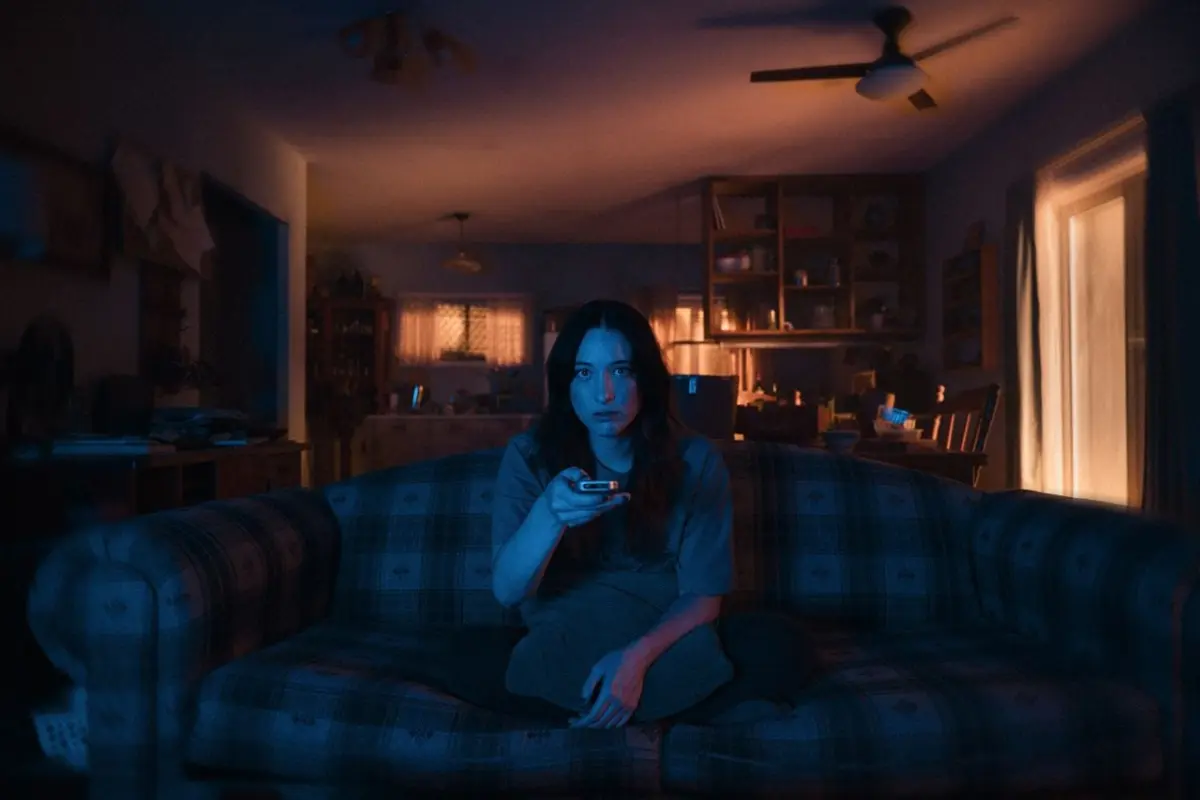
The plot follows Zoe, portrayed by Sophie Lowe, who returns to her childhood home on her birthday following a volatile confrontation with her partner, Alex, played by Remy Hii. Upon arrival, Zoe discovers her father, Neil (David Roberts), is already asleep, leaving her alone to navigate the emotional weight of her past. The catalyst for the ensuing supernatural phenomena is a collection of VHS tapes left behind by her mother, who passed away during childbirth following a terminal cancer diagnosis. These tapes, meticulously recorded for each of Zoe’s birthdays, serve as the primary narrative device.
As Zoe engages with these recordings, the film shifts from a domestic drama into the realm of analog horror. The tapes are interspersed with jarring, distorted visual artifacts—a hallmark of the subgenre that has seen a resurgence in popularity since the mid-2010s. Zoe’s grief-driven investigation into her mother’s death quickly evolves into an obsession, as she begins to perceive a sinister, hidden conspiracy embedded within the film reels. Her father’s persistent refusal to engage with her discoveries or acknowledge the anomalies serves as a structural obstacle, forcing the protagonist into a state of isolation that characterizes the film’s first act.
The Evolution of the Scary Face in Modern Horror
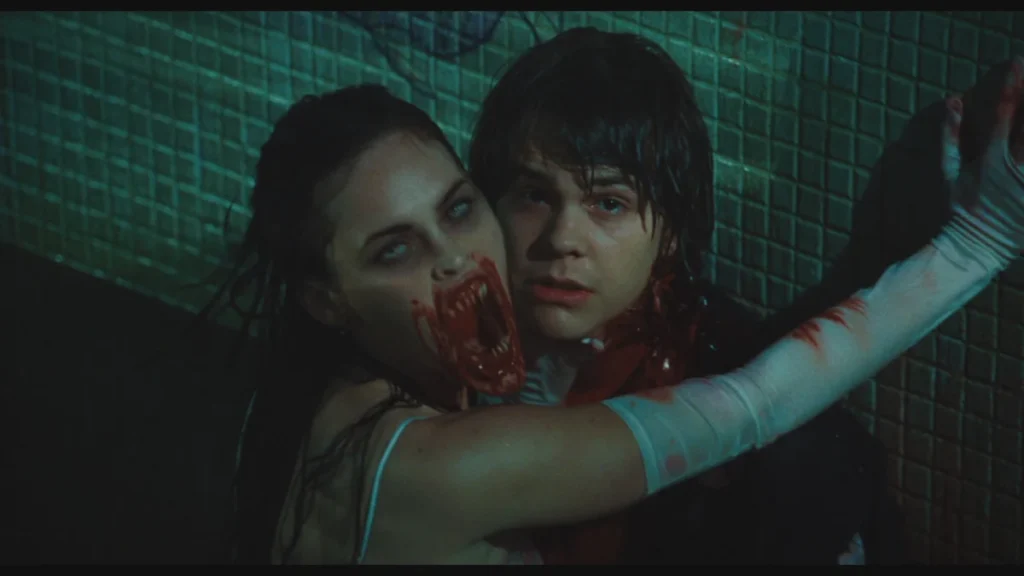
To understand the stylistic choices in Posthumous, one must look at the lineage of the "scary face" trope in modern cinema. Since the success of James Wan’s 2004 debut, Saw, and the subsequent massive box-office performance of the Insidious and The Conjuring franchises, horror filmmakers have increasingly relied on sudden, distorted facial imagery to elicit jump scares.
According to industry data, jump scares and "creature reveals" remain the most statistically effective methods for securing high audience engagement scores in test screenings for supernatural horror films. However, critics have noted a diminishing return on these tactics. In the case of Posthumous, Tanner utilizes these established visual cues—ranging from spectral apparitions to architectural shifts—but finds himself operating within a framework that has been heavily mined by previous entries like The Night House or the Insidious sequels. The film demonstrates that while a "scary face" can effectively trigger a physiological startle response, it does not necessarily translate into lasting atmospheric dread or narrative depth.
Chronology of Production and Festival Reception
The production of Posthumous represents a collaborative effort between Australian genre filmmakers and international distributors looking to capitalize on the "elevated horror" trend. Following the completion of principal photography, the film entered the festival circuit with the aim of securing a wider distribution deal. Its selection for the Brooklyn Horror Film Festival serves as a significant milestone, as the festival is known for highlighting emerging voices in the horror landscape.
Early reactions from festival attendees and industry observers have been bifurcated. On one hand, the film is consistently cited for its technical prowess. The cinematography, which relies on the contrast between the warmth of the home setting and the cold, grainy texture of the vintage video tapes, is widely considered a success. On the other hand, the film’s reliance on tropes—such as the "sacred geometry" motifs and the "possessed parent" dynamic—has led to comparisons with more streamlined, critically acclaimed projects. Analysts observing the screening noted that while the audience responded positively to the jump scares, there was a palpable sense of familiarity regarding the third-act revelations.

Thematic Analysis: Grief and Analog Horror
Beyond the surface-level scares, Posthumous attempts to address the psychology of grief. The film uses the protagonist’s desire to uncover the truth about her mother as a manifestation of her inability to accept her own lack of agency in her adult life. This theme is handled with a level of earnestness that sets the film apart from more superficial slasher-style entries.
Sophie Lowe’s performance provides the necessary emotional grounding to keep the audience invested even when the supernatural elements become increasingly chaotic. By acting with clear, intentional motivation rather than merely reacting to the "Aussie spook show" unfolding around her, Lowe elevates the material. This performance is a critical factor in the film’s favor, as it prevents the protagonist from becoming a mere vessel for the plot’s demands.
Industry Implications and Future Trends
The release of Posthumous occurs at a time when the horror genre is experiencing a shift in audience preferences. While "analog horror"—a style characterized by lo-fi aesthetics, static, and found-footage-adjacent storytelling—saw a massive surge in popularity on social media platforms like YouTube and TikTok, its transition to feature-length film has been inconsistent.
Industry analysts suggest that the market for standard supernatural horror is becoming increasingly crowded. For a film to stand out, it must now differentiate itself through either extreme originality or an innovative subversion of established tropes. Posthumous, while competent, risks being categorized as a "standard" entry. The implications for independent filmmakers are clear: the barrier to entry for producing high-quality, atmospheric horror is lower than ever, but the difficulty of achieving critical distinction is at an all-time high.
The film’s reliance on "kitchen sink" horror tactics in the final act—incorporating elements that range from liminal space imagery to ritualistic horror—indicates a potential struggle in the script’s development to resolve its mystery without resorting to well-worn genre staples. While the final monster design is noted for its uniqueness, it remains a singular highlight in a narrative that otherwise adheres strictly to the genre’s established boundaries.
Conclusion
Posthumous stands as a testament to the technical capabilities of modern indie horror directors, yet it serves as a stark reminder of the challenges inherent in the genre. Josh Tanner has demonstrated an ability to manage tension and leverage atmospheric lighting, which are essential skills for any successful horror director. However, the film’s reliance on a familiar, if well-executed, formula limits its overall impact.
As the horror landscape continues to evolve, films like Posthumous will likely be viewed as competent contributions to a specific era of genre filmmaking—one that is currently navigating the transition from the "jump scare" dominance of the 2010s toward more experimental and narrative-focused storytelling. For viewers seeking a well-acted, polished horror experience, the film provides the expected thrills; for those looking for a subversion of the genre, the experience may feel somewhat iterative. Ultimately, the film’s success will be measured by its ability to find an audience that appreciates the craftsmanship of its production, even if the premise itself feels like a familiar journey through a well-worn attic of cinematic history.