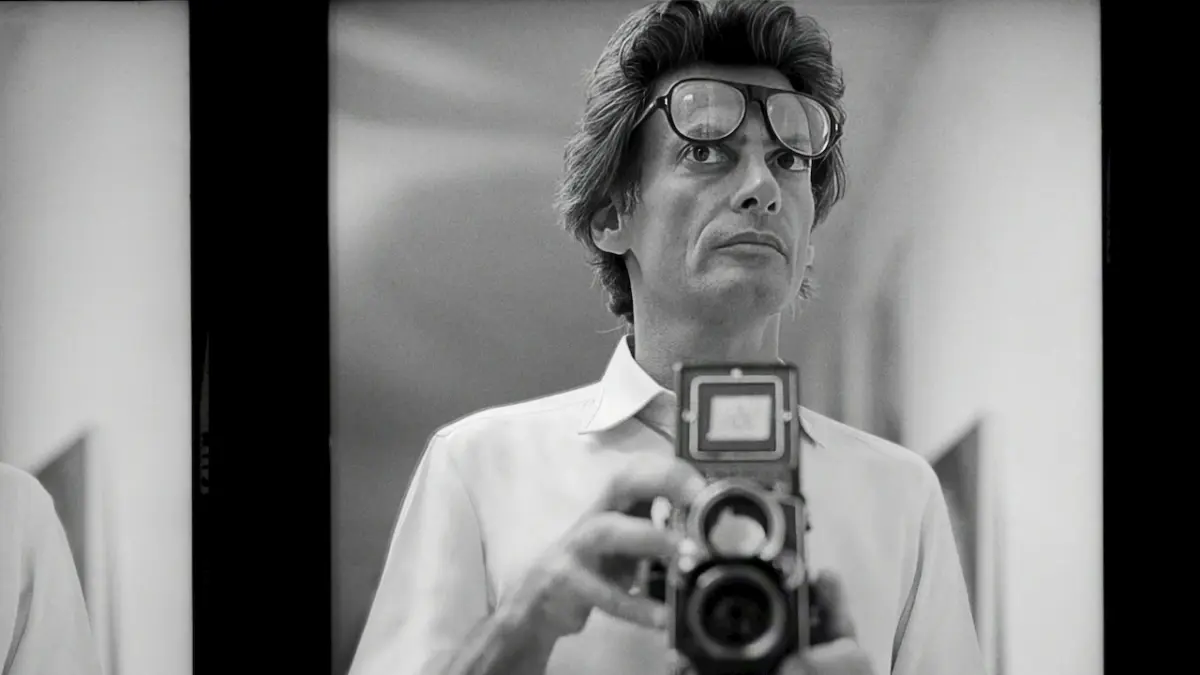
The enduring legacy of Richard Avedon, one of the twentieth century’s most transformative and uncompromising visual artists, is receiving a comprehensive examination in a new biographical documentary directed by Academy Award-winner Ron Howard. Simply titled Avedon, the film traces the six-decade career of a visionary who fundamentally redefined fashion photography, portraiture, and photojournalism. By capturing his subjects—from working-class Americans and civil rights icons to Hollywood royalty and political leaders—in states of unvarnished vulnerability, Avedon established a standard of psychological depth that continues to influence contemporary visual culture.
The documentary arrives at a time of renewed global interest in archival non-fiction cinema, bolstered by Netflix’s acquisition of the project following its notable debut at the Cannes Film Festival. Backed by an unprecedented level of access granted by the Richard Avedon Foundation, the film presents a rare, multifaceted exploration of an artist who constantly blurred the boundaries between high art, commercial enterprise, and political subversion.
Unprecedented Archival Access and Structural Overview
For the first time in its history, the Richard Avedon Foundation provided a documentary production team with unmitigated access to the photographer’s vast personal and professional archives. This treasure trove includes thousands of master prints, unpublished contact sheets, behind-the-scenes recordings, home movies, and personal correspondence. This foundational access grants Howard’s film an exceptional degree of intimacy, allowing viewers to witness Avedon’s artistic methodology not through secondhand accounts alone, but through the lens of his own meticulous preparation.
The production is framed primarily by audio recordings of Avedon himself. These archival interviews provide the narrative spine of the documentary, offering listeners a direct conduit to the photographer’s perfectionism, sharp intellect, and commanding presence. Howard’s editorial team successfully aligns Avedon’s descriptive recollections with unseen footage of his legendary photoshoots, creating a seamless dialogue between the creator’s intent and his final imagery.
While the film is structured as a chronological journey through Avedon’s monumental life and career, it simultaneously deconstructs the tensions that defined his professional existence. It explores the delicate balancing act between high-paying commercial commissions—which funded his ambitious personal projects—and his subversive artistic impulses, which frequently challenged the socio-political conventions of mid-century America.
A Chronological Tour Through a Six-Decade Career
Born in New York City in 1923, Avedon’s artistic journey spanned more than half a century, leaving an indelible mark on multiple industries. The documentary serves as an educational roadmap for audiences unfamiliar with the sheer breadth of his portfolio.
In his early years, Avedon revolutionized fashion photography by moving models out of static, sterile studio environments and into the streets, capturing them in motion. This dynamic approach caught the attention of Harper’s Bazaar and later Vogue, establishing him as a titan of editorial fashion. His influence extended to cinema; his iconic aesthetic directly inspired the character played by Fred Astaire in the 1957 musical film Funny Pages, for which Avedon also provided pivotal photographic contributions.
Beyond the glitz of fashion and Hollywood—where he famously photographed cultural figures ranging from Charlie Chaplin before his departure from the United States to opera star Marie Anderson—Avedon dedicated significant energy to socio-political documentation. The documentary illuminates his lesser-known yet profoundly impactful work documenting working-class communities, labor movements, and the civil rights struggles of the 1960s.
Of particular historical resonance is the exploration of Avedon’s lifelong friendship with writer and activist James Baldwin, whom he met in high school. The film recounts a formative anecdote involving Avedon’s mother physically defending Baldwin against a racist building employee, highlighting the personal stakes and social realities that shaped Avedon’s worldview long before he achieved international acclaim.
Navigating the Tensions of Commerce, Politics, and Art
A central theme of Howard’s documentary is the inherent friction Avedon experienced between the demands of capitalism and the purity of his artistic vision. As a commercial artist, Avedon was responsible for some of the most recognizable advertising campaigns of the late twentieth century, including the iconic "My Calvins" campaign for Calvin Klein, which permanently altered the landscape of denim marketing.
However, when commissioned to photograph powerful political figures, Avedon’s signature style—characterized by stark, white backgrounds and unflinching psychological exposure—frequently clashed with the controlled images those subjects wished to project. The documentary highlights subtle instances where Avedon reclaimed his artistic integrity when faced with bureaucratic or political demands. One notable example discussed in the film involves a portrait session with Nancy Reagan, during which Avedon retouched her face in accordance with standard editorial norms of the era while pointedly leaving her hands unaltered, preserving a layer of tangible, human reality.
These moments illustrate Avedon’s philosophy that a portrait is not merely a record of a face, but an intersection between the subject, the photographer, and the viewer. He famously remarked that his portraits were statements rather than likenesses, noting that vulnerability was the true currency of great photography.
Personal Dynamics and the Authorized Portrait
While Avedon’s professional triumphs are documented in exhaustive detail, Howard’s film also navigates the boundaries inherent in authorized biographies. Alongside the archival audio, the documentary features contemporary interviews with a curated roster of former employees, collaborators, and family members, including fashion icons Calvin Klein, Isabella Rossellini, and Lauren Hutton, as well as the photographer’s son, John F. Avedon.
These contributions help contextualize Avedon’s magnetic personality and demanding workplace culture. Art historians and dealers interviewed in the film provide valuable academic analysis, positioning Avedon’s innovations against the broader backdrop of late-twentieth-century visual arts.
At the same time, critics have noted that the documentary largely keeps Avedon’s private life and temperamental workplace behavior at arm’s length—a reflection, perhaps, of the subject’s own lifelong guardedness. The film touches upon a fractured family dynamic, shaped by a demanding, academically inclined father who enforced strict expectations, and Avedon’s subsequent efforts to break generational cycles by encouraging creativity in his own son.
Instances of workplace conflict are addressed sparingly, most notably an episode involving a former assistant, Sebastian Kim, whose decision to leave Avedon for rival photographer Steven Meisel sparked a severe public reprimand. The inclusion of this anecdote, concluded years later by an apologetic email from Kim, serves as a rare window into the intense emotional stakes that characterized Avedon’s studio environment.
Critical Reception, Distribution, and Industry Implications
Following its premiere on the international film festival circuit—most notably at Cannes—Avedon generated steady interest among industry insiders, culminating in its acquisition by Netflix. The streaming platform’s involvement has positioned the project within a competitive landscape of biographical documentaries, prompting discussions regarding its broader cultural impact and potential awards trajectory.
Industry analysts have noted that while Howard’s direction employs a relatively conventional, accessible structure typical of high-profile streaming biographies, the sheer strength of the archival material elevates the viewing experience. For photography students, historians, and enthusiasts, the film offers an invaluable masterclass in composition, lighting, and visual storytelling.
At the same time, some film critics have drawn comparisons to more radical, deeply investigative non-fiction works, suggesting that an authorized portrait backed by an estate necessarily operates under certain thematic guardrails. Nonetheless, the consensus among cultural commentators is that Avedon succeeds in honoring its subject’s monumental contributions without sacrificing historical context.
Broader Impact and Legacy on Modern Visual Culture
The release of Avedon arrives at a critical juncture for visual media, as contemporary photographers and digital creators grapple with questions of authenticity, staging, and digital manipulation. Avedon’s analog methodology—relying on large-format cameras, profound psychological engagement, and minimal digital intervention—serves as a counterweight to the hyper-processed imagery dominating modern social media and advertising.
By chronicling his evolution from a young fashion photographer in post-war New York to a globally recognized chronicler of the human condition, Howard’s documentary ensures that Avedon’s foundational impact remains visible to new generations of artists. The film underscores that Avedon’s greatest creation was not any single photograph, but a radically honest way of seeing people as they truly are.