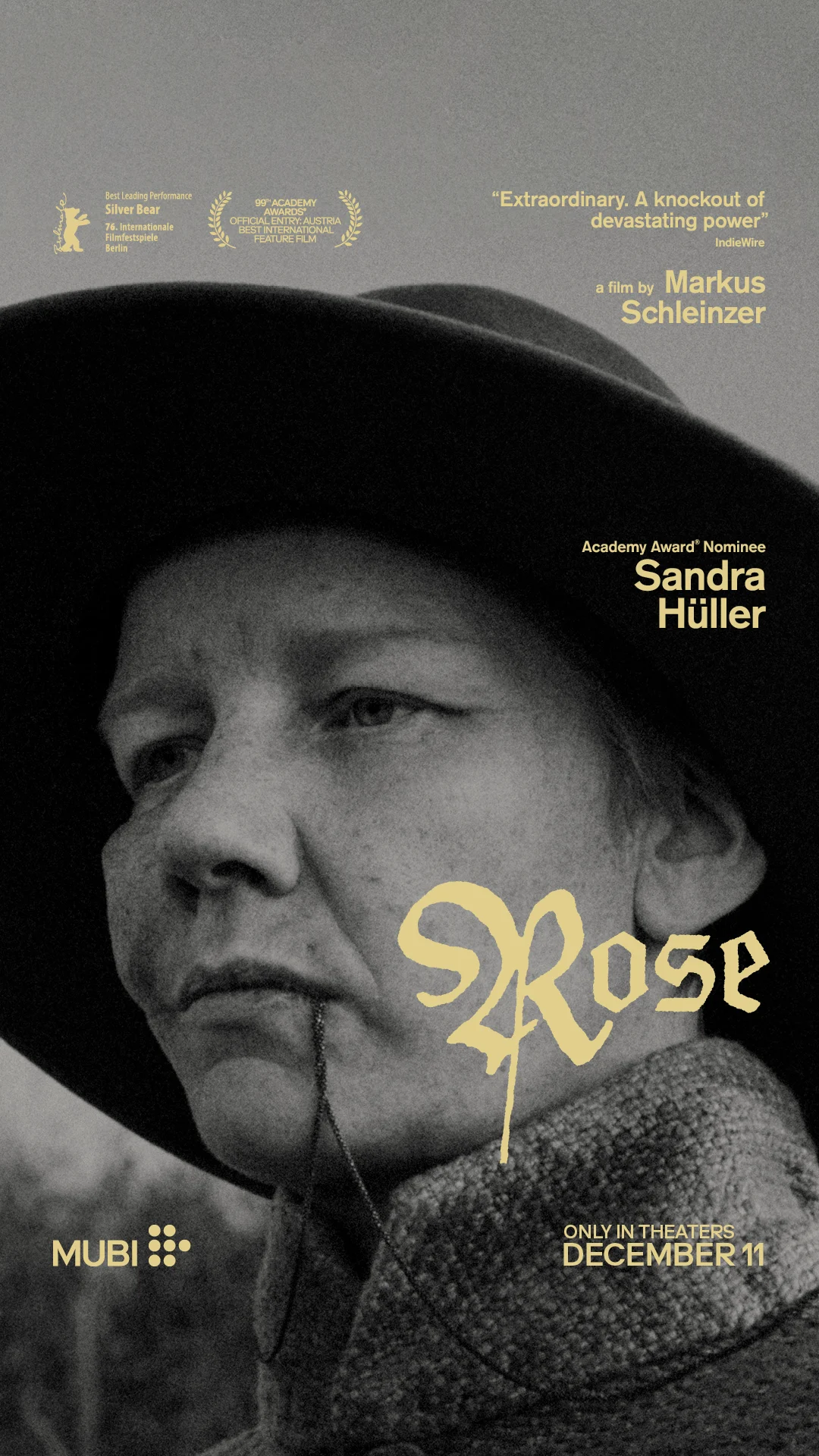
In the quiet, desolate landscape of the 17th-century post-Thirty Years’ War era, the concept of identity was a matter of life and death. For director Markus Schleinzer, the story of a woman executed 250 years ago for living as a man served as the catalyst for his latest film, Rose. The project, which recently premiered to critical acclaim at the Berlin International Film Festival, features a transformative performance by Sandra Hüller. The film serves not merely as a historical recreation, but as a visceral, political exploration of survival, gender, and the societal pressures that necessitate the act of hiding one’s true self.
A Collaboration Built on Instinct and Discovery
The creative partnership between Schleinzer and Hüller began long before the cameras rolled. Having worked together as co-stars on the 2023 black comedy Sisi & I, Schleinzer found himself captivated by Hüller’s process, eventually casting her in the titular role of his historical drama. Their preparation phase was characterized by a rigorous, almost academic attention to detail, tempered by the spontaneous energy that defines Hüller’s acting style.
One of the most revealing anecdotes from their pre-production discussions centered on the physical manifestation of the character. Hüller, known for her commitment to authenticity, initially contemplated intensive physical training to inhabit the role of a soldier in the 1600s. However, both she and Schleinzer quickly pivoted away from anachronistic notions of "masculine" performance. A particularly humorous moment occurred when Hüller expressed concern over whether she should lower her voice to mimic a man, only for the pair to realize that Schleinzer’s own voice was higher than hers. This realization underscored the absurdity of traditional gender signifiers and shifted the focus of the performance from superficial imitation to a deeper, more psychological embodiment of a person in hiding.
Historical Context and Political Resonance
The genesis of Rose can be traced to a specific, haunting birthday revelation for Schleinzer. Upon learning that a woman had been executed on that exact date two-and-a-half centuries prior for the "crime" of living as a man, Schleinzer began an extensive research project. He cataloged hundreds of similar cases across multiple centuries, finding a disturbing consistency in how societies have historically persecuted those who defy gender norms.
For Schleinzer, who identifies as queer, the film is an intentional bridge between the historical past and the contemporary political climate. He argues that the struggles of the 17th century are not detached from the current era of heightened scrutiny regarding marginalized communities. In his view, the act of existing as one’s authentic self remains a political statement. The film functions as an argument that the impulse to hide is a survival mechanism—a theme that feels increasingly relevant in the context of modern global discourse on identity rights.

Production Rigor and Aesthetic Choice
The production of Rose was as unconventional as its subject matter. Shot on location near the East German border, the film utilizes original, rugged sets that Schleinzer scouted by hiking through the wilderness, eschewing the convenience of soundstages. The aesthetic is defined by Gerald Kerkletz’s stark, high-contrast black-and-white cinematography, which emphasizes the "handmade" quality of the film.
This visual style serves to strip away the artifice often found in period pieces, ensuring that the audience is not distracted by the "museum-like" quality of the set design. Instead, the focus remains firmly on Hüller’s performance, which has been widely praised for its lack of vanity. Critics have noted that Hüller’s portrayal is a master class in restraint; she communicates the terror and the quiet defiance of her character without resorting to melodramatic tropes.
Chronology of the Project
The timeline of Rose is marked by a rapid transition from script to screen. Schleinzer initially wrote the screenplay in a prose-heavy, novelistic style before presenting it to Hüller. The filming schedule was uniquely fragmented, occurring in small increments over many months. This was largely due to Hüller’s intense international commitments, including the high-profile awards circuit for her role in Anatomy of a Fall, which culminated in an Academy Award nomination.
- February 2024: The film held its world premiere at the Berlin International Film Festival, where Hüller was honored with the Silver Bear for Best Lead Performance.
- September 2024: The North American premiere occurred at the Telluride Film Festival, where Hüller received a Tribute Medallion, cementing her status as a centerpiece of the festival season.
- October 2024: The film continued its tour at the New York Film Festival, receiving further critical accolades.
- December 11, 2024: Mubi is scheduled to release the film in North American theaters.
Analyzing the Performance and Awards Trajectory
Industry analysts are already positioning Rose as a significant contender for upcoming awards, though Hüller faces a unique internal challenge: she is simultaneously receiving acclaim for several other projects. Her dual presence in the awards conversation—notably with the Cannes-winner Fatherland and supporting roles in major studio features like Project Hail Mary—highlights her immense versatility.
However, the specific nature of her work in Rose is being highlighted by critics as a career-best performance. David Rooney, writing for The Hollywood Reporter, described the performance as "a master class in the art of acting with rigor, honesty, physicality and zero showiness." This assessment reflects a broader consensus that Hüller has reached a pinnacle of her craft, where the internal life of the character is projected through subtle shifts in posture, gaze, and silence rather than dialogue.
The Philosophy of Acting: A Departure from Tradition
Schleinzer’s experience as a former casting director provides a distinct vantage point on why Hüller’s work is so effective. He observes that many actors rely on dialogue as a crutch, using speech to avoid the vulnerability of true performance. He describes Hüller as the antithesis of this tendency. Her refusal to provide the same performance twice—often experimenting with different "shades" of the character from take to take—forced the director to constantly reassess how the story was being told.

"I had the big problem of choosing how to build up a character for the audience," Schleinzer noted in recent interviews, expressing his admiration for how Hüller’s spontaneity breathed life into the script. This collaborative tension, where the director seeks stability and the actor seeks fluidity, appears to have resulted in a film that is both intellectually rigorous and emotionally resonant.
Broader Implications and Future Outlook
The release of Rose arrives at a time when the film industry is increasingly interested in "prestige" period dramas that challenge traditional gender narratives. By situating the story in the post-Thirty Years’ War era—a period of immense upheaval and transition in European history—Schleinzer provides a backdrop that mirrors the instability of the character’s personal life.
The success of the film, both at festivals and in the critical press, suggests a growing appetite for stories that prioritize character depth over high-budget spectacle. As the film prepares for its December theatrical release, the industry will be watching to see if Hüller’s performance can translate into sustained commercial interest. Given her recent track record and the intensity of the reviews, the film is poised to be one of the most discussed features of the year.
Ultimately, as Schleinzer himself jokingly remarked, the industry has seen many accolades narrowly elude Hüller in the past. With Rose, there is a strong sentiment among observers that the depth of her contribution to this project makes such an oversight unlikely. The film serves not just as a narrative, but as an testament to the endurance of the human spirit when faced with the necessity of living a lie to survive, a theme that resonates as strongly today as it did in the 17th century.