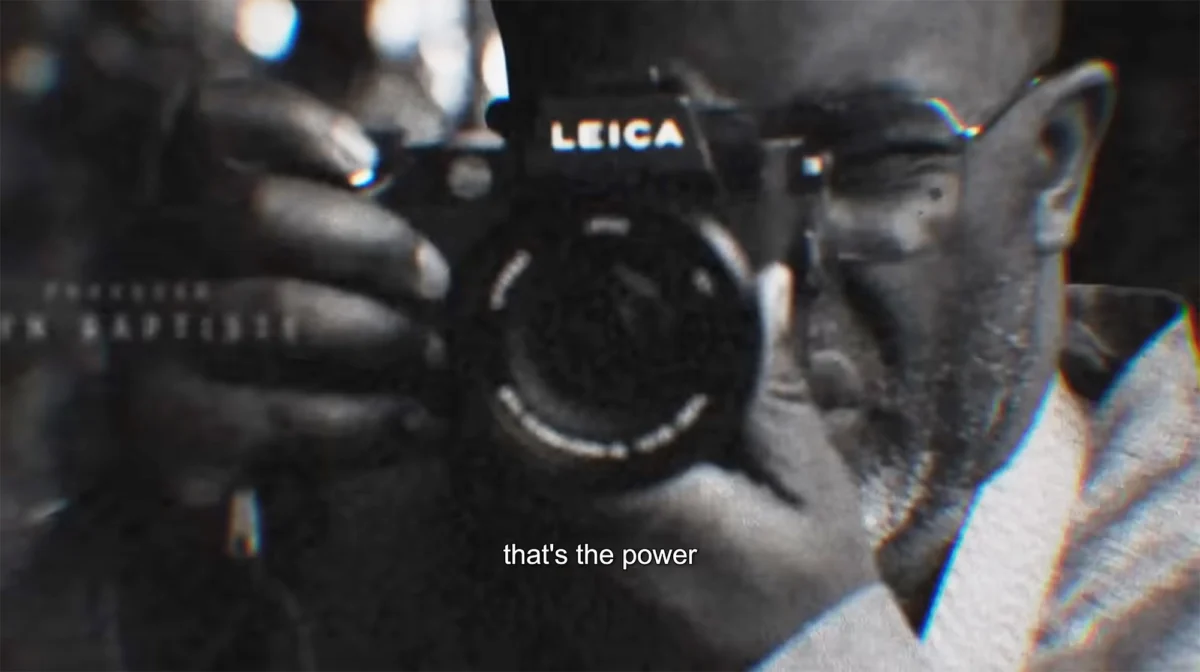
Watermelon Pictures has officially released the first teaser trailer and promotional poster for the upcoming documentary film Shoot the People, a comprehensive profile of the celebrated British-Nigerian photographer and filmmaker Misan Harriman. Directed by BAFTA-winning filmmaker Andy Mundy-Castle, the documentary explores the intersection of art, activism, and the personal responsibility of the observer. The film, which has already garnered attention on the international festival circuit, is scheduled for a phased theatrical release in the United States and the United Kingdom during the summer of 2026.
The documentary serves as both a retrospective of Harriman’s rapid ascent in the world of photojournalism and a real-time exploration of his involvement in some of the most significant social movements of the early 2020s. Through a combination of archival footage, frontline photography, and intimate interviews, Shoot the People examines the power of the still image to catalyze social change while simultaneously documenting the internal conflicts of the man behind the camera.
The Subject: Misan Harriman’s Artistic Evolution
Misan Harriman’s journey into professional photography is a relatively recent phenomenon that has yielded extraordinary results. Born in Nigeria and raised in the United Kingdom, Harriman spent much of his career in the corporate and tech sectors before picking up a camera in his 40s. His rise to prominence was accelerated by his documentation of the 2020 Black Lives Matter protests in London. One of his most famous images from that period—a black-and-white shot of a young protester—became an era-defining symbol of the movement and led to Harriman becoming the first Black man to shoot a cover for British Vogue in the magazine’s 104-year history.
Since then, Harriman has expanded his repertoire to include filmmaking, earning an Academy Award nomination for his short film The After. However, Shoot the People returns focus to his primary medium, showing how his lens has captured the gravity of the climate crisis, the ongoing struggle for Palestinian liberation, and the visceral energy of grassroots activism. The documentary highlights Harriman’s unique ability to capture "the humanity behind the headlines," a trait that has made him a preferred collaborator for high-profile figures and human rights organizations alike.

Documentary Premise and Narrative Structure
Shoot the People is structured as a dual narrative. On one hand, it is a high-stakes observational documentary that follows Harriman into the heart of global protests. The footage captures the chaos of the front lines, from the chants of activists to the heavy presence of law enforcement. On the other hand, the film is a deeply philosophical inquiry into the effectiveness of art. Harriman, who describes himself in the film as a "person of privilege," openly questions whether his photographs truly contribute to systemic change or if they merely serve as aesthetic documentation of trauma.
To explore these themes, the film features a series of high-level dialogues between Harriman and prominent social justice leaders. Among those interviewed are United States Representative Ilhan Omar and Martin Luther King III. These conversations provide a bridge between the visual representation of struggle and the legislative and grassroots efforts required to achieve tangible results. The film’s tagline—"That’s the power of art – to say another world is possible, and we have the power to change things"—serves as the central thesis that Mundy-Castle seeks to test throughout the runtime.
Production and Directorial Vision
The documentary is helmed by Andy Mundy-Castle, a filmmaker known for his nuanced approach to social issues. Mundy-Castle previously received critical acclaim for White Nanny Black Child, a documentary that explored the complexities of transracial fostering in the UK. His involvement in Shoot the People brings a seasoned perspective on the British-African experience and the nuances of racial identity in the modern West.
Produced by Wyn Baptiste, the film utilizes a visual style that mirrors Harriman’s own aesthetic—high-contrast, emotionally resonant, and focused on individual human expressions within large crowds. The production team reportedly spent over two years following Harriman, capturing the shift in his focus from the localized BLM protests in London to the broader, more complex geopolitical landscape of the mid-2020s. The film’s score and editing are designed to maintain the "urgency" described in the promotional materials, reflecting the fast-paced nature of digital-age activism.
Chronology of Festivals and Release
The journey of Shoot the People to the public began in early 2025. The film held its world premiere at the inaugural SXSW London in 2025, a fitting venue given both the subject’s and the director’s British roots. Following its successful debut in London, the film crossed the Atlantic for its North American premiere at DOC NYC in the fall of 2025. These festival screenings were instrumental in securing distribution and building critical momentum.

Watermelon Pictures, a distribution company known for its commitment to socially conscious cinema and advocacy for marginalized voices, acquired the rights to the film following its festival run. The company has organized a strategic release schedule:
- June 19, 2026: The film will open in select art-house cinemas across the United States. The choice of June 19, also known as Juneteenth, is a deliberate nod to the film’s themes of liberation and Black history.
- July 10, 2026: The documentary will premiere in theaters across the United Kingdom, followed by a series of Q&A sessions with Harriman and Mundy-Castle in London, Manchester, and Birmingham.
- Late 2026: Plans for a digital and educational release are expected to follow the theatrical window, aimed at schools and non-profit organizations.
Supporting Data: The Impact of Social Justice Photography
The release of Shoot the People comes at a time when the role of visual media in activism is under intense scrutiny. Data from various media studies suggests that visual content is 40 times more likely to be shared on social media than other types of content, making photographers like Harriman central figures in how modern movements are perceived by the public.
Furthermore, historical analysis provided within the documentary contextualizes Harriman’s work alongside legendary figures such as Gordon Parks and Moneta Sleet Jr. By comparing the 2020s protest imagery to that of the 1960s Civil Rights Movement, the film provides a statistical and visual timeline of how "the gaze" has shifted. According to market research cited by distribution analysts, documentaries focusing on social justice have seen a 25% increase in viewership on streaming platforms over the last five years, suggesting a growing appetite for content that bridges the gap between news and art.
Official Responses and Anticipation
While official reviews are still emerging following the teaser release, early reactions from the film community have been positive. Representatives from Watermelon Pictures stated that the film is "not just a biography, but a call to action." They emphasized that Harriman’s willingness to be vulnerable about his own doubts is what sets this documentary apart from traditional hagiographies of famous artists.
Human rights advocates have also signaled their support. In snippets from the film, Martin Luther King III notes that the "documentation of the struggle is as vital as the struggle itself, for without the record, the lessons are lost." This sentiment is echoed by Ilhan Omar, who discusses the importance of visual storytelling in shaping the political will of the younger generation.

Broader Impact and Implications
The release of Shoot the People is expected to spark a broader conversation about the ethics of photojournalism in the age of social media. As images of conflict become increasingly ubiquitous and ephemeral, the documentary asks if a single photograph can still hold the power to stop a war or change a law.
By focusing on Harriman—a man who transitioned from the corporate world to the front lines—the film also touches on the democratization of media. It suggests that in the 21st century, the tools for global storytelling are available to anyone with the courage to "shoot the people" in a way that honors their dignity.
As the film prepares for its June release, industry insiders view it as a potential awards contender in the documentary categories for the 2027 season. Beyond its awards potential, however, the film’s primary goal remains the elevation of the movements it depicts. For audiences in the US and UK, Shoot the People offers a chance to revisit the turbulent events of the recent past through a lens that seeks clarity amidst the chaos.
The official website for the film has launched a resource page to coincide with the trailer, providing viewers with information on the various social causes highlighted in the documentary. This integration of cinema and direct advocacy marks a continuing trend in the independent film industry, where the "impact campaign" is considered as important as the box office returns.