The enduring popularity of the HBO anthology series Tales from the Crypt in the 1990s inevitably led to ambitions for a cinematic expansion. Intended as a springboard to deliver high-quality, standalone horror narratives to a wider audience, the franchise’s transition to the big screen was far from a smooth ride. While the television show consistently captivated viewers with its macabre humor and inventive storytelling, the path to feature films was fraught with creative detours, production challenges, and ultimately, diminishing returns. This exploration delves into the complex history of the Tales from the Crypt film series, examining the genesis of Demon Knight, the tumultuous production of Bordello of Blood, and the largely forgotten Ritual, revealing a story of ambitious vision hampered by practical realities.
The Genesis of Demon Knight: A Cult Classic Forged in Pre-Production Turmoil
The initial strategy for Tales from the Crypt‘s cinematic universe was a trilogy of films, a logical progression for a franchise built on a foundation of compelling short-form horror. The creative minds behind the HBO series, a roster of some of the decade’s most promising genre filmmakers, seemed poised to deliver a cinematic home run, especially following the successful transitions of anthology series like The Twilight Zone and Tales from the Darkside to film. However, the journey to bring these visions to life was a protracted and often frustrating one, marked by numerous false starts and significant revisions.
While Demon Knight eventually emerged as a critical and commercial success, solidifying its status as a cult classic, it was just one of many potential Tales from the Crypt films that were conceptualized. The studio reportedly considered a sprawling zombie epic set in New Orleans and even explored adapting iconic genre scripts from luminaries like Peter Jackson and Quentin Tarantino.
The narrative of Demon Knight itself has a surprisingly deep lineage, predating the HBO series. The initial draft was penned in 1987 with the intention of director Tom Holland, fresh off the success of Child’s Play, helming the project. Holland, who would later direct three episodes of the Tales from the Crypt television series, began preliminary work on Demon Knight before shifting his focus to the lesser-known Fatal Beauty.
Following Holland’s departure, the script passed through the hands of other notable genre directors. Mark Carducci, known for Pumpkinhead, attempted to rework the material. Subsequently, Mary Lambert, who had directed the first season finale of Tales from the Crypt, "Collection Completed," took the reins. Lambert harbored ambitious plans for Demon Knight, but the prolonged pre-production phase, compounded by the disastrous reception of her follow-up film, Pet Sematary Two, led to a loss of investor interest in her vision.
The project then briefly found a potential home with Charles Band’s Full Moon Features, a move that would have undoubtedly resulted in a distinctly different, likely more low-budget, aesthetic. Ultimately, it was Joel Silver who acquired the rights, envisioning Demon Knight as the second installment in the planned trilogy. Universal executives, however, saw greater immediate potential in Demon Knight compared to the other two scripts in development, Dead Easy and Body Count.
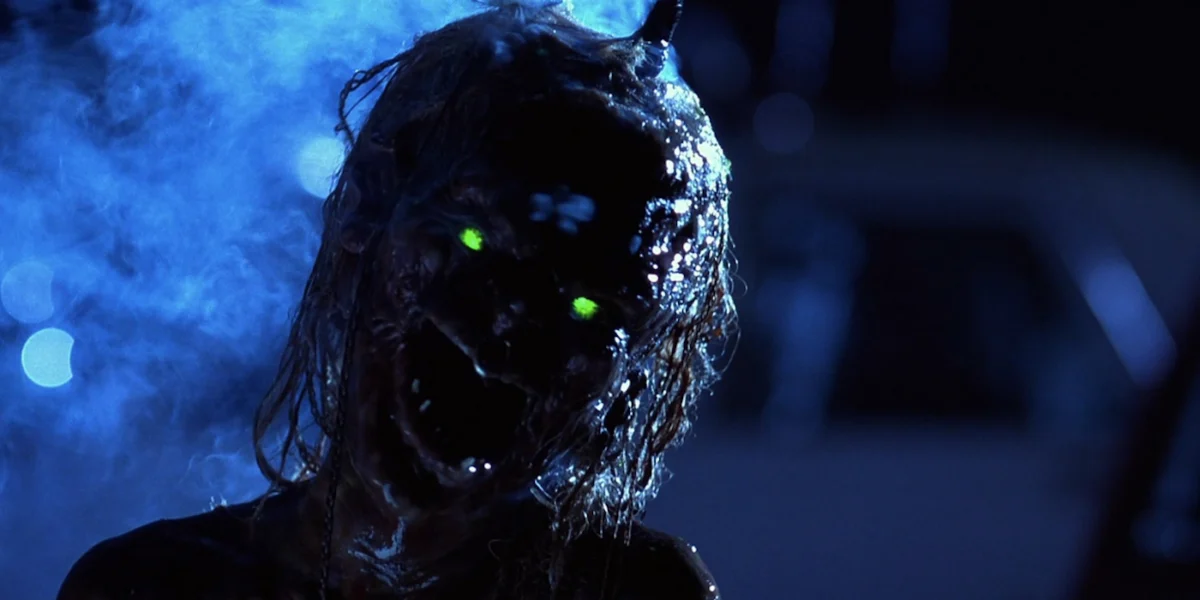
Under Ernest Dickerson’s direction, Demon Knight‘s production navigated the complexities of a bifurcated script that accommodated drastically different budgetary scenarios. One version featured overt demonic presence, while a more cost-effective alternative omitted explicit monsters, relying on a more subtle, psychological horror. This latter approach, which involved macabre Bible salesmen, reportedly made Universal executives uneasy, leading to the allocation of additional funds to ensure the film lived up to its titular promise. This decision proved to be prescient, as the film’s celebrated kitschy monster effects became a key element of its appeal. Demon Knight‘s financial performance exceeded expectations, nearly doubling its production budget at the box office, which immediately spurred discussions for a sequel.

The Unfulfilled Promise of Dead Easy and the Bizarre Turn of Bordello of Blood
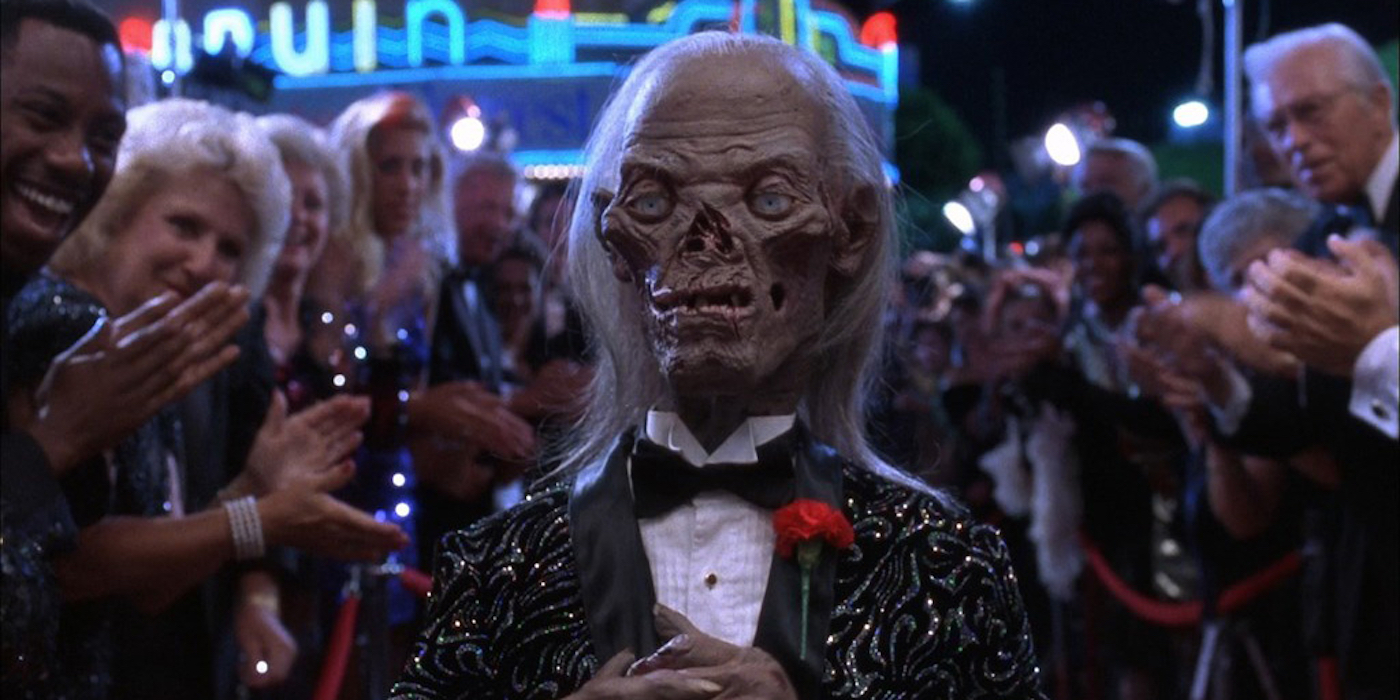
The success of Demon Knight emboldened Universal Pictures to greenlight two more Tales from the Crypt films, with Dead Easy (later known as Fat Tuesday), a zombie narrative set in New Orleans, slated to be the immediate follow-up. The Crypt Keeper himself even teased this future installment in a post-credit scene in Demon Knight, a detail that has since become little more than a piece of nostalgic trivia for dedicated fans.
The writing team of Gilbert Adler and A.L. Katz, seasoned contributors to the Tales from the Crypt television series, encountered significant challenges in developing the script for Dead Easy. In an effort to inject fresh perspective, Joel Silver enlisted Darin Morgan, renowned for his work on The X-Files, for a rewrite. Morgan’s talent for crafting compelling monster-of-the-week episodes for The X-Files made him a natural fit for an EC Comics-inspired story. The unfulfilled potential of Morgan’s take on Dead Easy represents a significant "what if" in the franchise’s history.
The film was on the cusp of pre-production in New Orleans, with shooting scheduled to commence, when Universal abruptly halted the project. The studio’s decision was reportedly driven by concerns about the film’s mainstream commercial viability, particularly its New Orleans setting, and a preference for a more overtly campy project over a psychological thriller.
Amidst the uncertainty surrounding the sequel, producers explored other high-profile genre scripts that possessed a similar Tales from the Crypt sensibility. Among these were Peter Jackson’s The Frighteners and Quentin Tarantino’s From Dusk Till Dawn. However, the franchise’s trajectory took an unexpected turn when Robert Zemeckis was presented with an offer from DreamWorks. To secure his continued association and prevent him from defecting, Universal offered Zemeckis the opportunity to revive an older script he and Bob Gale had written shortly after their time at USC. This script, Bordello of Blood, was reimagined as the second Tales from the Crypt film, effectively sidelining the other potential projects.
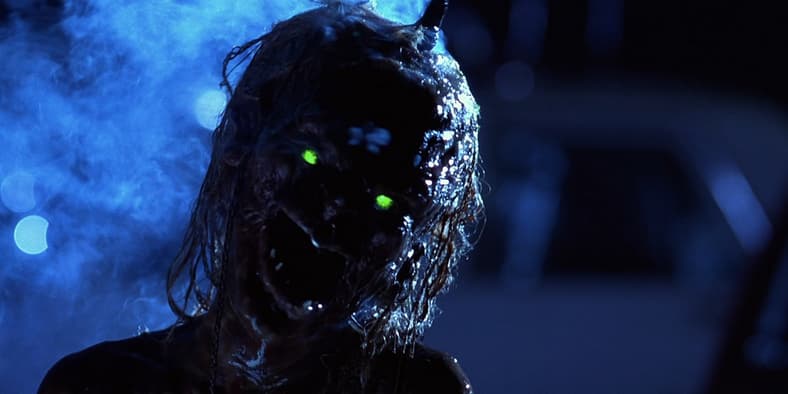
Bordello of Blood centers on a private investigator’s descent into a nefarious vampire brothel. While considered a significant step down from Demon Knight, the film possesses a surprisingly rich, albeit convoluted, production history. The original screenplay by Gale and Zemeckis, penned in the early 1970s, was conceived as a pulpy, exploitation-style grindhouse piece, distinct from any planned Tales from the Crypt association. The script had a brief stint with director John Milius in the 1970s alongside another of their early works, Tank, but failed to materialize. Gale and Zemeckis then pivoted to 1941. It’s an intriguing counterfactual to consider how their careers might have unfolded had this vampire exploitation project served as their initial professional calling card instead of a Steven Spielberg-directed war satire.
Adler and Katz were tasked with rewriting the Gale and Zemeckis script to modernize and update it. Both Zemeckis and Gale would later express their disappointment with how the final film diverged from their original vision, with Gale famously stating in 2015 that he had never seen the finished product due to his dissatisfaction with the dailies.
The casting of Bordello of Blood proved to be another significant hurdle. Adler and Katz had envisioned Daniel Baldwin and Robin Givens for the lead roles of Rafe and Lilith, respectively. However, executive producer Joel Silver vetoed this, insisting on Angie Everhart for Lilith, despite her limited acting experience, and Dennis Miller for Rafe. Miller’s reluctance to participate was palpable from the outset. When Universal refused his substantial $1 million salary, Silver reportedly recouped the amount by cutting $750,000 from the special effects budget. This decision was particularly detrimental, given that the success of Demon Knight was partly attributed to the adequate funding of its special effects and makeup departments.
Miller’s performance was plagued by his insistence on improvising the majority of his dialogue, leading to significant plot and continuity issues. The production schedule was further complicated by the need to accommodate Dennis Miller Live, exacerbating animosity among the crew who were forced to work through weekends. Miller’s exhaustion often led to his absence from the set, necessitating the use of a stand-in. Additionally, due to Silver’s past union disputes in Hollywood, the production was relocated to Vancouver, utilizing an inexperienced crew.

Actress Erika Eleniak also voiced strong objections to filming unless substantial rewrites were made to her character, Katherine Verdoux. Reports vary regarding the specifics of Eleniak’s concerns. She stated that her issues stemmed from Silver’s desire to incorporate a sexually charged scene between her character and Everhart’s, and a backstory where Katherine was a former overweight adult actress named "Chubbie" O’Toole, a role for which Eleniak even wore prosthetics. Regardless of the exact catalyst, Eleniak’s frustrations, combined with Miller’s demands and radical script revisions, created a production environment destined for mediocrity, falling far short of the benchmark set by Demon Knight.
Tales from the Crypt Presents: Bordello of Blood was met with widespread critical condemnation and a disappointing box office performance, grossing only $5.6 million against a $2.5 million budget. This was a stark contrast to Demon Knight‘s domestic haul of over $21 million. The film, intended to appease Zemeckis and Gale, became a widely disowned misfire for its creators.
Ritual: The Unceremonious End to a Cinematic Ambition
The troubled production and underwhelming financial results of Bordello of Blood effectively ended Universal’s original plan for a third Tales from the Crypt film. The franchise remained dormant for a decade, until a third movie, Tales from the Crypt Presents: Ritual, emerged in 2006. However, this release bore little resemblance to its predecessors in terms of production and branding. Unlike Demon Knight and Bordello of Blood, Ritual was not initially produced under the Tales from the Crypt banner.
Ritual tells a supernatural story involving a voodoo curse triggered by a denied inheritance, leading to dire and undead consequences. The film saw a limited theatrical release in the Philippines in 2002 and 2003, but it did not reach North American markets until its direct-to-video release in 2006. It was during this latter release that Crypt Keeper wraparound segments were added, a peculiar and arguably lazy attempt to tie it into the Tales from the Crypt franchise. This approach bears a superficial resemblance to the multi-platform releases of films like Cloverfield, but lacks the cohesive strategy.

Despite the inclusion of Crypt Keeper material and the involvement of Tales veterans like Tim Curry, and producers Richard Donner, David Giler, and Walter Hill, Ritual failed to capture the distinctive energy of the Tales from the Crypt series. The film’s origins are particularly convoluted. It began as a remake of the 1943 film I Walked With a Zombie, before evolving into a voodoo-centric take on Fatal Attraction under director Rob Cohen. Cohen eventually departed, and Avi Nesher took over as writer and director, with the film ultimately retitled Ritual. The fact that this film, intended to preserve the copyright of older RKO Pictures films, would become the final Tales from the Crypt movie, albeit only upon its physical media release, is a testament to the franchise’s winding and often illogical trajectory.
Ritual serves as a profoundly weak conclusion to the Tales from the Crypt cinematic experiment. Its release is made even more disheartening by its thematic similarities to the unproduced Dead Easy. Some casual viewers mistakenly believed Ritual to be Dead Easy under a different title. The conclusion of a promising anthology film series with a poorly received, low-budget horror film that was never conceived as a Tales from the Crypt movie is a significant disappointment. The tacked-on Crypt Keeper segments do little to salvage the film, instead highlighting the diminished charm of the Crypt Keeper himself, who, in this iteration, adopts a mildly offensive Jamaican stereotype lacking his usual wit.
The Lingering Legacy and Future Potential
With Ritual now two decades in the rearview mirror, the future of the Tales from the Crypt franchise remains uncertain. Rights issues have historically hampered the development of new projects, and this situation has not significantly changed. However, Shudder’s recent acquisition of the Tales from the Crypt streaming rights offers a potential avenue for the series to regain prominence and potentially spark new creative endeavors.
Whether a modern legacy sequel or a complete revival, the Tales from the Crypt brand holds significant nostalgia and potential. At the very least, a special edition of The Last Drive-In with Joe Bob Briggs featuring the Crypt Keeper as a guest would be a fitting tribute to the enduring, albeit complicated, legacy of this beloved horror anthology. The cinematic journey of Tales from the Crypt may have been fraught with challenges, but its story serves as a fascinating case study in the complexities of adapting beloved television franchises for the big screen, highlighting the delicate balance between creative ambition and commercial viability.