A federal judge has narrowed the scope of a lawsuit filed by actress Catherine Corcoran against the creators of the horror franchise Terrifier, while allowing her central breach of contract claim to proceed toward discovery. The ruling, issued by U.S. District Judge André Birotte, keeps alive Corcoran’s pursuit of a one percent share of the total profits generated by the burgeoning horror franchise, a figure that has grown exponentially following the massive box office success of recent sequels.
Corcoran, who portrayed the character Dawn in the original 2016 film, was one of the first victims of the antagonist Art the Clown. At the heart of the legal dispute is a backend participation agreement that granted Corcoran one percent of the profits from Terrifier. While the defendants—director Damien Leone and his production entity, Dark Age Cinema—contend that the agreement applies exclusively to the 2016 independent film, Corcoran argues that the contractual language encompasses the entire intellectual property, including sequels, merchandise, and streaming rights.
Judicial Determination on Contractual Ambiguity
In his ruling on Friday, Judge Birotte determined that the language within the contract contains "sufficient ambiguity" to prevent a dismissal of the breach of contract claim at this preliminary stage. The court’s decision focuses on the interpretation of the word "profits" and the scope of the "Terrifier" property as defined in the initial deal.
By allowing the case to move forward, the court has set the stage for a legal determination on whether Corcoran is entitled to a portion of the revenue generated by the franchise’s subsequent entries. This includes the surprise 2022 hit Terrifier 2, which earned $15 million against a micro-budget, and the 2024 blockbuster Terrifier 3, which has amassed over $90 million at the global box office.
One of the pivotal arguments presented by Corcoran’s legal team involves the timing of payments. Corcoran began receiving profit participation checks in 2022, nearly seven years after her initial deal was signed. Her attorneys argue that these payments, which occurred long after the expiration of the two-year term mentioned in certain parts of the contract, indicate that Dark Age Cinema implicitly acknowledged an ongoing financial obligation to the actress that extended beyond the life of the first film.
Devin McRae, counsel for Corcoran, expressed satisfaction with the court’s decision to maintain the core of the lawsuit. "The Court’s ruling confirms that the core of Ms. Corcoran’s case remains intact and is plausibly pled," McRae stated. "The claims which concern Ms. Corcoran’s contractual rights to 1% of the Terrifier franchise’s profits are now set and will proceed into discovery."
The Evolution of the Terrifier Franchise
To understand the stakes of the litigation, one must look at the unprecedented financial trajectory of the Terrifier series. What began as a niche, independent slasher film has evolved into one of the most profitable horror intellectual properties in modern cinema.
- Terrifier (2016): Produced on a shoestring budget estimated at approximately $35,000, the film gained a cult following through digital platforms and physical media. It introduced audiences to David Howard Thornton’s portrayal of Art the Clown and featured Corcoran in a prominent, albeit ill-fated, role.
- Terrifier 2 (2022): Following a successful crowdfunding campaign that raised over $250,000, the sequel was released to unexpected mainstream success. It grossed $15.7 million worldwide, a staggering return on investment that signaled the character’s transition into a horror icon.
- Terrifier 3 (2024): With a significantly larger production budget of roughly $2 million, the third installment shattered independent horror records. Its $90 million box office haul has placed the franchise in the upper echelon of horror properties, making a one percent stake in total profits a multimillion-dollar point of contention.
Corcoran’s claim suggests that as an early contributor to the franchise’s aesthetic and commercial foundation, her participation should reflect the brand’s total growth. The defense, however, maintains that such backend deals for independent actors are traditionally limited to the specific production in which they appeared.
Dismissal of Tort and Statutory Claims
While the contract claim survived, Judge Birotte dismissed several other components of Corcoran’s lawsuit. Most notably, the court rejected a claim alleging a violation of California’s "revenge porn" statute (Civil Code Section 1708.85).
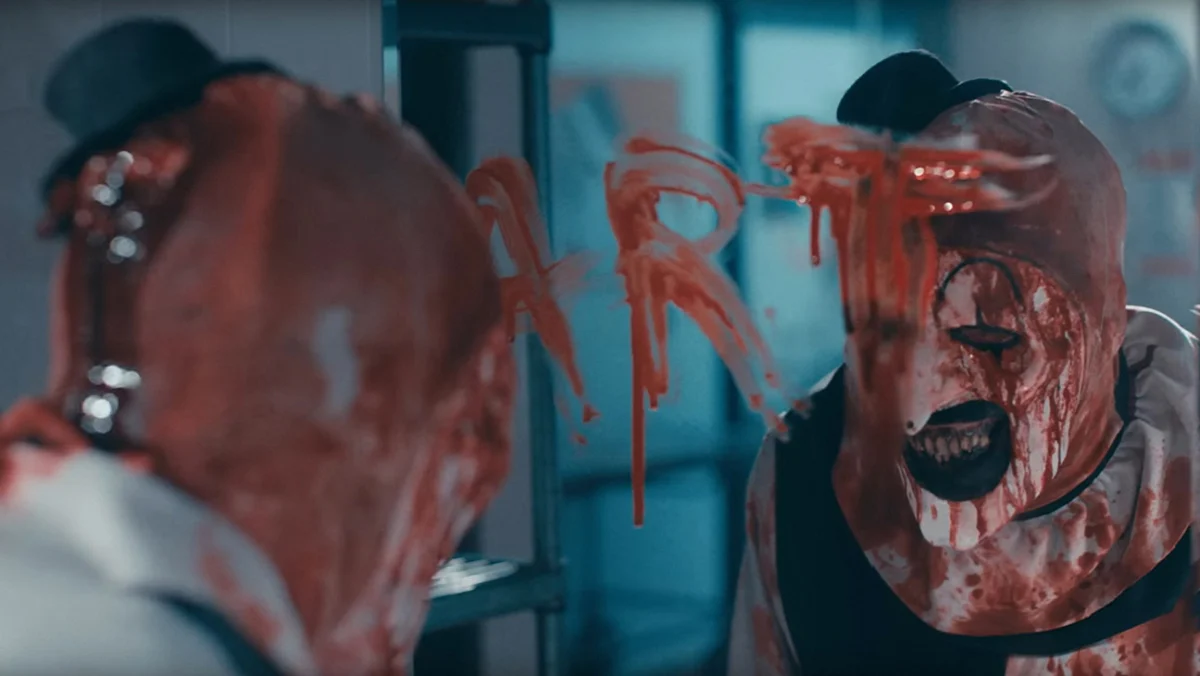
The claim stemmed from a notorious scene in the 2016 film in which Corcoran’s character is stripped and bisected by Art the Clown. Corcoran alleged that Dark Age Cinema failed to obtain the specific written consent required by SAG-AFTRA for nude scenes and that the subsequent exploitation of these images constituted a violation of her privacy.
Judge Birotte was unpersuaded by this argument, noting that the circumstances of the filming invalidated a reasonable expectation of privacy. "Her voluntary presence on a public film set for over ten hours invalidates her position that Defendants should have known she reasonably expected privacy," the judge wrote. The ruling emphasized that because the material was created for a commercial motion picture with the actor’s participation, it does not fall under the legal definition of nonconsensual pornography.
Additionally, the court dismissed claims for promissory fraud and unfair competition, finding that Corcoran’s complaint lacked the necessary factual specificity to support those allegations under federal pleading standards. However, the judge granted Corcoran leave to amend these claims, providing her legal team an opportunity to refile with additional evidence.
Statements from the Defense
Larry Zerner, representing Damien Leone and Dark Age Cinema, characterized the ruling as a victory for the filmmakers. "We appreciate the Court’s careful review of the pleadings, which led to the dismissal of the vast majority of the plaintiff’s meritless claims," Zerner said in an official statement.
Zerner further defended the conduct of the production team during the filming of the original movie. "Damien Leone and Phil Falcone conducted themselves professionally throughout the production of Terrifier, and the plaintiff’s attempt to transform her role as an actor into a claim under California’s revenge-porn statute was untenable from the start."
The defense maintains that the 2016 contract was a standard "single-picture" agreement and that Corcoran is attempting to retroactively capitalize on the unexpected success of sequels in which she did not appear.
Detailed Chronology of the Legal and Production Dispute
The timeline of the dispute spans nearly a decade, reflecting the long-tail success of the horror property:
- 2015: Catherine Corcoran is cast as "Dawn" in Terrifier. She signs an agreement that includes a 1% profit participation clause.
- October 2016: Terrifier premieres at the Telluride Horror Show and subsequently sees a limited release and digital distribution.
- 2017-2021: The film grows in popularity on streaming services, cementing Art the Clown as a recognizable figure in the horror genre.
- October 2022: Terrifier 2 is released in theaters, becoming a viral sensation due to its extreme gore and word-of-mouth marketing.
- Late 2022: Corcoran receives her first profit-sharing payments from Dark Age Cinema, despite the passage of several years since the original film’s release.
- 2023: Corcoran files her lawsuit in the U.S. District Court for the Central District of California, alleging that she has been underpaid and that her likeness is being used across the franchise without proper compensation.
- October 2024: Terrifier 3 is released, surpassing all financial expectations and significantly increasing the potential damages in the ongoing litigation.
- November 2024: Judge Birotte issues the ruling to narrow the case while preserving the breach of contract claim.
Grueling Working Conditions and the Dawn Death Scene
A significant portion of Corcoran’s original complaint detailed the physical toll of filming her character’s death scene, which remains one of the most discussed sequences in modern horror. The scene involved Corcoran being suspended upside down by her ankles for an extended period.
According to the lawsuit, the production was grueling. To prevent blood from pooling dangerously in her head, the scene was shot in 40-second increments over a span of 10 hours. The actress was intermittently lowered onto a platform to rest horizontally between takes. Corcoran has used these details to highlight her significant contribution to the "shock value" that helped the franchise gain its initial notoriety, arguing that the success of the sequels is built directly upon the foundation laid by the first film’s extreme practical effects.
Broader Implications for Independent Film Contracts
The outcome of Corcoran v. Dark Age Cinema could have lasting implications for how backend participation is drafted in the independent film industry. Typically, "net profit" or "profit participation" deals are viewed by studios as being limited to the specific project defined in the "Work Made for Hire" agreement.
However, if Corcoran successfully argues that "Terrifier" refers to the franchise or the intellectual property as a whole, it could lead to more stringent and specific language in future indie contracts. It also raises questions about "related intellectual property" and whether an actor’s contribution to the "origin" of a character entitles them to a perpetual share of the brand’s growth.
For now, the case moves into the discovery phase, where both parties will exchange internal documents, emails, and financial records. Corcoran’s team intends to amend the dismissed claims shortly, seeking to provide the "factual specificity" required by the court to reinstate the fraud and unfair competition allegations. As the Terrifier franchise continues its upward trajectory, the legal battle over its origins and the distribution of its millions remains a high-stakes drama in the world of entertainment law.