Mysterious Deaths and Clerical Crisis Grip Miles City as Pastor Arthur Beaucarne Faces Supernatural Threat
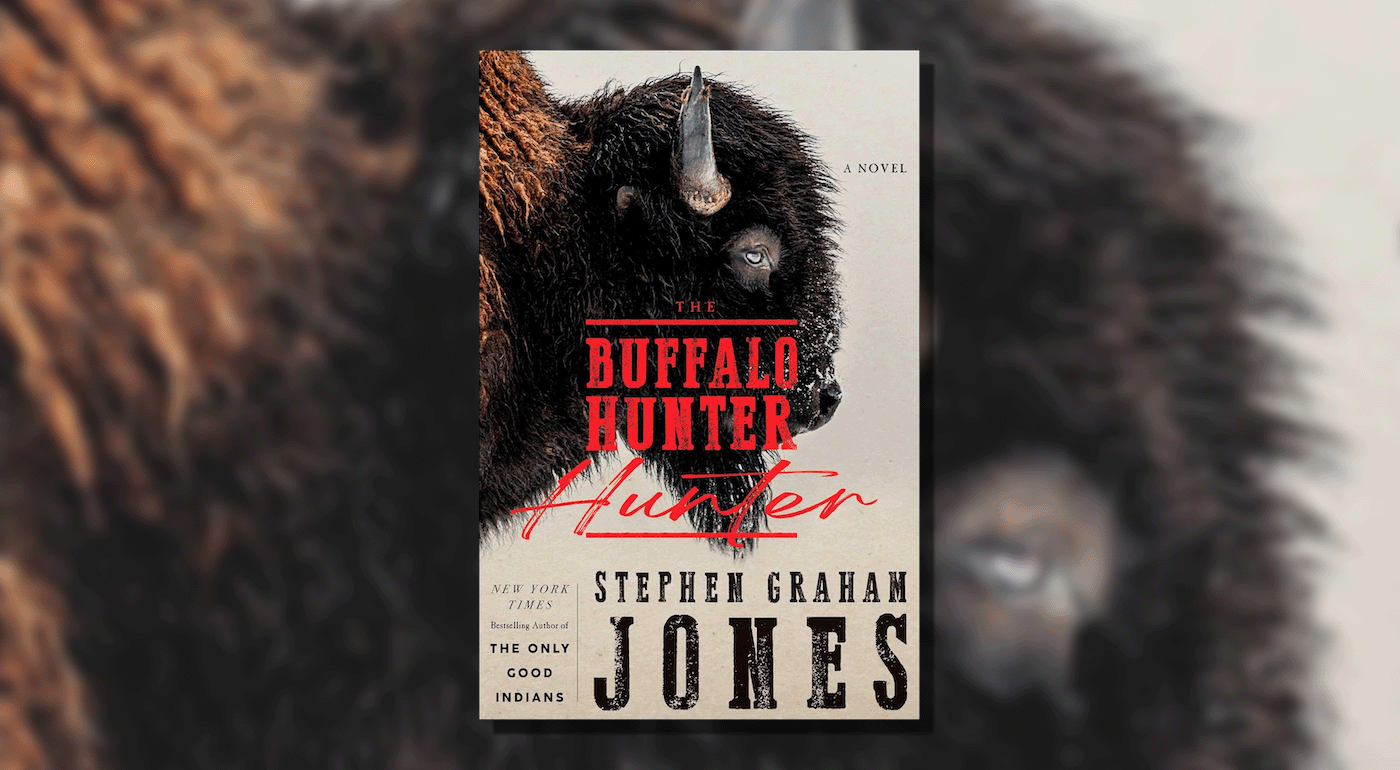
Miles City, Montana – A chilling undercurrent of fear and supernatural dread has descended upon Miles City following a series of unexplained deaths and the unsettling actions of local pastor, Arthur Beaucarne. Over April 25th and 26th, 1912, Beaucarne found himself at the epicenter of a crisis, attempting to convince local authorities of a monstrous entity’s existence while grappling with his own potential demise. The events, detailed in the upcoming publication The Buffalo Hunter Hunter by Stephen Graham Jones, paint a grim picture of a community teetering on the brink of unraveling, where faith, folklore, and primal fear collide.
The narrative begins on April 25th, the Feast of St. Mark, a day Beaucarne, for the first and, as he presumed, the last time, canceled Sunday mass. His sermon was not to be of spiritual guidance, but a terrifying confession of personal peril. He feared becoming the "feast" rather than presiding over a spiritual one, anticipating being "sublimated into a meal of blood." This stark premonition points towards an entity known as Good Stab, described as an ancient, predatory force with a modus operandi that appears to be rooted in the Indigenous practice of "counting coup." This tactic, a demonstration of power through proximity before delivering a fatal blow, suggests a profound psychological as well as physical assault.
Beaucarne’s desperate plea to Sheriff Doyle was to recognize the threat posed by Good Stab, whom he directly implicated in the murders of postmaster Clarkson, Pinkerton operative Dove, and several members of a prominent San Francisco family. The pastor’s attempts to protect his household, including his cat Cordelia, whom he locked in a closet to prevent her from returning to her former life at a local brothel, underscore the depth of his fear. His apprehension about leaving a candle for Cordelia, fearing it might ignite the church, speaks to the overwhelming sense of impending conflagration that seemed to engulf him.
Chronology of Terror and Desperate Appeals
The following day, April 26th, found Arthur Beaucarne waiting in the silent sanctuary of his church, the weight of Sheriff Doyle’s skepticism pressing down on him. Doyle, it seemed, remained unconvinced of the supernatural threat lurking within Miles City. Beaucarne’s release of Cordelia from the closet was met with a panicked screech, as if the animal itself sensed an unseen terror. Yet, Beaucarne perceived only emptiness, amplifying his sense of isolation and vulnerability. He felt "distinctly observed," a chilling sensation that intensified his anxiety about his final hours in town.
Earlier that day, Beaucarne’s efforts to locate Sheriff Doyle led him through the town’s familiar streets. His initial search for the sheriff proved fruitless, with Doyle absent from his office. Beaucarne’s path then took him towards the lodging house, a hub of local gossip, but he was waylaid by the sight of a bobbing bowler hat. The hat, a visual echo of the deceased Pinkerton man Dove, raised immediate suspicion. Following the hat-wearer into a local saloon, Beaucarne discovered it was merely Early Tate, now sporting Dove’s distinctive headwear.
It was within this saloon that Beaucarne finally encountered Sheriff Doyle, engaged in what appeared to be an informal "court" with two local business owners. Their departure upon Beaucarne’s approach left the pastor with a desperate window to press his case. He recounted his previous encounters with Good Stab, emphasizing that the "Indian" he had spoken of earlier had returned and admitted responsibility for the "previous humps" – the brutal killings of the postmaster, the Pinkerton man, and the San Francisco residents. He further elaborated that Good Stab claimed to have "skinned" entire camps of buffalo hunters, mirroring the fate of his recent victims.
Sheriff Doyle’s response was one of dismissive skepticism, questioning how a single individual could be responsible for such widespread carnage. Beaucarne countered that Good Stab claimed to be "more than that," hinting at his supernatural nature. He rejected Doyle’s offer of a drink, his focus solely on convincing the sheriff of the immediate danger. Beaucarne pleaded with Doyle to intervene, revealing that Good Stab still held one of the San Francisco victims captive in a hidden "dugout."
The sheriff’s challenge – would Beaucarne swear to this on the Bible? – was met with a resounding affirmation, not just from Beaucarne but from his entire congregation. This was a calculated move, subtly reminding Doyle that his congregants were also voters, a demographic he could not afford to ignore. Beaucarne’s plea for Doyle to at least investigate the dugout’s location was met with an ambiguous response. However, as Beaucarne offered to "settle up" with the barkeeper, Doyle, with his bottle in hand, departed, indicating a reluctant, albeit non-committal, willingness to investigate.
While settling his account, Beaucarne’s attention was drawn to a peculiar chandelier in the saloon, crafted from Sharps rifles joined at their barrels in a haystack formation. This artifact immediately resonated with Good Stab’s description of destroyed firearms. Outside, Beaucarne encountered Amos Short Ribs, an Indigenous man, washing his shirt at a horse trough. Offering Amos another bottle on his tab, Beaucarne also ingeniously retrieved a greasy black feather from Early Tate’s passing bowler. Licking the feather and pressing it to his forehead, a ritualistic act that seemed to unlock a torrent of ancestral knowledge, Beaucarne prompted Amos to share a tale. The feather, Amos explained, reminded him of a renowned medicine man named Happy. During a vision quest in the mountains, Happy encountered the Morning Star and his spirit buffalo. The Morning Star, burdened by grief for his people, wept tears of blood, leading the Blackfeet to name him "The Fullblood."
Beaucarne’s pointed question, whether The Fullblood of the Blackfeet took no scalps, was met with Amos’s profound distinction: "Two different people." This statement starkly separates the divine entity from the monstrous hunter, a crucial clarification that Arthur did not correct, understanding the complex duality at play.
Analysis of the Supernatural and its Implications
The events of April 25th and 26th, 1912, reveal a complex interplay between Indigenous folklore, Christian theology, and the raw terror of a supernatural predator. Beaucarne’s internal struggle highlights the conflict between his pastoral duties, bound by the sanctity of the confessional, and the urgent need to expose a mortal threat. His decision to violate the seal of confession, albeit to protect lives, marks a significant departure from traditional religious tenets. This act raises questions about the applicability of religious law when confronted with an entity that appears beyond earthly penance or redemption.
The narrative also delves into the concept of "counting coup," a practice that, when wielded by Good Stab, transforms into a horrifying psychological weapon. This act of proximity before destruction emphasizes the entity’s desire not just to kill but to shame and dominate its victims. The implication is that Good Stab’s actions are not random acts of violence but calculated displays of power rooted in a deep-seated grievance, possibly linked to the historical subjugation and destruction of Indigenous peoples and their way of life.
The symbolic significance of the buffalo heads, prevalent reminders of stolen resources and cultural erasure, and the saloon chandelier fashioned from rifles, artifacts of both conquest and often lost battles, further underscore this theme. These elements serve as potent symbols of dispossession and the lingering trauma of historical injustices, providing a potential motive for Good Stab’s vengeful rampage.
The revelation of the Morning Star myth and its connection to Good Stab is a pivotal moment. The story of Happy, the vision questing boy, and the blood-weeping Morning Star, The Fullblood, parallels Good Stab’s own narrative of grief and power. The black feather, a symbol of guidance and reassurance from a spirit guide, gifted by the Morning Star to Happy, acts as a catalyst for Amos Short Ribs to recount the tale. This suggests a profound connection between Arthur’s actions, the feather, and Amos’s own ancestral lore, potentially identifying Amos as the boy encountered by Good Stab.
The distinction between "The Fullblood" as a divinity and a monster is central to understanding Good Stab’s fractured identity. This duality, as Arthur recognizes, reflects a being who cannot reconcile his divine origins with his monstrous present, leading to a profound alienation from his community. The narrative implies that Good Stab’s actions are a desperate, albeit terrifying, attempt to reclaim a sense of belonging and address the injustices inflicted upon his people.
Broader Impact and Official Response
The series of violent deaths, initially attributed to mundane causes, has now taken on a far more sinister dimension. The reluctance of Sheriff Doyle to fully embrace Beaucarne’s claims reflects a common societal tendency to dismiss the inexplicable or the supernatural. However, the pastor’s appeals, backed by his congregation and the growing unease within the community, suggest that official denial will become increasingly untenable.
The implications of Good Stab’s continued presence extend beyond individual lives, threatening the social fabric of Miles City. The intersection of Indigenous spiritual beliefs with the stark reality of violence creates a volatile environment where trust and understanding are paramount, yet tragically absent in the initial response. The story of The Fullblood, as recounted by Amos Short Ribs, serves as a vital piece of cultural context, offering a framework for understanding the entity’s motivations, however terrifying.
As the events of April 1912 unfold, Miles City stands at a precipice. The courage of Arthur Beaucarne in confronting both a supernatural threat and bureaucratic indifference, coupled with the deep well of ancestral knowledge possessed by individuals like Amos Short Ribs, may hold the key to understanding and potentially confronting the darkness that has taken root. The resolution of this crisis will undoubtedly shape the future of this Montana town, forcing a reckoning with both its immediate dangers and its buried histories.
Next week, the series will explore Donald A. Wollheim’s "Mimic," featured in Ann and Jeff VanderMeer’s The Weird: A Compendium of Strange and Dark Stories.