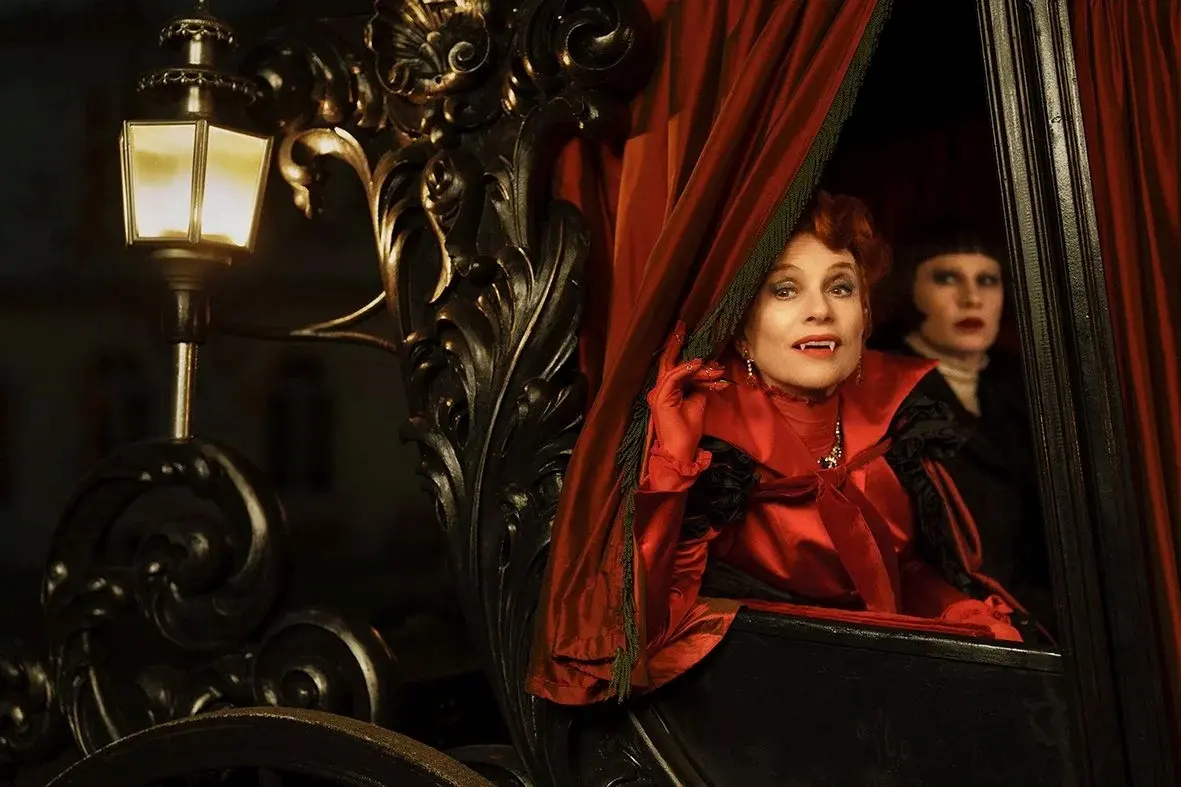
The film, directed by avant-garde filmmaker Ulrike Ottinger and featuring legendary French actress Isabelle Huppert, attempts to reimagine the life of Countess Elizabeth Bathory. Bathory, a Hungarian noblewoman from the 16th and 17th centuries, remains one of the most infamous figures in European history, accused of torturing and murdering hundreds of young women. While historical consensus often suggests the charges against her were politically motivated—designed to seize her vast estates—her legacy has persisted in pop culture as the quintessential vampire archetype.
Historical Context and Cinematic Legacy
The transition of Elizabeth Bathory from a historical figure to a staple of the horror genre is well-documented. Historical accounts, such as those by László Nagy, have argued that the allegations against the "Blood Countess" were a fabrication by the Palatine of Hungary, György Thurzó, to settle debts and neutralize a powerful political rival. Despite these academic debates, the legend of the woman who bathed in the blood of virgins to preserve her youth has fueled creative works for over a century.
In cinema, the character has appeared in various iterations, ranging from the gothic Hammer Horror style of the 1970s to contemporary slashers. Notable appearances include the 1971 film Countess Dracula and more recent genre-bending depictions. Ottinger’s The Blood Countess attempts to divert from the traditional "slasher" narrative, opting instead for a stylized, road-movie structure that incorporates elements of dark comedy and fantasy.
Production and Narrative Structure
The production centers on a modern, or perhaps timeless, iteration of Bathory. The narrative follows the titular character as she awakens from a prolonged dormancy, accompanied by her servant, Hermine, played by Birgit Minichmayr. The duo embarks on a quest to locate a mystical manuscript rumored to hold the cure for vampirism.
The journey is punctuated by a series of surreal encounters. Among the supporting cast is Thomas Schubert, who portrays Rubi Bubi, a vegetarian vampire whose character arc involves reconciling his vampiric nature with modern psychiatric norms. His interactions with a therapist, played by Lars Eidinger, serve as a meta-commentary on the genre’s tropes. Furthermore, the inclusion of drag icon Conchita Wurst highlights the film’s attempt to weave contemporary queer aesthetics into the historical framework of the Bathory legend.
![‘The Blood Countess’ Review: A Luscious But Disappointing Take on Lesbian Vampires [Fantastic Fest]](https://www.dreadcentral.com/wp-content/uploads/2026/10/The-Blood-Countess.jpg)
Critical Reception and Tonal Dissonance
Following its premiere at international film festivals, including a notable screening at Fantastic Fest, critical discourse surrounding The Blood Countess has focused on the disparity between its aesthetic ambition and its narrative execution.
The film relies heavily on "camp"—a sensibility characterized by irony, artifice, and exaggeration. While the visual presentation, including the elaborate costumes and ornate set pieces, has been praised for its high production value, many reviewers have noted that the film suffers from a lack of structural cohesion. The oscillation between traditional horror elements, musical interludes, and comedic character studies creates a fragmented experience for the audience.
Industry analysts observing the film’s release note that while Isabelle Huppert’s performance is universally cited as the production’s primary asset, her presence cannot entirely compensate for a script that struggles to define its target audience. The film, which maintains a deliberate distance from conventional horror pacing, often leaves viewers questioning whether the intent was a satire of the vampire genre or an earnest, albeit stylized, character study.
The Question of Queer Representation
One of the most anticipated aspects of the film was its exploration of the queer undertones frequently associated with the Bathory myth. Historically, the "lesbian vampire" trope has been a mainstay of horror cinema, often rooted in male-gaze-oriented exploitation.
Ottinger, a filmmaker known for her long-standing interest in gender identity and subversive narratives, was expected to provide a more nuanced take on this dynamic. However, observers have pointed out that the film remains somewhat conservative in its execution. While the film features instances of attraction and utilizes a queer aesthetic framework, it stops short of fully engaging with the radical potential of its subject matter. Critics have noted that for a film that ostensibly positions itself as a queer reimagining, the narrative restraint feels like a missed opportunity to subvert the heteronormative structures that have historically dominated vampire lore.
Institutional Implications and Market Placement
The release of The Blood Countess arrives at a time when the horror genre is experiencing a shift toward "elevated" or auteur-driven storytelling. Studios and independent distributors are increasingly backing projects that prioritize thematic depth and unique visual signatures.
![‘The Blood Countess’ Review: A Luscious But Disappointing Take on Lesbian Vampires [Fantastic Fest]](https://www.dreadcentral.com/cdn-cgi/image/width=788%2Cheight=444%2Cfit=crop%2Cquality=65%2Cgravity=auto%2Cmetadata=none%2Cformat=auto%2Conerror=redirect/wp-content/uploads/2026/10/The-Blood-Countess.jpg)
From a market perspective, the film is categorized within the "Festival/Events" sector, suggesting a targeted release strategy rather than a broad commercial play. This positioning is significant, as it acknowledges the film’s status as a niche, art-house endeavor. Its performance in international markets will likely depend on the strength of the "Huppert brand," as her global following remains a primary driver for the film’s visibility.
A Chronology of the Production
- Early 2025: Pre-production begins with the announcement of Isabelle Huppert’s casting, generating significant buzz within the European independent film circuit.
- Mid-2025: Principal photography commences across various European locations, utilizing the region’s historical architecture to serve as the backdrop for the film’s surreal aesthetic.
- Late 2025: Post-production efforts focus on the integration of the film’s musical segments and the intricate color grading required for its signature "gaudy" aesthetic.
- October 2026: The Blood Countess premieres at major genre festivals, sparking initial debates regarding the director’s departure from traditional horror tropes.
Analysis of Genre Hybridity
The challenges faced by The Blood Countess reflect a broader trend in contemporary filmmaking: the difficulty of balancing genre requirements with auteurist impulses. The "road movie" format inherently demands forward momentum and episodic character development, yet the film frequently pauses for atmospheric detours that, while visually striking, stall the narrative engine.
Data from recent audience sentiment analysis indicates that viewers who enter the theater expecting a traditional horror film are often left disoriented, while those anticipating a purely experimental art-house piece find the film’s commitment to "camp" to be inconsistent. This lack of a clear genre anchor is a recurring theme in the discourse surrounding the film’s distribution, as marketing teams struggle to categorize a project that functions as both a comedy and a period piece.
Conclusion: Aesthetics vs. Substance
Despite its shortcomings, The Blood Countess remains an object of interest for scholars of the genre and fans of Isabelle Huppert. The film functions as a visual catalog of Ottinger’s artistic sensibilities—a sprawling, often nonsensical, but undeniably beautiful endeavor.
While it fails to coalesce into a definitive or cohesive narrative, it serves as a testament to the enduring, malleable nature of the Elizabeth Bathory legend. The film proves that even centuries after her life (and alleged crimes) concluded, the "Blood Countess" remains a potent vessel for filmmakers to project their own visions of power, youth, and morality. Whether that vision succeeds as a complete story remains a matter of ongoing debate, but its contribution to the ongoing conversation about the role of the vampire in modern culture is, at the very least, a visually arresting addition. Future analyses of the film will likely emphasize its place in the broader canon of European avant-garde cinema, focusing on its visual language rather than its narrative success.