The transformation of Marion Robert Morrison into the cultural phenomenon known as John Wayne represents one of the most significant evolutions in the history of American cinema. Long before he was "The Duke," the man who would define the Western genre for half a century began his career in the humble positions of a prop boy and an extra. His transition to leading man status occurred under the direction of Raoul Walsh in the 1930 epic The Big Trail. In this production, Wayne portrayed Breck Coleman, a frontier scout seeking justice on the Oregon Trail. While the film was not a commercial success at the time of its release, it served as the foundational moment for an actor who would eventually appear in more than 170 feature films, establishing a screen persona characterized by a rigid moral code, physical presence, and a distinctively deliberate cadence of speech.
The Formative Years and the Birth of a Persona
Born in Winterset, Iowa, in 1907, Marion Morrison moved to Southern California as a child. His path to stardom was accidental; a bodysurfing injury ended his promising football career at the University of Southern California, leading him to seek work at the local film studios. It was during his time as a prop man and an occasional "goose herder" on film sets—a literal task involving the management of livestock for background shots—that he caught the attention of directors.
When Raoul Walsh cast him in The Big Trail, the studio executives at Fox Film Corporation felt that "Marion Morrison" lacked the gravitas required for a leading man in a pioneer epic. They settled on "John Wayne," a name inspired by Revolutionary War General "Mad" Anthony Wayne. Despite the rebranding, the failure of The Big Trail at the box office relegated Wayne to "B-movie" Westerns for nearly a decade. During the 1930s, Wayne honed his craft in dozens of low-budget productions, often playing the singing cowboy or the virtuous lawman. This period, while grueling, allowed him to develop the physical language of the cowboy—the rolling gait and the effortless handling of firearms—that would later become his trademark.
The Breakthrough: Stagecoach and the John Ford Partnership
The trajectory of John Wayne’s career changed irrevocably in 1939 with the release of Stagecoach. Directed by John Ford, the film is widely credited with elevating the Western from a "pulp" genre to a respected art form. Wayne’s entrance in the film—a dramatic zoom-in as he twirls a Winchester rifle—is regarded as one of the most iconic introductions in cinematic history. Portraying the Ringo Kid, an outlaw seeking to avenge his family, Wayne demonstrated a new level of screen presence that balanced ruggedness with a quiet vulnerability.
The collaboration between John Ford and John Wayne became one of the most prolific director-actor partnerships in Hollywood. Over several decades, they worked together on 14 films, including the "Cavalry Trilogy" (Fort Apache, She Wore a Yellow Ribbon, and Rio Grande). Ford famously remarked on Wayne’s evolution as an actor, noting that it was not until Wayne’s performance in Howard Hawks’ Red River (1948) that he realized the actor had truly mastered his craft. "I didn’t know the big son of a bitch could act," Ford reportedly stated after seeing Wayne’s portrayal of the obsessive cattle driver Thomas Dunson.
Psychological Complexity in the Post-War Era
As Wayne matured, his roles moved away from the straightforward heroism of his early career toward more psychologically fraught and morally ambiguous characters. This shift is most evident in the 1956 masterpiece The Searchers. Playing Ethan Edwards, a bitter Civil War veteran who spends years searching for his niece captured by the Comanche, Wayne delivered a performance that challenged the traditional image of the Western hero. Edwards was not a man of simple virtues; he was driven by prejudice and a self-tortured obsession that bordered on the villainous.
Similarly, in the 1962 film The Man Who Shot Liberty Valance, Wayne portrayed Tom Doniphon, a man who represents the "Old West" of individual justice and violence, forced to make way for the "New West" of law and literacy. The film served as a deconstruction of the Western myth, acknowledging that the civilization Wayne’s characters helped build ultimately had no place for men like them. This theme of the "obsolete hero" became a recurring motif in Wayne’s later work, reflecting both his own aging and the changing landscape of American cinema.
Statistical Dominance and Industry Impact
John Wayne’s impact on the film industry can be quantified through unparalleled statistical achievements. According to data from Quigley Publishing’s "Top Ten Money-Making Stars" poll, Wayne appeared on the list 25 times—a record that remains unsurpassed. Between 1949 and 1974, he was a near-constant presence in the top tier of box office draws, demonstrating a level of sustained popularity that few actors in any era have matched.
Furthermore, Wayne’s filmography is extensive. He is credited with over 140 leading roles, more than any other actor in Hollywood history. His influence extended beyond the Western genre; he found significant success in war films such as Sands of Iwo Jima (1949), for which he received his first Academy Award nomination, and The Longest Day (1962). His eventual Oscar win for Best Actor came in 1969 for his portrayal of the eye-patched, whiskey-soaked U.S. Marshal Rooster Cogburn in True Grit, a role that both celebrated and parodied his established screen persona.
Chronology of Major Career Milestones
- 1926–1929: Early work as a prop man and uncredited extra at Fox and Columbia Pictures.
- 1930: Debut as a leading man in The Big Trail.
- 1931–1938: The "Wilderness Years," appearing in approximately 60 low-budget Westerns and serials.
- 1939: Critical and commercial breakthrough in Stagecoach.
- 1948: Red River establishes him as a versatile dramatic actor.
- 1952: The Quiet Man showcases his range in a romantic comedy-drama set in Ireland.
- 1956: Release of The Searchers, often cited by critics as the greatest Western ever made.
- 1959: Rio Bravo highlights his ability to lead an ensemble cast in a "hangout" Western.
- 1960: Directs and stars in the historical epic The Alamo.
- 1969: Wins the Academy Award for Best Actor for True Grit.
- 1976: His final film, The Shootist, features him as an aging gunfighter dying of cancer—a poignant mirror of his own real-life battle with the disease.
Critical Analysis of the "Wayne Code"
The characters portrayed by John Wayne were almost universally governed by a specific set of ethics, often referred to as the "Wayne Code." This code prioritized individual responsibility, loyalty to one’s comrades, and a refusal to back down from a necessary confrontation. In Rio Bravo, his character, Sheriff John T. Chance, refuses help from anyone he deems "not good enough," emphasizing a meritocratic view of justice.
Critics have noted that Wayne did not merely play characters; he embodied a specific archetype of American masculinity. His roles often explored the tension between the rugged individualist and the requirements of an emerging society. While his earlier films presented this as a triumphant progression, his later collaborations with directors like Ford and Hawks offered a more elegiac view. The "Duke" became a symbol of a disappearing frontier, representing values that were seen as both essential to the nation’s founding and increasingly out of step with the modern world.
Broader Cultural Implications and Legacy
John Wayne’s influence transcends the boundaries of the film industry. He became a political and cultural icon, representing a brand of traditional Americanism that resonated deeply with mid-century audiences. His image was used by the U.S. military for recruitment and motivation, and he was posthumously awarded the Presidential Medal of Freedom in 1980 by President Jimmy Carter, who noted that Wayne "was bigger than life."
However, his legacy is not without complexity. In the decades following his death in 1979, modern audiences and historians have re-evaluated his work through the lens of contemporary social values. Discussions regarding the portrayal of Native Americans in his films and his own publicized political views have added layers of nuance to his historical standing. Despite these debates, Wayne remains a central figure in film studies, with his work analyzed for its contribution to genre theory, cinematography, and the myth-making of the American West.
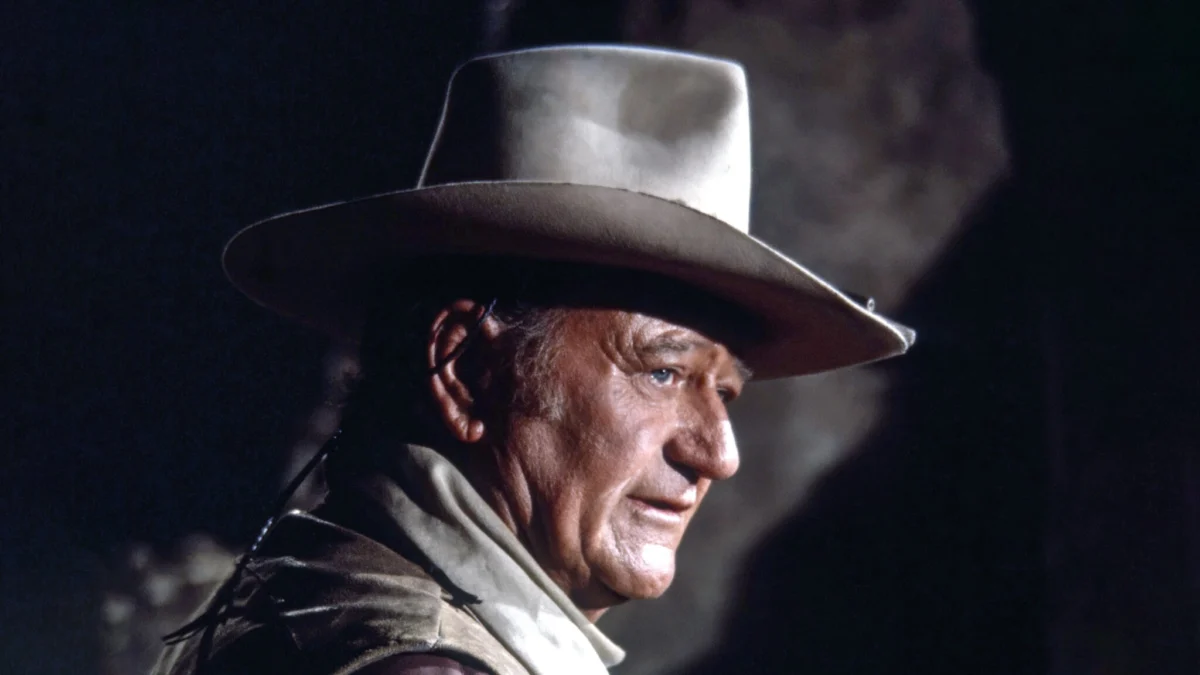
Today, the image of John Wayne—tilted hat, hand on holster, squinting into the desert sun—remains the definitive visual shorthand for the Western genre. His films continue to be broadcast globally, and his estate remains a significant entity in the licensing of his likeness, ensuring that "The Duke" remains a recognizable figure for new generations. From his start as Marion Morrison, the prop boy, to his status as a global icon, John Wayne’s career serves as a testament to the power of the cinematic image and the enduring appeal of the American frontier myth.