Isabella Schaub arrived in New York City with the same aspiration that has fueled generations of artists: the dream of a career in the performing arts. A 24-year-old recent college graduate with auburn hair and a background in soccer coaching and barista work, Schaub began the arduous process of building a resume through background work on film and television sets. In February, what appeared to be a monumental breakthrough arrived via email. A message ostensibly from Linda Lowy—the renowned casting director responsible for the ensembles of Grey’s Anatomy, Friday Night Lights, and Scandal—reached out to Schaub after purportedly discovering her profile on professional casting databases.
The correspondence followed a trajectory that mirrored a legitimate professional ascent. Lowy first requested a headshot for an undisclosed HBO Max series. When that was met with approval, a request for a monologue followed. Schaub submitted a recording of the coming-out speech delivered by the character Robin in Stranger Things, a performance the sender described as "compelling and assured." Within twenty-four hours, the ruse reached its climax: Schaub was offered a role on the critically acclaimed series Hacks. To finalize the deal, she was asked to sign a Non-Disclosure Agreement (NDA) and, crucially, to join the performers’ union, SAG-AFTRA.
The deception unraveled when Schaub was directed to a "union contract administrator" whose email address ended in "@contractor.net" rather than an official union domain. A quick verification call to the actual SAG-AFTRA office confirmed the fraud. The "administrator" eventually requested $3,000 in initiation fees to be paid via bank transfer, PayPal, or CashApp. Schaub’s experience, while personally devastating, is merely the tip of a sophisticated and growing iceberg of industry-specific fraud. For over half a year, a coordinated campaign of impersonation has targeted vulnerable actors, utilizing the names of Hollywood’s most elite casting directors to extract money and personal data.
The Anatomy of a High-Stakes Ruse
The current wave of scams targeting the entertainment industry is a refined version of traditional social engineering. Unlike the crude "Nigerian Prince" emails of the early internet era, these fraudsters demonstrate a nuanced understanding of the casting process. They target early-career actors who are often unrepresented by major talent agencies and are therefore more likely to handle their own professional correspondence.
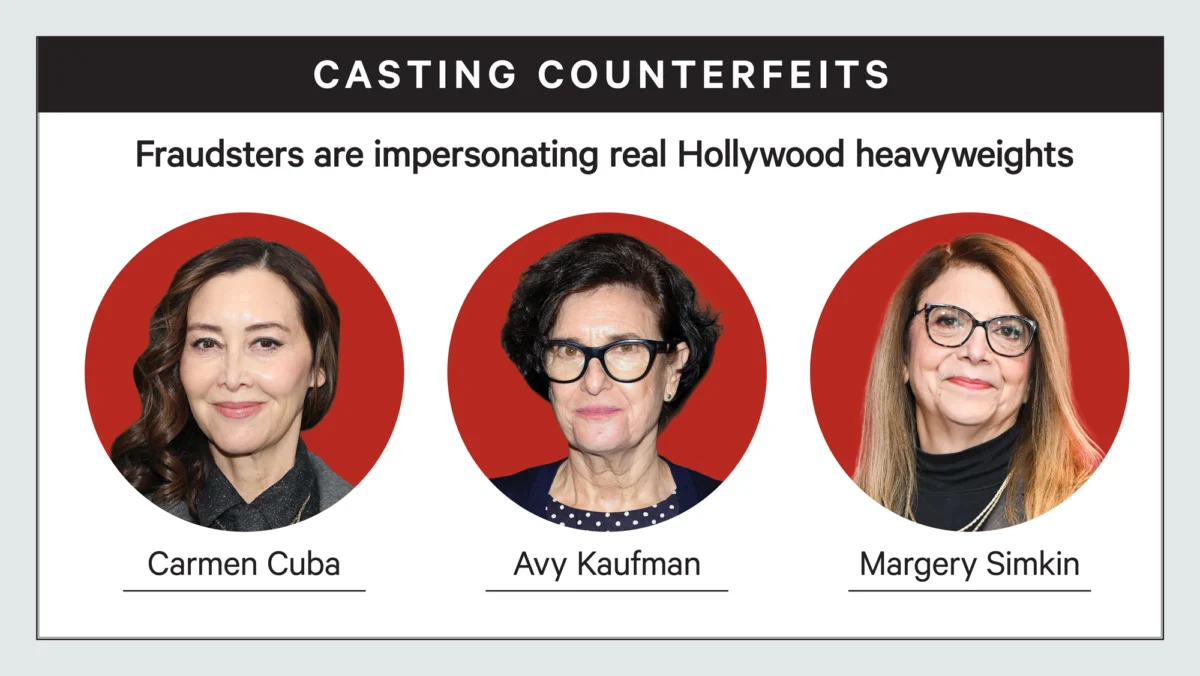
The scammers have impersonated a "who’s who" of casting royalty. Beyond the fake Linda Lowy, imposters have surfaced claiming to be Carmen Cuba (Stranger Things), Margery Simkin (Avatar), J.J. Ogilvy (The Good Doctor), Avy Kaufman (Succession), and Rachel Tenner (Severance). By using the names of directors associated with high-profile, "prestige" television and film, the scammers leverage the victim’s desire for a career-defining break to bypass their natural skepticism.
The process typically follows a four-stage chronology:
- The Hook: An email or social media message from a "casting director" expressing interest in the actor’s look or previous background work.
- The Audition: A request for materials, such as headshots, reels, or custom self-tapes. In some instances, the scammers provide specific "sides" (script excerpts) and offer constructive feedback to build a sense of professional legitimacy.
- The Offer: A congratulatory message informing the actor they have been cast in a major project, often accompanied by an NDA to justify the lack of specific project details.
- The Sting: The introduction of a "hitch"—usually a requirement to join a union or pay a "booking fee" or "insurance bond" before filming begins.
The Evolution of Casting in the Digital Age
The success of these scams is inextricably linked to the structural changes the entertainment industry underwent during the COVID-19 pandemic. Prior to 2020, the casting process was heavily centralized in physical offices in Los Angeles and New York. However, the pandemic forced a pivot to virtual auditions and "self-tapes," which have now become the industry standard.

Furthermore, the rise of "street casting"—the practice of finding non-professional actors on social media or in public spaces to provide authentic performances—has normalized the idea of a major casting director reaching out to an unknown talent directly. This shift has created a "new normal" where receiving a direct message from a high-level professional, while rare, is no longer viewed as an immediate red flag.
Liz Weinstein, an actress and model who has been targeted by multiple impersonators, notes that legitimate industry practices often overlap with the tactics of scammers. "A lot of the legitimate jobs do come off as scammy," she explains, citing the common use of NDAs and the initial withholding of project titles for high-profile productions. This ambiguity provides the perfect cover for fraudsters to operate.
AI and the New Frontier of Fraud
While many of the scams rely on polished text and corporate logos, the emergence of generative AI is adding a chilling new dimension to the threat. In a particularly sophisticated instance involving the impersonation of Avatar casting director Margery Simkin, the scammer utilized an AI-generated voice memo to "prove" their identity.
The audio, shared with industry investigators, featured a voice that closely mimicked Simkin’s cadence and tone, explicitly stating that the message was being sent to "clear the air" and prove the legitimacy of the offer. Simkin described the experience of hearing her own voice used in a fraudulent capacity as "creepy" and "distressing."
Fraud experts, including Mason Wilder of the Association of Certified Fraud Examiners, warn that the entertainment industry is an ideal target for AI-driven impersonation. High-profile figures have a massive "data footprint"—thousands of hours of interviews and public appearances that can be used to train AI models to replicate their voices and likenesses with startling accuracy.
Legal Protections and Industry Standards
In response to the proliferation of these schemes, legal experts and union officials are emphasizing the existing protections and standards that should serve as safeguards for actors. In California, the Krekorian Talent Scam Prevention Act explicitly prohibits talent representatives from charging upfront fees for services such as auditions or casting.
Furthermore, the "union fee" trap relies on a fundamental misunderstanding of how SAG-AFTRA operates. A performer cannot simply pay a lump sum to join the union. Membership is earned through "union-eligible" work on a covered project or through membership in an affiliated guild for a specific period. Any request for an initiation fee via a personal payment app like CashApp or PayPal is an immediate indicator of fraud.
Official responses have been swift but face the challenge of an ever-shifting digital landscape. The Casting Society (CSA) has established an anti-scam committee and a dedicated web page for reporting fraudulent activity. Tiffany Little Canfield, a prominent casting director and VP of Communications for the CSA, notes that the organization is working to educate both actors and educational institutions on how to spot these deceptions.

The Historical Precedent of the Hollywood Grifter
The current wave of digital impersonation is the modern iteration of a century-old phenomenon. Hollywood has always been a magnet for "hucksters" selling the promise of stardom. In the 1990s, a similar landline-based scam involved callers claiming to be casting directors offering roles in Canadian commercials, provided the actor wired a "waiver fee" of approximately $93.
The "Hollywood Con Queen" scam, which made international headlines in recent years, involved a single individual impersonating powerful female executives like Amy Pascal and Kathleen Kennedy to lure production professionals to Indonesia under the guise of work, only to fleece them for travel and logistics costs. The common thread across these eras is the exploitation of the "dreamer’s desperation."
Psychological Impact and the Reluctance to Report
The psychological toll on victims like Isabella Schaub is profound. The transition from the euphoria of a "big break" to the realization of a scam often results in feelings of naivety and embarrassment. This emotional fallout contributes to a significant underreporting of these crimes.
According to a 2025 Pew Research Center survey, approximately 75% of adults who lost money to online scams never reported the incident to the authorities. In the entertainment industry, where reputation is paramount, actors may fear that being "fooled" will make them appear unprofessional or "green" to legitimate employers.
Peter Warmka, a former CIA senior intelligence officer and founder of the Counterintelligence Institute, suggests that the number of victims is likely much higher than currently known. "There’s a pretty good percentage of people that have been scammed and don’t report it," he says, noting that the perpetrators rely on this silence to continue their operations.
Broader Implications for the Future of Talent Acquisition
The persistence of these scams suggests a need for a more secure, verified ecosystem for talent acquisition. As AI makes it easier to forge identities, the industry may need to move toward encrypted communication platforms or verified digital credentials to protect both casting professionals and performers.
For now, the advice from the Casting Society and SAG-AFTRA remains rooted in vigilance:
- Verify the Domain: Legitimate casting directors rarely use generic Gmail addresses for official union contracts; they use studio or production company domains.
- No Upfront Fees: Professional casting directors are paid by the production, not the actor. Any request for money is a red flag.
- Cross-Reference: Actors should use resources like IMDbPro, the CSA directory, and union offices to verify the identity of anyone reaching out with an offer.
As the timeless allure of Hollywood continues to draw thousands of hopefuls each year, the "Fake Linda Lowys" and "Fake Avy Kaufmans" of the digital world remain a stark reminder that in the search for a starring role, the most important performance is often the one where an actor plays their own best advocate.