A very courteous, yet undeniably passive-aggressive, skirmish has been unfolding across social media platforms recently, reigniting a long-standing debate among fans of The Devil Wears Prada. At the heart of this renewed discussion lies the question of which former Condé Nast veteran truly served as the inspiration for Emily Blunt’s scene-stealing character, Emily Charlton, the perpetually harried yet impeccably stylish first assistant to Miranda Priestly. This debate has gained particular traction as interest in the iconic film and its potential narrative continuations surges, bringing figures from the hallowed halls of Vogue back into the spotlight.
The Genesis of a Cultural Phenomenon: From Memoir to Mainstream
To fully appreciate the current debate, one must first delve into the origins and enduring legacy of The Devil Wears Prada. The story began with Lauren Weisberger’s 2003 best-selling novel, a thinly veiled roman à clef detailing her experiences as a personal assistant to a notoriously demanding fashion magazine editor. Weisberger herself had served as a second assistant to Anna Wintour, the formidable editor-in-chief of American Vogue, in 1999. Wintour, known for her icy demeanor, distinctive bob haircut, and unwavering influence over the global fashion industry, quickly became synonymous with the novel’s tyrannical editor, Miranda Priestly.
The novel offered a tantalizing glimpse behind the velvet ropes of the fashion world, captivating readers with its blend of glamour, cutthroat ambition, and the sheer absurdity of high-stakes editorial demands. Its success paved the way for the critically acclaimed 2006 film adaptation, starring Meryl Streep as Miranda Priestly, Anne Hathaway as Andrea Sachs (the wide-eyed second assistant), and Emily Blunt as Emily Charlton, the world-weary first assistant. The film grossed over $326 million worldwide on a $41 million budget, cementing its status as a cultural touchstone and amplifying the public’s fascination with the real-life inspirations behind its memorable characters. Its impact transcended mere box office success, permeating pop culture through iconic quotes, GIF-able moments, and a lasting influence on how the fashion industry is perceived by the mainstream. The film’s enduring popularity continues to fuel discussions, memes, and a persistent yearning for a cinematic sequel, which periodically resurfaces in entertainment news cycles.
The Emily Charlton Conundrum: A Battle for the Narrative
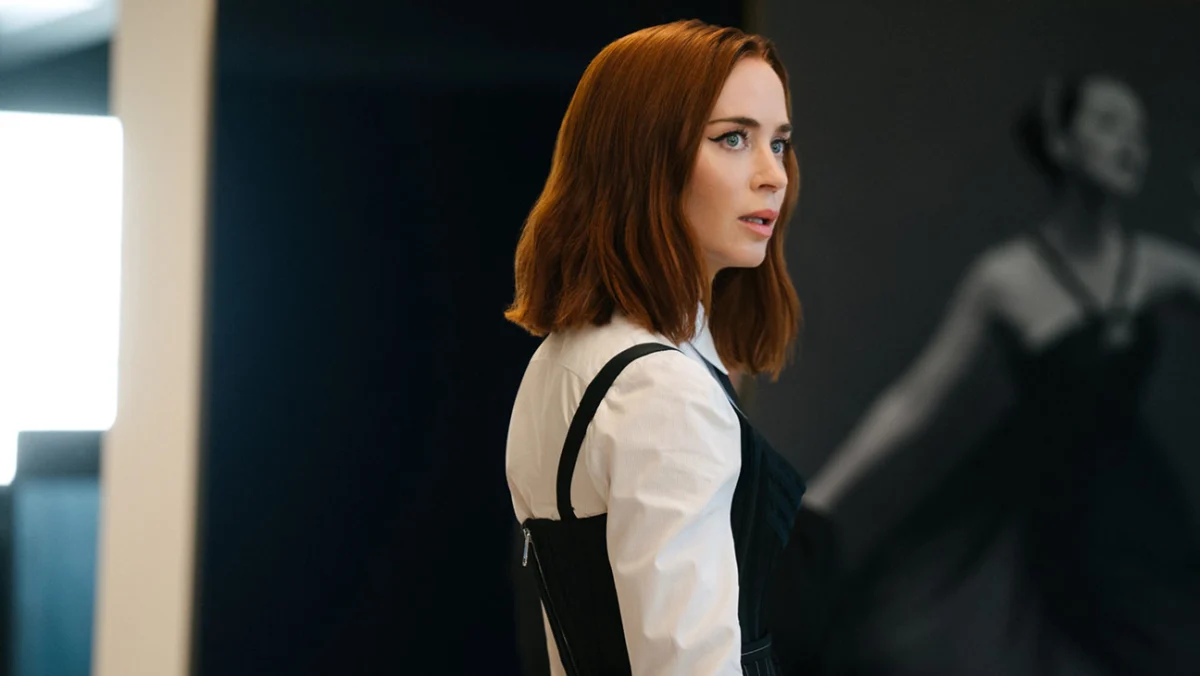
The character of Emily Charlton, with her withering glances, blunt pronouncements, and unwavering dedication to her impossible job, quickly became a fan favorite. Her return in the novel’s sequel, Revenge Wears Prada, and the ongoing discussions about a potential film continuation, have intensified the speculation about her real-life counterpart. Two prominent figures from Anna Wintour’s past Vogue office have recently stepped forward, implicitly or explicitly, to claim the "Emily mantle."
In one corner is celebrity stylist Leslie Fremar, who indeed served as Anna Wintour’s first assistant at Vogue in 1999—the very same year Lauren Weisberger was the second assistant. Fremar, now a highly successful stylist to stars like Julianne Moore and Charlize Theron, recently addressed the long-standing speculation on Vogue‘s own podcast, "The Run-Through." During her appearance, Fremar openly acknowledged the strong parallels between her experiences and those depicted in Weisberger’s novel. "It was really based off a lot of things that, you know, I lived, she lived," Fremar stated, referring to the shared ordeal of working under Wintour. She further admitted, with a candor that surprised some, that much like the Emily Charlton portrayed by Emily Blunt, she was "not very nice" to Weisberger during their time together. This admission aligns perfectly with the film’s depiction of Emily Charlton’s initial frosty reception of Andrea Sachs, lending significant weight to Fremar’s claim as the primary inspiration. Her direct tenure in the role, coinciding precisely with Weisberger’s, provides a compelling chronological link.
However, the internet, ever a hotbed of speculation and competing narratives, bristles with an alternative theory. Many online observers suggest that Jill Demling, Vogue‘s longtime entertainment director-turned-casting director, is the true inspiration for Emily Charlton. The evidence for Demling’s claim centers on a crucial piece of internal Vogue history: Demling held the position of Wintour’s first assistant before Fremar. In fact, it was Demling who hired Fremar to replace her when she transitioned to a new role within the magazine. This pre-Fremar tenure suggests Demling set the precedent for the demanding, high-pressure environment that defined the first assistant’s role. Demling was reportedly known for being even more stringent and less accommodating to the other assistants than her successor. "I was kind of strict in the way I ran [Wintour’s] office," Demling recently recounted to The Daily Mail, further reinforcing her reputation for an uncompromising work ethic. She even added a telling anecdote: "Leslie even said she was intimidated to take my job because of how I ran the office." This detail paints Demling as the original, perhaps even more formidable, template for the "Emily" persona.
Strategic Ambiguity and the Public Eye
Interestingly, Demling has not overtly laid claim to the "Emily mantle" in the same direct manner as Fremar. Instead, her approach has been one of strategic ambiguity, subtly distancing herself from direct assertions while undoubtedly benefiting from the surge of publicity such speculation affords. On her own podcast, "Going Rogue," Demling notably released a roundtable discussion featuring former Vogue assistants, including Leslie Fremar. This episode, timed amidst a surge of renewed public interest and discussions surrounding a potential "Prada 2" continuation of the narrative, created a direct platform for the debate. During this discussion, Demling publicly acknowledged Fremar as the "real Emily," a seemingly magnanimous gesture that simultaneously highlights her own proximity to the story and her role in shaping the environment.
Demling has also engaged with the speculation on social media, using platforms like Instagram to clarify her stance. In one post, she wrote, "No quotes about ‘I’m the real Emily’ – because I never actually said that." This carefully worded statement allows her to participate in the conversation without definitively committing, maintaining a degree of plausible deniability while keeping her name firmly associated with the popular narrative. This calculated approach exemplifies the nuanced way public figures navigate their connection to fictionalized portrayals, balancing the allure of recognition with the desire to control their own story.
Beyond Emily: Other Characters and Their Real-Life Echoes
The debate over Emily Charlton’s inspiration is just one facet of the broader fascination with the real people behind The Devil Wears Prada‘s beloved characters. The film’s supporting cast, equally memorable, has also sparked years of speculation regarding their real-life counterparts.
One such character is Nigel Kipling, played with flamboyant wit and poignant vulnerability by Stanley Tucci. Nigel, Miranda Priestly’s closest confidante and artistic director, is a figure of immense talent and often serves as Andrea’s mentor within the cutthroat world of Runway. For years, rumors have swirled that longtime Vogue editor William Norwich is the true inspiration for Nigel. Norwich has openly embraced this association, recounting how it has become a staple of his introductions: "When I’m introduced to people now, someone will say, ‘This is Billy — he’s the guy in The Devil Wears Prada. He’s the real Stanley Tucci,’" he once shared with an interviewer. Norwich acknowledges the similarities, stating, "There are certainly similarities. I was a very caring, avuncular person at Vogue." He even playfully noted the unexpected benefits of this cinematic connection, adding, "It was a huge boon to my sex life." This candidness from Norwich adds a layer of personal endorsement to the public’s perception.
However, William Norwich’s claim to Nigel is not entirely unchallenged. Veteran fashion editor Paul Cavaco is also frequently cited as a potential inspiration for the character. Cavaco, known for his sharp wit and deep industry knowledge, has publicly disavowed any direct correlation, instead offering his own theory. He believes Nigel is based on "a combo of Billy Norwich and Vogue writer Hamish Bowles." Bowles, Vogue‘s international editor-at-large, is renowned for his encyclopedic knowledge of fashion history and his distinctive personal style, making him a plausible component of a composite character like Nigel. This suggests that some characters may not be drawn from a single individual but rather an amalgamation of traits and anecdotes observed from multiple people within the industry.
And then, of course, there is Miranda Priestly herself. Meryl Streep’s masterful portrayal of the icy editor earned her an Academy Award nomination and solidified Miranda’s place as one of cinema’s most iconic antagonists. While the character is widely believed to be a direct caricature of Anna Wintour, Streep has, on several occasions, attempted to distance her performance from a direct imitation. She has claimed to have based Miranda more on various male directors she’s worked with throughout her illustrious career, rather than specifically on Wintour. "I based her on people I’ve worked with, directors who are very specific, very demanding, and very clear," Streep once stated. Despite Streep’s efforts to broaden the inspiration, the public, and indeed the fashion industry, largely remains unconvinced. The striking visual parallels, from the signature bob to the ever-present sunglasses, combined with the anecdotal evidence from Weisberger’s book, make it virtually impossible for most to separate Miranda Priestly from Anna Wintour. Probably not even Anna Wintour herself believes Streep’s denial, as the character has become inextricably linked to her public persona.
The Allure of Authenticity: Why These Debates Matter
The enduring public fascination with the real-life inspirations behind The Devil Wears Prada speaks volumes about our collective appetite for authenticity, even within the realm of fiction. In an age saturated with celebrity culture and curated online personas, stories that promise a "behind-the-scenes" look at powerful figures and glamorous industries hold an irresistible appeal. These debates blur the lines between reality and art, allowing audiences to feel closer to the world they consume on screen.
The resurfacing of these discussions, particularly around the Emily Charlton character, is also strategically timed. The rise of podcasts as a platform for intimate storytelling provides an ideal medium for these former Condé Nast employees to share their perspectives directly. It allows them to control their narratives, offer their side of the story, and leverage their past experiences for contemporary relevance and, in some cases, personal branding. The renewed interest in the Prada universe, whether through discussions of sequels or nostalgic re-evaluations, provides a perfect cultural moment for these individuals to gain renewed visibility and capitalize on their connection to a beloved story.
The Business of Inspiration: Podcasts, Publicity, and Personal Brands
For Leslie Fremar and Jill Demling, engaging in this "skirmish" is more than just settling an old score; it’s a savvy move in the landscape of personal branding and media. Fremar’s appearance on Vogue‘s podcast, an official Condé Nast property, lends her claim a certain institutional imprimatur, while simultaneously promoting her ongoing career as a stylist. Demling, through her own podcast, Going Rogue, and her carefully crafted social media presence, leverages the Prada connection to draw listeners and cultivate her own brand as an industry insider with unique insights. The timing of her roundtable with former assistants, coinciding with heightened Prada interest, is a clear example of strategic content creation.
This interplay between fiction and reality highlights how powerful cultural narratives can become assets for individuals long after their initial creation. The "real-life" connections provide a continuous stream of engagement, ensuring that The Devil Wears Prada remains not just a film, but a living, breathing part of pop culture history, continually re-evaluated and re-contextualized by those who claim to have inspired it.
Looking Ahead: The Continued Saga of Fashion’s Fictionalized Truths
As long as The Devil Wears Prada continues to resonate with audiences, the debates over its real-life inspirations are likely to persist. Each new podcast, interview, or social media post from a former Vogue employee will undoubtedly add another layer to the complex tapestry of truth and fiction that defines this cultural phenomenon. These ongoing discussions not only provide entertainment but also offer valuable insights into the power dynamics, personal sacrifices, and often absurd demands that characterize elite industries like fashion. The enduring appeal lies not just in the glamorous façade, but in the human stories — the struggles, the ambitions, and the indelible personalities — that continue to shape our understanding of what it truly means to survive and thrive in a world where the devil, indeed, wears Prada.