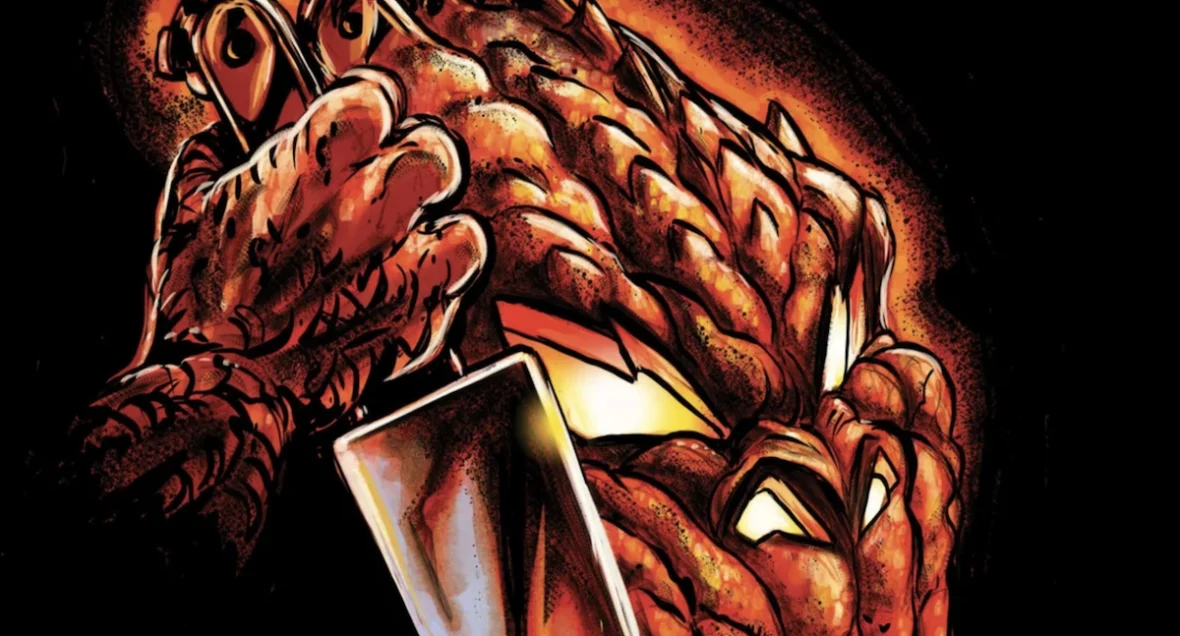
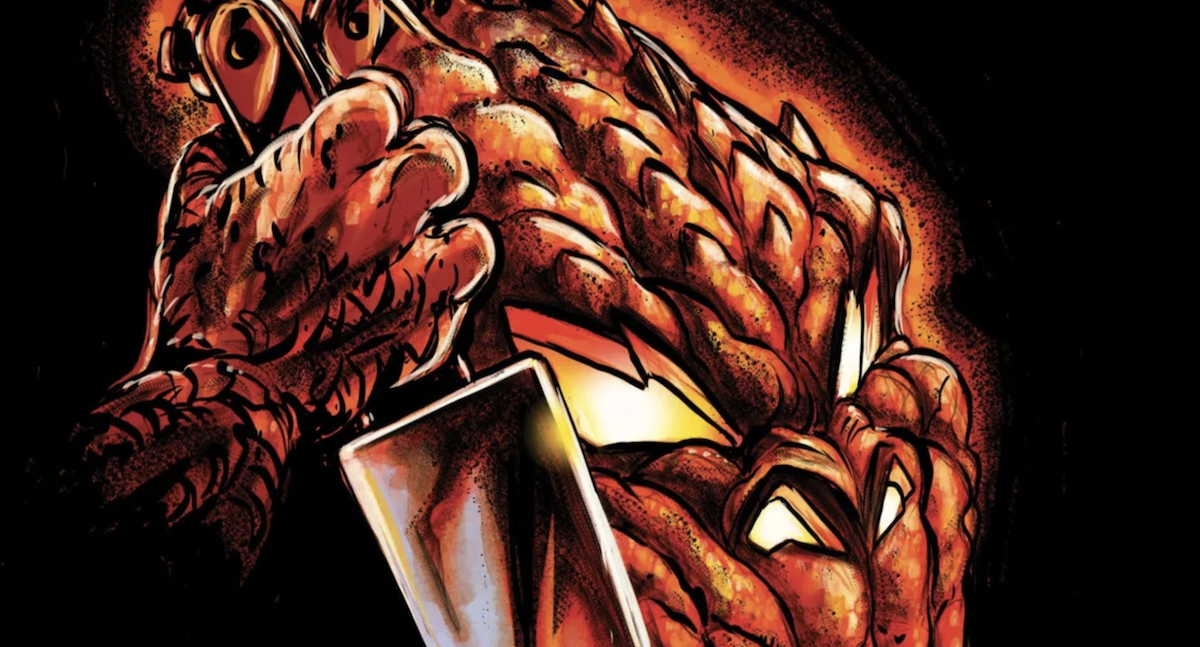
Publisher IDW Publishing has unveiled a striking new variant cover for its upcoming comic series, The Horror of Godzilla #1, that pays a direct and unmistakable homage to John Carpenter’s iconic 1978 slasher film, Halloween. This artistic choice, illustrated by Tunica, reimagines one of cinema’s most enduring horror posters through the formidable lens of Toho’s legendary kaiju, Godzilla. The variant cover, designated as Variant B, positions the King of the Monsters as the terrifying antagonist, mirroring the chilling presence of Michael Myers from the original Halloween poster. This artistic direction signals a significant thematic shift for the Godzilla comic franchise, emphasizing its primal horror roots rather than its more recent portrayal as a destructive, albeit sometimes heroic, force.
The Halloween homage cover is a key component of IDW Publishing’s ambitious "Kai-Sei Era" initiative. This new chapter in the Godzilla comic universe is explicitly designed to delve into the creature’s terrifying origins, moving away from narratives that have often cast Godzilla as an antihero or a protector of Earth against even greater threats. The choice to evoke the visceral fear associated with Halloween suggests a deliberate effort to reintroduce the sheer terror that Godzilla represented in his debut.
A Return to Primal Fear: The Kai-Sei Era Initiative
The Kai-Sei Era initiative represents a deliberate pivot in the long-standing Godzilla comic narrative. For decades, Godzilla has been a complex figure in popular culture. Initially conceived in 1954’s Godzilla as a terrifying allegory for nuclear destruction, the monster’s portrayal has evolved considerably. Films and comics have explored his role as a force of nature, a misunderstood titan, and even a reluctant protector against other kaiju. However, the Kai-Sei Era, as exemplified by The Horror of Godzilla #1, aims to strip away these later interpretations and return to the unadulterated terror of his first appearance. This approach aligns with recent critical and commercial successes like Godzilla Minus One and Shin Godzilla, which have successfully revitalized the monster’s terrifying persona by focusing on human vulnerability and the overwhelming destructive power of the kaiju.
The synopsis for The Horror of Godzilla #1 offers a glimpse into this darker, more visceral storytelling: "A terrifying look at Godzilla’s first attack! Tokyo, 1954. As the country begins to look toward its postwar future, two scientists start an experiment in the Pacific Ocean. It is meant to change everything… and it will. Come now, reader, and bear witness to the incredible horror of the King of the Monsters. There are no heroes. There are no survivors. There is only the wrath of Godzilla." This narrative framing explicitly rejects any notion of heroic intervention or survival, positioning Godzilla as an unstoppable force of destruction, echoing the existential dread that defined his initial cinematic outing.

Chronology and Context: The Genesis of Terror
The genesis of Godzilla in 1954 was deeply rooted in the post-World War II anxieties of Japan. The bombings of Hiroshima and Nagasaki, coupled with the fallout from American nuclear testing, created a potent cultural backdrop for a story about a monstrous creature born from nuclear radiation. The original film, directed by Ishirō Honda, was not merely a monster movie; it was a powerful anti-nuclear statement and a somber reflection on the devastating consequences of human hubris. The Horror of Godzilla #1, as a four-issue standalone miniseries, serves as a prequel to the broader Kai-Sei Era continuity. Its setting in "Tokyo, 1954," precisely mirroring the original film’s debut year, is a strategic choice. This allows the creators to revisit the moment of Godzilla’s emergence and explore the sheer terror and chaos of his initial rampage, offering a perspective that has been largely unexplored in detail within the comic medium.
The series is positioned as essential reading for fans of recent critically acclaimed Godzilla projects, including Godzilla Minus One and Shin Godzilla, as well as the original 1954 film. This recommendation highlights the thematic continuity the Kai-Sei Era seeks to establish, emphasizing a return to the creature’s terrifying essence that resonated so strongly with modern audiences in these recent productions.

Creative Team and Vision
The creative team behind The Horror of Godzilla #1 brings a wealth of experience in horror and genre storytelling. The miniseries is penned by writers Griffin Sheridan and Ethan S. Parker, known for their work on titles such as Marvel Zombies and Kill Your Darlings. Their pedigree in crafting unsettling narratives and exploring darker themes is expected to translate effectively to the horror-centric approach of this Godzilla series.
The artwork for the series is helmed by veteran horror illustrator Tristan Jones. Jones has a distinguished history in the genre, with previous credits including work on comics based on influential horror properties like Event Horizon and the Aliens franchise. His expertise in rendering atmospheric dread, visceral action, and creature design is a crucial asset for a series aiming to redefine Godzilla as a pure horror antagonist. The visual language established by Jones is expected to be a significant factor in conveying the unadulterated terror promised by the series’ premise.

A New Perspective on Destruction
According to IDW Publishing, The Horror of Godzilla aims to immerse readers directly into the chaos of Godzilla’s initial assault. The series promises a ground-level perspective, placing the audience amidst the destruction and panic experienced by ordinary citizens and authorities. This approach offers a stark contrast to many previous Godzilla narratives, which often focus on military responses or the strategic movements of the kaiju from a distance. By emphasizing the human experience of encountering such an overwhelming force, the series intends to amplify the horror and the sense of helplessness that Godzilla’s first rampage inflicted upon Tokyo.
The explicit statement that "There are no heroes. There are no survivors. There is only the wrath of Godzilla" is a bold declaration of intent. It suggests a narrative that eschews conventional storytelling tropes and embraces a bleak, uncompromised vision of destruction. This aligns with the foundational themes of the original film, which served as a powerful metaphor for the devastating impact of nuclear warfare and the fragility of human civilization in the face of overwhelming destructive power.

Availability and Preorder Information
The Horror of Godzilla [Kai-Sei Era] #1 Variant B (Tunica Movie Homage Cover) is currently available for preorder. The cover price for this issue is set at $4.99. Comic shops are scheduled to receive the issue on July 29, 2026. This release date places the series firmly within the broader publishing schedule for the Kai-Sei Era, allowing fans to anticipate a wave of new Godzilla stories that delve into his darker, more terrifying aspects. The availability of multiple variant covers, including the Halloween-inspired one, suggests IDW’s strategy to appeal to both dedicated Godzilla fans and a wider audience interested in horror and iconic pop culture crossovers. The inclusion of a direct homage to a foundational horror film like Halloween is a clear indicator of the publisher’s marketing strategy, leveraging the recognition and inherent fear associated with Carpenter’s masterpiece to draw attention to Godzilla’s terrifying resurgence.
The broader implications of the Kai-Sei Era and the Halloween homage cover extend beyond just a single comic series. It suggests a potential re-evaluation of how Godzilla is presented across all media. If this initiative proves successful, it could influence future film and television adaptations, encouraging a return to the monster’s origins as a symbol of primal fear and ecological disaster. The success of Godzilla Minus One has already demonstrated a strong audience appetite for a more serious and terrifying portrayal of the character, and IDW’s comic line appears to be capitalizing on this renewed interest. By tapping into the legacy of classic horror, The Horror of Godzilla #1 is poised to offer a chilling and unforgettable reading experience, reminding audiences why the King of the Monsters remains one of cinema’s most enduring and terrifying icons.