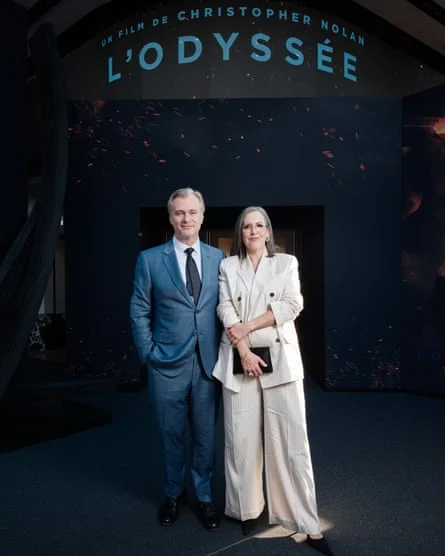
"I’m in that moment of sheer terror," says Christopher Nolan, perched in a London hotel suite, a pot of tea his sole companion on the eve of his most ambitious undertaking yet. The air crackles with anticipation, not just for the world premiere of his latest cinematic opus, but for the fate of a $250 million adaptation of Homer’s ancient epic, The Odyssey. This is not merely another film; it’s a colossal gamble, a testament to Nolan’s singular vision and a bold challenge to the very landscape of blockbuster filmmaking. The success of this venture, shot over six months across six continents in IMAX, hinges on the collective embrace of a global audience, a prospect that visibly weighs on the director.
Nolan, known for his meticulously crafted narratives and his deep-seated commitment to the theatrical experience, articulates a philosophy that has defined his career: "I make films for audiences, and the audience tells me what it likes. They finish the film." This sentiment underscores his direct engagement with the cinematic contract, a contract where his creative endeavors are ultimately validated by public reception. He admits, "I don’t have anything to hide behind. I can’t just be like: ‘Oh, people don’t get it.’ Those aren’t the films I make." The crucial questions, for Nolan, remain stark: "What does the audience make of it? Do they turn up? Do they like it if they do turn up?"
This inherent vulnerability, he believes, is a crucial component of artistic integrity. "By the way, I don’t think I’d be doing my job right if I wasn’t petrified every time I put a film out, because you’re trying to challenge yourself, you’re trying to take risks."

Yet, on this particular day, a palpable sense of ease seems to emanate from Nolan, a stark contrast to the "sheer terror" he professes. In his two decades of interviews, Nolan has cultivated an aura of cautious amiability, a master of discussing his work without revealing personal depths. He once described himself as "the most accessible reclusive director in America," a paradox that often made interviews feel akin to extracting intelligence from a seasoned spy. However, the seven Academy Awards bestowed upon Oppenheimer, coupled with the sheer exhaustion of completing The Odyssey, a production that spanned continents and demanding logistical feats, appears to have fostered a newfound openness.
A significant contributing factor to this perceived thaw might be the recent addition to his family: Charlie, a chocolate Labrador. Acquired with his wife and producing partner, Emma Thomas, after their youngest child left home, Charlie has brought a new dimension to their lives. "They’re all off in the world," Nolan reflects, referring to his children. "We’ve got a dog, and then I decided to make The Odyssey because it’s the ultimate dog movie." This is not a flippant remark; the presence of a loyal canine companion is intrinsically woven into the narrative of The Odyssey, a detail Nolan found particularly compelling. "I never had a dog as a kid, and we never got a dog when the kids were younger because we travelled too much," he explains. "They’re a bit fed up that we got one as soon as they left, although they love the dog." The ancient epic, he notes, features Odysseus’s reunion with his faithful hunting dog, Argos, a poignant moment of recognition after two decades of absence. A glimpse of a puppy, presumably young Argos, in the film’s trailer, was a deliberate and cherished addition for Nolan.
The genesis of The Odyssey is inextricably linked to the monumental success of Oppenheimer. The greenlighting of this colossal project by Universal Pictures, under the purview of Donna Langley, and its solidification following Nolan’s Best Director Oscar win – a moment he describes as collapsing "in his arms like a runner crossing the finish line" after a congratulatory embrace from Steven Spielberg – provided the fertile ground for this audacious adaptation. "I thought: OK, I’ve now got an opportunity to make a film that I wouldn’t be able to make otherwise," Nolan states.
Emma Thomas provides a pragmatic perspective, emphasizing the crucial role Oppenheimer‘s triumph played in securing the backing for The Odyssey. "I don’t think there’s any world we could have gone to a studio and said: ‘We want to adapt a 2,700-year-old poem,’ and that be an automatic huge movie," she explains. "We were asking for a big budget to do it. That would not have happened without Oppenheimer."
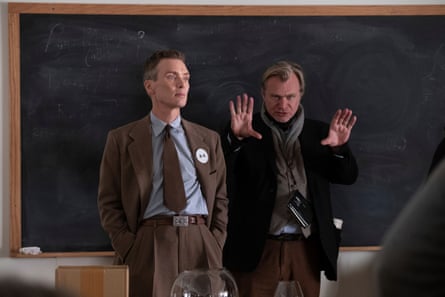
The extensive awards campaign for Oppenheimer, which spanned nine months, meant Nolan could not begin writing The Odyssey until April 2024. However, this delay proved to be a period of deep, long-distance rumination on the film’s structure, a process that began the moment he revisited the poem he had first encountered in primary school. Nolan observes, "I’ve spent many years in hotel rooms like this talking about the non-linear structures of my film as if it was so radical, and then you go back to the oldest foundational literary text and it’s got an absolutely radical structure. It’s stories within stories, it’s flashbacks within flashbacks. And that immediately was exciting." This realization underscores a recurring theme in Nolan’s work: the exploration of complex narrative frameworks, a technique he finds mirrored in the very foundations of storytelling.
A Monumental Production: The Making of The Odyssey
The production of The Odyssey is being described by those involved as the most challenging of their careers, a sentiment echoed by Emma Thomas. "Like making seven ambitious movies in one," she quips, hinting at the sheer scale and complexity of the endeavor. The production traversed vast and varied landscapes, from scorching deserts to towering mountains and icy Arctic terrains. Reaching filming locations often involved arduous journeys by helicopter or lengthy hikes, pushing the boundaries of logistical planning.
The cinematography team, led by Hoyte Van Hoytema, faced the immense task of transporting 300-pound IMAX cameras – roughly the weight of a small refrigerator – across rugged terrain where simply getting the crew to set was a daily hurdle. "At the end of each day, the heads of department would have dinner and then we’d collapse into a screening room to watch dailies," Thomas recounts. "Every time you would get through one challenge, you’d think: oh my God, we did it. And then you’d think: oh no, next week we’ve got a whole other thing to deal with. It was just the relentlessness of the challenges that were posed."
Nolan’s commitment to practical filmmaking, a hallmark of his directorial style, undeniably amplified these challenges. His preference for real locations over soundstages, for "in-camera" effects over digital manipulation, and his reliance on IMAX – a format demanding precise execution due to its three-minute shooting limitations and the sheer physical presence of its cameras – transformed the gruelling shoot into an experience far beyond a typical film production. The tumultuous seas that characterized the filming of Dunkirk seem almost tranquil in comparison to the relentless demands of The Odyssey.
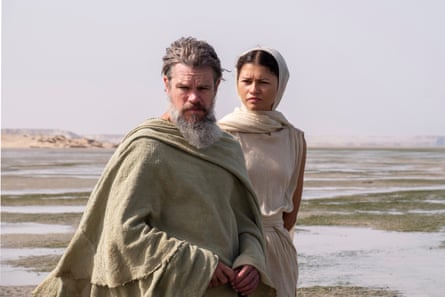
However, Nolan is quick to distance the production from any sense of self-inflicted suffering. "It’s really not," he insists when asked if difficulty was the point. "The more we talk about it, the more it feels like it was a some sort of Herzogian ordeal, but that’s really not my bag. In truth, it’s just about The Odyssey. You need things that you haven’t seen before. I get bored on sound stages and sets, not because I wouldn’t want it to be difficult. It’s because nature and the real world gives you a scale and a set of options and serendipity that you can’t achieve in the studio. But yeah, it was daunting physically, and there were times where I felt like maybe I’d bitten off more than I could chew."
The mental strain, however, was a constant companion. Nolan admits that his sleepless nights were not typically on set, but rather on Sunday evenings, poring over the script and the week’s schedule. "I sleep well because I get exhausted," he says, "but come Sunday, I’d get a chance to read the script again and look at the schedule for the week ahead. I’d go: ‘Oh shit, how the hell am I going to do that week?’ and that keeps me up often at times all night, Sunday night, just not able to sleep. So I come to set frazzled, the next day, but I was prepared. I had a way out."
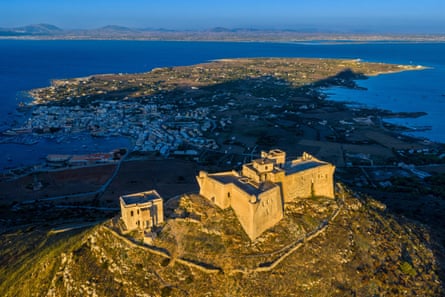
One particularly memorable location that tested the resolve of cast and crew was the clifftop ruins of Castello di Santa Caterina on the Sicilian island of Favignana, chosen to represent Odysseus’s home island of Ithaca. Reaching this site daily involved a 45-minute ascent up a challenging, stony path. Nolan recalls, "That loomed very large over me knowing that we were going to be in that situation, but we got such a great spirit from the cast and crew. You’ve got Tom Holland bounding up this path like a gazelle, making me feel very old and tired, but as an example to everybody, he was just in there." This dedication from the cast, epitomized by Holland’s energetic commitment, fostered a strong sense of camaraderie.
The culmination of this arduous journey was marked by a profound sense of shared experience. On the final day of filming at Universal Studios in Los Angeles, after wrapping around 1 a.m., Thomas and Nolan typically open champagne to mark the end of a production. "On this one, I think this was the first time we’d done that and it really felt like nobody wanted to leave," Thomas shares. "It was like we were totally trauma-bonded. You want to carry on, jump out of the plane again." This "trauma bonding" suggests a deep emotional connection forged through shared adversity and triumph, a testament to the unique spirit of the production.
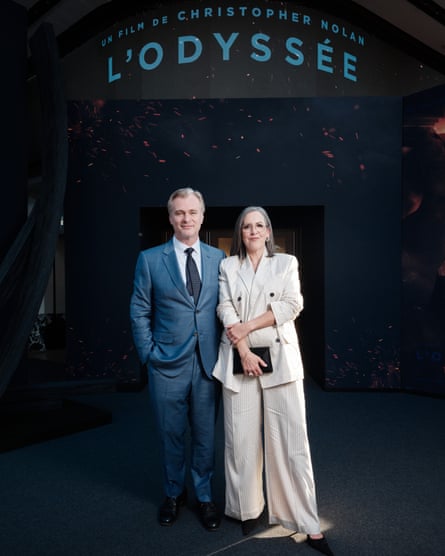
Navigating Cultural Currents and Reimagining Iconic Roles
Even before its release, The Odyssey has become a focal point for cultural discourse, particularly concerning the casting of Lupita Nyong’o as Helen and Elliot Page as Sinon. Homer’s epic, often interpreted as a foundational text celebrating male valor, has been embraced by certain cultural conservative factions as a bulwark against perceived "woke" ideologies. This has led to commentary such as, "Homer’s Odyssey is in, gender studies is out."
Ironically, Nolan’s adaptation presents a powerful ensemble of female characters, arguably his strongest to date. In his vision, figures like Helen, Penelope, Circe, Athena, and Calypso transcend their traditional roles as mere prizes, temptations, or divine interventions. Instead, they are portrayed as fully realized individuals, brought to life through compelling performances.
"In the text, they’re icons," Nolan explains. "The problem is that there’s not so much to them beyond these ideals in whatever form they take. What I love about what the women in this movie have done is they give you a sense of the person behind the icon." He elaborates on the impact of specific performances: "Watching Lupita as Helen, you suddenly have some sense of what it would actually be like to be the catalyst for this huge war and siege – what that would mean, what that would do to a person. And then Anne [Hathaway] as Penelope – very strong, very nuanced."
This depth, Nolan emphasizes, is cultivated through collaborative dialogue with the actors, rather than being strictly dictated by the script. "I’ve been on enough sets to know that horrible moment where, as the writer-director, you’re asked that question you can’t answer. And you have to have an answer. There might be a planned ambiguity – the way Anne’s played Penelope, I almost didn’t want to know what she had in her head – but yeah, you have to be on your toes." This approach highlights Nolan’s belief in the actor’s interpretive power and the collaborative nature of cinematic creation.
The Unavoidable Restlessness of a Master Storyteller
For Christopher Nolan, the cycle of creation is an intrinsic part of his being. As The Odyssey embarks on its global premiere tour, from Mumbai to London, and prepares for an anticipated awards season run, the director’s mind is already beginning to stir with the prospect of his next project. "The first signs are probably about a week after he’s had nothing to do, he starts to get really antsy," his wife, Emma Thomas, observes. "That’s when he’ll begin to really home in on: ‘OK, I need to do something.’"
This inherent restlessness, this drive to create, is what has propelled him from the intricate puzzles of Memento to the cosmic scope of Interstellar and the historical weight of Oppenheimer. It’s the same force that, in a way, led him to The Odyssey. However, the demands of launching such a monumental film, coupled with the inevitable awards campaign, suggest that a period of extended respite is unlikely in the immediate future.
"I’m so desperate to have a period I have nothing to do," Nolan admits, a statement tinged with a familiar urgency. "It feels so long since I had a time like that. It’s true – I get bored very quickly, and that’s one of the reasons I like to go back to work. I get restless." He pauses, then concludes with a simple yet profound aspiration: "At the moment, all I can see is just trying to get through this, put the film out, and then take a little break." The journey of The Odyssey, it seems, is far from over, both on screen and in the creative spirit of its visionary director.