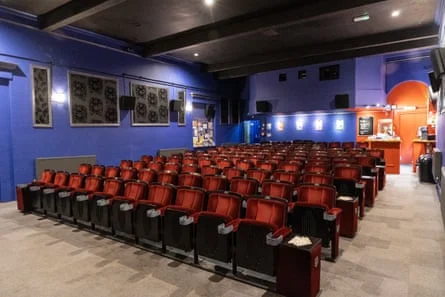
The future of the Ultimate Picture Palace (UPP), a cherished independent cinema in east Oxford and one of the UK’s oldest, hangs precariously in the balance. Its landlord, Oriel College, part of the University of Oxford, has refused to extend the cinema’s lease, a move that jeopardizes vital renovations and the institution’s long-term viability. The UPP, which opened its doors in 1911, has been a cultural cornerstone for generations of Oxford residents and students, even entertaining acclaimed figures like Oscar-winning director Sam Mendes. Its unique charm, characterized by a traditional box office window, patrons queuing on the street, and a manually operated curtain revealing the screen, has long been a hallmark of its identity.
A Community Rallies to Save a Historic Landmark
Following decades of operational instability, the UPP underwent a significant transformation in recent years, becoming a community-owned business. Over 1,200 dedicated supporters rallied, raising crucial funds to ensure the cinema’s continued operation within its Grade II-listed building. This collective effort underscored the deep affection and value the community places on the UPP as a cultural asset. However, these hard-won gains and ambitious plans for the future have been met with a significant obstacle: Oriel College’s reluctance to grant a lease extension. This extension is critical for the UPP to secure further investment and undertake essential renovations.
Essential Renovations Halted by Landlord’s Stance
Micaela Tuckwell, the UPP’s executive director, highlighted the urgent need for upgrades, particularly in areas of energy efficiency and accessibility. She explained that the cinema’s operating costs have escalated by 25% over the past four years, placing it on a precarious financial footing. "We are on a financial knife-edge," Tuckwell stated, emphasizing that critical improvements, including those to enhance energy efficiency and accessibility, cannot proceed without Oriel College agreeing to extend the current lease beyond its expiry in 2037. Tuckwell described the situation as "a really big emergency." The cinema has secured grant funding for these essential upgrades, but without a secured future lease, these funds cannot be deployed.
Oriel College’s Position and the Broader Context of "Studentification"
A spokesperson for Oriel College issued a statement regarding the situation: "This lease was agreed recently in 2022 with a new registered society. We have no plans to amend the lease at this early stage in the tenancy. We continue to be in dialogue with the new managers about how to ensure the cinema remains open to the wider public." This response suggests that the college views the current lease agreement as sufficiently recent and stable, and is not inclined to renegotiate at this juncture.

The UPP’s predicament is set against a wider backdrop of increasing property acquisition by Oxford University colleges in the city, particularly in east Oxford. Oriel College itself owns a significant number of properties in the vicinity of the UPP, and there are reports of further expansion plans. This trend, often referred to as "studentification," has drawn criticism from local residents who express concerns about the erosion of community spaces and the impact on the character of the neighbourhood. The pending demolition of a popular local café by the university serves as another example of this ongoing tension.
Imo, a local resident, voiced her frustration: "Every closure from the university’s encroachment has a scarring effect – if this trend continues there will be no space for locals to do things on their own terms." This sentiment reflects a broader concern about the displacement of local businesses and community hubs in favour of university-led development.
Historic England Weighs In on the Importance of Cultural Institutions
The situation gains an interesting dimension from the fact that Oriel’s provost, Neil Mendoza, also chairs Historic England, the public body responsible for championing the nation’s historic environment. A spokesperson for Historic England commented on the broader significance of cultural institutions like the UPP: "We know cultural institutions, including cinemas, are important to local communities and can help to sustain our high streets and town centres. Businesses offering cultural experiences, through art, theatre, cinema, music, are often attracted to historic sites because these places really resonate with local people. We aim for historic buildings to be kept in use so they can continue to be anchors for communities and loved for longer." This statement from Historic England implicitly underscores the value of preserving the UPP, a cultural institution housed within a historic building, as a vital community anchor.
A Groundswell of Support and Parliamentary Intervention
The UPP’s fight for survival has galvanized significant public support. A dedicated campaign and petition to save the cinema has garnered an impressive 22,000 signatures. Furthermore, the Member of Parliament for Oxford East, Anneliese Dodds, has actively engaged with the issue, raising the UPP’s future in Parliament last month. Dodds stated her optimism about a potential resolution: "I have discussed this matter with Neil Mendoza and he has said he wants to work with the UPP. I really hope that can happen." This indicates that high-level discussions are underway, and there is a potential for intervention or mediation.
A Rich History and Enduring Cultural Significance
The Ultimate Picture Palace boasts a rich history dating back to 1911, a period when cinema was an emerging and transformative form of entertainment. Over its more than a century of operation, it has screened countless films, becoming a repository of cinematic memories for generations of Oxford residents. Its programming has consistently embraced a diverse and artistic selection, moving beyond mainstream blockbusters to champion alternative, foreign-language, and classic films. Foreign language films currently account for over a fifth of the UPP’s ticket sales, with a similar proportion dedicated to classic or repertory features. This commitment to diverse programming has fostered a loyal and engaged audience.

Despite a general post-pandemic decline in national cinema attendance, the UPP has reported a remarkable 20% increase in ticket sales. Notably, a quarter of these sales are to individuals under 25, demonstrating the cinema’s ability to attract and resonate with younger audiences. This statistic is particularly significant, highlighting the UPP’s role in cultivating a new generation of film enthusiasts.
More Than Just a Cinema: A Hub for Community and Social Connection
Beyond its cinematic offerings, the UPP plays a vital role in fostering social connection and combating isolation. Kit Finnie, the UPP’s lead projectionist, described the organization’s extensive volunteer program, which boasts a two-year waiting list, and its collaborations with local charities such as Asylum Welcome. "This is a really safe and consistent interaction: coming here, feeling OK that you’re by yourself, and sitting with a tea or coffee to interact with a piece of art," Finnie explained. "This is the only affordable way to have that interaction." This highlights the UPP’s function as a welcoming and inclusive space, offering affordable access to cultural experiences and fostering a sense of belonging for individuals, particularly those who may be experiencing social isolation.
Malcolm Atkins, a 69-year-old local artist and a UPP patron since the 1970s, shared his personal connection to the cinema: "All the films I still love best I saw there – A Touch of Zen, Celine and Julie Go Boating – the cinema was so good for long, meditative films, and I haven’t experienced cinematic wonder comparable since." His sentiment speaks to the enduring impact of the UPP on individuals’ lives and its role in shaping cultural appreciation.
The Path Forward: A Call for Dialogue and Resolution
The current impasse between the UPP and Oriel College presents a stark contrast between the preservation of a vital community asset and the potential for further university expansion. The UPP’s success as a community-owned entity, its strong audience engagement, and its significant cultural contribution all underscore the importance of finding a sustainable solution. The involvement of local MP Anneliese Dodds and the potential for dialogue with Neil Mendoza, who chairs Historic England, offer glimmers of hope.
The outcome of this situation will undoubtedly have implications beyond the UPP itself, potentially setting a precedent for how historic cultural institutions navigate their relationships with powerful academic landlords in urban settings. The 22,000 signatures on the petition and the passionate testimonies from patrons and volunteers alike demonstrate a community united in its desire to see the Ultimate Picture Palace continue to light up the screen for many years to come. The coming weeks and months will be critical in determining whether this historic cinema can overcome this latest challenge and secure its place in Oxford’s cultural landscape for future generations.