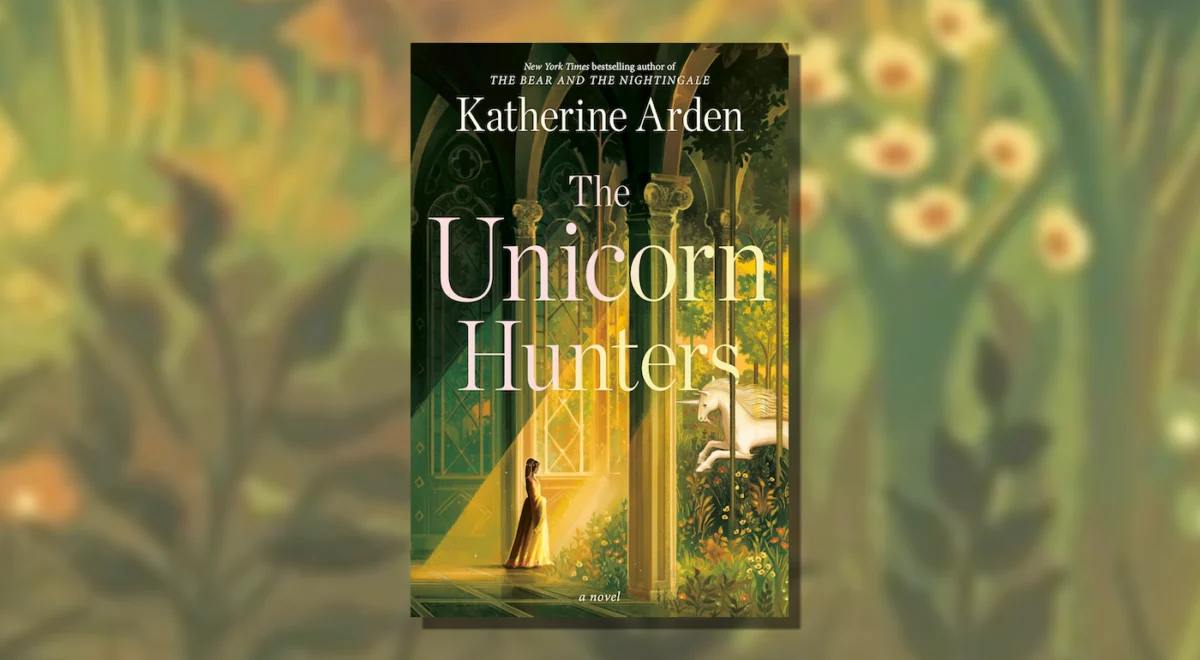
Penguin Random House has announced the upcoming release of Katherine Arden’s new fantasy novel, The Unicorn Hunters, slated for publication on June 2nd by Del Rey. The novel is set in historical Brittany and offers a compelling narrative centered on Anne of Brittany, a young duchess navigating a perilous political landscape fraught with French ambition and the weight of her ducal responsibilities. An excerpt from the novel, providing a glimpse into its opening chapters, has been made available, painting a vivid picture of Anne’s predicament and her strategic defiance.
Anne of Brittany’s Struggle for Sovereignty
The narrative plunges readers into the tumultuous period following France’s invasion of Brittany. Anne, a child when her father met his tragic end under French aggression, finds herself a young woman and the sovereign duchess of a land under occupation. The French crown’s objective is clear: to solidify their conquest by marrying Anne to their king. Such a union, however, would irrevocably place her title, her ancestral lands, and her very person under the dominion of her nation’s adversaries.
But Anne is portrayed as a leader unwilling to be the last Duchess of Brittany. Faced with the existential threat of assimilation into France, her only recourse for resistance lies in forging an alternative alliance, one sealed through marriage. This desperation fuels a daring gambit: a clandestine betrothal to a formidable rival of the French king. The inherent danger of such secrets is amplified in an era where rival courts employed diviners to maintain constant surveillance and uncover sensitive intelligence.
The excerpt introduces the mystical Forest of Brocéliande, a place steeped in legend as the former haunt of Merlin the Enchanter and the elusive faerie queen. While magic is believed to have long since receded from Brocéliande, faint traces remain, including the occasional sighting of a unicorn. Crucially, this ancient forest possesses a unique characteristic: it is entirely hostile to the practice of divination. It is within this seemingly paradoxical sanctuary that Anne plans a diversion, a seemingly innocuous unicorn hunt, as a cover for her secret wedding. However, the narrative hints that this carefully constructed plan may be far more intricate and perilous than she initially anticipates.
Chapter 1: The Arrival of Unforeseen Change
The opening chapter, titled "Chapter 1," sets a somber yet charged atmosphere. The arrival of a French envoy to Nantes on the last Sunday of Eastertide is understated, occurring while the Breton court is immersed in religious observance. The rhythmic sounds of church services and the persistent rain serve to mask the approach of the envoy and his retinue, highlighting the element of surprise and the profound, unacknowledged shift about to occur. The narrative notes that from this year forward, "Christendom would never be the same," underscoring the far-reaching implications of the events unfolding.
The pervasive mist and rain that characterize Brittany create a sense of ethereal obscurity as the courtiers emerge from the cathedral. The description of the court, though diminished by the recent war with France – with many fallen or held for ransom – is one of resplendent attire contrasted with the grim reality of their political vulnerability. Amidst this scene, Anne, the young Duchess, is depicted with a youthful vivacity, her merry eyes and simple violet attire standing out. The sale of her jewels to fund her garrisons underscores the precarious financial state of Brittany, a poignant symbol of her dedication to her people’s defense.
Anne’s focus is initially on a game of riddles with her maids-of-honor, a testament to her youthful spirit and perhaps a coping mechanism amidst the overwhelming political pressures. Her expectation of a messenger from another quarter hints at her clandestine dealings. The mention of "divination" as the answer to a riddle by her clever maids-of-honor foreshadows its significance in the unfolding plot, particularly its role as both a tool of espionage and a vulnerability to be exploited.
Jean de Rieux, Anne’s guardian, expresses his anxieties regarding her secret arrangement, cautioning against overconfidence. His words, "You must not sell the bear’s skin before it’s been killed," reflect a pragmatic concern for the potential consequences of her audacious plan. Anne’s playful retort, "Or in this case married. Let us all pity the bear," reveals her youthful confidence and perhaps a touch of impishness, though her excitement is palpable.
The arrival of her younger sister, Isabeau, a spirited ten-year-old, provides a brief moment of familial warmth. Anne’s playful reprimand about her sister’s expensive shoes, emphasizing the need to pay soldiers, reinforces her commitment to her duchy’s well-being. The transition from the outdoor scene to the ducal keep, the Castle of the Dukes of Brittany, is marked by the sounds of music and laughter, a stark contrast to the underlying political tension.
The Shadow of French Intervention
The atmosphere shifts dramatically with the realization that an unfamiliar contingent has arrived. The presence of foreign horses and voices in the guardhouse signals an unwelcome intrusion. Anne’s inability to discern details due to the persistent rain adds to the growing sense of unease. The eventual confirmation from her half-brother, Henri, Baron of Avaugour, that Guillaume de La Trémoille, a prominent figure from the French court, has arrived with a significant escort and messages from the French king, confirms their deepest fears. La Trémoille’s presence, coupled with the mention of him having received word via diviner, suggests that Anne’s carefully guarded plans may have been compromised.
Henri’s revelation that La Trémoille has come to insist upon the French marriage without further delay ignites Anne’s resolve. Her mind flashes back to her coronation, to her defiant declaration to De Rieux: "I will not marry the king of France." She understood the existential threat of such a union, which would effectively erase Brittany as an independent entity. Her promise to her father, and the precarious state of Brittany after its defeat in war, left her with limited options. Yet, she had vowed, "I will make myself new choices."

The realization that France may have discovered her clandestine dealings plunges the court into palpable anxiety. De Rieux voices the common concern: "They must have found out." Montauban, her chamberlain, questions the timing of La Trémoille’s arrival, while Dunois, another influential figure, expresses his unease with the ominous implications. The potential consequences of France laying bare its intentions too soon – deposition or forced marriage – weigh heavily on Anne and her advisors.
Anne, however, displays a remarkable composure amidst the rising tension. She analyzes La Trémoille’s escort, noting the absence of additional troops, and speculates that he may not yet be aware of her secret arrangements. This strategic assessment highlights her sharp intellect and her ability to remain pragmatic under pressure.
A Strategic Diversion: The Unicorn Hunt
In a pivotal moment, Anne orchestrates a masterful piece of political theater. Instructing Henri to adorn himself in ostentatious attire and to convey an image of ambition and inflated spending, she aims to project a facade of self-importance and potential leverage. This strategic maneuver is designed to influence La Trémoille’s perception of the Breton court and its resources.
The narrative then shifts to the perspective of Guillaume de La Trémoille, revealing his motivations and internal conflict. As lieutenant-general of France, he had been instrumental in the conquest of Brittany and believed the war should have concluded with Brittany’s complete annexation. He views Charles V as overly idealistic and lacking the ruthlessness of his predecessors. La Trémoille’s primary objective is to secure Anne’s marriage to King Charles, thereby consolidating French control over Brittany. He is further motivated by his desire to conclude his duties in Brittany and embark on a lucrative military campaign in Pavia.
The narrative reveals that Marguerite of France, the King’s elder sister and a formidable political force, has urged La Trémoille to expedite the marriage negotiations, emphasizing the strategic imperative of securing Brittany. This external pressure fuels his determination to confront Anne and her court.
Upon meeting Anne, La Trémoille is struck by her youthful appearance and the lavish spread of sugared fruits and marchpane, which he dismisses as the fare of a spoiled child. He formally presents his proposal for the alliance with King Charles. Anne’s hesitant demeanor and her tentative gaze towards Henri suggest a pre-arranged strategy.
It is Henri who interjects, invoking the legend of a unicorn sighting in Brocéliande, thereby introducing a seemingly irrelevant but strategically vital element into the proceedings. Anne, feigning modesty, explains that they had received word of a unicorn sighting and had considered hunting it. La Trémoille, a keen hunter himself, is intrigued by the prospect of such a rare quarry. Henri further fuels the diversion by suggesting that any hint of "unchastity" could jeopardize the unicorn hunt, playing on the mythical creature’s purported aversion to impurity.
This carefully constructed ruse successfully delays La Trémoille’s immediate push for marriage. He agrees to a "small delay before negotiations begin," a concession that, while seemingly minor, represents a significant victory for Anne. La Trémoille, believing Henri to be motivated by a desire for a bribe, contemplates offering him a less desirable estate. Anne, meanwhile, promises the unicorn’s horn as a wedding gift to the French king, a symbolic gesture that appeases La Trémoille and further solidifies the diversion.
The Strategic Advantage of the Unseen
Following La Trémoille’s departure, Anne’s true intentions begin to unfold. She confides in her guardian, Jean de Rieux, revealing that the unicorn hunt is a deliberate ploy to "buy ourselves time." De Rieux expresses skepticism, questioning the efficacy of such a brief reprieve. However, Anne’s plan hinges on a deeper understanding of the unique properties of Brocéliande.
She consults her court diviner, Calyx, a somewhat inebriated oenomancer. Anne’s primary questions concern the whereabouts of her messenger from Flanders and the nature of Brocéliande’s resistance to divination. Calyx confirms that her messenger is approaching Nantes and, with some reluctance, reveals the legend that Brocéliande is a "cursed place for diviners." He explains that while divination is possible, it yields nonsensical results, and persistence can lead to madness. This crucial piece of information about the forest’s inherent hostility to divination is the cornerstone of Anne’s strategy.
Anne’s nascent plan relies on the fact that Brocéliande is a place where French espionage, particularly through divination, will be rendered ineffective. This strategic advantage allows her to conduct her clandestine affairs without the constant threat of discovery. Her confidence in this aspect of her plan is evident as she dismisses Calyx’s warnings about the dangers of Brocéliande, noting that the mythical creatures associated with the forest have not been seen for centuries.
The excerpt concludes with Anne instructing Henri to secretly intercept her messenger from Flanders, emphasizing the absolute necessity of keeping this operation hidden from La Trémoille. The chapter ends with Anne’s determined assertion to De Rieux that they have indeed bought themselves significant time, a testament to her strategic acumen and her unwavering resolve to protect Brittany’s sovereignty. The stage is set for a complex game of cat and mouse, where political maneuvering, historical legend, and the allure of a mythical hunt converge to determine the fate of a duchy.