Marcus Batto’s ambitious feature film, There’ll Likely Be Michael Jackson Vigils Throughout the Night, embarks on the near-impossible task of reconstructing a single, globally resonant day—June 25, 2009, the day Michael Jackson died—through an exhaustive compilation of found footage available online. This cinematic endeavor transcends mere documentary filmmaking, serving as a profound act of digital archaeology that not only chronicles a pivotal cultural event but also offers a poignant commentary on the ephemeral nature of early internet culture and the challenges of preserving our digital past. In an era where the internet’s pace is relentlessly accelerating and its history increasingly obscured by algorithmic myopia, Batto, a 31-year-old artist, archivist, and programmer, meticulously sifts through the digital detritus of the past to illuminate a moment when the world’s diffuse energies momentarily converged.
The Day the Music Died: A Global Digital Reckoning
June 25, 2009, was a day etched into global consciousness, marked by the sudden and shocking death of Michael Jackson, the "King of Pop." Jackson, whose career spanned over four decades, had redefined music, dance, and celebrity. From his early days as the prodigious frontman of the Jackson 5 to his monumental solo career with albums like Thriller—the best-selling album of all time—he wielded unparalleled cultural influence. His personal life, however, was frequently shrouded in controversy, leading to intense media scrutiny. Despite these challenges, his artistic legacy remained largely undiminished for millions worldwide.
When news of his cardiac arrest at his Holmby Hills home broke, it sent immediate shockwaves across the globe. Traditional news outlets scrambled to confirm reports, but it was the burgeoning internet, particularly social media platforms and nascent video-sharing sites, that became the primary conduit for the world’s real-time reaction. Twitter, still in its relative infancy, experienced unprecedented traffic, with tweets per second reaching new highs. Google reported a surge in searches so massive that it initially mistook the activity for a distributed denial-of-service attack. Forums, blogs, and news comment sections exploded with disbelief, grief, and speculation.
Batto’s film plunges viewers directly into this digital maelstrom, demonstrating how the internet, for a fleeting period, acted as a collective consciousness. Unlike today’s hyper-personalized algorithms, the internet in 2009, while growing, still fostered a sense of shared experience around major events. People from all corners of the earth, often using the newly prevalent front-facing cameras on their devices, turned to their screens to process, express, and share their grief, creating an unintentional, sprawling digital vigil.
Marcus Batto: An Ethnograper of the Early Internet
Batto’s journey into this unique form of filmmaking began years ago, shaped by his early experiences with the internet. "Growing up," he recalls, "I wanted to be a filmmaker. I fell into editing first, then making these found-footage things, never really knowing if they fit into the category of film or music videos or even just art pieces." His interest is particularly drawn to the formative first decade of YouTube’s history, a period he witnessed firsthand as a twelve-year-old when iconic viral videos like "Charlie Bit My Finger" first surfaced. This deep personal connection to the era informs his artistic and archival methodology.
For years, notably starting during the COVID-19 pandemic, Batto has cultivated his distinctive approach through the Certain Moments To Remember series (2020–). These compilations are more than mere montages; they are ethnographic studies of specific digital subcultures and shared online phenomena. A standout entry, RANDOM WEBCAM DANCE @ DA IMAC STORE (2023), stitches together footage of individuals spontaneously dancing in Apple Stores in 2011, leveraging the then-novel front-facing cameras on Mac products. The soundtrack, Johnny Duncan and Jane Fricke’s 1978 rendition of "Stranger," creates a powerful temporal dissonance, with Duncan crooning "Stranger, could I believe in you?" as a V-necked teenager performs the robot dance in front of an iPad 2 advertisement. This juxtaposition imbues the piece with an "eerie sense of technological determinism," as Batto counterposes the techno-utopian vision of the Apple Store with the looming "overpopulated graveyard of lost media."
Other compelling editions in this series, which Batto’s website aptly describes as "bearing witness to subculture, shared experience, and social phenomena," include Flashmob Compilation (2023) and Maid of the Mist VII (2023). These works highlight Batto’s fascination with moments where online trends spilled into real-world interactions, capturing the nascent curiosity and often unselfconscious participation that defined early internet engagement.
His short documentary Honeycomb (2024) further exemplifies his archival prowess. Composed entirely of found footage—vlogs, television broadcasts, and security camera recordings—it investigates the 2020–2022 surge in catalytic converter theft across the United States. The film’s title refers to the "honeycomb" component within the converter, rich in precious rare metals like platinum, rhodium, and palladium. Batto draws a parallel between the thieves, who meticulously extract and process these valuable elements from discarded vehicle parts, and his own work as an archivist. Both processes involve discerning untapped value in overlooked, seemingly disposable materials, whether physical or digital. This thematic resonance underscores an "air of frantic activity that follows the realization that something meaningful or valuable could be sitting unattended" – be it beneath a car or buried deep within YouTube’s vast, unsorted archives.
Reconstructing a Global Moment: The Film’s Methodology and Challenges
There’ll Likely Be Michael Jackson Vigils Throughout the Night, Batto’s first feature, masterfully conveys a sense of overwhelm, mirroring the deluge of information experienced by internet users on June 25, 2009. The film employs a distinctive visual device: a rotating prism, each side composed of a five-by-four grid displaying twenty videos simultaneously. This kaleidoscopic presentation immerses the viewer in the chaotic, fragmented reality of online experience. Batto frequently keys in on individual videos, abruptly shifting from a Botafumeiro swinging incense in a Spanish cathedral to ultrasound footage, then to a group of refugees on a lifeboat. This rapid-fire succession intentionally renders the process of cataloging each scene futile, emphasizing the sheer volume and diversity of online content generated that day.
The process of creating such a film is inherently arduous, demanding immense dedication to both discovery and curation. Batto’s work evokes comparisons to other found-footage documentaries, such as Ian Bell’s WTO/99 (2025), which chronicled four days of anti-globalization protests in Seattle. For both filmmakers, locating the vast amounts of material is merely the first hurdle; boiling it down into a coherent and impactful narrative presents an even greater challenge. Batto admits, "I have playlists that I’ve created that have maybe 800 videos. I had a work-in-progress screening last June, but I couldn’t stop finding videos even after that. It was becoming an issue." This ongoing discovery highlights the ever-expanding, yet simultaneously fragile, nature of the digital archive.
Batto’s ambition is distinctly global, often illustrating his gridded arrays of videos atop a digital rendering of the rotating earth. This visual motif reinforces the film’s premise: that as more of daily life is captured on video, the global digital archive swells, even as its stability and coherence diminish. He selected June 25, 2009, not out of personal devotion as a Michael Jackson fan, but precisely because it represented a unique historical confluence—a rare moment when a significant portion of the world’s disparate online energy was momentarily channeled into a single, unified direction of collective mourning and reaction.
The Internet’s Nascent Years: A Canvas of Raw Expression
The year 2009 was a pivotal juncture in the evolution of the internet and digital communication. YouTube, founded in 2005, had rapidly become the dominant platform for video sharing, and the proliferation of affordable digital cameras and, crucially, front-facing cameras on nascent smartphones (like the iPhone 3GS released just weeks prior) democratized video creation. Vlogging was still a nascent genre, characterized by its raw, unpolished, and often deeply personal nature. This era preceded the widespread professionalization of online content, the advent of sophisticated editing software for casual users, and the pervasive influence of social media algorithms dictating optimal content creation strategies.
This "innocence" is a core theme Batto identifies in the footage. "With all these videos I found," he explains, "there’s this through-line of innocence. People didn’t care about how they looked on their webcam, or how they came off, in the same way they do today. They were just experimenting with this new technology." This contrasts sharply with the contemporary internet, where personal branding, curated aesthetics, and algorithmic optimization often dictate online self-presentation. In 2009, many users simply turned on their cameras to record their immediate impressions, often for an audience numbering in the single digits, embodying a genuine, unfiltered desire to share and connect.
The film showcases a spectrum of these raw reactions: an emo teenager feigning sarcastic tears, individuals expressing outrage and even making threats against blogger Perez Hilton (who had controversially suggested Jackson’s death was a publicity stunt), and others reacting to the day’s other significant celebrity death, that of Farrah Fawcett. One amateur film reviewer poignantly remarks, "One of Charlie’s Angels just became an angel herself," delivering the line in front of a framed poster for Halloween H20: 20 Years Later (1998), further embedding the moment in a specific cultural and temporal context. These vignettes, individually trivial perhaps, collectively form a powerful mosaic of collective human experience.
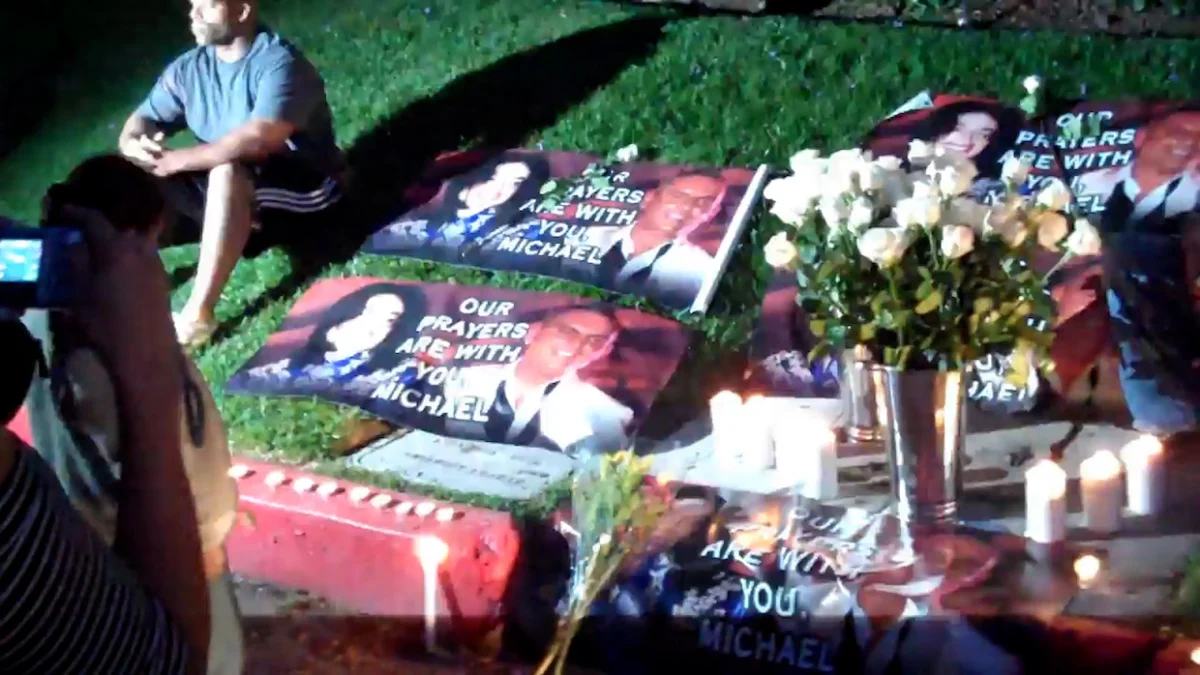
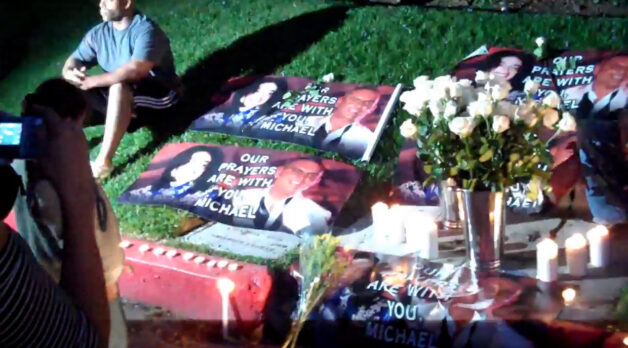
Batto’s camera also follows mourners into the streets of Los Angeles, where the digital outpouring found its physical manifestation. Crowds gathered, not always accurately, around the Hollywood Walk of Fame star of the British radio DJ Michael Jackson, mistakenly believing it to be the King of Pop’s. (The real Michael Jackson’s star was, ironically, underneath the red carpet outside the premiere of Sacha Baron Cohen’s Bruno). This poignant misidentification serves as a fitting metaphor for a film that functions as a double memorial: for the global icon whose passing galvanized the world, and for a fleeting moment in time when the internet’s cacophony could still coalesce into something resembling a single, shared chorus.
Technological Determinism and the Graveyard of Lost Media
Batto’s work is deeply concerned with the implications of technological determinism and the accelerating obsolescence of digital content. The "overpopulated graveyard of lost media" he alludes to is a stark reminder that despite the internet’s seemingly infinite storage capacity, digital preservation is far from guaranteed. Websites vanish, file formats become unreadable, and platforms disappear, taking vast swathes of human expression with them. This constant erosion of the digital past makes Batto’s archival efforts all the more critical.
His creative process, much like the catalytic converter thieves in Honeycomb, involves recognizing "untapped value sitting where it’s least expected, open for the taking for any thief or archivist armed with a YouTube-to-mp4 converter or a Sawzall." He is, in essence, stripping parts from the decaying machinery of the past internet, extracting meaning and historical insight from what others might deem worthless or irrelevant. This act of salvaging, curating, and recontextualizing transforms ephemeral online moments into enduring cultural artifacts.
The parallels Batto draws between his work and the historical documents of Mitchell and Kenyon, the "Local Films for Local People" produced in late 19th-century Britain, are particularly illuminating. These early cinematic works captured the curious faces of British children encountering a movie camera for the first time, revealing a raw, unselfconscious interaction with novel technology. Batto suggests a profound kinship between these soot-marked faces exiting factories in 1897 and the webcam-captured mourners of 2009. Both groups, separated by over a century of technological advancement, exhibit a similar "profound innocence" in their engagement with the camera, compressing the vast temporal distance between the two eras and underscoring how far both seem from the hyper-curated, AI-generated, and algorithmically-driven digital landscape of 2026.
The Premiere and Its Resonant Message
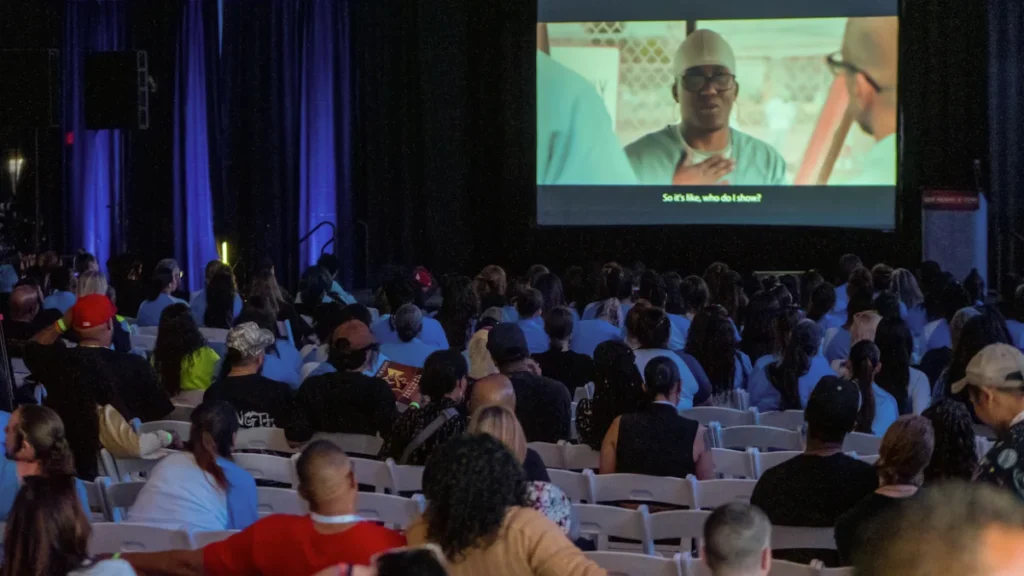
The premiere of There’ll Likely Be Michael Jackson Vigils Throughout the Night was itself a performative act that amplified the film’s themes. It was accompanied by a unique giveaway: refurbished third-generation iPod Touches, preloaded with the film and a curated playlist. This gesture served as a tangible connection to the technological artifacts of the era the film explores, transforming nostalgic devices into vessels for contemporary commentary. The presence of a Michael Jackson impersonator, who reportedly fell asleep partway through the film and later offered a laconic "okay" as feedback, added a touch of meta-commentary, perhaps reflecting the dreamlike quality of revisiting a past era or the overwhelming nature of the film’s multiscreen presentation.
When asked about the feasibility of creating a similar film for a more recent celebrity death, Batto offers a sobering observation: "today’s internet doesn’t create discernible moments in the same way. It’s all so fleeting. You can’t really hold it anymore." This statement encapsulates the core challenge facing future digital archivists and cultural ethnographers. The internet has evolved from a relatively open, if chaotic, public square into a constellation of highly individualized, algorithmically-filtered echo chambers. While content generation has exploded, the sense of a shared, globally unified experience around a single event has diminished, replaced by fragmented, personalized feeds.
There’ll Likely Be Michael Jackson Vigils Throughout the Night does more than just document a historical event; it makes strikingly evident the acceleration of audiovisual history. Marcus Batto stands at the metaphorical end of a certain product’s life-cycle—the early, uninhibited internet. His work bridges crucial gaps: between artist and archivist, between the present and the recent past, and between the fleeting digital artifact and its potential for enduring meaning. While Batto may express a degree of mournfulness for a lost innocence in online interaction, he is also keenly aware of what valuable insights might still be stripped for parts from the ever-expanding, yet increasingly unstable, digital landscape. His film is a powerful reminder that even in the chaotic torrent of online information, there are profound cultural narratives waiting to be unearthed, assembled, and understood.