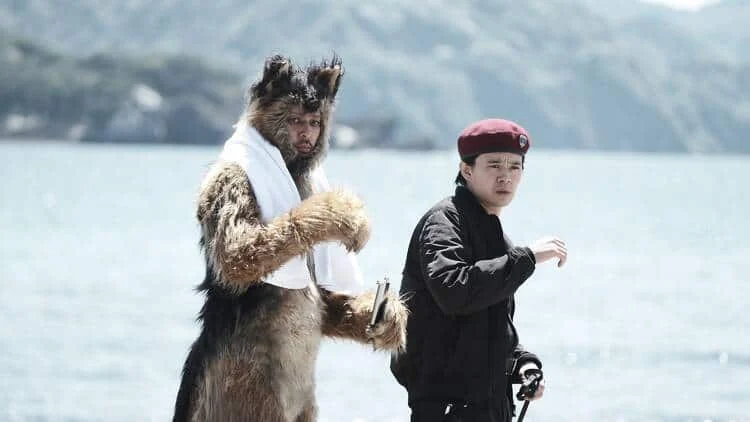
Following the unexpected cult success and critical acclaim of "Hot Spring Shark Attack" (2024), director Morito Inoue has unleashed its highly anticipated sequel, "Hot Spring Shark Attack 2," promising audiences an even grander, more ambitious cinematic experience. Eschewing the temptation to merely replicate the winning formula of its predecessor, Inoue has publicly stated his intent to craft a film that is significantly "larger in scale," featuring enhanced visual effects and, notably, a staggering "three times as many sharks" as the original. This commitment to escalating the absurdity while simultaneously deepening thematic layers positions the sequel as a significant entry in contemporary Japanese genre cinema, blending overt silliness with incisive social commentary.
A Return to the Thermal Terrors: The Genesis of a Grand Vision
The journey to "Hot Spring Shark Attack 2" began in the wake of its predecessor’s triumphant run on the international festival circuit in 2024. The original "Hot Spring Shark Attack," a low-budget independent feature, captivated audiences with its outlandish premise of predatory sharks infesting Japan’s iconic hot springs. It quickly garnered a dedicated fanbase and critical praise for its unique blend of horror, comedy, and surprisingly poignant cultural observations. Its success at festivals, which often champion innovative and unconventional storytelling, solidified its status as a breakout hit and established Morito Inoue as a director with a distinct voice and vision.
Buoyed by this reception, the development of a sequel was swift. Rather than resting on the laurels of the first film’s charm, Inoue articulated a clear ambition to elevate the franchise. He envisioned "Hot Spring Shark Attack 2" not just as a continuation of the narrative, but as an expansion of its universe, pushing boundaries in terms of scale, effects, and narrative complexity. This bold declaration set high expectations among fans and critics alike, eager to see how Inoue would build upon the foundation of his initial, unexpected triumph.
From Cult Hit to Ambitious Saga: The Evolution of a Franchise
The original "Hot Spring Shark Attack" resonated deeply with audiences for its inventive premise and its clever, often tongue-in-cheek, engagement with the creature feature genre. While frequently drawing comparisons to Western B-movies like the "Sharknado" series due to its inherent absurdity, Inoue’s work distinguished itself by grounding its fantastical elements within a recognizably Japanese cultural context. The sequel takes this distinction even further. Where "Sharknado" often leaned purely into spectacle for its own sake, "Hot Spring Shark Attack 2" meticulously crafts a world where the outlandish premise serves as a conduit for exploring deeper, more resonant themes.
Inoue’s creative evolution is evident in his approach to world-building. He has stated that he wanted to move beyond simple jump scares and gore, aiming for a narrative that feels both expansive and internally consistent, despite its fantastical elements. This ambition translates into a film that, according to early reviews from festival screenings, manages to be both gloriously silly and surprisingly profound, a testament to Inoue’s growing mastery of genre storytelling. The sequel consciously elevates the stakes, not just in terms of shark count or special effects, but in the emotional investment it demands from its characters and, by extension, its audience.
Kyushu’s New Nightmare: Unpacking the Sequel’s Narrative
The narrative of "Hot Spring Shark Attack 2" transports viewers to the picturesque, yet increasingly troubled, island of Kyushu. Years have passed since the initial "onsen shark" threat was purportedly neutralized, but the scars on the region’s vital tourism industry remain deep. Kyushu, a locale rich in both natural beauty and ancient folklore, becomes the new epicenter of terror. Its local history is intricately woven with the legend of a venerable warrior who once battled formidable sharks, a tale that now takes on an ominous new relevance.
At the heart of the unfolding crisis is Tenma, a high-school student portrayed with compelling nuance by Shibata Ruka. Tenma finds herself disaffected by her hometown’s struggling economy and the oblivious influx of tourists, harboring a keen desire to escape upon graduation. Yet, an inexplicable, almost ancestral, connection binds her to the local legend and the imposing statue of the shark-slaying warrior that dominates the town square. This enigmatic link serves as a crucial plot device, hinting at a deeper, almost mystical, relationship between Tenma and the encroaching threat.
As Kyushu grapples with a series of mysterious disappearances and gruesome deaths, local authorities, desperate to preserve the fragile tourism sector, seek quick and often superficial explanations. However, Tenma’s instincts, fueled by her unique connection to the island’s past, lead her to the terrifying conclusion: the onsen sharks have returned, more numerous and ferocious than ever. In her desperate quest for answers and survival, Tenma finds an unlikely ally in Denbei, played by the returning Kaneko Kiyobumi. Denbei, a former police chief from Atsumi—the setting of the first film—brings his invaluable experience in combating these creatures, forming a crucial partnership with the young protagonist. As the shark menace multiplies at an alarming rate, Tenma is forced to confront not only the physical threat but also the profound truth behind her mysterious lineage, a truth that holds the key to saving Kyushu and its people from utter devastation.
Beyond the Bites: Deeper Themes and Social Commentary
One of the most compelling aspects of "Hot Spring Shark Attack 2" is its remarkable ability to transcend its seemingly ludicrous premise to deliver astute social commentary. Director Morito Inoue masterfully uses the absurdity of shark-infested hot springs as a potent metaphor for a range of contemporary issues. The film delves deeply into the theme of the exploitation of nature and local culture through tourism. The struggling hot-spring regions, desperate for visitors, often compromise their natural environment and traditional values, inadvertently creating conditions ripe for disaster—both literal and metaphorical. The sharks, in this context, are not merely monsters; they are symbolic manifestations of the destructive consequences of unchecked human greed and disregard for ecological balance.
Furthermore, the sequel launches a surprisingly sharp critique of capitalism and corruption. The local authorities’ initial response to the disappearances, prioritizing economic recovery over public safety, highlights a cynical disregard for human life in favor of profit. This satirical observation extends to the broader implications of unchecked development and the erosion of community integrity under the pressure of external economic forces. The sharks become an obvious, visceral representation of these "destructive forces" threatening both people and their environment, forcing viewers to consider the uncomfortable parallels between the film’s fantastical horrors and real-world societal ailments. Inoue’s skill lies in embedding these serious observations within a highly entertaining package, making the commentary palatable and thought-provoking without ever feeling preachy or detracting from the film’s primary goal of delivering genre thrills.
A Homage to Japanese Pop Culture: Inoue’s Signature Style
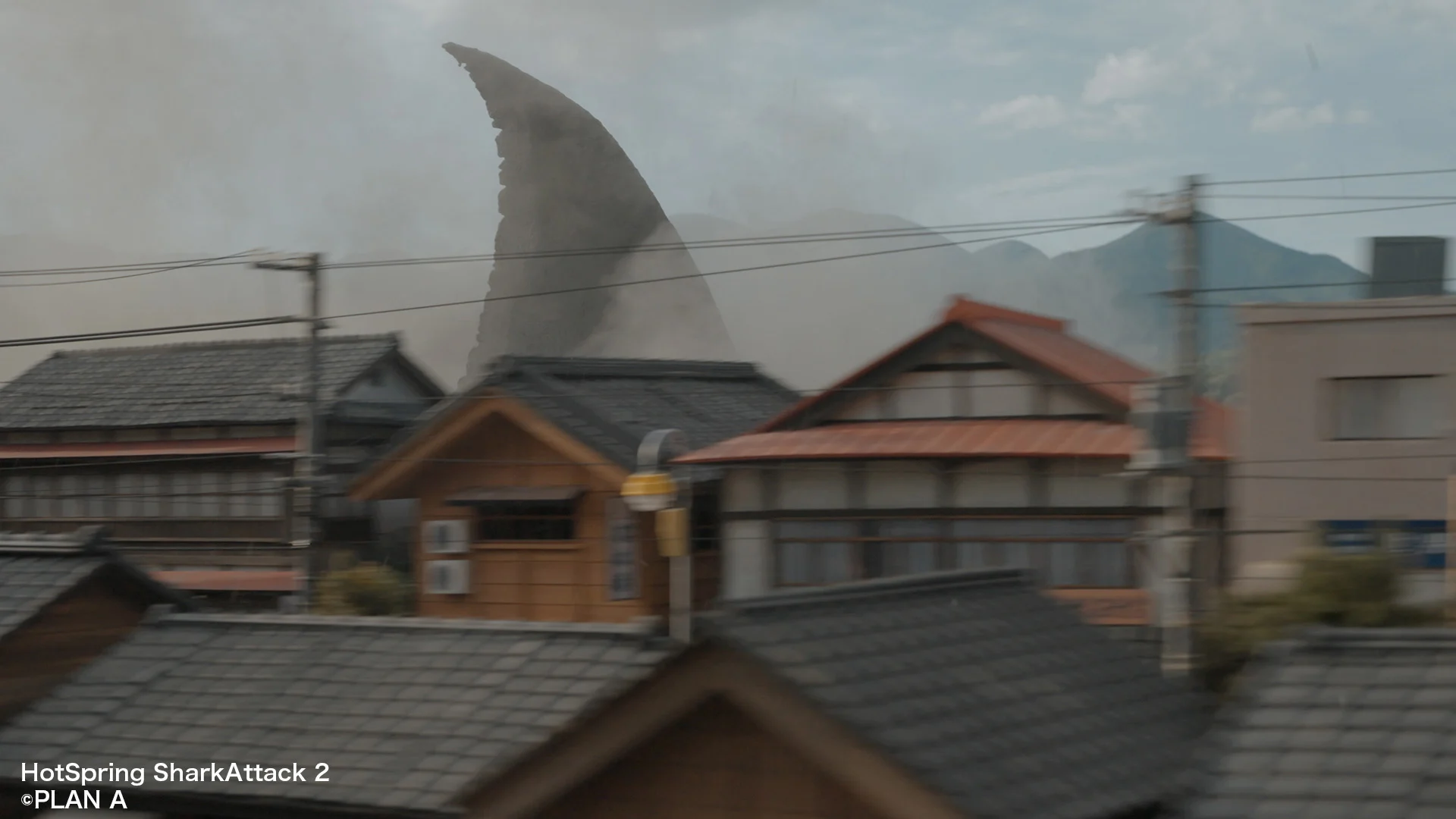
Morito Inoue’s filmmaking is deeply steeped in the rich traditions of Japanese popular culture, and "Hot Spring Shark Attack 2" serves as an even grander canvas for these influences. His fondness for kaiju films (giant monster movies), the iconic Ultraman series, various anime genres, and a broader spectrum of Japanese pop culture elements, which were subtly present in the first installment, are now woven more intricately into the sequel’s fabric. These are far from mere superficial references or "audiovisual gimmicks." Instead, they are integral components of the narrative itself, expanding the cinematic universe and adding significant depth to both new and returning characters.
For instance, the portrayal of the sharks, their rapid multiplication, and the escalating scale of the conflict often echo the tropes of classic kaiju cinema, where the threat grows from a localized menace to a national catastrophe. The character arcs, particularly Tenma’s journey of self-discovery and her connection to an ancient legend, bear stylistic hallmarks reminiscent of certain anime narratives that explore destiny and the weight of tradition. This deliberate integration not only enriches the viewing experience for fans of Japanese media but also provides a unique cultural grounding that differentiates Inoue’s work from its Western counterparts. The film proudly asserts an "unmistakably Japanese" identity, a characteristic that, as the original article notes, can sometimes feel diluted in other contemporary genre productions from Japan aiming for broader international appeal. Inoue’s approach proves that embracing local cultural touchstones can lead to truly universal storytelling.
Crafting the Spectacle: Production Design and Intentional Aesthetics
The aesthetic of "Hot Spring Shark Attack 2" is a testament to the ingenuity and creative spirit prevalent in Japanese independent genre cinema. The film’s "intentionally mismatched effects, goofy CGI, miniature work, and delightfully awkward puppets" might, at first glance, give an impression of deliberate "trashiness." However, this perception, as articulated by the director himself, is far from the truth. Instead, these elements are a deliberate artistic choice, carefully orchestrated by Inoue to craft an entertaining spectacle that remains distinctly unique.
This approach reflects a long-standing tradition in Japanese filmmaking, particularly within the tokusatsu (special effects) genre, where practical effects, miniatures, and creative solutions often take precedence over purely photorealistic CGI. The "goofy CGI" might be a nod to early digital effects in creature features, while the "miniature work" pays homage to classic kaiju films. The "delightfully awkward puppets" inject a tangible, if campy, charm that digital effects often struggle to replicate. This blend of techniques is not a sign of budgetary limitations but rather a conscious decision to foster a specific aesthetic—one that celebrates creativity, ingenuity, and a playful disregard for conventional polish. It underscores Inoue’s talent for orchestrating complex action sequences and creature encounters with limited resources, showcasing how imagination can triumph over lavish budgets, creating a memorable and distinct visual signature. This intentional aesthetic also contributes to the film’s self-aware tone, inviting the audience to revel in the creative choices rather than scrutinizing them for realism.
The Festival Phenomenon: A Shared Cinematic Experience
"Hot Spring Shark Attack 2" has swiftly established itself as "essential festival viewing," a sentiment underscored by its anticipated premiere at prestigious events such as the New Images Fantastic Film Festival (NIFFF), which prominently featured the film in its 2026 lineup for its 25th anniversary. The festival circuit provides the ideal platform for a film of this nature, where its unique blend of horror, comedy, and social commentary can be celebrated by an appreciative and engaged audience. The communal experience of watching "Hot Spring Shark Attack 2" is repeatedly highlighted as a key factor in enhancing its entertainment value. The shared laughter, gasps, and collective energy of a festival crowd amplify the film’s inherent joy and absurdity, transforming a mere screening into a vibrant, interactive event.
Genre festivals, in particular, cultivate an environment where unconventional films like Inoue’s can thrive. Audiences at these events often seek out features that push boundaries, defy expectations, and offer a refreshing alternative to mainstream cinema. A spokesperson for NIFFF, commenting on the film’s inclusion, noted, "Morito Inoue’s latest work perfectly embodies the spirit of fantastic cinema: it’s daring, imaginative, and incredibly fun. It promises to be a highlight, especially when experienced with a packed house, celebrating the communal joy of genre storytelling." This sentiment is echoed by early attendees, who praise the film’s ability to create a truly memorable shared experience, reinforcing the idea that some films are simply made to be seen with an enthusiastic crowd.
Industry Reactions and Broader Implications
The release of "Hot Spring Shark Attack 2" has sparked considerable discussion within the Japanese film industry and among international critics. Director Morito Inoue’s bold vision and the film’s layered execution have been widely praised. In an interview following a festival screening, Inoue remarked, "It was crucial for me that the sequel didn’t just repeat the first. I wanted to challenge myself, and challenge the audience, to think deeper while still having an absolute blast. The reception has been incredibly validating."
Lead actress Shibata Ruka commented on the demanding nature of her role, stating, "Tenma’s journey is complex. She starts as someone wanting to escape, but finds her destiny intertwined with her hometown’s legend. It was a powerful experience to portray that transformation against such a wild backdrop." Kaneko Kiyobumi, reprising his role as Denbei, added, "It’s rare to find a film that can make you laugh, scream, and then ponder serious issues of environment and community. Morito has a unique talent for that balance."
Critically, the film has been lauded for its ability to balance its outrageous premise with genuine thematic depth. Critics have highlighted its sharp, albeit satirical, observations about tourism’s impact on local communities, the pitfalls of unchecked capitalism, and the corruption that can undermine environmental efforts. Many see the film as a vibrant example of Japanese genre cinema reasserting its unique identity on the global stage, proving that creativity and a distinct cultural voice can resonate powerfully. Its success underscores a growing appetite for films that are both entertaining and intellectually stimulating, demonstrating that "trashy" aesthetics can coexist with profound commentary. The film’s inventive approach to effects and storytelling is also expected to inspire a new generation of independent filmmakers, showing that resourcefulness and a strong artistic vision can overcome budgetary constraints to create compelling cinema.
Conclusion: A Triumphant Return to Absurdity and Insight
"Hot Spring Shark Attack 2" stands as a triumphant testament to Morito Inoue’s evolving directorial prowess and the enduring creativity of Japanese genre cinema. The film more than delivers on its director’s audacious promise of making the sequel "larger in every conceivable way," from its increased shark count to its expanded narrative scope and deeper thematic explorations. Firmly rooted in the rich traditions of Japanese popular culture, it is a masterclass in balancing high-octane absurdity with surprisingly sharp social commentary, leveraging its fantastical premise to explore pertinent issues of environmental exploitation, cultural identity, and societal corruption.
This gloriously silly and hugely entertaining spectacle is precisely the kind of joyful, self-aware genre entertainment that reminds viewers why festival screenings, with their communal energy and shared appreciation for the unconventional, can be such an exhilarating and memorable experience. "Hot Spring Shark Attack 2" is not just a sequel; it is a significant statement, proving that genre films can be both wildly fun and intellectually engaging, solidifying its place as a standout feature of the contemporary cinematic landscape.