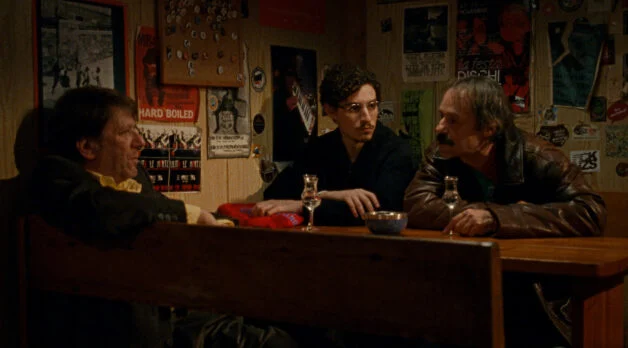
The 2026 edition of Visions du Réel (VdR), Nyon’s esteemed international creative nonfiction festival, recently concluded, leaving an indelible mark on the global documentary landscape and signaling a pivotal moment in its leadership. Artistic Director Emilie Bujès, a ubiquitous and vibrant presence throughout the festival, announced her departure to join the Geneva International Film Festival (GIFF) in August, making this year’s VdR her final curation. Her tenure has been widely credited with steering the festival towards an increasingly international and profoundly engaged exploration of nonfiction cinema, burrowing deep into global narratives and diverse cinematic languages. This edition, held in the picturesque Swiss town overlooking Lake Geneva, showcased a powerful collection of films that confronted pressing geopolitical realities, explored complex human relationships, and meditated on the intricate interplay between geography, identity, and memory.
A Legacy of Vision: Emilie Bujès’ Transformative Leadership
Emilie Bujès’ presence at Visions du Réel was unmistakable, characterized by her distinctive style and an infectious energy that permeated every aspect of the festival. Whether engaging with attendees at Place du Réel, presiding over discussions on stage, or sharing lighthearted moments with her team, Bujès embodied the spirit of the event. Her leadership, which began in [Hypothetical start year, e.g., 2017/2018], has been instrumental in shaping VdR into a leading platform for artistic and politically resonant documentary filmmaking. Under her direction, the festival has consistently pushed boundaries, prioritizing formally innovative and narratively challenging works that might find fewer avenues for exhibition elsewhere.
The announcement of her departure, made just two weeks prior to the festival’s opening, sent ripples through the international documentary community. Her transition to the Geneva International Film Festival presents a new chapter for both Bujès and GIFF, but it also prompts reflection on the significant legacy she leaves at VdR. Industry analysts suggest that Bujès’ strategic programming choices, which often highlighted emerging talents and underrepresented voices from around the world, have not only diversified the festival’s offerings but also significantly elevated its profile as a crucial market and showcase for international nonfiction. Her vision fostered an environment where challenging themes, from post-colonial narratives to environmental crises and personal struggles within conflict zones, were given prominent platforms, resonating deeply with a discerning global audience. Her successor will face the task of building upon this robust foundation, continuing to champion bold and independent documentary cinema while navigating the evolving landscape of film funding and distribution.
Geopolitical Echoes: Documentary as a Mirror to a Fractured World
The 2026 edition of Visions du Réel was undeniably weighted with the profound challenges of current global geopolitics. A recurring motif woven through many of the selected films was the indelible impact of geography and the arbitrary nature of formalized borders on human experience, both collective and individual. This thematic thread was not merely academic; it was deeply personal for many attendees. Conversations throughout the festival frequently revealed individuals personally impacted by ongoing global conflicts—a juror stranded by bombings, filmmakers striving to ensure the safety of their teams in Gaza, and freelancers from Iran facing internet blockades that severed connections to loved ones and homelands. Their presence, screening and watching films despite profound personal dislocations, underscored the resilience and vital role of cinema as a medium for witness and solidarity.
Several films directly engaged with the ongoing humanitarian crisis and conflict in Gaza, providing urgent and empathetic perspectives. American Doctor by Poh Si Teng, which had previously premiered at the Sundance Film Festival, offered a poignant exploration of themes related to the conflict. Complementing this was Muddy Currents, a bracing short film by Palestinian artist and filmmaker Shadi Habib Allah, which garnered critical attention for its raw portrayal of the region’s complex realities. Further illuminating the human cost of geopolitical tensions was Faezeh Nikoozad’s feature, In Between, a Place. This prescient and emotionally charged work meticulously depicts the evolving contours of a lifelong relationship between three Iranian childhood friends, themselves filmmakers, now dispersed across the globe due to conflict and state repression. Nikoozad’s film served as a powerful testament to the enduring bonds of friendship and identity against a backdrop of forced displacement and political upheaval, resonating deeply with a global audience grappling with similar narratives.
The festival’s commitment to these urgent narratives highlights its role as a vital platform for films that challenge dominant media portrayals and offer nuanced, human-centered perspectives on global crises. This focus aligns with a broader trend in international documentary filmmaking to address contemporary social and political issues with increasing urgency and artistic innovation.
Exploring Landscapes: From Urban Decay to Environmental Imperatives
Beyond the immediate geopolitical crises, VdR 2026 presented a rich tapestry of films that explored various landscapes, both literal and metaphorical, and their profound influence on human lives.
A standout among the medium-length films, a category where VdR consistently demonstrates particular strength, was The Building Site by Tiziano Locci and Tito Puglielli. This Special Youth Jury Award winner offered a captivating journey through the crumbling yet resilient windows and apertures of a decaying palazzo in Palermo, Italy. The film masterfully portrays the decline and subsequent rebirth of a communal home for a diverse array of distinctive Palermo locals. It serves as a poignant allegory for the broader struggle against the erosive forces of unbridled tourism and capitalist demands, which threaten to chip away at the histories and affordability of traditional housing. The film’s narrative tension, as tenants reluctantly pack up and prospective investors arrive, is subtly maintained by the building itself, which seemingly resists its fate. Sofas stubbornly fight against narrow doorways, and darkened, winding stairwells guard the secrets of their interiors, casting skepticism over the area’s future financial potential. The film’s conclusion, a defiant "the building does not relent," offers a glimmer of hope for preservation amidst rapid change.
Hassen Ferhani’s Alea Jacarandas presented a verdant and deeply moving exploration of interpersonal relationships through space and time. Textural in its form, the film clusters memories around Algiers’ iconic jacaranda trees, using these natural elements as anchors for emotional narratives. The tender father-son dynamic at its core invites audiences, regardless of their familiarity with the jacaranda plant, to reflect on their own personal language of symbology and the places where their memories reside. The film’s aesthetic beauty and emotional depth left a lasting impression, coloring viewers’ perceptions of their own worlds long after the credits rolled.
The environmental crisis, another pervasive global concern, found powerful expression in Nikolaus Geyrhalter’s Melt. Geyrhalter, renowned for his observational documentaries on humanity’s impact on the planet, crafted a haunting portrayal of a world in flux. The film juxtaposed the stark inevitabilities of doctors’ offices physically slipping towards melting borders with vast, almost futile images of ice-workers battling an increasingly volatile nature. Contrasting these scenes were glimpses of seemingly oblivious party-skiers in the Alps, highlighting a disconnect. Every meticulously framed image in Melt served as a stark reminder that what we witness—landscapes, ecosystems, and human endeavors—is already becoming history, archived before its time due to human folly and climate change. The numerous charming, yet ultimately poignant, scenes of penguins served as both a moment of respite and a symbol of the fragile beauty at stake.

Further expanding on the theme of landscapes, G. Anthony Svatek’s Humboldt, USA, a world premiere and first feature, captivated the selection committee from its opening moments. Bujès herself highlighted its immediate impact, recognizing its rare and experientially potent exploration of legacy and interconnectedness. Svatek, in collaboration with editor Kaija Siirala (hailed as a major talent), intricately braids contemporary American life with its lived environment through the lens of 19th-century scientist Alexander von Humboldt. Humboldt, a polymath whose name graces countless institutions, species, and places, becomes a conceptual guide. Through a diverse cast of characters—including a youthful museum educator, dedicated East Buffalo community activists, weary herds of bighorn sheep, and optimistic AI tech enthusiasts in Silicon Valley—the film constructs a playful narrative poetry. It meditates on contemporary environmentalism and humanity’s relationship with nature, offering a beautifully rendered and thought-provoking perspective on our shared planetary future.
Intimate Glimpses and Societal Reflections: The Human Condition Unveiled
Visions du Réel also offered deeply intimate and culturally specific narratives that shed light on the complexities of human relationships and societal structures. Sophie Schrago’s What Comes From Sitting in Silence provided an almost ethnographic insight into the first female Islamic court in Mumbai. The Swiss-Indian filmmaker stationed herself in a corner of the court, observing as Judge Khatoon mediated arguments presented by couples and families in distress, basing her verdicts on interpretations of the Quran. Initially, Schrago’s camera maintained a restrained, almost static distance, akin to the observational style of filmmakers like Claire Simon. However, the film takes an unexpected turn when the bond between Schrago and Judge Khatoon deepens, prompting Schrago to share an intimate confession about a past relationship midway through the film. This personal revelation imbues her camera’s previous restraint not as a formal necessity, but as an act of resilience, fundamentally reframing the viewers’ perspective of the couples who revisit the court for their verdicts. The film thus transcends mere observation, becoming a profound meditation on empathy, judgment, and the shared human experience of vulnerability.
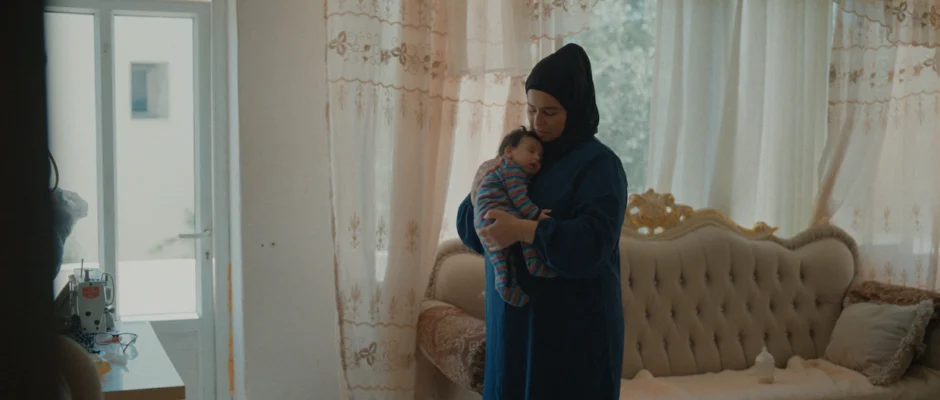
Another emotionally resonant film, For Life by Ömür Boyu, emerged as one of the festival’s most tender and impactful offerings. This vérité film meticulously portrays Hind, a woman in Palestine navigating the impossible circumstances surrounding her attempts to conceive a child. The film often takes on the suspenseful quality of a thriller, depicting Hind’s relentless fight against a complex and often oppressive system. Her struggle is a time-based race against numerous obstacles: closed border crossings, debilitating traffic, and the unpredictable efficacy of fertility medications. The core of her quest is to liberate her husband’s sperm, held prisoner in an Israeli jail, to realize her dream of motherhood. For Life is a profound portrait of humanity, a powerful antidote to narratives that often strip individuals of their agency and emotional depth. Its raw depiction of hope, perseverance, and the desperate yearning for a future leaves audiences tender and quiet, a sentiment palpable in the respectful silence that enveloped the Theatre de Marens after its screening. The film’s ability to elicit such a visceral and empathetic response speaks volumes about its artistic merit and the universal themes it explores against a backdrop of profound personal and political adversity.
The Evolving Documentary Marketplace: Nyon’s Ascendance
Beyond its compelling film program, Visions du Réel 2026 also made significant strides as an active and attentive marketplace for documentary film. Whispers among industry attendees, suggesting that fewer would return to the International Documentary Film Festival Amsterdam (IDFA), hinted at VdR’s shifting status as a leading European documentary market, challenging IDFA’s longstanding reign. This year’s marketplace, meticulously curated by former Chicken & Egg Pictures VP Sabine Fayoux Cantillo, showcased a diverse array of projects garnering significant buzz.
Highlights from the market included Todd Chandler’s multi-award-winning Trade, an atmospheric and insightful exploration into the cultural representation of capitalism and human nature. Sofie Benoot, director of VdR 2024 selection Apple Cider Vinegar, presented the bewitching, crane-oriented Hello?!, captivating attendees with its unique premise. Grace Hsia’s To My Dearest, an 8mm feature, offered a tender and intimate look at the intersection of fertility, family, and friendship, resonating with its heartfelt narrative. Special mention also went to Ljubomir Stefanov’s The Vortex of Extinction, a film that ingeniously interprets toxic masculinity through the unexpected lens of Macedonian turtles, a premise that intrigued and surprised many.
American industry attendees, many new to the Nyon festival, frequently expressed a mix of awe and frustration. "Why do we even bother?" was a common sentiment, reflecting on the robust list of filmmakers whose work rarely sees play on the other side of the Atlantic, and the remarkable achievements accomplished with budgets significantly smaller than US standards. The creative ambition on display across every programming point, coupled with a host of venues less than a ten-minute walk from one another, contributed to Nyon’s almost "utopic" atmosphere for filmmakers and industry professionals. This idyllic setting, however, came with a caveat: the notoriously high cost of living in Switzerland, with a meal rarely costing less than 22 CHF (approximately $27 USD), served as a grounding reminder of economic realities.
Despite the expenses, the festival’s unique structure, featuring a central bar/café where festivalgoers could shed their industry badges and connect informally, fostered a strong sense of community. The town’s small size, paradoxically, offered myriad enclaves for quiet contemplation, a vital aspect for processing the formally and emotionally challenging works on display—a luxury often taken for granted at larger, more sprawling festivals.
Broader Implications and The Future of Nonfiction Cinema
Visions du Réel 2026, under Emilie Bujès’ final direction, served as a powerful counter-narrative to prevailing anxieties about a "dying documentary industry" and contracting budgets, particularly in the US. The festival’s programming presented a parallel reality, one where enviable state funding in Europe continues to strengthen the global nonfiction landscape, fostering artistic experimentation and supporting narratives that push back against algorithmic audience impulses. This commitment to artistic integrity over commercial viability is a distinguishing feature that sets VdR apart.
The festival’s enduring appeal lies in its integral curiosity, its dedication to showcasing films that are formally and narratively challenging, rather than merely crowd-pleasing. This approach ensures that audiences remain engaged and open to new perspectives, fostering a deeper appreciation for the art of documentary. While many US festivals leave attendees with a sense of resignation or fatigue, Visions du Réel consistently leaves its participants "hungry for more"—a testament to its unique ability to nourish the creative spirit and invigorate the documentary community. As the festival transitions to new leadership, its established reputation as a hub for groundbreaking nonfiction cinema, deeply engaged with global realities and artistic innovation, positions it to continue influencing the trajectory of documentary film for years to come.