Na Hong-Jin’s highly anticipated sci-fi monster film, Hope, has achieved an unprecedented milestone in international film distribution, securing pre-sale deals across an astounding 200 territories worldwide. This monumental success, which saw the film recouping nearly half of its substantial net production budget even before its theatrical release, underscores the escalating global appetite for Korean cinematic excellence and solidifies the visionary director’s reputation on the world stage. The film, a standout at the recent Cannes Film Festival, has not only captivated critics and audiences but has also ignited a fervent bidding war among international distributors, setting a new all-time record for a Korean title in terms of pre-sales volume and reach.
A Cannes Sensation Ignites Global Demand
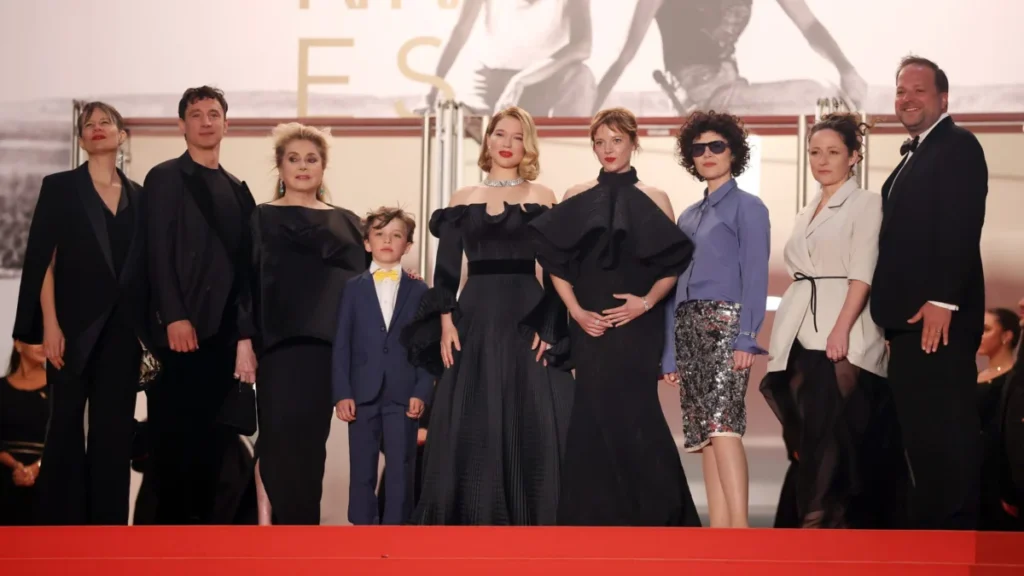
Hope‘s journey to global prominence was significantly propelled by its premiere at the prestigious Cannes Film Festival. The film garnered widespread acclaim, captivating festival-goers and critics alike with its unique blend of genre intensity and profound storytelling. Reports from Cannes highlighted a palpable buzz surrounding Hope, culminating in a robust critical reception. The Hollywood Reporter‘s chief film critic, David Rooney, lauded it as a "rip-roaring sci-fi creature feature" with "cult classic written all over it," a sentiment that undoubtedly resonated with prospective buyers eager to identify the next breakout phenomenon. The festival served as an indispensable launchpad, transforming critical buzz into tangible market value and demonstrating Cannes’ enduring power as a crucial hub for international film commerce.
The enthusiastic reception at Cannes, often a litmus test for a film’s international viability, translated directly into the record-breaking sales figures. This phenomenon is a testament to the festival’s unique ability to elevate films, particularly those from non-English speaking markets, onto a global platform. For a film like Hope, which marries a distinctive directorial vision with a globally accessible genre, Cannes provided the perfect environment to showcase its potential and attract a diverse array of distribution partners.
Major Players Secure Key Territories
The scale of Hope‘s international acquisition spree is underscored by the involvement of several major industry players. Studio divisions Focus Features and Sony Pictures Worldwide Acquisitions (SPWA) were among the first to secure significant international territories. Focus Features, in collaboration with UPI France, acquired rights for France, the Benelux region, and South Africa, signaling confidence in the film’s appeal across varied cultural landscapes. Simultaneously, SPWA secured distribution rights for Portugal, Scandinavia, Iceland, Israel, and the Middle East, further broadening the film’s international footprint.
Beyond these studio giants, a diverse range of prominent international distributors also joined the fray. Japan’s Gaga, known for its discerning taste in international cinema, acquired the rights for its territory, while CIS’s The World Pictures and Eastern Europe’s Unicorn Media ensured extensive coverage across their respective markets. India’s Star Ent. also secured a deal, highlighting the film’s wide-ranging appeal even in highly competitive and culturally distinct markets.
Crucially, some of these agreements represent a significant departure for the acquiring distributors, with Hope marking their first-ever acquisition of a Korean film. This detail is particularly telling, indicating a broader industry shift where the proven quality and marketability of Korean content are overcoming traditional barriers and expanding the horizons of international distribution portfolios. This diversification of acquisitions reflects a growing confidence in the commercial viability of non-Hollywood productions, particularly those emerging from the vibrant Korean film industry.
Adding to the robust pre-sales performance, Neon, a distributor renowned for its successful acquisition and promotion of critically acclaimed independent and international films, pre-emptively secured Hope for North America, the U.K., and Australia ahead of Cannes. This early commitment from Neon, which has a track record of turning festival darlings into box office successes (e.g., Parasite), provided an early vote of confidence in the film’s potential. Similarly, Mubi, a global streaming service and distributor celebrated for its curated selection of arthouse and international cinema, pre-bought multiple territories, including Germany, Spain, Italy, and Latin America, signaling the film’s strong appeal across both traditional theatrical and burgeoning streaming platforms.
Financial Triumph and Strategic Vision
The financial implications of Hope‘s pre-sales success are profound. Plus M Entertainment, the company overseeing worldwide sales for the title, confirmed that the film has already recouped "nearly half" of its net production budget. This figure is not merely impressive; it represents a significant de-risking of the project even before its public debut. In the volatile landscape of film financing, securing such a substantial return prior to release is a testament to the film’s perceived value and market confidence. For a non-Hollywood production, this level of pre-sale recoupment offers unparalleled financial stability, allowing the filmmakers and investors to approach the theatrical release with a considerably reduced financial burden.
This early financial success also provides a powerful signal to the global film industry. It demonstrates that compelling, original storytelling, even when originating from a non-English speaking market and featuring a challenging genre, can command significant international investment. This model of pre-sales success allows production companies to reinvest in future projects, fostering a sustainable ecosystem for independent and international filmmaking.
Na Hong-Jin’s Vision: A Franchise in the Making
At the heart of Hope‘s appeal is the distinctive directorial vision of Na Hong-Jin. Known for his intense, often brutal, and meticulously crafted thrillers like The Chaser (2008) and The Wailing (2016), Na has cultivated a reputation for pushing cinematic boundaries. His previous works have consistently earned critical acclaim for their intricate narratives, atmospheric tension, and unflinching exploration of human darkness. This established pedigree undoubtedly played a crucial role in attracting international buyers, who recognize Na Hong-Jin as a director whose films are not only artistically significant but also possess strong commercial potential.
Hope follows Bum-seok, portrayed by The Wailing star Hwang Jung-min, as the chief of police in the small, remote South Korean outpost of Hope Harbor, situated near the Demilitarized Zone. The town finds itself under siege from strange, otherworldly creatures, plunging its inhabitants into a desperate fight for survival. The film boasts a stellar ensemble cast, including Zo In-sung and Hoyeon, alongside show-stopping cameos from international stars Michael Fassbender, Alicia Vikander, and Taylor Russell. This blend of acclaimed Korean talent and recognizable global faces further enhances the film’s international marketability, bridging cultural gaps and drawing in diverse audiences.
Intriguingly, Na Hong-Jin has conceived Hope as the first installment in a potential franchise. This strategic foresight adds another layer of commercial appeal, as distributors are often keen to invest in intellectual property with long-term potential. The concept of a multi-film narrative allows for deeper world-building, character development, and sustained audience engagement, offering a more enduring return on investment compared to standalone features. While the film’s original running length, clocking in at 2 hours and 40 minutes, could present a programming challenge for some distributors, it also signals a commitment to a rich, expansive narrative, a trait often appreciated by dedicated genre fans and audiences seeking immersive cinematic experiences. The decision to embrace a longer runtime, particularly for the inaugural film in a planned franchise, suggests a confidence in the story’s depth and the audience’s willingness to commit to a more epic scale.
The Broader Implications for Korean Cinema and Hallyu
Hope‘s record-breaking success is not an isolated event but rather a powerful affirmation of the ongoing global phenomenon known as Hallyu, or the Korean Wave. Over the past two decades, Korean cultural content—from K-pop music and K-dramas to feature films—has achieved unprecedented international recognition and commercial success. Films like Bong Joon-ho’s Parasite (2019), which famously won the Palme d’Or at Cannes and then the Academy Award for Best Picture, shattered perceptions about non-English language cinema’s ceiling. Similarly, the global success of series like Squid Game on Netflix further demonstrated the universal appeal and commercial might of Korean storytelling.
Hope‘s performance in the international market signals a maturation and diversification of this trend. While Parasite showcased social satire and Squid Game leveraged survival drama, Hope ventures into the realm of high-concept sci-fi horror, proving that Korean filmmakers can excel across a wide spectrum of genres. This genre versatility broadens the appeal of Korean cinema, attracting new segments of the international audience who might not typically gravitate towards traditional Korean dramas or thrillers. The film’s success also highlights the increasing sophistication of Korean production values and special effects, making it competitive with blockbuster productions from Hollywood and other major film industries.
Furthermore, the participation of renowned international actors like Michael Fassbender and Alicia Vikander, albeit in cameo roles, signifies a growing willingness among global talent to collaborate with Korean directors and production houses. This cross-cultural collaboration not only adds star power but also facilitates greater visibility and accessibility for Korean films in Western markets, further blurring the lines between regional and global cinema.
Looking Ahead: Release Schedule and Future Prospects
Hope is slated for its initial release in Korea this summer, a strategic move that allows the film to build domestic momentum before its international rollout. This will be followed by a North American premiere in the fall, capitalized on by Neon’s aggressive distribution strategy, with subsequent releases scheduled worldwide throughout the remainder of the year and into early next year. This staggered release approach is common for major international titles, allowing distributors to tailor marketing campaigns to specific regional tastes and optimize box office performance.
The unprecedented pre-sales for Hope have firmly positioned it as one of the most anticipated international releases of the year. Its success serves as a powerful testament to the creative prowess of Na Hong-Jin and the robust health of the Korean film industry. As Hope prepares to captivate audiences around the globe, it not only promises thrilling cinematic entertainment but also paves the way for a new wave of international investment and recognition for Korean storytelling, further cementing its indelible mark on the global cultural landscape. The industry watches keenly to see how this record-setting pre-release performance translates into box office success and how it will shape the trajectory of future Korean productions seeking global reach.