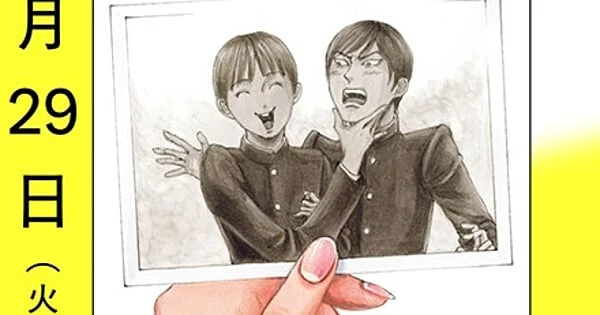
The production committee for the television anime adaptation of Yuki Ikeda’s Thunder 3 manga officially announced on Thursday, October 1, 2026, that the series has been greenlit for a second season, scheduled to debut in 2027. This announcement follows the conclusion of the first season, which aired its final episode on Wednesday, September 30, 2026. To commemorate the renewal, series creator Yuki Ikeda released an original illustration, signaling the continued expansion of the franchise’s multimedia presence.
The series, which blends high-stakes science fiction with the grounded reality of school life, has seen a steady rise in popularity since its serialization began. Kodansha USA, which holds the English-language publishing rights, describes the narrative as a high-concept thriller involving three ordinary schoolboys who inadvertently stumble into an interdimensional conflict, forcing them to navigate a world far beyond their understanding.
Contextualizing the Production Landscape
The renewal of Thunder 3 is part of a broader trend within the Japanese animation industry in 2026, which has seen an uptick in multi-season commitments for original and manga-adapted works. The first season of the anime, produced under the vision of Hiroya Oku—who utilizes the pen name Yuki Ikeda for this project—has been lauded for its distinct visual style and unconventional pacing.
Industry analysts observe that the decision to confirm a second season immediately following the finale is a strategic move to maintain viewer engagement and capitalize on the momentum generated by the show’s season-one conclusion. By announcing the 2027 window early, the production committee aims to secure a firm place in the upcoming fiscal year’s broadcast schedule, a critical component for maintaining visibility in an increasingly saturated streaming market.
A Period of High-Volume Industry Activity
The announcement of Thunder 3’s second season arrives during a highly active week for the anime industry, marked by a wave of renewals, new series announcements, and tributes to industry veterans. As of the end of September 2026, several high-profile franchises have made significant headlines:
- Seirei Gensouki – Spirit Chronicles: Following the conclusion of its second season in late 2024, the official production channels confirmed the development of a third season on September 30, 2026.
- Liar Game: The anime adaptation of Shinobu Kaitani’s manga has also been granted a second season, with the final episode of its 26-episode debut run airing on September 28, 2026.
- Naruto: In a move that has captured significant international attention, Viz Media announced a "limited" television series for the Naruto franchise, with further details scheduled for release at the New York Comic-Con panel on October 10.
- Obocchama-kun: TV Asahi confirmed the production of a new series, Obocchama-kun Reborn, slated for 2027, featuring the return of original voice actress Chie Kōjiro.
This flurry of activity underscores a robust period of growth for the sector. Data from the Association of Japanese Animations suggests that the market for televised anime has reached a post-pandemic peak, driven by the increasing global demand for localized content on major streaming platforms.
Strategic Shifts in Light Novel and Manga Adaptations
The industry is currently witnessing a transition where long-running light novel series are approaching their narrative conclusions, creating space for newer properties to occupy top-tier broadcast slots. Notably, the light novel series Bottom-tier Character Tomozaki (Jaku Chara Tomozaki-kun) by Yūki Yaku is set to conclude with its 12th volume on October 16, 2026. This conclusion marks the end of a significant era for the series, which served as a staple of the "real-life" game genre.
Simultaneously, creators are pivoting toward legacy revivals and modern extensions. Sankaku Head has revealed the upcoming launch of Umaru-chan 100 on the Young Jump+ platform on October 1, 2026, extending the lifespan of the Himouto! Umaru-chan franchise. Furthermore, the industry is increasingly looking toward film projects as a primary vehicle for advancing established series, as evidenced by the announcement of the first film project for Welcome to Demon School, Iruma-kun during the "DEVIL’S PARTY! 2" event.
Reflections on Artistic Legacy
While the industry moves forward with new projects, it has also paused to honor the pioneers of the medium. The recent passing of director Toshio Masuda, who died on August 26, 2026, at the age of 98, has prompted retrospectives on the early evolution of Japanese animation. Masuda, known for his work on the Space Battleship Yamato film and his collaboration on the historical war film Tora! Tora! Tora!, was a central figure in shaping the cinematic language of the 20th century. His influence remains a touchstone for directors currently navigating the transition from traditional animation to the digital-heavy production models seen in current hits.
The Rise of Multi-Platform Content
The integration of webtoons into the mainstream animation and exhibition space represents another significant development. The ongoing "K-Comics Origin Los Angeles" exhibition at the Korean Culture Center serves as a testament to the international reach of digital-first comics. By exploring the 100-year history of Korean comics and their transition into webtoons, the industry is recognizing the format’s role as a primary source of Intellectual Property (IP) for global streaming services. This shift is mirrored in the critical reception of works like Aachi and Ssipak, which demonstrate the evolution of Korean animation from outsourcing roles to creative independence.
Implications for the 2027 Broadcast Season
The confirmation of Thunder 3 for a 2027 release indicates that the production committee is focusing on a long-term strategy rather than a rapid, high-volume production cycle. In the context of modern animation, where production committees face pressure from labor shortages and scheduling bottlenecks, the decision to allow a gap year between seasons is becoming a standard practice for maintaining quality control.
By providing fans with a concrete timeline, the producers of Thunder 3 have effectively mitigated the "wait-and-see" uncertainty that often plagues mid-tier series. As the production moves into its next phase, the involvement of Kodansha USA suggests a concerted effort to maintain a unified global release strategy. This synchronization is vital, as the international market now accounts for a substantial portion of the total revenue for Japanese animation studios.
Conclusion and Future Outlook
As of early October 2026, the anime landscape is defined by a synthesis of nostalgia and innovation. The revival of classic series like Magic Knight Rayearth alongside the continuation of contemporary hits like Thunder 3 and Seirei Gensouki illustrates a balanced portfolio for production houses.
The industry enters the fourth quarter of 2026 with a clear roadmap for the coming year. Stakeholders are keeping a close watch on the New York Comic-Con announcements regarding Naruto and the reception of new adaptations, which will serve as indicators for the market’s appetite for high-budget, legacy-brand revivals. For the audience of Thunder 3, the focus now shifts toward potential teasers and plot developments that will define the narrative trajectory of the second season in 2027. The project remains a focal point of current industry discourse, highlighting the successful intersection of manga-to-anime translation and global digital distribution.