The 2026 Tribeca Film Festival has officially announced the world premiere of Humpty Dumpty X, a long-gestating documentary directed by British filmmaker Tony Kaye. The film, which has been in production for over two decades, serves as an autobiographical post-mortem of one of the most contentious production cycles in modern Hollywood history: the making of the 1998 neo-Nazi drama American History X. By utilizing a vast archive of personal footage, recorded telephone conversations, and private journals, Kaye aims to provide an unvarnished look at the creative friction that defined his feature debut and subsequently altered the trajectory of his career. The debut trailer, released in late May 2026, offers a glimpse into a narrative that has transitioned from industry gossip to cinematic folklore, documenting a director’s fight for artistic autonomy against the traditional studio system.
The Historical Context of the American History X Controversy
To understand the significance of Humpty Dumpty X, one must examine the volatile environment of the late 1990s when American History X was in production. Tony Kaye, then a highly successful commercial and music video director known for his visual flair and uncompromising style, was hired by New Line Cinema to helm the project. While the film eventually became a critical success and earned lead actor Edward Norton an Academy Award nomination, the post-production phase was marked by a public and legal battle between Kaye and the studio.
The conflict primarily centered on the final cut of the film. Kaye’s initial edit was approximately 95 minutes long, which the studio found insufficient. When the studio demanded changes and allowed Edward Norton to participate in the editing process, Kaye famously revolted. He argued that the studio’s version was "crammed with shots of everyone crying in each other’s arms," which he felt undermined the raw, documentary-style grit he intended for the narrative. The dispute escalated to the point where Kaye attempted to have his name removed from the credits, requesting that the Director’s Guild of America (DGA) allow him to use the pseudonym "Humpty Dumpty" instead of the standard "Alan Smithee."

The Genesis of Humpty Dumpty X
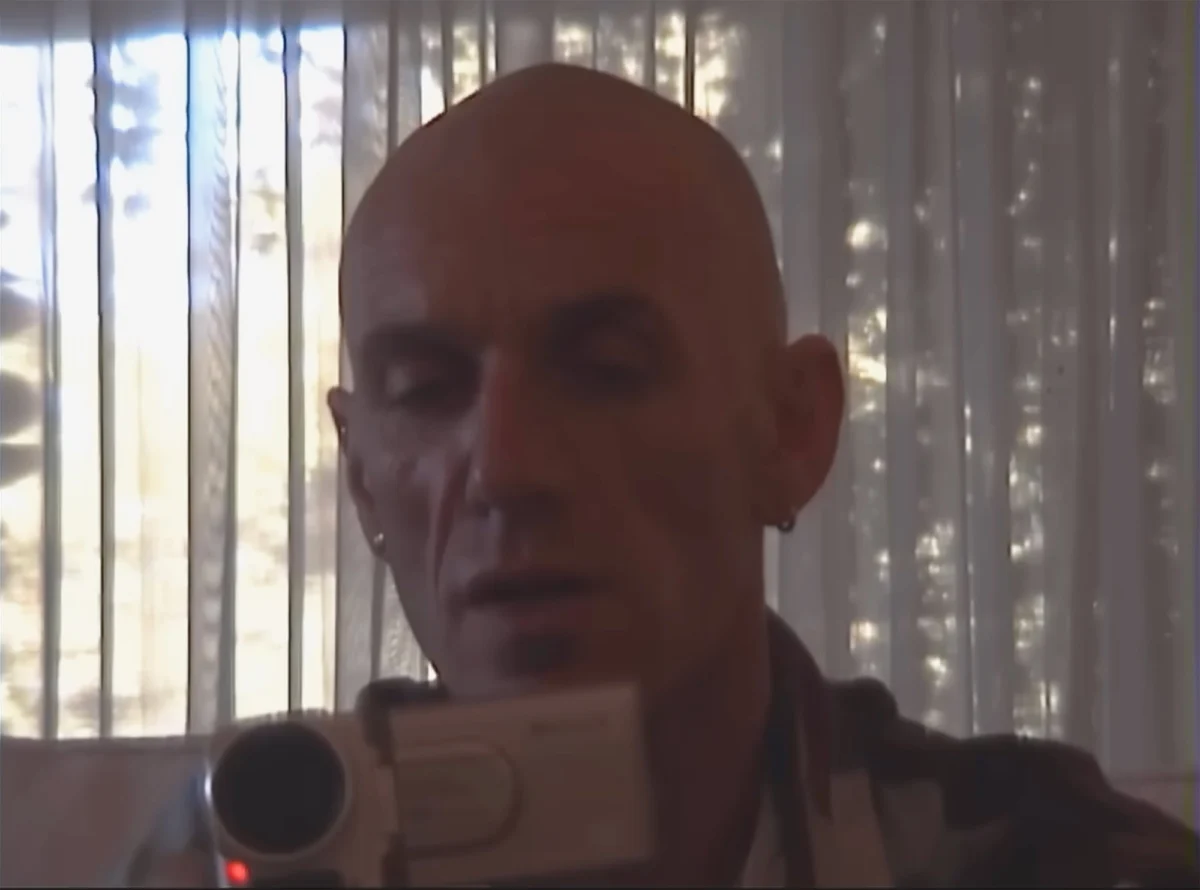
The documentary represents a 23-year effort to compile and curate the footage Kaye captured during this tumultuous period. Unlike traditional "making-of" documentaries that are often produced by studios as promotional material, Humpty Dumpty X is an independent, self-funded exploration of the "war" between an artist and a corporation. The film is constructed from hundreds of hours of raw data, including VHS tapes of production meetings, audio recordings of heated phone calls with New Line Cinema executives, and Kaye’s own video diaries.
The title itself, Humpty Dumpty X, refers directly to the pseudonym Kaye fought to use in 1998. At the time, the DGA denied his request on the grounds that he had publicly disparaged the film, violating the guild’s rules for name removal. Kaye’s insistence on the "Humpty Dumpty" moniker was a metaphorical statement on the "shattering" of his vision and the impossibility of putting the original creative pieces back together once the studio had intervened. The documentary functions as a digital reconstruction of those shattered pieces, offering Kaye the final word on a project that has haunted his filmography for nearly thirty years.
Chronology of a Hollywood Standoff
The timeline of events covered in Humpty Dumpty X spans from the initial casting calls in 1996 to the eventual release of the film in late 1998, and the subsequent decades of reflection. Key milestones depicted in the documentary include:
- 1996–1997: The initial production phase where Kaye’s experimental techniques, such as shooting in both black-and-white and color, were initially supported by the studio.
- Early 1998: The delivery of Kaye’s first cut and the subsequent rejection by New Line Cinema executives, who demanded a longer, more traditional narrative structure.
- Summer 1998: Kaye’s public protest, which included spending an estimated $1 million of his own money on full-page advertisements in trade publications like Variety and The Hollywood Reporter, criticizing the studio and Edward Norton.
- Late 1998: The release of the studio-approved cut of American History X. Despite the film’s success, Kaye filed a $200 million lawsuit against New Line Cinema and the DGA, claiming his First Amendment rights were violated.
- 1999–2025: The "lost years" where Kaye continued to film himself and his surroundings, documenting the industry’s reaction to his reputation as a "difficult" director while he worked on other projects like the abortion documentary Lake of Fire and the drama Detachment.
Artistic Methodology and Documentary Structure
Humpty Dumpty X is described by Tribeca festival organizers as a "fascinating self-portrait" and a "meditation on art." The trailer indicates that the film does not follow a standard chronological narrative but rather adopts a collage-like structure. It incorporates Kaye’s paintings, photographs, and notebooks, suggesting that the director views the struggle over American History X as a broader philosophical conflict rather than a mere contractual dispute.

The inclusion of unmediated access to a major director in the middle of a production crisis provides a rare pedagogical tool for film historians and students of the industry. The film documents the specific pressures of the studio system during the 1990s—a period when independent-leaning "prestige" films were being increasingly absorbed by large corporate entities. Kaye’s footage captures the exact moment when the "director-as-auteur" model collided with the "studio-as-brand" model.
Industry Reactions and Inferred Implications
While New Line Cinema and the individuals involved in the 1998 production have not issued formal statements regarding the documentary’s 2026 release, the film’s premiere at Tribeca suggests a significant level of industry interest in Kaye’s perspective. Historically, the "Humpty Dumpty" incident was viewed as a cautionary tale about the dangers of a director becoming too combative with their financiers. However, in the modern era of "Director’s Cuts" and fan-led campaigns for original artistic visions (such as the "Snyder Cut" of Justice League), Kaye’s decades-old battle takes on a new relevance.
Industry analysts suggest that Humpty Dumpty X could serve as a companion piece to other recent documentaries focused on difficult productions, such as Megadoc, which chronicled the making of Francis Ford Coppola’s Megalopolis. These films reflect a growing appetite among cinephiles for "meta-cinema"—stories about the grueling, often ugly process of creation that exists behind the polished final product.
The 2026 Tribeca Film Festival Premiere
The Tribeca Film Festival, established by Robert De Niro and Jane Rosenthal, has long been a venue for documentaries that challenge the status quo. The inclusion of Humpty Dumpty X in the 2026 lineup places it among the most anticipated titles of the summer season. The festival’s programming notes highlight that the film offers "unmediated access to a major director," a rarity in an age where behind-the-scenes content is typically heavily sanitized by PR departments.

The premiere is expected to draw significant attention from both the press and the filmmaking community in New York City. For Kaye, the screening represents a homecoming of sorts—a return to the public eye with a project that is entirely under his control. Produced by Yan Kaye and Above the Sea Inc., the film currently does not have a wide theatrical release date, though industry insiders expect a distribution deal to be finalized following its festival run.
Broader Impact on Filmmaking and Legacy
The release of Humpty Dumpty X marks a pivotal moment in the career of Tony Kaye. After the fallout from American History X, Kaye was largely marginalized by major Hollywood studios, leading him to pursue more experimental and independent avenues. By finally releasing this documentary, Kaye effectively reclaims his narrative, transforming a career-threatening controversy into a structured piece of performance art.
The film also raises questions about the ethics of "archival" filmmaking. By using recorded phone calls and private conversations from 1998, Kaye is testing the boundaries of privacy and professional conduct. However, from a historical standpoint, these recordings provide a primary-source account of the power dynamics within a major studio during the transition into the 21st century.
As the film prepares for its June premiere, it stands as a testament to the endurance of the creative spirit and the long memory of Hollywood. Whether Humpty Dumpty X will vindicate Kaye or further cement his reputation as a provocateur remains to be seen, but its existence ensures that the story of American History X will remain a central case study in the ongoing dialogue between art and commerce. For those interested in the realities of the creative life and the scars earned within the studio system, Kaye’s long-promised work appears to be essential viewing, offering a raw look at what happens when a filmmaker refuses to compromise.