Zheng Yifei’s independently produced documentary, "Trashy Boy," originally titled "Feiwu gushi" (A Tale of Trash) in Mandarin, offers a deeply empathetic portrayal of Zhang Haichao, a young man navigating the complex landscape of personal struggle and societal pressures in the remote western Chinese province of Gansu. Far from the bustling metropolises typically associated with China’s rapid development, the film transports viewers to Longxi, a relatively unremarkable part of Dingxi city, where Haichao, affectionately nicknamed Big Sponge, grapples with a myriad of challenges, from health issues to economic precarity and the yearning for artistic recognition. The film’s English title, "Trashy Boy," while direct, perhaps softens the original Chinese nuance, which could be more accurately interpreted as "good-for-nothing" or "waste," highlighting the protagonist’s marginalized status and self-perception, yet Zheng Yifei’s directorial approach consistently imbues the narrative with profound sympathy for his subject, elevating the film beyond a mere observation of hardship.
A Portrait of Disillusionment and Aspiration
The documentary immediately establishes an unconventional relationship between filmmaker and subject. Unlike traditional observational documentaries where the director often remains an unseen presence, Zheng Yifei is an active participant in Haichao’s life, engaging in constant verbal exchanges, sharing meals, and offering companionship. This intimate connection, whose origins are left largely unrevealed beyond their shared hometown of Longxi, allows for a raw and unfiltered depiction of Haichao’s daily existence. This participatory approach fosters a sense of trust and authenticity, enabling Haichao to open up about his innermost thoughts and struggles, making the audience privy to a deeply personal journey of self-discovery and resilience.
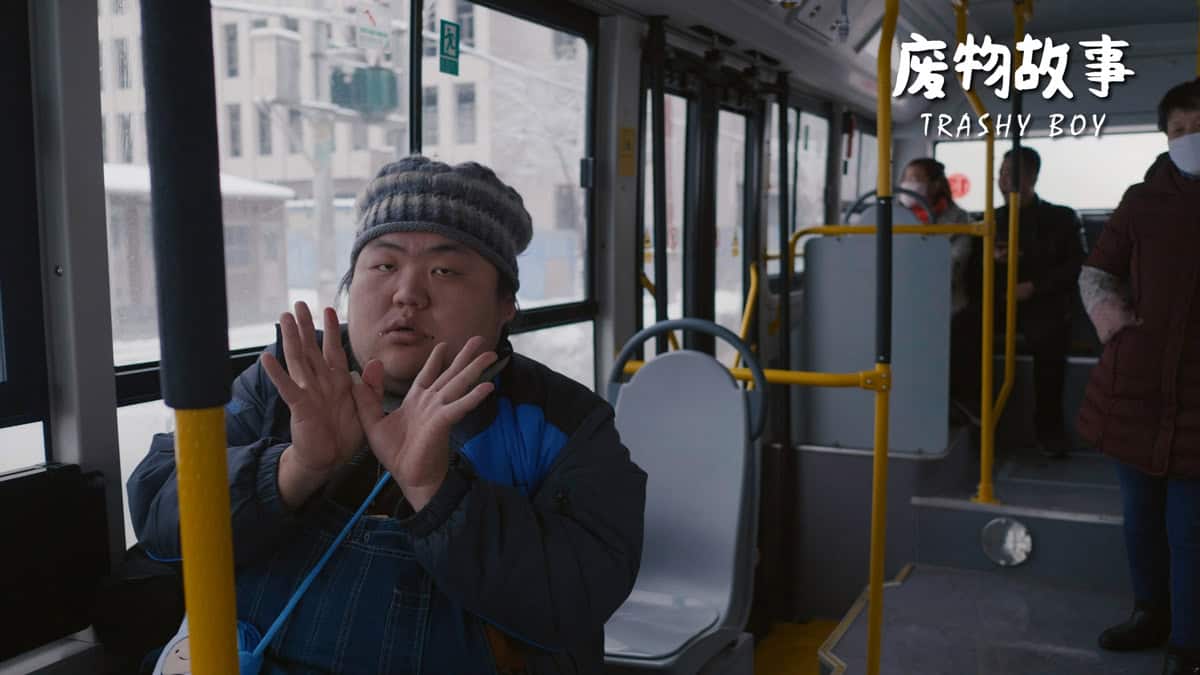
At just 20 years old, Zhang Haichao embodies many of the anxieties facing a segment of China’s youth. A high school dropout, he battles a significant weight problem, a consequence, in part, of childhood vasculitis. His attempts to combat his obesity through a radical, albeit inconsistently followed, diet mirror the broader struggles in his life – earnest efforts often met with frustrating setbacks. He lives in a spacious apartment, suggesting a degree of familial support, even if unspoken, and dedicates the bulk of his time to writing and recording rap songs. These lyrical creations serve as a confessional, a chronicle of his personal circumstances, aspirations, and frustrations, offering a unique window into the mind of a young man striving to find his voice in an often-unforgiving world.
Longxi’s Unseen Realities: A Socioeconomic Backdrop
The choice of Longxi, Dingxi, Gansu province, as the film’s primary setting is crucial to understanding Haichao’s predicament. Gansu, a landlocked province in China’s arid northwest, is historically and economically less developed than the country’s eastern coastal regions. It faces significant challenges related to poverty, environmental degradation, and a persistent rural-urban divide. For someone like Haichao, living in a place described as "unremarkable," opportunities are inherently scarce, and the path to upward mobility is steep. This geographical context underscores the isolation and limited prospects that define his early adulthood.
Rap music, a genre deeply rooted in urban culture and typically thriving in China’s major cities like Beijing, Shanghai, and Chengdu, is largely "unknown" in remote provinces like Gansu. This cultural disparity highlights Haichao’s artistic ambition as both an act of defiance and a testament to his determination. He is not merely pursuing a hobby; he is attempting to carve out an identity and a future through an art form that is foreign to his immediate environment, further emphasizing his sense of being an outsider, even within his own community.
Zhang Haichao: Navigating Personal and Societal Hurdles
The Weight of Expectations: Health and Family
Haichao’s childhood, marked by vasculitis and strict parents, paints a picture of early hardship that likely contributed to both his physical condition and his introverted nature. His father, who works as a school security guard, makes occasional visits, and the film captures their strained but deeply poignant interactions. The father, while seemingly caring, struggles to comprehend his son’s passion for rap, preferring that Haichao pursue more traditional forms of music or a stable occupation. This generational clash, a microcosm of broader societal shifts in China, is one of the film’s most compelling elements. The constant "talking past each other" between father and son resonates with the universal theme of parental expectations versus youthful aspirations, and the difficulty of bridging the gap between traditional values and modern expressions of identity. For many young Chinese, the pressure to succeed and conform, often termed "involution" (neijuan), can be overwhelming, and Haichao’s father’s subtle disapproval is a reflection of these societal pressures.
The Digital Dream: BiliBili and the Quest for Recognition
Haichao’s financial situation is precarious, mirroring the challenges faced by many young people in China, particularly high school dropouts in less developed regions. Youth unemployment has been a significant concern in China, with rates sometimes reaching record highs, leading to a sense of disillusionment and the popular phenomenon of "lying flat" (tangping) – a rejection of the relentless pursuit of success. In an attempt to generate income, Haichao turns to the internet, aspiring to become a singer and "influencer" on BiliBili, a popular Chinese video-sharing platform akin to YouTube or TikTok.
However, the world of online content creation is fiercely competitive, and Haichao’s attempts meet with limited success. Despite his yearning for recognition, he is inherently shy, a paradox that adds layers to his character. One fleeting moment of triumph occurs when he is recognized in a local bar in Longxi, where staff and patrons immediately request to hear one of his songs. Yet, this recognition, rather than bringing joy, causes him discomfort, highlighting the deep-seated conflict between his desire for validation and his innate modesty or insecurity. This scene powerfully illustrates the psychological complexities of navigating public attention for a private individual, especially one who has largely existed on the fringes.
The Unlikely Anthem: Rap in Rural China
The emergence of rap music in China over the past two decades has been phenomenal, driven by popular reality shows like "The Rap of China" and a burgeoning underground scene. However, its growth has largely been concentrated in urban centers, making Haichao’s dedication to the genre in Longxi particularly striking. For Haichao, rap is more than just music; it is a vital outlet for self-expression, a means to process his unhappiness, articulate his struggles, and assert his individuality. His lyrics, often raw and introspective, become a powerful narrative of his life, transforming personal pain into art. This commitment to an art form that is culturally dissonant with his immediate surroundings underscores his resilience and his desperate need to communicate his truth to a world that often overlooks him. His rap serves as an unlikely anthem for a generation grappling with identity, opportunity, and the pursuit of dreams against formidable odds.
Zheng Yifei’s Compassionate Lens: Documentary Ethics and Intimacy
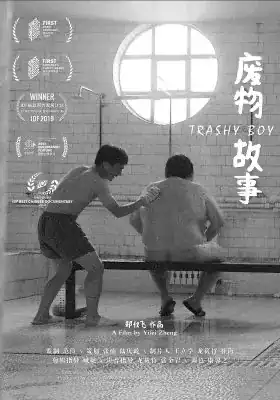
Zheng Yifei’s directorial choices are central to the film’s impact. His evident sympathy for Haichao permeates every frame, creating a documentary that is less about objective observation and more about shared human experience. This empathetic approach ensures that Haichao is never exploited or ridiculed, even when his vulnerabilities are most apparent. A notable example is a scene in a bathhouse where Haichao’s obesity is clearly visible. Instead of sensationalizing or judging, Zheng’s camera maintains a respectful distance, focusing on the human aspect rather than the physical condition. This ethical stance is crucial, particularly when dealing with a protagonist who is already marginalized and struggling with self-esteem.
The director’s active presence and interaction with Haichao blur the lines of traditional documentary filmmaking, moving towards a more participatory or collaborative style. This intimacy allows for a deeper exploration of Haichao’s character, revealing his complexities, contradictions, and ultimately, his unwavering spirit. This unconventional relationship forms the backbone of the narrative, giving the film its unique emotional depth and ensuring that the audience connects with Haichao on a profoundly personal level.
Beyond the Frame: Implications for Chinese Youth and Independent Cinema
"Trashy Boy" garnered significant recognition within China, winning two awards at local festivals, including an Audience Award. This suggests that Haichao’s story resonated deeply with Chinese viewers, perhaps because his struggles with identity, economic pressure, and generational conflict are widely relatable. The Audience Award, in particular, highlights the film’s ability to connect emotionally with its viewers, validating Zheng Yifei’s compassionate approach.
Despite its local success, the film’s limited presence at international festivals is a missed opportunity. "Trashy Boy" offers a powerful counter-narrative to the often-homogenized portrayal of China in global media. It sheds light on the lived realities of youth in less developed regions, the challenges faced by independent filmmakers in China, and the universal quest for self-expression and belonging. Independent Chinese cinema often struggles with funding, distribution, and censorship, making it difficult for such nuanced stories to reach a broader global audience. Yet, films like "Trashy Boy" are vital, offering authentic, unvarnished perspectives on contemporary Chinese society. They provide a critical lens through which to understand the social dynamics, economic disparities, and cultural shifts occurring within the country, giving voice to those often unheard in mainstream discourse. The film’s exploration of themes like youth disillusionment, the "lying flat" phenomenon, and the arduous pursuit of dreams in a hyper-competitive society makes it a significant social commentary.
A Resilient Spirit: The Enduring Message of ‘Trashy Boy’
As the film draws to a close, Haichao’s spirit of defiance remains unbroken. Despite the unfulfilled promise of an online romance and the uphill battle for artistic recognition, he refuses to be defeated. The documentary concludes with a beautifully produced, professional-sounding rap song, a stark contrast to his earlier, more rudimentary recordings. This final piece of music is not just an artistic achievement; it’s a powerful statement of hope and resilience, hinting at a potentially brighter future for the passionate singer. It suggests that even in the face of relentless adversity, the pursuit of one’s passion can be a profound act of self-preservation and a pathway to a more fulfilling existence.
"Trashy Boy" is more than just a documentary about a young man; it is a testament to the human spirit’s capacity for creativity and perseverance. It serves as an important document of contemporary China, revealing the aspirations and challenges of its youth beyond the glossy facade of economic prosperity. It is a film that champions empathy, artistic integrity, and the enduring power of storytelling to illuminate the lives of those often overlooked. Viewers seeking an authentic and moving cinematic experience are encouraged to watch "Trashy Boy," available on CathayPlay, by clicking on the image below or visiting the platform directly.