Society has long maintained a dark, unrelenting fascination with criminals who terrorize communities on a mass scale. True-crime narratives continue to dominate streaming platforms and box offices alike, driven by an insatiable public curiosity to understand the psychological underpinnings of monstrous acts. Yet, translating real-world trauma and complex historical investigations into compelling cinematic art remains a formidable challenge. The latest attempt to examine the life, crimes, and capture of Theodore Kaczynski—known globally as the Unabomber—arrives in the 97-minute feature film titled simply Unabomber. Directed by Janus Metz and written by Sam Chalsen and Nelson Greaves, the film boasts a high-profile cast featuring Russell Crowe, Jacob Tremblay, and Shailene Woodley. Despite its pedigree, the production ultimately falters, delivering a mundane and unfulfilling exploration of a harrowing historical chapter.
Main Facts and Narrative Structure
Unabomber attempts to balance two distinct historical threads within its tight 97-minute runtime. The narrative oscillates between Kaczynski’s formative years as a brilliant, socially isolated Harvard undergraduate participating in controversial psychological experiments, and the relentless 1990s FBI manhunt that ultimately led to his arrest.
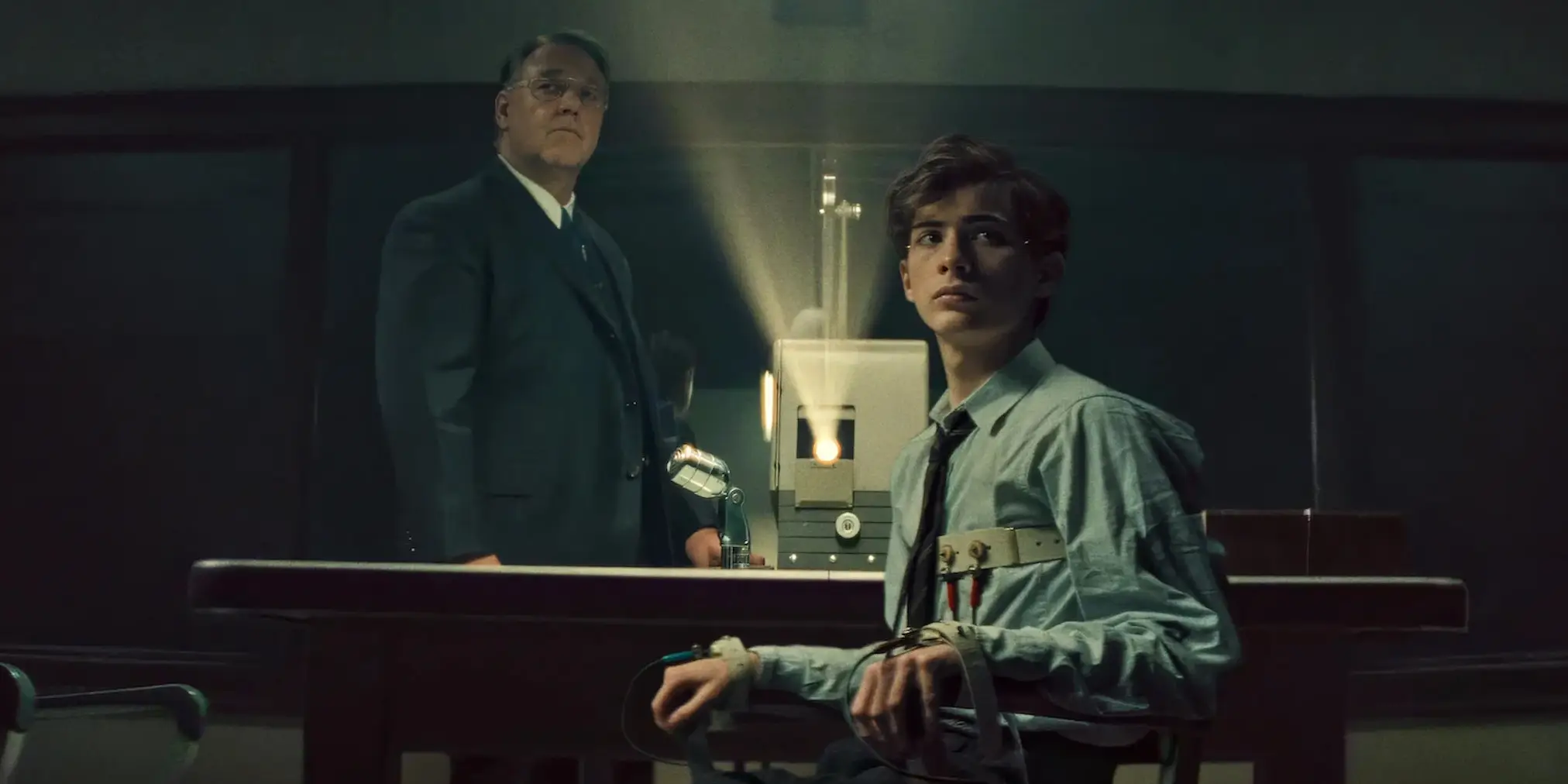
The first storyline features a young Ted Kaczynski, portrayed by Jacob Tremblay, who catches the eye of psychology professor Henry Murray, played by Russell Crowe. Murray introduces his young student to clinical experiments designed to test human resilience under psychological stress—experiences that modern historians and biographers frequently cite as pivotal catalysts in Kaczynski’s mounting alienation and eventual radicalization. Decades later, Kaczynski’s anti-technology crusade would result in a 17-year mail-bomb campaign that killed three people and injured 23 others between 1978 and 1995.
Simultaneously, the film follows FBI Agent Joanne Miller, played by Shailene Woodley, as she joins the federal task force assigned to construct Kaczynski’s psychological profile. Miller’s investigative efforts form the backbone of the modern-day timeline, showcasing the methodical, albeit cinematic, collection of evidence that ultimately culminated in the high-profile raid of Kaczynski’s remote Montana cabin in April 1996.
Chronology of the Real-World Case
To contextualize the events depicted on screen, it is necessary to examine the actual timeline of the Unabomber investigation, which stands as one of the longest and most expensive manhunts in Federal Bureau of Investigation history.
- 1958–1962: A 16-year-old Ted Kaczynski enters Harvard University on a scholarship, where he later participates in psychologically grueling experiments conducted by Professor Henry Murray.
- May 25, 1978: The first Unabomber device is mailed, injuring a security guard at Northwestern University.
- 1978–1995: Over nearly two decades, Kaczynski targets universities, airlines, and computer stores, sending sixteen explosive devices through the mail. The campaign ultimately claims the lives of Thomas Mosser, Gilbert Murray, and Hugh Scrutton, while severely maiming numerous others.
- September 1995: Facing pressure from federal law enforcement, major media outlets including The New York Times and The Washington Post publish Kaczynski’s 35,000-word manifesto, titled Industrial Society and Its Future.
- April 3, 1996: Following a tip from Kaczynski’s brother, David Kaczynski—who recognized the ideological phrasing in the published manifesto—FBI agents raid a remote cabin in Lincoln, Montana, arresting Ted Kaczynski without incident.
- May 1998: Kaczynski pleads guilty to federal charges to avoid the death penalty and is sentenced to life imprisonment without the possibility of parole. He died in federal custody in June 2023 at the age of 81.
Critical Analysis of the Film’s Execution
Despite rich historical source material, the screenplay by Chalsen and Greaves struggles under the weight of its dual narrative structure. By attempting to encompass both Kaczynski’s radicalization at Harvard and the federal task force’s investigation in the 1990s, the film spreads its runtime too thin, robbing both storylines of essential depth.
The depiction of Kaczynski’s university years glances superficially at his developing social anxieties and burgeoning misanthropy. While brief moments—such as his hesitancy to pursue a romantic relationship with a peer who shares his intellectual interests—hint at a more profound internal conflict, these scenes are swiftly abandoned to refocus on his dynamic with Professor Murray. Similarly, the relationship between student and mentor lacks the psychological resonance required to make Kaczynski’s later violent turn feel fully contextualized.
On the investigative side, Agent Miller’s pursuit suffers from a similar lack of procedural detail. The meticulous evidence gathering, forensic linguistics, and inter-agency friction that defined the real UNABOM (Unabomber) task force are reduced to perfunctory beats. Manufactured internal conflicts between investigators feel forced rather than organic, undermining the tension of a high-stakes manhunt.
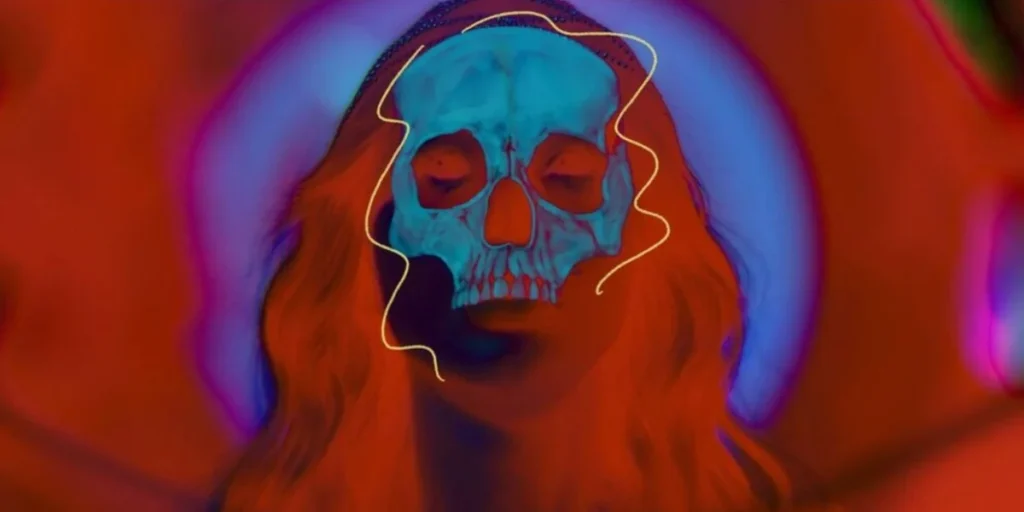
Director Janus Metz attempts to inject stylistic flair into the production, relying on conventional visual shorthand. The 1950s flashbacks are heavily saturated with sepia and brownish tones to signify the past, while the Harvard experiments utilize harsh lighting and jarring sound design to evoke Kaczynski’s internal distress. Yet, these directorial choices feel heavy-handed, failing to elevate a script that frequently relies on exposition rather than visual storytelling.
Cast Performances
The ensemble cast delivers uneven results, largely constrained by underdeveloped character arcs. Jacob Tremblay offers a distinct interpretation of Kaczynski, avoiding the familiar gruff persona associated with the older terrorist and leaning into the volatile, articulate fury of his youth. However, the writing limits his performance to surface-level outbursts rather than a nuanced psychological portrait.
Russell Crowe brings seasoned gravitas to Professor Henry Murray, yet his screen presence feels remarkably subdued. The role requires little of the actor’s dynamic range, resulting in a flat and functional performance that serves the plot rather than enriching it. Shailene Woodley faces the steepest uphill battle as Agent Miller. Hamstrung by sparse material, her character lacks the defining traits and obsessive dedication necessary to anchor a federal investigation, rendering her role largely disposable within the broader narrative.
Broader Impact and Implications
The release of Unabomber highlights Hollywood’s ongoing preoccupation with true crime and the ethical complexities of dramatizing real-world violence. While cinematic explorations of notorious criminals can offer valuable sociological and psychological insights into the origins of extremism, projects that prioritize superficial sensationalism over rigorous analysis risk trivializing historical trauma.
Experts in forensic psychology and criminology frequently emphasize that understanding individuals like Kaczynski requires careful examination of societal alienation, mental health, and the unforeseen consequences of academic and scientific experimentation. When films like Unabomber treat these profound themes as background noise for a standard thriller, they fail both the audience and the victims of the crimes depicted.
As public interest in the psychology of domestic terrorism remains high, future filmmakers exploring Kaczynski’s life or similar historical figures will face mounting pressure to deliver substantive, responsible storytelling. Unabomber serves as a cautionary tale of how rich source material can be diluted by rushed pacing and conventional framing, leaving audiences with a middling cinematic footnote rather than a definitive historical examination.