Production Background and Narrative Framework
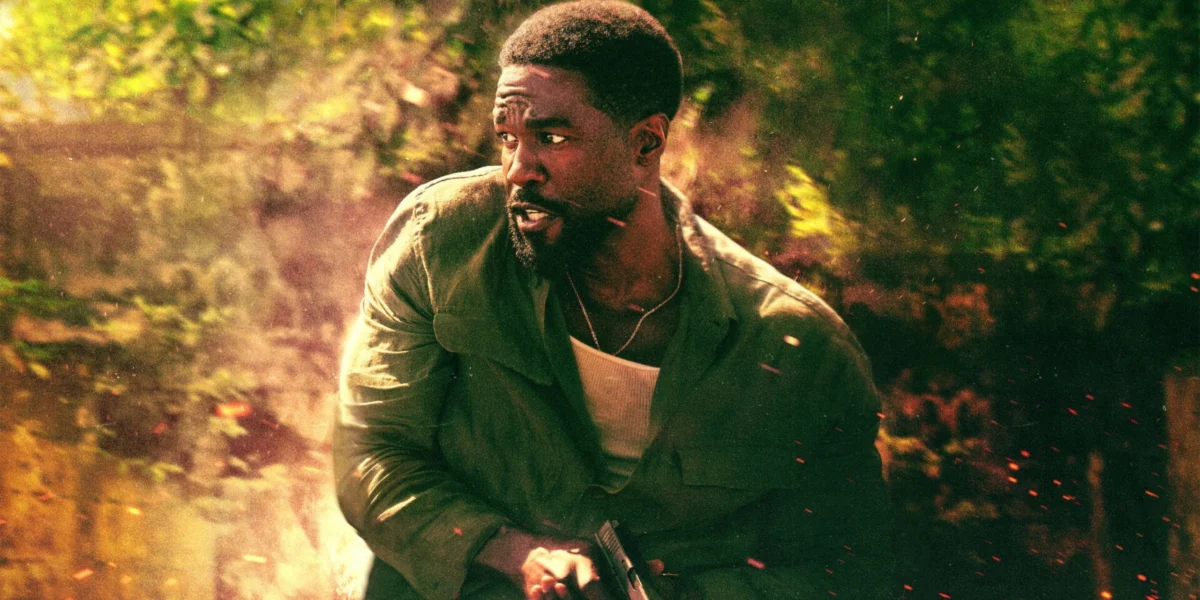
The series stars Emmy Award winner Yahya Abdul-Mateen II as John Creasy, a role previously occupied by Scott Glenn in 1987 and Denzel Washington in 2004. In this iteration, Creasy is depicted as a wounded former mercenary grappling with the psychological scars of his clandestine career. The narrative follows his journey to Brazil, where he is tasked with protecting the daughter of a deceased colleague. The central conflict ignites when an explosion in a high-rise residential building leads to a catastrophic loss of life, leaving Creasy as the sole protector of Poe Rayburn, played by Billie Boullet.
Unlike the 2004 film, which was set against the backdrop of a kidnapping epidemic in Mexico City, the 2024 series utilizes the favelas and corporate corridors of Brazil to explore themes of systemic corruption and organized crime. This geographical shift allows the production to incorporate local socio-political elements, though critics have noted that the exploration remains largely on the surface, serving more as a stylistic backdrop for action sequences than a deep sociological study. The supporting cast includes veteran actors Scoot McNairy, Bobby Cannavale, and Alice Braga, the latter playing Valeria Melo, a local driver whose personal stakes become inextricably linked with Creasy’s mission.
A Chronology of the Man on Fire Intellectual Property
The journey of "Man on Fire" from literature to the screen spans over four decades, reflecting changing tastes in the action-thriller genre.
- 1980: The Source Material – Author A.J. Quinnell (a pseudonym for Philip Nicholson) publishes the original novel. Set in Italy, the story follows an ex-CIA agent named Creasy who is hired to protect the daughter of a wealthy industrialist during the height of the "Years of Lead," a period of political terrorism and kidnappings.
- 1987: The First Adaptation – Director Élie Chouraqui releases the first film version starring Scott Glenn and Joe Pesci. While faithful to the Italian setting, the film failed to gain significant traction at the box office or with critics.
- 2004: The Tony Scott Era – Re-imagined by director Tony Scott and writer Brian Helgeland, the story was moved to Mexico City. Denzel Washington’s performance and Scott’s frenetic, hyper-stylized visual language turned the film into a cult classic and a commercial success, grossing over $130 million worldwide.
- 2023–2024: The Netflix Transition – Netflix announced a straight-to-series order for a new adaptation. The goal was to leverage the "Creasy" character as a recurring protagonist for a potential multi-season franchise, moving away from the definitive ending of the 2004 film to allow for narrative longevity.
Performance Analysis and Character Dynamics
Yahya Abdul-Mateen II’s portrayal of John Creasy serves as the emotional anchor of the series. Known for his roles in "Watchmen" and "Candyman," Abdul-Mateen II brings a level of vulnerability to the character that distinguishes this version from Washington’s more stoic and enigmatic interpretation. This Creasy is less of a "force of nature" and more of a man in active recovery, allowing the show to spend significant time on his psychological state.
However, the "lone wolf and cub" dynamic—a trope recently popularized by series like "The Mandalorian" and "The Last of Us"—is where the series faces its most significant hurdles. While the chemistry between Abdul-Mateen II and Billie Boullet is serviceable, the extended runtime of the series requires the relationship to be tested through various subplots that some analysts argue dilute the core emotional stakes. The addition of Alice Braga’s character, Valeria Melo, introduces a secondary narrative thread involving the struggles of families within Brazil’s criminal underworld, adding layers to the plot but also contributing to the "narrative bloat" often associated with streaming adaptations.
Technical Execution and Visual Style
One of the primary points of comparison for the new series is the visual direction. Tony Scott’s 2004 film was famous for its aggressive editing, saturated colors, and hand-cranked camera work, which many felt mirrored the chaotic mental state of the protagonist. In contrast, the Netflix series adopts a more standardized, "prestige TV" aesthetic. The cinematography is clean and professional, but lacks the distinctive texture and "weight" found in Scott’s work.
Action sequences in the series are frequent, featuring gunfights and tactical maneuvers through the dense urban environments of Brazil. While these sequences are executed with high production values, they have been described by some industry observers as "functional" rather than "innovative." The series leans heavily on the "Dad Thriller" aesthetic—a subgenre currently dominated by Amazon’s "Reacher" and "The Terminal List"—which prioritizes clear-cut stakes and a formidable, highly skilled protagonist over complex moral ambiguity.

Commercial Performance and Streaming Metrics
Despite mixed critical reviews, "Man on Fire" has demonstrated significant "binge-ability" according to internal Netflix data and third-party tracking services. In its debut week, the series reportedly clocked over 50 million hours viewed, placing it in the top three most-watched shows in over 80 countries.
Industry analysts suggest that the success of "Man on Fire" is a testament to the power of established intellectual property. Audiences are more likely to click on a title they recognize, even if the creative team and cast have changed. This "built-in" audience, combined with Yahya Abdul-Mateen II’s rising stardom, has made the series a "ratings juggernaut." Consequently, industry insiders suggest that a second season is all but inevitable, likely moving Creasy to a different international location to continue his mission, effectively turning the "Man on Fire" brand into a procedural anthology.
Broader Industry Implications and Critical Consensus
The reception of "Man on Fire" highlights a growing divide between commercial viability and critical acclaim in the streaming era. The "5/10" consensus among several critics stems not from a lack of quality in acting or production, but from the perceived unnecessary expansion of the story. The term "empty TV calories" has been used to describe the phenomenon where a story that could be told in two hours is expanded to seven or eight hours to satisfy the algorithms that favor "time spent on platform."
From a journalistic perspective, the series represents a case study in the "streaming-ification" of cinema. Studios are increasingly looking at their libraries to see which films can be converted into episodic content. While this provides steady work for actors and production crews, it raises questions about the dilution of storytelling. The 2004 "Man on Fire" film is now viewed as a masterclass in stylistic action-filmmaking, whereas the 2024 series is seen as a competent, yet formulaic, addition to a crowded streaming landscape.
Official Responses and Future Outlook
While Netflix has not officially greenlit Season 2, the production team has expressed interest in expanding the "Creasy-verse." Showrunner Kyle Killen has noted in various press junkets that the television format allows for a deeper dive into Creasy’s background as a mercenary—elements that were only hinted at in previous films.
The series’ impact on the local Brazilian film industry has also been noted, as the production employed hundreds of local crew members and utilized authentic locations, providing a boost to the regional economy. However, the portrayal of the country’s criminal elements continues to be a point of contention for local advocates who seek more nuanced representations of Brazilian society in international media.
In summary, "Man on Fire" (2024) stands as a successful commercial product that effectively utilizes a known brand and a talented lead actor to capture global attention. It fulfills the requirements of the modern streaming model: it is accessible, high-budget, and designed for continuous viewing. Whether it will leave a lasting legacy comparable to the 2004 film remains to be seen, but for now, it remains a dominant force in the current television cycle, proving that the character of John Creasy remains as compelling to audiences today as he was in 1980.