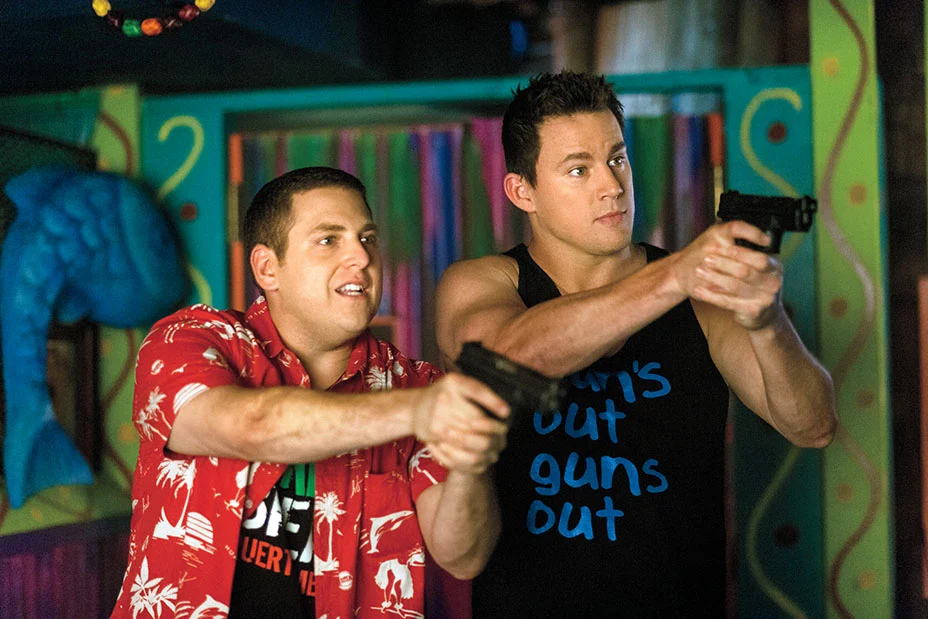
The highly anticipated continuation of the beloved buddy-cop comedy franchise, 24 Jump Street, is officially in development at Sony Pictures, with fan-favorite stars Jonah Hill and Channing Tatum in active discussions to return as the undercover police duo, Schmidt and Jenko. Joining them in talks is Ice Cube, expected to reprise his role as the gruff Captain Dickinson, signaling the reunion of the core comedic triumvirate that propelled the previous installments to critical and commercial success. Rodney Rothman, a key creative force behind the franchise’s previous entries, is set to direct the new film from a screenplay he co-wrote with Hill and Meghan Malloy, marking a significant evolution in his involvement with the series.
The Return of a Beloved Duo and an Evolved Creative Team
The news of 24 Jump Street‘s development has ignited considerable excitement among fans and industry observers alike, particularly with the potential return of Jonah Hill and Channing Tatum. Their on-screen chemistry as the mismatched officers, Schmidt (the intellectual but insecure one) and Jenko (the charming but dim-witted one), has been a cornerstone of the franchise’s appeal. Their comedic timing, improvisational prowess, and ability to blend genuine friendship with hilarious antagonism created a dynamic that resonated deeply with audiences. Ice Cube’s portrayal of Captain Dickinson, the perpetually exasperated and foul-mouthed superior, provides the perfect foil to their antics, grounding the outlandish situations with his no-nonsense demeanor. The prospect of seeing this trio back together promises a continuation of the unique blend of action, satire, and heart that defined the Jump Street films.
Rodney Rothman’s elevation to director is a testament to his integral role in shaping the franchise’s comedic voice. Rothman, an Academy Award winner for co-directing and co-writing Spider-Man: Into the Spider-Verse, previously contributed to the screenplay of 22 Jump Street alongside Michael Bacall and Oren Uziel. His deep understanding of the characters and the meta-comedic style of the series positions him well to steer this new chapter. The original directors, Phil Lord and Chris Miller, who helmed both 21 Jump Street (2012) and 22 Jump Street (2014), will return as producers, ensuring creative continuity and their signature innovative spirit. Their involvement, alongside veteran producer Neal H. Moritz, Hill’s Strong Baby Productions partner Matt Dines, and Tatum’s Free Association partner Reid Carolin, forms a robust producing team. Lord and Miller’s track record extends beyond the Jump Street franchise to critically acclaimed and commercially successful projects like The Lego Movie and the Spider-Verse films, solidifying their reputation as visionaries in modern animation and live-action comedy. Their continued oversight, even in a producing capacity, suggests a commitment to maintaining the distinct tone and quality that fans have come to expect.
A Franchise’s Illustrious History: From Television Roots to Box Office Triumph
The Jump Street film franchise is famously a meta-comedic reboot of the original 21 Jump Street television series, which first premiered on Fox in 1987. The show, co-created by Patrick Hasburgh and Stephen J. Cannell, was a groundbreaking procedural drama that followed a squad of youthful-looking police officers who went undercover in high schools and colleges to combat youth crime. It launched the career of Johnny Depp, who starred as Officer Tom Hanson, and became a cultural touchstone of the late 1980s and early 1990s. The series ran for five seasons, evolving from a gritty youth drama into a more character-driven narrative, and paved the way for future youth-oriented police shows. Johnny Depp even made a memorable cameo appearance in the 2012 film, a nod to the franchise’s origins and a moment cherished by long-time fans.
The cinematic reimagining began with 21 Jump Street in 2012, marking Phil Lord and Chris Miller’s live-action feature directorial debut. The film, based on a script by Jonah Hill and Michael Bacall, ingeniously blended the premise of the original show with a self-aware, satirical humor that deconstructed action movie tropes and buddy-cop clichés. It centered on Schmidt and Jenko, two incompetent officers forced to relive high school while undercover to dismantle a synthetic drug ring. The film was a runaway success, both critically and commercially, surprising many with its sharp wit and genuine comedic heart. It garnered widespread praise for its smart writing, hilarious performances, and its ability to simultaneously lampoon and celebrate the genre. Globally, 21 Jump Street surpassed the $200 million mark at the box office, far exceeding expectations for a reboot of an older television property.
The sequel, 22 Jump Street, released in 2014, proved to be an even greater triumph. This time, Schmidt and Jenko went undercover in college, navigating new social dynamics and a more dangerous drug operation. The film leaned even further into its meta-commentary, openly acknowledging its status as a sequel and humorously lampooning sequel conventions. Its critical reception was equally enthusiastic, with many critics praising its ability to maintain freshness while escalating the comedic stakes. Financially, 22 Jump Street was a bona fide blockbuster, raking in an impressive $331 million worldwide. This substantial box office performance firmly established the Jump Street film series as a major comedic franchise for Sony Pictures, demonstrating the enduring appeal of its unique brand of humor and the undeniable chemistry of its lead actors. The consecutive successes laid a strong foundation for future installments, making the decade-long wait for 24 Jump Street all the more protracted for eager audiences.
The Curious Case of "23 Jump Street": A Detour Through Development Hell
The journey to a third Jump Street film has been a protracted and often uncertain one, marked by various creative iterations and public statements. For years following the success of 22 Jump Street, discussions about "23 Jump Street" were rampant, with numerous concepts explored by the studio and the creative team. One of the most publicized and intriguing possibilities was a crossover event with Sony’s other major franchise, Men in Black. This ambitious project, often referred to as MIB 23, aimed to blend the comedic sensibilities of Jump Street with the sci-fi action of Men in Black, with Hill and Tatum potentially interacting with the alien-hunting agents. Lord and Miller were attached to produce, and there was considerable buzz surrounding the concept, which promised a unique blend of genre parody and franchise expansion.
However, despite initial enthusiasm and active development, the Men in Black crossover eventually stalled. Creative differences, scheduling conflicts for the high-demand cast and crew, and the sheer logistical complexity of merging two distinct cinematic universes proved to be insurmountable hurdles. By the late 2010s, the project was widely reported to be "finally dead," much to the disappointment of fans who were captivated by the potential for such a unique cinematic experiment. The failure of MIB 23 to materialize left the future of the Jump Street franchise in limbo, with the prospect of a third conventional sequel also appearing increasingly remote.
Adding another layer to this complex timeline, Channing Tatum himself provided a hopeful, albeit ultimately misaligned, update in 2024 (though the context suggests this statement likely occurred earlier, possibly in 2023 or late 2022, given the current news cycle). Tatum publicly noted that a script for a third movie in the 21 Jump Street series had indeed been written "a while back," and he enthusiastically praised its quality. "You know what, I’m going to put some good juju out there, and I’m going to say I would love to see 23 Jump Street," Tatum stated at the time, expressing a strong desire to reunite with Hill. "I would love to do it with Jonah, and Jonah I know wants to do it. We would love to just get to go play again." This statement underscores the consistent desire from the lead actors to revisit their roles, even as the studio navigated the complexities of development.
The decision to title the new film 24 Jump Street, deliberately skipping "23," is a significant and intriguing choice that immediately sparks curiosity. This stylistic jump could serve multiple purposes. It might be a clever meta-joke, a direct acknowledgment of the defunct MIB 23 crossover, or even a subtle commentary on the prolonged development hell the franchise experienced. By skipping a number, the filmmakers might be signaling a fresh start, detaching the new installment from the baggage of previous, unfulfilled plans and allowing for a clean narrative slate. Alternatively, it could be a setup for a future in-joke within the film itself, where the characters or plot acknowledge the missing "23" in a comedic fashion, further cementing the franchise’s signature self-awareness. Regardless of the exact reason, the title itself is already generating buzz and contributing to the unique identity of this upcoming sequel.
Studio’s Strategic Move: Capitalizing on Proven Success and Fan Demand
Sony Pictures’ decision to greenlight 24 Jump Street after a decade-long hiatus is a clear strategic move to capitalize on a proven intellectual property with a demonstrated track record of success. The robust box office performances of 21 Jump Street and 22 Jump Street provided undeniable evidence of the franchise’s widespread appeal and profitability. In an increasingly competitive cinematic landscape, studios often gravitate towards established brands that offer a lower risk profile and a built-in audience. The Jump Street series fits this mold perfectly, offering a unique comedic voice that stands out amidst a sea of action-heavy blockbusters and traditional comedies.
The inferred confidence from Sony in the returning creative team and the core cast is palpable. The involvement of Rodney Rothman as director, a talent who has ascended to Oscar-winning status since his last direct contribution to the series, alongside the continued producing power of Phil Lord and Chris Miller, signals a strong belief in the vision for 24 Jump Street. The studio is clearly banking on the enduring chemistry between Hill and Tatum, understanding that their dynamic is the heart of the franchise. Furthermore, the decade since 22 Jump Street has likely amplified fan demand, creating a ripe environment for a highly anticipated return. In a media ecosystem where nostalgic reboots and legacy sequels often dominate, 24 Jump Street represents a savvy move to reignite a beloved franchise that still has considerable comedic and financial potential. The initial report by Variety underscores the industry’s attention and anticipation surrounding this development.
Broader Impact and Implications for the Comedic Landscape
The return of the Jump Street franchise with 24 Jump Street carries significant implications for the contemporary comedic film landscape. In an era where traditional studio comedies have sometimes struggled to find their footing against superhero epics and animated blockbusters, the success of the Jump Street films has been a notable exception. Their ability to blend high-octane action with intelligent, self-referential humor established a new benchmark for the buddy-cop genre. This new installment could revitalize interest in R-rated comedies that dare to be both wildly entertaining and smartly satirical.
The development also highlights the enduring appeal of meta-comedy, a style that the Jump Street films perfected. By consistently breaking the fourth wall and commenting on cinematic tropes, the movies created a unique bond with audiences who appreciate the playful deconstruction of genre conventions. 24 Jump Street has the opportunity to push this meta-narrative even further, perhaps directly addressing the long wait, the skipped "23," or the evolution of the film industry itself over the past decade.
While no plot details have been officially shared, the progression from high school to college in the previous films suggests a continued exploration of different institutional settings for Schmidt and Jenko’s undercover escapades. The title 24 Jump Street hints at a potential new environment or perhaps an unexpected twist on their usual missions. The film’s success will not only be measured in box office numbers but also in its ability to maintain the freshness and innovative spirit that characterized its predecessors, further cementing its legacy as one of the most intelligent and entertaining comedy franchises of the 21st century. The reunion of this formidable creative and acting team signals a promising future for a series that has consistently defied expectations and delivered exceptional comedic entertainment.