A newly released teaser trailer for Victorian Psycho offers a chilling glimpse into Maika Monroe’s latest foray into the horror genre, showcasing her as an unsettlingly bloodthirsty figure in a role poised to solidify her status as a contemporary Scream Queen. The film, which held its world premiere on Thursday at the prestigious Cannes Film Festival in the Un Certain Regard section, arrives with significant anticipation, particularly given its association with the acclaimed producers behind Longlegs, a feature widely credited with cementing Monroe’s formidable presence in horror cinema. The Hollywood Reporter previously provided an exclusive first look at the period thriller as the Cannes festivities commenced earlier this month, sparking considerable industry buzz.
Anatomy of a Gothic Nightmare: Plot and Setting
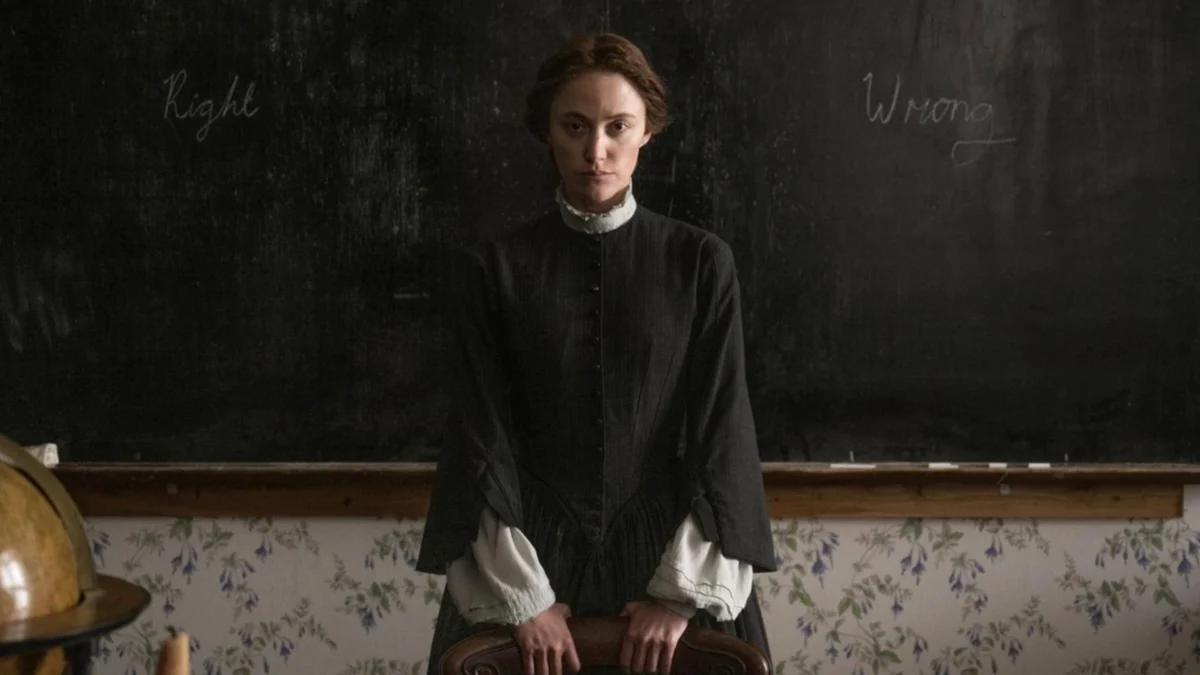
Directed by Zachary Wigon, Victorian Psycho plunges audiences into the atmospheric dread of 1858, following Monroe’s portrayal of Winifred, an eccentric young governess. Her arrival at the remote, imposing gothic manor known as Ensor House marks the beginning of a sinister unraveling. As Winifred gradually integrates herself into the household, a disturbing pattern emerges: staff members begin to inexplicably vanish. This unsettling sequence of events prompts the manor’s owners to question the true nature of their new governess, contemplating whether something is profoundly amiss with the young woman, or if she might even be possessed by a darker entity. The teaser deftly establishes a palpable sense of foreboding, hinting at psychological manipulation and supernatural undertones characteristic of classic gothic horror. The visual language of the trailer – dark, oppressive interiors, isolated landscapes, and Monroe’s unsettling gaze – immediately immerses viewers in the film’s 19th-century milieu, promising a deeply atmospheric and psychologically intense experience.
A Challenging Portrayal: Monroe’s Deep Dive into Winifred
In an exclusive first-look interview with The Hollywood Reporter’s David Canfield, Maika Monroe offered profound insights into the demanding nature of embodying the serial killer governess, Winifred. "It terrified me," Monroe confessed, reflecting on the role. "I knew that it would be the hardest role that I have ever done — and so incredibly different from anything I’ve ever done." Her candid remarks underscore the profound artistic challenge presented by the character, a departure from her previous acclaimed performances. Monroe elaborated on the personal toll the role exacted: "There’s always a little part of me in roles that I do, something that I can ground it with or connect it with within my own personal life — but this role was really a departure from that. It was working from the ground up, creating this character where I couldn’t rely on my own self. It really, in the most magical way, took a toll on me. I felt it every day." This level of immersive dedication highlights Monroe’s commitment to her craft and suggests a performance of considerable depth and intensity, potentially marking a significant milestone in her already impressive career. Her willingness to venture into such emotionally and psychologically demanding territory speaks volumes about her artistic ambition and her desire to continuously push the boundaries of her acting capabilities.
Director’s Vision: The Paradox of Belonging
Director Zachary Wigon also shared his perspective on Winifred, describing her as an "outsider who desperately wants to be an insider, and it’s simply impossible." This observation frames Winifred’s character within a poignant psychological struggle, adding layers to her villainy. "It’s a very, very deep paradox. She will never belong — and she will never stop wanting to belong," Wigon told THR. This directorial insight suggests that Winifred’s murderous tendencies may stem from a profound sense of alienation and a desperate, perhaps twisted, yearning for acceptance, transforming her from a mere villain into a complex, tragic figure. Wigon’s previous work, such as the critically acclaimed Sanctuary, demonstrates his adeptness at exploring intricate power dynamics and psychological tension within confined settings, making him a compelling choice to helm a film steeped in the complexities of human desire and societal exclusion. His approach promises a nuanced portrayal of the antagonist, moving beyond superficial horror to explore the darker corners of the human psyche.
Distinguished Ensemble and Source Material
Beyond Monroe’s compelling lead performance, Victorian Psycho boasts an impressive supporting cast that includes Thomasin McKenzie, known for her roles in Jojo Rabbit and Last Night in Soho; the seasoned Jason Isaacs, celebrated for his work in the Harry Potter series and The Patriot; Amy De Bhrun; Ruth Wilson, acclaimed for The Affair and Luther; Jacobi Jupe; and Evie Templeton. The presence of such an accomplished ensemble further elevates the film’s artistic promise, suggesting a rich tapestry of performances complementing Monroe’s central role.
Intriguingly, the film adapts Virginia Feito’s novel of the same name. What makes this particularly noteworthy is the original report’s indication that the novel is a "2025 novel," suggesting the film adaptation is premiering before the book’s official publication. This unusual chronology – where a major film adaptation precedes its literary source’s general release – creates an intriguing dynamic. It could imply a highly anticipated literary debut that gained early traction in Hollywood, or perhaps a simultaneous multimedia rollout strategy. This atypical approach adds another layer of uniqueness to Victorian Psycho, highlighting the industry’s keen interest in Feito’s narrative vision even prior to its widespread availability in print. Virginia Feito herself is known for her distinctive voice and darkly humorous, often unsettling narratives, as evidenced by her debut novel Mrs. March, which also explored themes of psychological unraveling and societal repression. Her involvement, even in the source material, hints at a sophisticated and potentially subversive take on the horror genre.
Cannes Premiere: A Platform for Artistic Acclaim
The world premiere of Victorian Psycho in the Un Certain Regard section of the Cannes Film Festival is a significant marker of its artistic merit and international appeal. Un Certain Regard, an official selection of the festival, is dedicated to showcasing films with unique visions and styles, often highlighting emerging talent and challenging cinematic conventions. It serves as a crucial platform for films that push boundaries and offer fresh perspectives, distinct from the more established narratives typically found in the main Competition section. A premiere at Cannes instantly confers prestige and generates global attention, attracting critics, distributors, and cinephiles from around the world. For Victorian Psycho, this exposure can be instrumental in building early critical momentum and securing robust international distribution deals ahead of its general release in the fall. The festival’s reputation for championing thought-provoking and artistically bold cinema aligns perfectly with the film’s apparent blend of period drama, psychological intensity, and horror elements.
Maika Monroe: The Evolution of a Scream Queen
Maika Monroe’s journey to becoming a prominent "Scream Queen" has been both organic and compelling. Her breakthrough performance in David Robert Mitchell’s 2014 indie horror sensation It Follows established her as a formidable presence in the genre, lauded for her nuanced portrayal of a young woman haunted by a supernatural entity. This was followed by critically acclaimed roles in films like The Guest (2014), where she showcased her versatility in an action-thriller context, and more recently, Oz Perkins’ Longlegs (2024). Longlegs, a deeply unsettling psychological horror film, further solidified her reputation, with critics and audiences alike praising her ability to convey vulnerability, resilience, and profound fear.
Monroe’s selection of roles demonstrates a deliberate move towards projects that offer complex characters and push the boundaries of the horror genre beyond conventional jump scares. Her performances are often characterized by a quiet intensity, an ability to convey deep emotional states with subtle expressions, and a magnetic screen presence that draws viewers into her characters’ struggles. In Victorian Psycho, her role as Winifred, a character described as terrifying and challenging, represents a significant evolution, demanding a more active and potentially villainous portrayal compared to her previous roles as a victim or survivor. This move showcases her range and willingness to embrace roles that explore the darker facets of human nature, suggesting a trajectory that could see her transcend the "Scream Queen" moniker to become recognized simply as a leading actress with a penchant for challenging, genre-bending cinema.
Broader Implications and Anticipated Release
The convergence of a compelling narrative, a strong directorial vision, an accomplished cast, and a prestigious Cannes premiere positions Victorian Psycho as a highly anticipated release for the fall. The film’s period setting, coupled with its horror elements, taps into a growing appetite for sophisticated, atmospheric genre pieces that offer more than just scares, delving into psychological depth and social commentary. The success of similar gothic-inspired or period horror films in recent years indicates a robust market for such narratives, especially when executed with a high degree of artistic integrity.
Furthermore, the film’s production pedigree, stemming from the producers of Longlegs, signals a commitment to quality and a particular aesthetic that resonates with contemporary horror aficionados. This connection suggests that Victorian Psycho may share Longlegs‘s penchant for slow-burn tension, unsettling atmosphere, and a focus on psychological dread rather than overt gore. For Maika Monroe, Victorian Psycho represents an opportunity to further diversify her acting portfolio and demonstrate her capacity for complex, morally ambiguous characters. The film’s fall release will allow it to capitalize on the buzz generated from Cannes, potentially making it a significant contender in the year-end awards conversation for genre films and a notable entry in the broader cinematic landscape. The teaser trailer serves not merely as an advertisement but as a compelling invitation to witness a potential masterclass in psychological horror, anchored by a performance that promises to be both terrifying and unforgettable.