Tom Avison, fresh from a whirlwind sales trip to Los Angeles, embodies the ambitious vision behind Perth Film Studios. Having recently concluded approximately 16 to 17 meetings with industry titans such as Netflix, Universal, Warner Bros, and Disney, Avison is acutely aware of the global industry’s keen interest in what he is building. "Basically any production company that you can think of," he states, "they want to know what’s going on." This sentiment underscores the burgeoning potential of Western Australia’s (WA) nascent film production landscape.
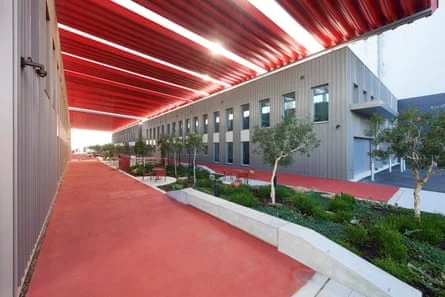
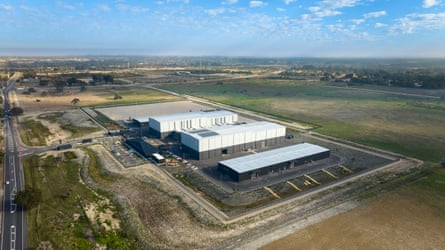
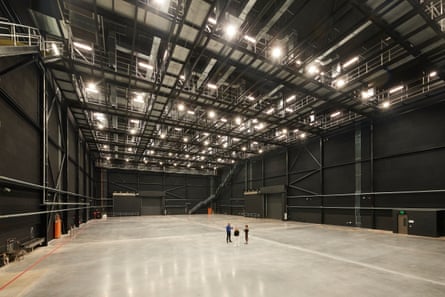
Housed in a state-of-the-art facility in Whiteman, on Perth’s semi-rural northeastern fringe, Avison, the studio’s inaugural chief executive, navigates the complex terrain of launching a major production hub from the ground up. His experience, including a prior role in establishing Sky Studios Elstree near London – a facility that has hosted productions like "Wicked," "Jurassic World," and "Bridget Jones" – provides a crucial foundation. However, the opportunity to shape not just a physical space but an entire industry, which he discovered through LinkedIn, proved irresistible. "Not long ago, this was just a cow paddock," he remarks wryly, gesturing across the expansive 16-hectare site. Over the past three years, this former agricultural land has been transformed into a world-class film studio, featuring four vast sound stages, extensive production offices, workshops, service roads, and a backlot that dwarfs the playing field of Perth’s 60,000-seat Optus Stadium.
A Strategic Public Investment in a Growing Market
The development of Perth Film Studios represents a significant public investment, with the construction alone costing $233.5 million, funded by state taxpayers. This initial outlay is further bolstered by an additional $57 million committed over the studio’s first decade of operation. This substantial financial backing is strategically aimed at elevating Western Australia’s share of national scripted screen production from its current 1% to a projected 10% over the next ten years. This ambitious target is set against a backdrop of increasing international demand for Australian production. Drama production expenditure across Australia reached $2.7 billion in the 2024-25 financial year, marking a substantial 43% increase from the previous year, according to industry figures. For Avison, the imperative is to position Perth as a viable contender alongside established production hubs on the east coast and to champion Western Australia’s unique offerings on a broader scale.

Unlocking Western Australia’s Cinematic Potential
Avison articulates a compelling case for WA’s attractiveness, rooted in both financial incentives and its diverse geographical landscape. Producers can leverage WA’s own production incentives in conjunction with the federal Location Offset, a tax rebate designed to attract film and television projects to Australia, with additional support for regional shoots. From a locational standpoint, Avison perceives "a tremendous amount of untapped opportunity." Western Australia, with its breathtaking cinematic range encompassing the south-west forests, the Wheatbelt, the Kimberley, the otherworldly Pinnacles, and the striking contrast of "red dirt into a blue sea," has been historically underutilized by major productions. This vast and varied backdrop presents a unique canvas for storytelling.
Early Momentum: "Two Birds" Takes Flight
Evidence of this burgeoning activity is already visible within the studio’s sound stages. During a recent visit, "Two Birds," a six-part Stan and ITV mystery-thriller starring acclaimed actors Judy Davis, Sheridan Smith, and Stephen Peacocke, was in its inaugural week of production. The set buzzed with activity as props and furniture were meticulously arranged for interior shots, with completed sets standing ready for filming. The series, which also utilizes Kalgoorlie for on-location shooting, is a significant contributor to the local economy, employing over 100 Western Australian cast and crew members and is projected to inject more than $17 million into the state’s economy.
While "Two Birds" might not immediately resemble a Hollywood blockbuster, Avison views it as a crucial step in building industry credibility. "Melbourne’s had a film studio for 20 years, Sydney for 30 years, Queensland for 40 years," he observes. "We’re four months into a film studio here." His strategy emphasizes sustainable growth, aiming to "stretch the muscle" of the industry without overextending its capacity. This measured approach is vital for long-term development.
The Broader Australian Production Landscape and WA’s Place
The emergence of Perth Film Studios occurs amidst a broader trend of international productions seeking alternative filming locations to Hollywood, which has seen a decline in its share of global production. California’s entertainment industry, once dominant, is now grappling with competition from jurisdictions offering lower production costs and more attractive financial incentives. Data from entertainment analytics firm Luminate indicates a significant drop in the proportion of U.S. scripted series filmed in Los Angeles, falling from 40% in 2019 to under 25% by early 2026. California Governor Gavin Newsom has publicly acknowledged the precarious state of the state’s entertainment industry, describing it as "on life support."
Screen Australia’s recent analysis highlights Australia’s reputation as a trusted production hub, yet it also cautions against the sector’s vulnerability to "feast and famine cycles." These peaks in production strain the limited pool of experienced crew, driving up costs and leading to scheduling conflicts.
Addressing Workforce Gaps and Local Impact
"Two Birds" serves as an early case study in navigating these challenges. The British-Australian co-production, spearheaded by WA producer Martha Coleman, features a majority local crew, supplemented by interstate and UK professionals where specialized skills were not readily available within the state. This included the recruitment of an east coast line producer, a best boy/rigging gaffer, and a key grip.
Avison acknowledges that WA’s historical lack of large-scale productions has resulted in a deficit of trained personnel and specialized equipment in areas such as stunts, special effects, construction, grips, and certain aspects of rigging and lighting. To address this, Screenwest is actively implementing targeted industry-capacity funding and workforce training initiatives.
Matthew Deaner, CEO of Screen Producers Australia, emphasizes that while Perth Film Studios is a vital investment, "a studio alone does not create a sustainable screen industry." He argues that the true measure of success lies not merely in the productions attracted but in the "capability left behind." The development of local stories and intellectual property (IP) through returning series is crucial for stabilizing the sector for the long term.
Local Producer Perspectives and the Challenge of Distance
Kate Separovich, a WA producer and co-founder of Lake Martin Films, expresses cautious optimism about Perth Film Studios. However, she raises concerns that the influx of larger productions could place undue pressure on independent producers seeking to finance local projects, potentially absorbing the very crews that smaller productions rely upon. "If a bigger production comes in and takes all the local crew, then I can’t afford to fly people in from interstate or overseas," she notes. "As a producer, I’m like, but where are the crew when I want to make something?"
The issue of crew depth is compounded by WA’s geographical isolation. Separovich points out, "The challenge of being in Perth is always our distance. It’s 20-plus hours to get from LA to Perth." Avison counters that within the global production circuit, distance is viewed differently. Creative talent already circulates between major hubs like Los Angeles, London, Sydney, and Cape Town. Furthermore, Perth’s direct 17-hour flight connection to London is expected to be a significant draw for UK-based productions.
Beyond the Concrete: Sustainability and Ecosystem Building
Avison’s vision for Perth Film Studios extends beyond its physical infrastructure. He highlights the studio’s thoughtful design, which includes a yarning circle, extensive native plantings, and an open field frequented by kangaroos. "In the UK, film studios are big grey boxes and loads of parking," he observes. "Here, we don’t want it just to be that." This commitment to softer, more integrated design sits alongside a forward-looking technical ambition, with stages equipped for traditional shoots, virtual production, real-time rendering, and AI-assisted workflows. Avison stresses the need for studios to be "kind of eternally flexible."
His ultimate aspiration is for Perth Film Studios to provide a crucial "center of gravity" for WA’s screen industry. He likens the studio to "an artificial reef" – a piece of infrastructure designed "to help establish and grow an ecosystem." This ecosystem, he hopes, will attract not only large-scale international projects but also smaller, independent productions, recognizing that "they all feed off each other." The success of this ambitious $290 million investment in fostering a vibrant and sustainable screen industry in Western Australia will ultimately be measured by its long-term impact and the depth of the ecosystem it cultivates.