Mahnaz Mohammadi, an Iranian filmmaker and a tenacious advocate for women’s rights, has emerged as a symbol of resilience in the face of relentless state repression. Her life’s work has been punctuated by repeated arrests, imprisonment, and even solitary confinement accompanied by torture. These harrowing experiences, far from breaking her spirit, have forged an indomitable will, now channeled into her art and activism. Despite the constant threat of persecution, Mohammadi continues to challenge the Iranian regime, using her camera as a weapon against injustice and giving voice to the voiceless.
The filmmaker’s journey through the labyrinthine corridors of Iran’s correctional system is a testament to her unwavering resolve. In 2011, she endured months of isolation and torture, a period that left indelible scars. This was followed by a five-year sentence in 2014, of which she served several months. These ordeals, however, did not deter her. In a poignant encounter years later, Mohammadi met one of her early interrogators. His words, revealing the authorities’ perception of her unyielding spirit, resonated deeply: "He said he told his colleagues that after doing all those things, if I were going back behind the camera, it meant they couldn’t do anything with me." This acknowledgment, however backhanded, served as a profound validation. "When I heard this from his mouth, I thought: ‘He’s right! Nobody can hurt me.’"
A Life Under Scrutiny and the Drive to Create
Despite this inner fortitude, the pervasive atmosphere of surveillance and threat in Iran means Mohammadi lives with a constant sense of unease. Her most recent film required her to leave Iran to complete its production, and she currently resides in Europe on a three-year visa. The precariousness of her situation was underscored when a journalist publicly disclosed her city of residence, forcing her to contemplate another move. "I thought, now I have to move," she recounts, the unease palpable. "I’m not afraid of dying but I don’t feel safe. It’s not a good feeling."
Meeting Mohammadi, now 51, in a tranquil London setting, one is struck by her gentle demeanor and hushed voice. Yet, beneath this quiet exterior lies a gaze that is both steady and resolute. "You can ask me anything," she offers, an invitation that belies the gravity of the experiences she is willing to share.
For years, the idea of making a film about her experiences in prison lingered, but hesitation often prevailed. This was partly due to the reactions she sometimes encountered when speaking about her ordeal. Some found the accounts too difficult to bear, while others, even friends, displayed a dismissive attitude, questioning her motives. "They’d say: ‘Do you want credit for being in prison?’" Mohammadi recalls. "I’d say to them: ‘You don’t have any idea of what happened in there.’" Such responses contributed to a sense of isolation, leading her to consider remaining silent.
"Roya": A Fictional Echo of Real Trauma
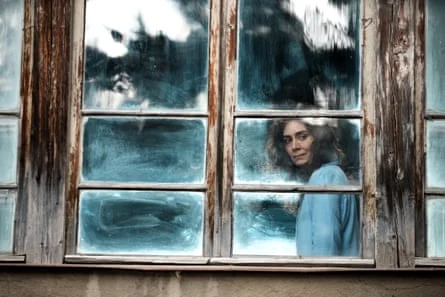
However, the impulse to bear witness proved too strong. Mohammadi has now written and directed "Roya," an extraordinary fictional drama that draws heavily on her own lived experiences and those of other women imprisoned in Iran. The film is a harrowing, yet deliberately und graphic, exploration of state-sanctioned brutality. "I censored a lot," Mohammadi states, emphasizing her careful approach to depicting the psychological toll of incarceration.
"Roya" tells the story of Roya, a university professor portrayed by the Turkish actor Melisa Sözen. Mohammadi deliberately chose a non-Iranian actor to safeguard individuals within Iran from potential repercussions. Roya is falsely accused of inciting her students to burn their headscarves, a charge that mirrors the political climate in Iran where dissent is ruthlessly suppressed. Like Mohammadi herself in 2011, Roya is subjected to months of solitary confinement in a stark, windowless cell within the notorious Evin prison. The film vividly conveys the disorientation and despair of such confinement, where a flickering light makes it impossible to distinguish day from night.
The film’s narrative structure is as unsettling as its subject matter, unfolding with the disorienting logic of a nightmare. For the initial twenty minutes, the audience experiences the prison environment entirely from Roya’s perspective. When a female guard escorts her from her cell for interrogation, the camera places the viewer under Roya’s chador, partially blindfolded, experiencing the rough handling and disorienting journey through a corridor through her limited sight. The film masterfully employs terrifying sensory details: a fleeting glimpse of blood smeared on an elevator button, a prisoner’s desperate plea to see her newborn baby for breastfeeding. The sound design is relentlessly visceral, creating an oppressive atmosphere that forces the audience to confront the claustrophobia and terror of the situation. Throughout these harrowing sequences, Roya remains silent, her unspoken suffering amplified by her inability to articulate her torment.

The second part of the film finds Roya free, released on compassionate leave for three days. However, after the psychological and physical ordeal of torture and solitary confinement, the reality of her freedom is rendered ambiguous. Like Roya, the audience is left questioning what is real, a testament to the film’s profound exploration of the psychological impact of prolonged abuse.
The Power of Writing on Prison Walls
A poignant detail in "Roya" is the protagonist tracing graffiti on her cell walls. This is a deeply autobiographical element, a coping mechanism Mohammadi herself employed. "It helped me get through isolation," she explains. This act of defiance evolved into something more: "Then one day, I stole a pen from my interrogator and I started writing for the next woman – ‘I was here. Now I’m not. You will not stay for ever. I’m gone. You will be gone. Don’t worry.’" This simple act of solidarity, leaving a message of hope for future inmates, had a profound impact. She later met a woman imprisoned in the same cell who told her, "Mahnaz, you saved my life!"
Mohammadi candidly discusses the emotional nadir she experienced in prison. During one interrogation, she was falsely informed of her father’s death, a cruel tactic designed to break her resolve. Her father, in turn, was told of her alleged demise and subsequent arrest. "They tortured both of us at the same time," she whispers, her eyes welling with tears. "I felt so guilty. I was thinking I should kill myself. Because if I get out, how can I look into the eyes of my family?" This profound sense of guilt and despair highlights the extreme psychological warfare employed by the authorities.
Identity Shattered, Resilience Rebuilt
The transformative impact of prison on Mohammadi’s identity is profound. "I’m not the same," she states. "The Mahnaz who went to prison was a different person. When I came out my identity was shattered." The immediate aftermath of her release was a period of intense reclusion, lasting almost two years, during which she was supported by a few close friends, "mostly women." "I would cook for them. I’m a good cook," she adds, a small, humanizing detail amidst the recounting of immense hardship.
The betrayal of trust was another deeply damaging consequence of her imprisonment. During interrogations, Mohammadi was subjected to recordings revealing that some of her friends and colleagues had informed on her, a tactic designed to isolate and destabilize her.
A Broader Struggle: Filmmakers Under Threat
Mohammadi’s current situation is emblematic of the challenges faced by many Iranian artists and filmmakers. Banned from making films since her 2019 feature debut, "Son-Mother," she is not alone in defying the regime at significant personal risk. In a stark reminder of this ongoing crackdown, earlier this month, Tehran’s revolutionary court upheld a one-year prison sentence for Oscar-nominee Jafar Panahi on charges of creating propaganda against the Iranian state. Similarly, Mohammad Rasoulof was forced to flee to Germany in 2024 after being sentenced to eight years in jail and flogging for directing his film "The Seed of the Sacred Fig." These incidents underscore a systematic effort to silence critical voices within Iran’s cultural landscape.
Despite these pervasive restrictions, Mohammadi persevered in making "Roya." Exterior scenes were filmed in Iran without official permission, a testament to her courage and ingenuity. She remains tight-lipped about the specifics of how these scenes were shot, prioritizing the safety of her collaborators in Iran. The prison sequences were filmed in Tbilisi, Georgia, a necessary measure to avoid further endangerment. Mohammadi, however, is accustomed to operating under constraints. "I never think about limitations," she asserts. "As a woman, since you are born, they put the scarf on your hair. And they don’t put just a scarf on our heads. They put limitations on our way of thinking. That’s why I never think about the limitations and censorship. I only think about what I can do."
A Legacy of Resistance and Hope for the Future
The personal cost of creating art in such an environment is immense. "You feel naked," Mohammadi admits when asked about the exposure inherent in making a film as personal as "Roya." However, she remains driven by a sense of responsibility to those still imprisoned. "But there are so many people inside Iran still in prison. Until the last one is there, I will do whatever I can. I can’t do big things. But I can do small things, like make films." Her recent documentary, "Beyond the Lies," tackles the regime’s violent suppression of the November 2019 protests, and she is currently collaborating with Channel 4 on a documentary focusing on women in Iran.
Mohammadi’s upbringing in a culturally rich, middle-class family, filled with teachers and university professors, provided a strong foundation for her intellectual and artistic development. "Books have been my best friends since childhood," she states, a sentiment that hints at the solace and inspiration she found in literature.
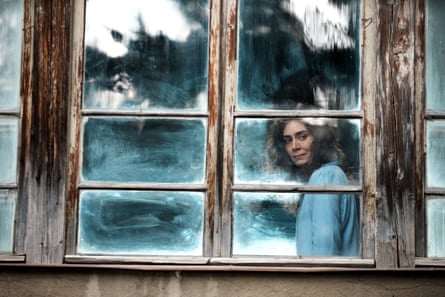
Her father played a pivotal role in shaping her resilience. Upon her first release from prison, he welcomed her home with unconditional love and acceptance. "He said to me: ‘Amazing Mahnaz. Now you’re really my daughter.’ I was lucky to have such a dad, because some people after prison, their family rejects them. If I’m surviving, it’s because I was privileged to have such a dad." This familial support was crucial in helping her navigate the trauma of her imprisonment.
Her early taste of independence began at the age of 15 when she won a story competition for children’s radio and was offered a job. For four years, she contributed to the show, heading to the radio station each morning before school. The station even suggested she pursue a career in reporting, but the requirement to wear a chador led her to politely decline, a subtle assertion of her burgeoning independence.
This teenage work experience was transformative. "You can’t imagine the confidence it gave me," she reflects. With the money she saved, at 18, she moved out of her family home to live independently in Tehran, a decision that shocked many of her peers who questioned her departure from traditional norms.
While she studied psychology at university, her path ultimately led her to the film industry. Her directorial aspirations were not immediate; she initially envisioned a career as a writer of books, not scripts. A turning point came during a Persian New Year when she volunteered at a women’s homeless shelter. Her continued involvement led to her debut documentary, "Women Without Shadows," a five-day project capturing the realities of the shelter, released in 2003.
An Unwavering Commitment to Iran
Despite her current exile, Mohammadi’s heart remains in Iran. "Yes. I’m going back. I’m not a refugee in Europe. My visa is for three years." When gently probed about the possibility of seeking asylum, she firmly reiterates her commitment. "Yes. But I’m not just a film-maker. For so many years, I have been fighting for women’s rights."
Her dedication is framed by a powerful analogy to her mother: "My mum asks me: ‘Mahnaz, why I can’t see you?’ I say to her: ‘Mum, just imagine I’m a soldier, but I don’t have a gun; I have a pen and I have a camera.’" This metaphor encapsulates her belief in the power of art and activism as instruments of change.
Mohammadi expresses a palpable sense of hope for Iran’s future, envisioning the eventual toppling of the current regime. She recently received a message from one of her former students: "Don’t worry Mahnaz. We are gaining power for the last attack on them. Now is our time. We will do it." This sentiment reflects a growing generational resolve. "The new generation has such a big will to get rid of them. It will definitely happen. The Islamic republic is finished," Mohammadi states with conviction, her words resonating with the quiet strength of someone who has faced the worst and still believes in the dawn of a new day.