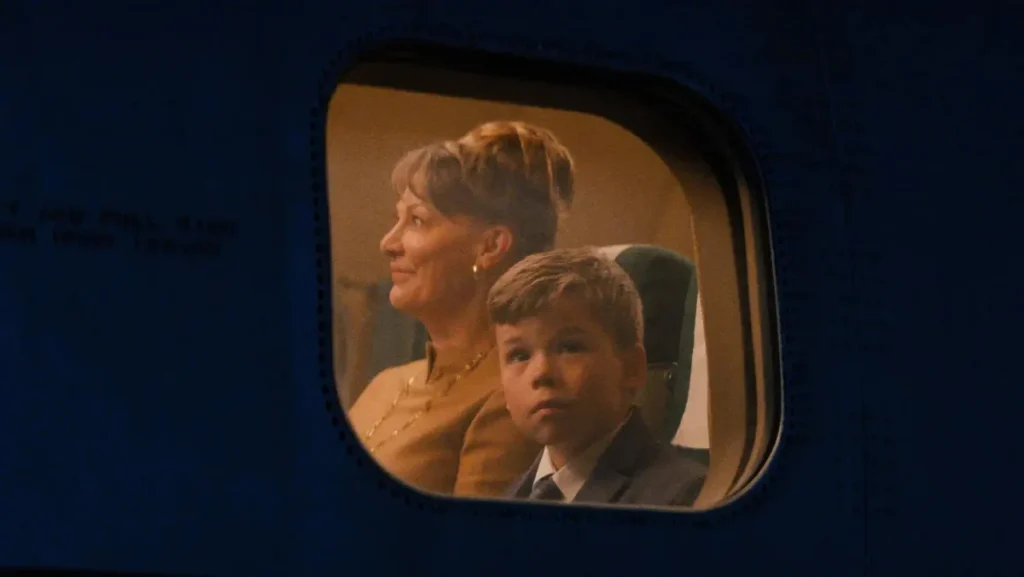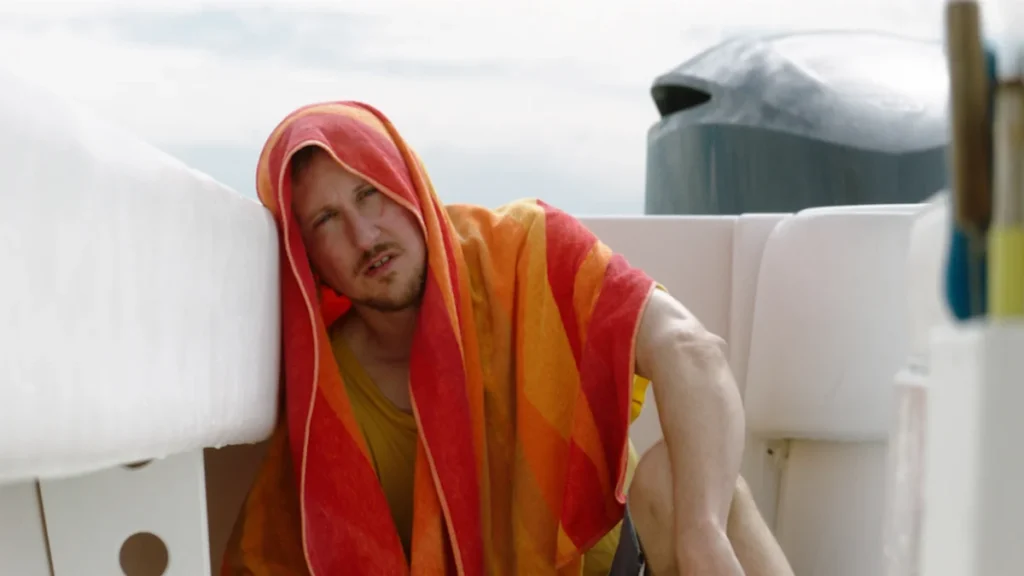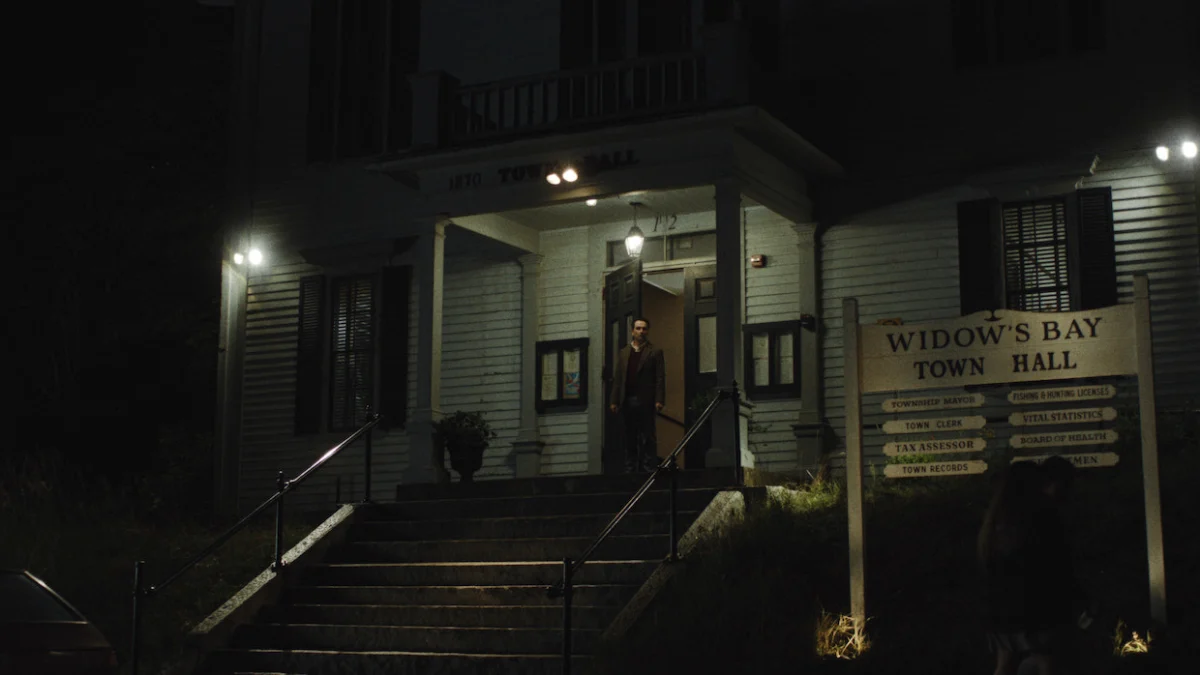
Apple TV+’s new series, Widow’s Bay, created and showrun by Katie Dippold, is poised to become a significant entry in the increasingly popular subgenre of horror-comedy, further cementing a trend where comedic auteurs successfully transition into crafting critically acclaimed and commercially successful genre narratives. The series, starring Matthew Rhys, deftly blends genuinely unsettling supernatural elements with character-driven humor, challenging traditional genre classifications and potentially influencing how awards bodies perceive such hybrid storytelling.
A New Wave of Auteurs: From Sketch to Scream
In recent years, the entertainment landscape has witnessed a compelling migration of talent from the world of sketch comedy into the realm of horror. This shift, far from being a novelty, has produced some of the most innovative and impactful films of the last decade, suggesting a deep, albeit often overlooked, synergy between eliciting laughter and fear. The pioneers of this modern wave include Jordan Peele and Zach Cregger, whose successes have paved the way for creators like Katie Dippold.
Jordan Peele, a household name from the satirical sketch comedy duo Key & Peele, made a seismic entry into feature filmmaking with his directorial debut, Get Out, in 2017. The film, a sharp social commentary wrapped in a psychological horror narrative, not only garnered immense critical praise but also achieved significant commercial success, grossing over $255 million worldwide on a modest $4.5 million budget. Its impact was further solidified when Peele won the Academy Award for Best Original Screenplay in 2018. He followed this with Us (2019) and Nope (2022), both of which continued his tradition of blending thought-provoking themes with terrifying suspense, solidifying his status as a master of modern horror. Us garnered an impressive 93% on Rotten Tomatoes and pulled in over $255 million globally, while Nope achieved 82% on Rotten Tomatoes and a worldwide gross of $172 million, demonstrating consistent audience and critical engagement.
Similarly, Zach Cregger, a founding member of the irreverent comedy troupe The Whitest Kids U’ Know, transitioned with striking success. His 2022 horror film Barbarian was a sleeper hit, lauded for its unpredictable plot and genuine scares. Made on a budget of just $4 million, Barbarian earned over $45 million globally and received a stunning 93% critical approval rating on Rotten Tomatoes. Cregger’s follow-up, Weapons, further underscored his prowess, earning Amy Madigan a Best Supporting Actress award for her "devious turn," according to industry reports. These achievements highlight a discernible pattern: comedic backgrounds provide a unique toolkit for crafting effective horror.
The connection between comedy and horror is not merely coincidental; it’s rooted in shared psychological mechanics. Both genres thrive on manipulating audience expectations, building tension, and delivering a cathartic release—whether that release is a laugh or a jump scare. As Dippold articulates, "I really do think there’s something to people who started in sketch comedy understanding how to build something, setting up the anticipation and the payoff. What I find fun is that you don’t know if that build is going to lead to something that’s going to make you laugh or scare you." This fundamental understanding of pacing, misdirection, and emotional payoff forms the bedrock of both comedic timing and suspense building. Historically, films like An American Werewolf in London, The Evil Dead, Scream, and The Cabin in the Woods have expertly straddled this line, proving that horror doesn’t always have to be devoid of humor, and indeed, often benefits from it. Even iconic horror figures like Freddy Krueger were known for their macabre wit.
Katie Dippold’s Journey to Widow’s Bay
Katie Dippold’s path to creating Widow’s Bay mirrors the trajectory of her contemporaries, albeit with her own distinct comedic and narrative sensibilities. Dippold began her career in the trenches of sketch comedy and television writing, with early credits on iconic shows like Mad TV and the beloved sitcom Parks and Recreation. These experiences honed her ability to craft engaging characters, develop intricate comedic scenarios, and understand the rhythms of episodic storytelling.
Her transition into genre film began with co-writing the screenplay for the 2016 female-led Ghostbusters reboot, a project that, despite its polarizing reception, demonstrated her capacity to infuse supernatural narratives with comedic flair. She further explored this intersection by penning Disney’s Haunted Mansion in 2023, directed by Justin Simien. These film projects provided invaluable experience in navigating the technical and creative demands of larger-scale genre productions, setting the stage for her ambitious leap into showrunning with Widow’s Bay.
The genesis of Widow’s Bay is a testament to Dippold’s long-term vision and persistence. She reveals that the concept for the series has been percolating for nearly two decades, initially conceived as a spec script for Parks and Recreation some 18 years ago. This long gestation period allowed the idea to evolve from a purely broad comedy into the nuanced blend of humor and horror that defines the Apple TV+ series. Over this time, Dippold refined the narrative, deepened its thematic undertones, and developed its unique tone. This evolution highlights a crucial difference between feature film writing and television showrunning, a distinction Dippold readily embraces. "With features, you just write the script and you’re lucky if the director wants you on set," she notes. "Not being able to have much say once the script is in and [now] being in a position where I have all the say naturally made me someone who wants that collaboration. These actors are brilliant, the production design team is tremendous, and the directors who came in had other ideas that I would not have thought of. It’s thrilling to me, and I can’t imagine doing it in a way where it’s all my vision and nothing will ever change." This collaborative spirit, particularly in a showrunner capacity, allows for a more dynamic and enriched storytelling process, where diverse creative inputs can elevate the original vision.
Unpacking Widow’s Bay: A New England Nightmare with Punchlines
Widow’s Bay is set on a picturesque, yet deeply cursed, New England island, where the seemingly idyllic surface belies a lurking assortment of malevolent forces. The series centers on Tom Loftis, the town’s perpetually optimistic mayor, portrayed by the charmingly rascally Matthew Rhys. Tom, ever the believer in his town’s potential, harbors aspirations of transforming Widow’s Bay into a bustling vacation destination, a vision that often clashes with the grim realities of its supernatural inhabitants. One might imagine him as a more endearingly misguided Mayor Vaughn from Jaws, if played by Rhys instead of Murray Hamilton.
Despite Tom’s resolute skepticism and the constant, fervent warnings from the town crankpot, Wyck (played by the inimitable Stephen Root), who is convinced the island is cursed, the evil below Widow’s Bay’s quirky veneer persistently manifests. These manifestations are both genuinely unsettling and darkly comedic: ominous fogs that roll in with sinister intent, a terrifying killer clown, an uncomfortably amorous sea hag, a notoriously haunted inn, and a malevolent spellbook that nearly turns a seemingly innocuous cocktail party into a mass drowning event. This juxtaposition of the mundane and the monstrous forms the comedic backbone of the series.
Crucially, while its supernatural elements are crafted to be genuinely unsettling, Widow’s Bay operates primarily as a comedy, with its horror elements serving as catalysts for humor. Much of the show’s comedic genius stems from the characters’ remarkably "reasonable" reactions to increasingly outlandish supernatural phenomena. For instance, Tom’s attempt to debunk the haunted inn by spending a night there himself—only to be proven emphatically wrong, even as the innkeeper refuses to stay—is a prime example. Another memorable sequence involves Tom being stalked by the aforementioned sea hag, whose preferred method of smothering her male victims by sitting on their faces leads to a physically hilarious gag involving a well-timed reclining armchair sending her sprawling across Tom’s living room. Like the best sitcoms, the core entertainment value lies in observing these well-developed characters navigate scenarios that escalate from peculiar to utterly unhinged, all while trying to maintain a semblance of normalcy.
The brooding visual tone of Widow’s Bay is a direct result of Dippold’s collaboration with executive producer Hiro Murai, the Emmy-winning director acclaimed for his work on critically lauded series like The Bear, Atlanta, and Station Eleven. Murai, who helmed five of the season’s ten episodes, helped shape the show’s distinct aesthetic. Dippold drew inspiration from a vivid teenage memory: a visit to a "lawless" haunted house in Long Branch, New Jersey, in the 1980s. "They could chase you around and grab you," she recalls, describing the experience. "That mix of being scared, but you’re having the time of your life, is a feeling I’ve wanted to capture ever since." This personal anecdote underscores the foundational intent behind Widow’s Bay: to create a viewing experience that is both thrillingly frightening and genuinely fun.

Crafting the Tone: Collaboration and Casting
Another critical element enabling Widow’s Bay to effectively meld its disparate tones is its meticulously assembled cast. While the original vision might have leaned towards populating the fictional town with seasoned comedic performers, a strategy Dippold considered based on her years performing improv at the Upright Citizens Brigade Theatre, a different approach was ultimately taken to preserve the delicate comedy-horror balance. Dippold realized that casting overtly comedic actors in lead roles could inadvertently detract from the show’s credibility. "When I imagined an actor that you know from comedy starring in it, it just took me out of it," she explains. "Like, I don’t believe it’s a real place, and I don’t know that I would watch the show. As a horror fan, I want to know that they’re taking it seriously."
This insight led to a strategic casting decision: grounding the show with actors primarily known for their dramatic work in the main roles, while reserving comedic specialists for supporting parts. Matthew Rhys, an Emmy winner for his intense role in The Americans, exemplifies this approach as Mayor Tom Loftis. Dippold was a fan of Rhys’s dramatic prowess, and his suggestion came from casting director Allison Jones. Of Rhys’s performance, Dippold praises, "He always just plays the truth of the scene. He never goes for the joke. He’s so naturally funny, and he understands what’s funny about [the scene]." This emphasis on playing the emotional truth of a scene, regardless of its comedic or horrific context, is vital for the show’s unique tone.
The main cast includes other actors primarily recognized for their work in television dramas: Kate O’Flynn as Tom’s understated assistant Patricia, Kevin Carroll as the town sheriff Bechir Clemmons, and Dale Dickey as the no-nonsense employee Rosemary. Stephen Root, known for his diverse roles in NewsRadio, Office Space, and his Emmy-nominated performance in Barry, stands as an exception, bridging the gap between comedy and drama with his distinctive presence as the town crankpot, Wyck. Conversely, the supporting roles are populated by an impressive roster of comedic talent, including Emmy winner Jeff Hiller, Tim Baltz, Toby Huss, Neil Casey, Connor Ratliff, and Chris Fleming, who deliver specific comedic beats without undermining the overall dramatic stakes.
This deliberate casting strategy brings to mind an anecdote shared by Dippold, sparked by a conversation about Sydney Pollack’s approach to directing Tootsie. Pollack reportedly expressed astonishment at how funny the film turned out, given the dramatic mood on set during production. This resonated deeply with Dippold. "Often when I talk about influences on the show, I talk about Stephen King and John Carpenter, Atlanta and Parks and Rec," she says, "but I am secretly also thinking about Tootsie—but I never say it, because I know it’s going to confuse the hell out of everyone." She and the interviewer concur that Dustin Hoffman’s dedicated performance, playing his character’s situation with earnest dramatic conviction, is precisely what makes Tootsie so hilariously effective. "I mean, he’s in a drama," Dippold laughs. "If he was playing it any differently, it would feel terrible. And I think the actors on this show are doing something very similar. They don’t look at it like they’re in a comedy or a horror show; they’re just playing the scenes and they’re not thinking about the genres. And I think that helps a great deal." This commitment to character and situation, irrespective of genre labels, is what allows Widow’s Bay to successfully blend its diverse elements.
The Emmy Conundrum: Challenging Genre Categories
The forthcoming Emmy Awards season presents a unique challenge for Widow’s Bay, as it will be submitted in the comedy series category. While it might contend for the title of the year’s most gruesome comedy, its undeniable comedic prowess positions it squarely within this classification. However, the Emmys have historically shown a lukewarm reception to genre shows in their comedy categories, often preferring more traditional sitcoms or dramedies.
Recent exceptions to this trend include Netflix’s Wednesday and FX’s What We Do in the Shadows. Wednesday, a supernatural mystery-comedy, found considerable success, garnering multiple nominations and wins, including for its production design and music. What We Do in the Shadows, a mockumentary about vampire roommates, has been a perennial Emmy favorite, consistently nominated for Outstanding Comedy Series and often winning for writing and directing. These two examples, despite their vastly different tones—one a gothic teen mystery, the other a deadpan ensemble comedy—demonstrate a nascent willingness within the Television Academy to acknowledge genre-inflected comedies.
This contrasts sharply with the Emmy Drama categories, which have shown remarkable inclusivity towards genre storytelling. After four wins for the fantasy epic Game of Thrones, the Outstanding Drama Series category has embraced a wide array of nominees, including the superhero satire The Boys, the post-apocalyptic drama The Last of Us, the cosmic horror narrative Lovecraft Country, the space Western The Mandalorian, and the science fiction phenomenon Stranger Things. In these shows, the dramatic weight is intrinsically woven into their science fiction, fantasy, or horror frameworks.
Widow’s Bay now stands as a test case for Emmy voters: can the comedy series Emmy become as inclusive and genre-agnostic as its dramatic counterpart? In Widow’s Bay, the jokes are not mere embellishments; they are as vital and integral to the show’s identity as its chills. The series makes a compelling argument that executing a perfectly timed jump scare requires as much craft and precision as landing a punchline. Recognizing Widow’s Bay in the comedy category would not only validate its innovative blend but also signal a broader evolution in how the industry defines and celebrates comedic excellence, acknowledging that humor can thrive even amidst ominous fog and terrifying sea hags. For film awards, there is some precedent; both Get Out and The Substance were submitted as comedies at the Golden Globes, suggesting a different, perhaps more flexible, approach to genre classification outside of television’s specific awards structures.
The Future of Hybrid Storytelling
The emergence of shows like Widow’s Bay, alongside the continued success of creators like Jordan Peele and Zach Cregger, points to a significant trend in contemporary storytelling: the blurring of traditional genre lines and the increasing sophistication of hybrid narratives. Audiences are no longer content with neatly categorized content; they crave nuanced experiences that evoke a full spectrum of emotions. Horror-comedy, in particular, offers a unique catharsis, allowing viewers to confront their fears through the lens of humor, making the experience both palatable and profoundly resonant.
This trend also has broader implications for creators from diverse backgrounds. The success of sketch comedians in horror demonstrates that a strong grasp of narrative structure, character development, and audience engagement transcends genre boundaries. It encourages more creators to explore unconventional pathways and bring fresh perspectives to established genres.
For platforms like Apple TV+, supporting innovative, genre-bending content like Widow’s Bay reinforces their commitment to high-quality, distinctive programming. In a crowded streaming market, unique voices and bold creative choices are paramount to attracting and retaining subscribers. By championing shows that defy easy categorization, Apple TV+ positions itself as a home for artistic experimentation and sophisticated storytelling.
Ultimately, Widow’s Bay is more than just a horror-comedy; it is a meticulously crafted piece of television that understands the intricate dance between fear and laughter. Its success, both critically and in terms of awards recognition, could pave the way for a more inclusive understanding of what constitutes "comedy" in the modern television landscape, proving that a show can be both profoundly disturbing and uproariously funny, all at once.