The initial murmurings from the Croisette painted a picture of a subdued Cannes Film Festival in 2026, with critics and industry pundits lamenting a perceived lack of "masterpieces" or "white-knuckle, nerve-racking" cinematic events. However, beneath this surface assessment, a profound shift was taking place. Cannes 2026 quietly unveiled a new breed of storytelling – a "quiet revolution" characterized by films that favored incremental emotional impact, deep reflection, and intricate character development over bombastic narratives. These "accumulative works," as many observers began to describe them, left a lasting bodily and emotional impression, fostering a dramatic muscle memory within the viewer that resonated long after the credits rolled.
The Palme d’Or and the Ascendance of Deliberate Cinema
The festival’s highest honor, the Palme d’Or, was awarded to Cristian Mungiu’s multilingual drama, Fjord. Mungiu, a previous Palme d’Or winner for his acclaimed 2007 film 4 Months, 3 Weeks, and 2 Days, presented a supersized exposé of Norwegian child protective services. While some critics praised its unflinching gaze and ambitious scope, others found Fjord to be a "stacked deck," its critique of a Scandinavian "nanny state" bordering on a reactionary outlook. Its direct, confrontational style stood in stark contrast to the festival’s emerging thematic undercurrent of nuanced introspection.
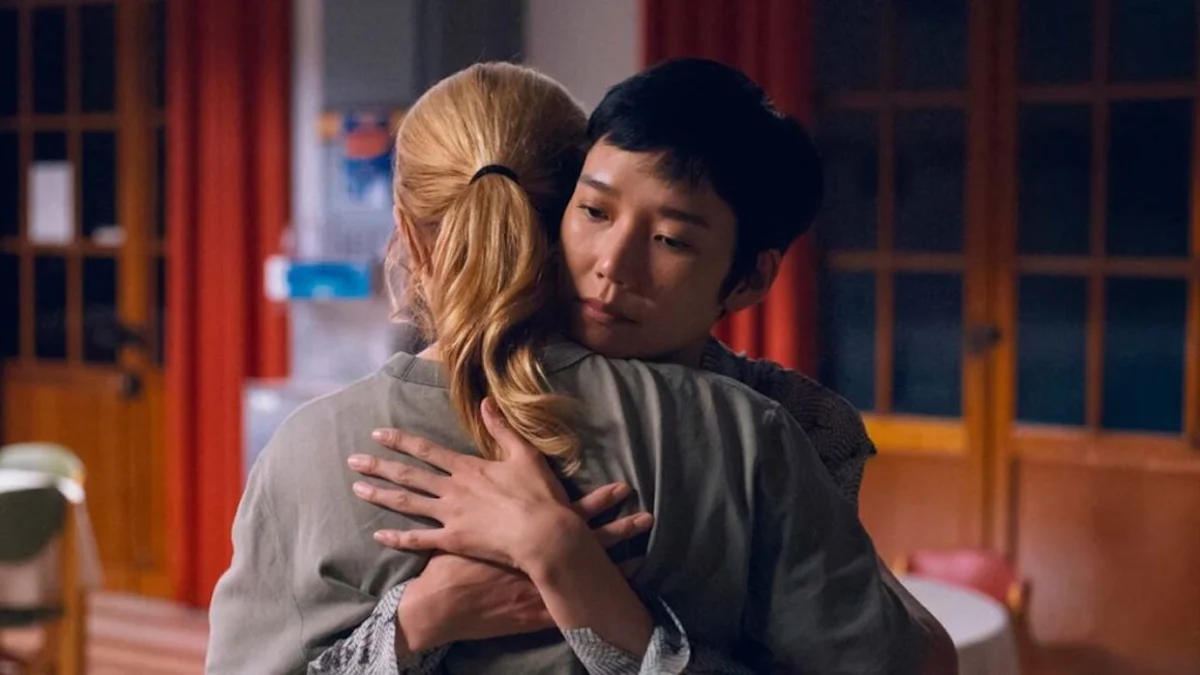
This contrast was most acutely felt in the reception of Ryusuke Hamaguchi’s latest, All of a Sudden, which, despite its profound impact on audiences, did not secure the top prize. Hamaguchi, known for his masterful character studies, crafted an adventure of reflection and connection through the extended heart-to-heart between a Japanese playwright, Mari (Tao Okamoto), and a French eldercare manager, Marie-Lou (Virginie Efira). Their chance encounter blossomed into a fortifying friendship, organically encompassing shared concerns about personal well-being and the world’s palpable decline. The film’s stirring portrayal of this deepening bond, far from a "wham-bam blow," delivered its emotional weight through subtle accumulation, illustrating the power of human connection in an increasingly fragmented world. The exceptional performances by Okamoto and Efira were duly recognized with a joint Best Actress award, a testament to their compelling on-screen chemistry and the film’s empathetic narrative.
The inspiration for Hamaguchi’s compassionate scenario emerged from real-world correspondence between Japanese anthropologist Maho Isono and philosopher Makiko Miyano, whose terminal illness mirrored Mari’s journey. Isono’s attendance at the premiere in the Lumière Theater underscored the film’s deep roots in authentic human experience, reminding pundits that true "star power" often lies in the stories themselves and the lives that inspire them, rather than just celebrity wattage.
Beyond the Croisette: Un Certain Regard, Critics’ Week, and Directors’ Fortnight
While the Competition generated its share of debate, the parallel sections of Cannes — Un Certain Regard, Critics’ Week, and Directors’ Fortnight — showcased a rich tapestry of cinematic innovation and emerging talent, further solidifying the "quiet revolution" narrative.
Un Certain Regard, traditionally a platform for original and daring works, opened with Jane Schoenbrun’s Teenage Sex and Death at Camp Miasma. This febrile meta-horror journey into self-realization and pleasure, featuring Hannah Einbinder and Gillian Armstrong, continued Schoenbrun’s exploration of parasocial relationships and desire, proving to be one of the section’s most readily digestible yet thought-provoking entries. However, the top prize for Un Certain Regard was bestowed upon Sandra Wollner’s Everytime, a shattering study in divergent pathways through grief and recovery. Shot with a heady intimacy by Gregory Oke (cinematographer for Aftersun) and enhanced by an immediate sound design, Everytime immersed viewers in its mysterious exploration of loss, earning widespread critical acclaim for its raw emotional power.
In Critics’ Week, dedicated to discovering new filmmakers, Marine Atlan’s debut feature, La Gradiva, emerged as a standout. This gorgeously observed film, co-written and co-cinematographed by Atlan, captivated audiences with its exquisitely attuned portrayal of French students on a school trip to Pompeii. Atlan demonstrated a whisker-sensitive feel for adolescent angst and joy, alongside the credible dedication of their teacher (Antonia Buresi). The ensemble cast of newcomers, including Suzanne Gerin as a budding artist grappling with loneliness and Colas Quignard as a poignant outsider, delivered electric performances. Atlan’s masterful camera work, shifting perspectives between observer and participant, skillfully captured the nuances of teenage dynamics and autonomy. La Gradiva quickly secured US distribution through 1-2 Special and garnered a lengthy rave review from The New Yorker, underscoring its impact and challenging the traditional, Competition-centric hierarchy of attention at Cannes.
The Directors’ Fortnight also contributed significantly to the festival’s critical successes. Dominga Sotomayor’s La Perra, a magnificently composed portrait of a Chilean islander (Manuela Oyarzún) whose childhood loss manifests in an ornery stray dog, paired nicely with Everytime in its exploration of grief and unconventional connections. Its arresting visuals and deeply empathetic performance from Oyarzún earned it high praise.
Honoring New Voices: The Camera d’Or
The Camera d’Or, awarded to the best debut feature across all sections, went to Clarissa, a sumptuously mounted reworking of Virginia Woolf’s Mrs. Dalloway from Nigerian directors Arie Esiri and Chuko Esiri. Their adaptation introduced a sharpened colonialist critique, referencing Chinua Achebe, offering a fresh, politically resonant perspective on a literary classic. This film was one of several titles brought to the festival by NEON, a distributor known for its eclectic and daring selections. NEON’s diverse slate at Cannes 2026 ranged from the turbocharged South Korean monster movie Hope, featuring a galloping, stretchy hominid alien seemingly inspired by Goya’s Saturn Devouring His Son, to James Gray’s Queens family tragedy Paper Tiger. The latter, a pitch-perfect classical work, was widely regarded as having been unjustly overlooked for awards recognition despite its masterful storytelling.

Historical Echoes and Contemporary Resonances
Cannes 2026 also featured several period dramas that, while set in the past, held up striking mirrors to the present moment, reinforcing the festival’s theme of reflective storytelling. Pawel Pawlikowski’s Fatherland offered an impeccably shot and constructed road movie following Thomas Mann (Hanns Zischler) and his daughter Erika Mann (Sandra Hüller) on the writer’s 1949 speaking tour across West and East Germany. Pawlikowski, known for his concise yet profound narratives, rapidly distilled a crucial moment in postwar thought. Mann’s eloquent speeches, steeped in 19th-century Kantian and Goethean principles, struggled to fully address the stark realities of postwar ruins, blinkered opportunism, and resurgent authoritarian demons, prompting audiences to ponder unsettling parallels with contemporary global political landscapes.
Similarly, Emmanuel Marre’s A Man of His Time held up another disquieting mirror to the present. The film tracked the rise and moral decay of a middling municipal bureaucrat (a maddeningly good Swann Arlaud) in Nazi-occupied Vichy France. The hard-lit 16mm cinematography lent a visceral "you-are-there" feel to the Frenchman’s gradual shuffle toward fascism and genocide. The film’s chilling authenticity was rooted in Marre’s own family history, with Arlaud’s character based on the director’s great-grandfather, whose letters to his wife were quoted in the film.
Exploring the Unconventional and the Disquieting
Among the festival’s most haunting and unclassifiable experiences was Arthur Harari’s The Unknown. This film, often mislabeled as a mere "body-swap movie," defied genre expectations. In a deeply vulnerable performance, Léa Seydoux portrayed a man who awakens in the body of a woman with whom he had a one-night stand at a carnivalesque warehouse party. Harari masterfully employed bodily displacement as a floating signifier, representing trauma in all its bewildering estrangement from the self, while also exploring the sometimes unsettling solidarity felt with others in similar states of existential flux. This uncompromising, go-it-alone film exemplified the kind of daring cinema Cannes aims to showcase. Seydoux also featured in Marie Kreutzer’s Gentle Monster, a crushing yet imperfect follow-up to Corsage (2022), where she starred as a singer blindsided by her husband’s arrest on child pornography charges, exploring similar themes of betrayal and identity.
Ira Sachs’ The Man I Love further explored themes of memory and identity. Set in the 1980s and inflected by the AIDS crisis, the film centered its narrative on a musical performer’s loss of memory and identity, shifting the focus from corporeal decay to the profound psychological and emotional impact of the era. This unique approach to a well-trodden subject highlighted the festival’s commitment to diverse narrative strategies.
Political Statements and Global Commentary
Cannes 2026 concluded not with a grand communion, but with a powerful antiauthoritarian gesture. Russian exile Andrei Zvyagintsev, awarded the Grand Prix for his film Minotaur, used his acceptance speech to directly address Vladimir Putin, urging him to end the war in Ukraine. Zvyagintsev, whose first film in nearly a decade was shot in Latvia, presented a compelling adaptation of Chabrol’s The Unfaithful Wife to the Russian corruption industrial complex, portraying a domineering businessman who descends into murder. While some found its critique of Russian society somewhat predictable, the film’s stark portrayal resonated deeply, especially given the director’s courageous public stance.
Radu Jude’s guest-worker update and punking of Octave Mirbeau’s Diary of a Chambermaid offered another potent social critique. A less raucous companion piece to his 2023 film Do Not Expect Too Much from the End of the World, Jude’s latest followed a young mother navigating the double binds of nannying a stranger’s child while only able to FaceTime her own daughter back in their Romanian village. The film deftly used performance to disarm and expose the systemic inequalities inherent in global labor dynamics.
Implications for the Future of Cinema
Cannes 2026, despite initial skepticism, will be remembered as a pivotal year. The collective impact of films like All of a Sudden, The Dreamed Adventure, La Gradiva, and Everytime signaled a burgeoning trend towards "accumulative cinema" – films that build their power incrementally, focusing on nuance, introspection, and profound emotional resonance rather than overt spectacle or shock. This shift suggests a renewed appreciation for deliberate pacing, character-driven narratives, and the subtle complexities of human experience.
The strong showing from debut filmmakers and the diverse range of films honored across all sections underscore Cannes’ enduring role as a launchpad for new talent and a barometer for the global cinematic landscape. The festival’s embrace of diverse voices, from Nigerian adaptations to Chilean islander tales and Eastern European sagas, reflects a broader industry movement towards inclusive storytelling. The critical reception and swift distribution deals for many of these "quiet revolution" films indicate a market readiness for deeper, more reflective narratives. As the Lumière Theater curtains closed on Cannes 2026, the impression was not of a "meh year," but rather of a festival that cultivated a rich harvest of titles destined for compulsive re-watching and long-term resonance, ultimately redefining what constitutes cinematic impact in the modern era.