The American Cinematheque’s "Bleak Week: Cinema of Despair" series, which began as a provocative counter-programming initiative in 2022, has rapidly evolved from a local Los Angeles phenomenon into a worldwide cinematic event. Now in its fifth iteration, the festival is embarking on an unprecedented global expansion, reaching 73 cities and nearly 100 theaters starting in June. This significant growth underscores a potent and widespread appetite among audiences for films that explore "unpleasant truths and raw empathy," challenging the prevailing trends of mainstream entertainment.
The Genesis of a Provocative Vision
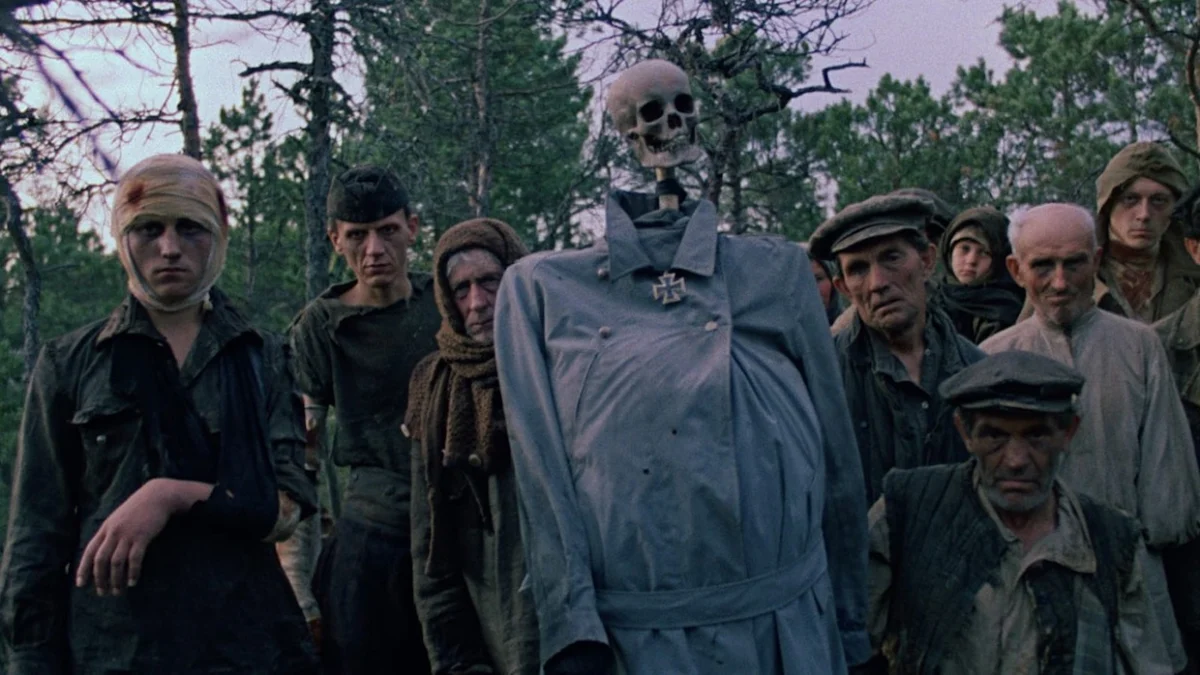
Conceived in 2022, Bleak Week was initially a "cheeky stab at some summertime counter-programming," designed to offer an alternative to the often lighter fare typically associated with the warmer months. The American Cinematheque’s website articulated its mission: to spotlight "filmmakers who wholly embrace a cinema of despair in pursuit of unpleasant truths and raw empathy." The inaugural 33-film slate was a formidable collection of repertory classics, including uncompromising works like Pier Paolo Pasolini’s Salò, or the 120 Days of Sodom (1975), Elem Klimov’s Come and See (1985), Ingmar Bergman’s Winter Light (1963), Michael Haneke’s Funny Games (1997), Lars von Trier’s Breaking the Waves (1996), and Béla Tarr’s seven-and-a-half-hour epic Sátántangó (1994). These films, while diverse in their aesthetic modes and national origins, were united by a visceral quality and a commitment to exploring profound human suffering and existential dread, establishing "baseline dreariness and arthouse bonafides" as the series’ organizing principles.
Chris LeMaire, Director of Programming at the American Cinematheque, has long championed challenging cinema. Prior to the pandemic, LeMaire was instrumental in programming rare Andrei Tarkovsky prints and facilitating Lav Diaz’s first visit to the United States. Both Tarkovsky and Diaz are renowned for their austere, often durational films that delve into national history, political atrocity, and deep existential concerns. This foundational curatorial philosophy paved the way for Bleak Week, which, despite its seemingly surface-level branding, encourages audiences to engage with fundamental human qualities and difficult realities, even when the immediate inclination might be to avoid such heavy subject matter. This dedication to "patience and humanism," to confronting what might appear intimidatingly heavy, is articulated as the very "heart and soul" of Bleak Week.
From Local Experiment to Global Phenomenon
The initial idea for Bleak Week, according to American Cinematheque Artistic Director Grant Moninger, emerged from a desire to "take Chris’s brilliant programming and present it in a way to really bring some recognition to art house films and great auteurs throughout the history of cinema." This was achieved, in part, by deliberately contravening an unspoken programming rule at the Cinematheque. Rather than presenting Bleak Week as merely one thematic program among many, LeMaire and Moninger chose to saturate the schedules of all three of their Los Angeles venues with "wall-to-wall despair." This bold move forced audiences to confront the series head-on, transforming the experience from a choice into an immersive encounter.
This audacious programming strategy created both a predicament and an opportunity. If audiences had no alternative but to participate in Bleak Week, how would they personally navigate the program? This question led LeMaire to ponder the multifaceted nature of bleakness itself: "What if there are different types of bleaks?" While the first edition had few truly left-field choices beyond Arthur Penn’s black comedy Penn & Teller Get Killed (1989), subsequent iterations have embraced a broader spectrum. The current lineup, for instance, seamlessly integrates arthouse and repertory staples—including the return of Bleak Week favorite Béla Tarr, Jane Campion’s The Piano (1993), and Ingmar Bergman’s war apologia Shame (1968)—with diverse genre films such as Richard Kelly’s divisive Southland Tales (2006) and Mick Jackson’s harrowing post-apocalyptic nightmare Threads (1984). These films, not typically programmed alongside each other, demonstrate the series’ expanded definition of "bleakness." With retrospective strands dedicated to luminaries like Isabelle Huppert, Warwick Thornton, and Ari Aster, all confirmed for Q&As, the festival aims to offer something compelling for every type of audience member willing to delve into its thematic depths.
Navigating the Cultural Landscape: "Hopecore" vs. Reality
The expansion of Bleak Week comes at a time when Hollywood and media narratives are often seen to be shifting. Moninger and LeMaire initially expressed apprehension about public reception, especially in light of trends like "Hopecore," a term coined in The Hollywood Reporter by Carly Thomas, describing a movement towards "uncynical storytelling that celebrates collaboration and the indomitable human spirit." Thomas cited the sci-fi blockbuster Project Hail Mary as a vanguard of this trend, representing a departure from the "downbeat, grayscale filmmaking inaugurated by Christopher Nolan’s Batman films."
However, the rapid and extensive growth of Bleak Week, expanding from its Los Angeles base to major cultural hubs like New York City, Chicago, Dallas, and London, and now encompassing 73 cities worldwide, strongly suggests a counter-narrative. This widespread enthusiasm indicates a powerful desire among audiences for films that reflect reality "warts and all," rather than escapist optimism. Moninger articulates this perspective eloquently: "To me, the greater hope is that places are uniting. These are films made by humans, programmed by humans, for humans, about the human condition. There’s nothing more hopeful than that." This viewpoint reframes the experience of confronting difficult truths through art as an act of profound human connection and solidarity, rather than mere capitulation to despair.
The notion of "Hopecore" as a definitive cultural shift, while capturing media attention, may also be seen as a somewhat superficial assessment. As Moninger points out, "There’s never been a time on this earth that wasn’t bleak. It may not be bleak in your house, but I guarantee that next door it’s kind of bleak. And I guarantee you across the ocean it’s kind of bleak. So to say it’s really all about ‘now’ is limiting." This perspective grounds Bleak Week’s relevance in a timeless human condition, suggesting that the desire for art that acknowledges suffering and complexity is a constant, not a transient trend.

A Collaborative Global Network
The global expansion of Bleak Week is a testament to a unique collaborative model. Kerstin Larson, programming director at Milwaukee’s Oriental Theater, shared insights into this process. LeMaire directly reached out to potential participating venues, though Larson noted she was already aware of the series through her own research and reports from LA-based colleagues. The American Cinematheque, rather than imposing a rigid framework, offers extensive resources, including a "giant spreadsheet" detailing past programs and distributors’ upcoming slates of restorations, while encouraging local interpretation. LeMaire emphasizes this decentralized approach: "What’s extremely important to us is that we don’t impose a lineup. We don’t even say it has to be seven days. What is a ‘week’ to you? What would that look like in your programming?"
This ethos has fostered remarkable diversity in programming across the participating cities. The Oriental Theater in Milwaukee, for example, has curated a focused lineup of seven films, with minimal overlap with the American Cinematheque’s main program—only William Friedkin’s intense heist thriller Sorcerer (1977) appears on both. Larson intentionally developed a specific theme for Milwaukee’s programming, centering on "how work and labor continues to be bleak." A cornerstone of her selection is the restoration of Chris Smith’s American Job (1996), a natural fit given the immense local popularity of Smith’s subsequent documentary American Movie (1999), which chronicles the making of American Job. Adding a touch of ironic counter-seasonal programming, the Oriental Theater is screening Béla Tarr’s The Turin Horse (2011), a famously austere film about existential hardship, on Father’s Day in June, a month typically associated with bright, sunny optimism.
Attracting Auteurs and Industry Endorsement
Beyond its expanding geographic footprint, Bleak Week has significantly elevated its stature by attracting prominent filmmakers and actors. Moninger recalls a pivotal moment: "When Chris convinced Béla Tarr, who said he would never come back to the United States, to come back for Bleak Week, it suddenly changed the stature of the festival." Tarr, considered one of the "heroes" of Bleak Week, lent an invaluable sense of occasion and artistic legitimacy to the series. In subsequent years, other renowned cinematic voices have joined the fold, with 2025 featuring a rare retrospective for independent maverick Jon Jost, and 2024 honoring Kenneth Lonergan, Lynne Ramsay, and Charlie Kaufman.
The festival’s growing prestige is further evidenced by its ability to draw contemporary stars. The current edition boasts retrospectives and Q&As with Isabelle Huppert, Warwick Thornton, and Ari Aster. LeMaire noted, "This is the easiest year we’ve ever programmed. Because once you have her [Huppert], everyone’s saying ‘yes.’" This "trickle-down" effect is strategic: "If we can have someone that big, then we can ask audiences to take a chance on some of the rarer things in the lineup," LeMaire explained. "If it’s in a festival with Isabelle Huppert and Ari Aster, it must be interesting."
The enthusiasm extends to distributors, who play a crucial role in securing rare prints and restorations. LeMaire highlights their support: "Janus Films and American Genre Film Archive are willing to hold some restorations they have for the year for Bleak Week, which is really cool." This year’s lineup proudly features world premieres of restorations, including the Coen Brothers’ The Man Who Wasn’t There (2001) and Daniel Petrie’s difficult-to-see Buster and Billie (1974), further cementing the festival’s significance within the repertory cinema landscape.
Despite being primarily a repertory festival with "no premieres of new films," Bleak Week has cultivated an intense following. LeMaire marvels at the audience response: "The response to it in this town is like, ‘I gotta get a ticket for every night.’ Year one, we never would have dreamed." Moninger corroborates this, noting that Ari Aster’s retrospective sold out "in just a few minutes," signaling a robust and dedicated audience eager to engage with challenging, curated content.
Curatorial Choices and Future Horizons
A notable characteristic of Bleak Week’s programming thus far has been the omission of nonfiction filmmaking. Moninger clarifies the rationale behind this decision: "We don’t actually want to show the suffering. Bleak Week is really triumphant. It’s saying that no matter what people have been through, what they’re going through now, or who they are, you can make art about it." This perspective underscores the festival’s focus on narrative as a vehicle for processing and transforming difficult realities into art, rather than directly depicting raw, unmediated suffering. While this approach is consistent with the festival’s celebratory stance on artistic creation in the face of adversity, it also represents a potential area for future expansion. Integrating unflinching but thoughtfully framed documentaries could offer another dimension to the exploration of "bleakness," potentially enriching the program with direct reflections of real-world experiences, provided they align with the overarching curatorial philosophy.
The enduring appeal of Bleak Week suggests a fundamental truth about cinema’s role in culture. Far from being a niche interest, the communal experience of engaging with profound sorrow and grief in a shared space offers a unique form of catharsis and connection that solo viewing at home cannot replicate. As Moninger observes, "Being able to experience sorrow and grief together—there’s something more hopeful about that than people watching entertainment at home." In a world that often feels increasingly fragmented and isolating, Bleak Week provides a powerful platform for collective introspection, empathy, and the shared acknowledgment of the human condition’s complex tapestry. It stands as a testament to the enduring power of challenging cinema, proving that even in the embrace of "bleakness," there is profound artistic triumph and communal hope.