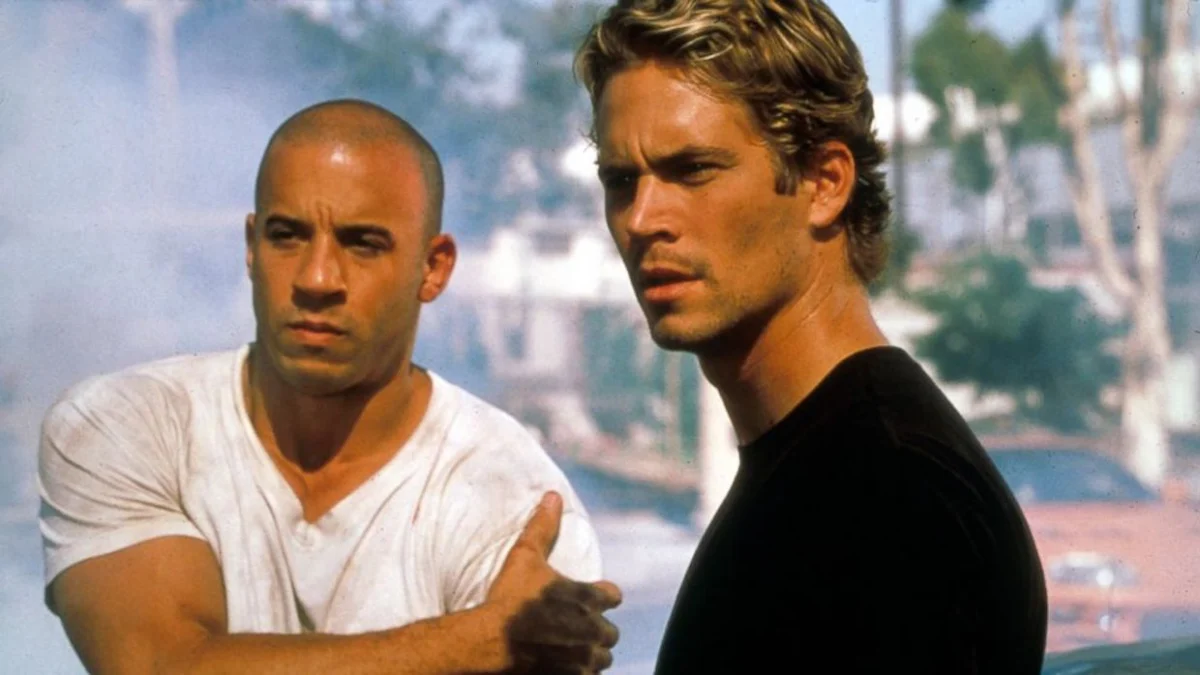
The 79th Cannes Film Festival, typically a bastion of arthouse cinema and auteurist visions, made a surprising yet culturally significant inclusion in its Official Selection this year, hosting a special midnight screening of Rob Cohen’s The Fast and The Furious to commemorate its 25th anniversary. The event, held last Wednesday at the Grand Théâtre Lumière, saw an emotional return for franchise patriarch Vin Diesel, alongside co-stars Michelle Rodriguez, Jordana Brewster, and Meadow Walker, daughter of the late Paul Walker, underscoring the enduring legacy of the street-racing saga that launched a global phenomenon.
A Quarter-Century Milestone for a Cultural Juggernaut
Released in 2001, The Fast and The Furious began as a relatively modest action film centered on illegal street racing, car modifications, and a tight-knit crew led by Dominic Toretto (Vin Diesel). The film, which cost approximately $38 million to produce, became a sleeper hit, grossing over $207 million worldwide and establishing a template for high-octane action and themes of "family" that would define a multi-billion-dollar franchise. Its inclusion in Cannes, a festival often perceived as exclusive to European art cinema, highlights a growing trend in major film festivals to acknowledge and celebrate popular culture touchstones that have significantly impacted the global cinematic landscape.
This year’s Cannes edition was notably absent of major Hollywood studio premieres, a stark contrast to previous years where blockbusters like Top Gun: Maverick (2022) and Mission: Impossible – Dead Reckoning Part One (2023) received grand, star-studded launches. In this context, the screening of The Fast and The Furious served as a strategic "conciliatory gesture," as noted by some observers, a nod to mainstream audiences and a recognition of the film’s immense cultural penetration. The sentiment was reinforced by a simultaneous screening of Top Gun at the Cinéma de la Plage, further cementing the festival’s embrace of beloved genre cinema.
Vin Diesel’s Emotional Return to Cannes
The evening’s most poignant moments revolved around Vin Diesel, whose connection to Cannes predates The Fast and The Furious. Before his rise to global stardom, Diesel, then Mark Sinclair, first visited Cannes in 1995 as an unknown 28-year-old filmmaker. He presented his 20-minute short film, Multi-Facial, which he wrote, produced, directed, and starred in, to critical acclaim. The semi-autobiographical piece, exploring issues of race and identity in the acting world, garnered enough attention to pave his way into Hollywood, notably catching the eye of Steven Spielberg for Saving Private Ryan.
Returning to the festival’s flagship venue, the Grand Théâtre Lumière, two and a half decades later, Diesel was visibly moved. Before addressing the 2,300 attendees, he lingered on the red carpet, showcasing a blazer emblazoned with "FAST FOREVER" in diamante, a testament to the franchise’s enduring power and his deep personal investment. Festival General Delegate Thierry Frémaux and President Iris Knobloch, along with Diesel’s co-stars and Paul Walker’s daughter, Meadow, awaited his presence for a triumphant group photo, underscoring the magnitude of the occasion.
Inside, Diesel delivered an emotional address, frequently referring to The Fast and The Furious as a "classic" despite its official categorization outside the festival’s dedicated "Classics" sidebar. His slow, resonant delivery captivated the audience as he reflected on his journey, recalling Frémaux’s earlier remark: "You, Vin, were born in Cannes." The moment was further imbued with emotion as Diesel spoke of his late co-star, Paul Walker, who tragically died in a high-speed car crash in 2013 during the production of Furious 7. Diesel paid tribute to Walker, affectionately calling him "Pablo," and proclaimed, "This is the film where brotherhood was introduced to our millennium by myself and my brother Pablo." This deeply personal reflection resonated with the audience, highlighting the familial bond that has become a cornerstone of the franchise’s narrative and appeal.

The Evolution of a Franchise: From VCRs to Outer Space
The original The Fast and The Furious now stands in stark contrast to its astronomically scaled successors. The plot, by today’s franchise standards, is charmingly quaint: it centers on a series of daring heists involving stolen VCRs and DVD players. LAPD officer Brian O’Conner (Paul Walker) infiltrates Dominic Toretto’s crew to investigate, leading to a complex interplay of loyalty, betrayal, and burgeoning friendship. This relatively grounded premise allowed for a focus on practical stunts, authentic car culture, and character development, elements that some fans argue have been diluted in later installments by increasingly fantastical plots and rampant digitalization.
The original film’s portrayal of Brian O’Conner showcased Paul Walker’s nascent acting talent, with his furrowed-brow intensity and "Fremen-blue eyes" conveying a mix of determination, anger, and nascent loyalty. This performance, while perhaps not reaching the heights of dramatic complexity, effectively established his character’s internal conflict and laid the groundwork for his integral role in the franchise. Walker’s origins in television, notably his 1993 stint on the long-running soap opera The Young and the Restless, offer a fascinating parallel to the Fast & Furious franchise itself. Like the enduring soap, which debuted in 1973, the Fast & Furious saga has maintained a core identity as a complex family melodrama, albeit one wrapped in an ever-escalating package of global espionage and impossible stunts.
Over its 25-year history, the franchise has undergone a dramatic transformation. What began as a street-level crime drama evolved into a globe-trotting action series, incorporating elements of spy thrillers and even venturing into space with F9 (2021). The stakes have escalated from quarter-mile drag races to saving the world from super-villains and advanced technology. Despite these drastic shifts, the central theme of "family" (both biological and chosen) has remained the unwavering anchor, a constant emotional core that resonates deeply with its massive global fanbase. This thematic consistency, coupled with a diverse cast and an unwavering commitment to spectacular action, has allowed the franchise to thrive across ten main films, a spin-off, and several upcoming television series.
Broader Implications: Cannes, Classics, and Cultural Impact
The decision by Cannes to feature The Fast and The Furious speaks volumes about the evolving definition of "classic" cinema and the festival’s willingness to engage with films that hold immense cultural, rather than solely artistic, significance. While it might not fit the traditional mold of a Cannes "classic" – typically reserved for meticulously restored masterpieces by revered auteurs – its inclusion acknowledges the film’s undeniable impact on popular culture, its role in launching one of the most successful film franchises of all time, and its ability to connect with diverse audiences worldwide.
This move could be interpreted as part of a broader strategy by Cannes to maintain its relevance in a rapidly changing media landscape, where streaming services and blockbuster franchises increasingly dominate audience attention. By embracing popular cinema, even as a special event, the festival signals a more inclusive approach, without diluting its commitment to high art. It also underscores the idea that a film’s enduring quality can be measured not just by critical acclaim or artistic merit, but also by its cultural footprint, its ability to generate widespread affection, and its lasting impact on an entire generation of moviegoers.
The event at Cannes serves as a powerful reminder of the franchise’s longevity and its unique position in cinematic history. With a "final" installment slated for 2028 and four spin-off TV series reportedly in development at Peacock, the "FAST FOREVER" promise on Vin Diesel’s blazer is far from idle. The Fast & Furious universe continues to expand, driven by the foundational elements established a quarter-century ago: speed, family, and an unyielding sense of brotherhood. The midnight screening, concluding well past 3 a.m., left attendees not only energized but perhaps also with a renewed appreciation for how a seemingly simple street-racing film evolved into a global cultural phenomenon, securing its place, if not in the official "Classics" sidebar, then certainly in the pantheon of beloved cinematic institutions.