A decade ago, as streaming services were solidifying their place in entertainment, Netflix embarked on a distinctive, interactive experiment to address the growing challenge of content discovery: a feature known as Max. Launched exclusively on the PlayStation 3 in June 2013, Max was a bold departure from traditional recommendation algorithms, taking the form of a quirky virtual assistant designed to gamify the process of finding something to watch. While ultimately short-lived, Max represents a fascinating chapter in Netflix’s ongoing quest to combat "choice paralysis" and enhance the user experience, paving the way for subsequent innovations in content discovery.
The Streaming Landscape of 2013: A Breeding Ground for Innovation
To understand Max’s emergence, it’s crucial to contextualize the streaming landscape of 2013. Netflix, having successfully transitioned from a DVD-by-mail service to a streaming behemoth, was rapidly expanding its content library. This growth, while a boon for subscribers, simultaneously introduced a new problem: the overwhelming paradox of choice. Users, faced with thousands of titles, often spent more time scrolling and deliberating than actually watching, leading to frustration and potential churn.
In 2013, Netflix was a dominant, but not unchallenged, player. Hulu was a significant competitor for broadcast TV content, and Amazon Prime Video was beginning to ramp up its original programming efforts. Traditional cable television still held a substantial market share, and smart TVs were becoming more common, but dedicated streaming devices and gaming consoles like the PlayStation 3 were vital conduits for digital entertainment. The PS3, in particular, was a powerhouse for Netflix streaming, boasting a vast user base that regularly accessed the service through their consoles. This made it an ideal testing ground for new features that required more interactive input than a typical smart TV remote could offer.
Before Max, Netflix relied heavily on its nascent, yet sophisticated, recommendation engine, driven by user ratings (the 5-star system was still in place) and viewing habits. However, these algorithms, while effective, were largely passive. Max was conceived as an attempt to inject personality and interactivity into this process, making content discovery less of a cold, analytical function and more of an engaging, almost human-like interaction.
The Genesis of Max: A Collaboration with Gaming Innovators
Netflix’s decision to develop Max underscored its willingness to experiment and innovate beyond conventional user interfaces. The company sought to transform the often-tedious task of browsing into an entertaining event. For this ambitious project, Netflix partnered with Jellyvision, the creators behind the irreverent and highly popular trivia game series You Don’t Know Jack. Jellyvision’s expertise in crafting engaging, comedic, and interactive experiences was a perfect fit for Netflix’s vision of a playful recommendation engine. It’s worth noting that Jackbox Games, known for its party games, is a spin-off from Jellyvision Games, maintaining a strong lineage in interactive entertainment.
Max officially rolled out on June 28, 2013, exclusively on the PlayStation 3 app. This platform choice was strategic; the PS3 was not only a popular streaming device but also provided a controller-based interface that could support Max’s interactive mini-games and dialogue more effectively than simpler remotes. Todd Yellin, then Netflix’s VP of Product Innovation, articulated the company’s experimental mindset in a now-offline blog post, stating, "If Max performs at the level he promises, we’ll expand his repertoire and make him available on other devices in the future, likely the iPad next." This statement highlights the initial optimism and the phased deployment strategy Netflix often employs for new features.
Max in Action: Gamifying the Search for Content
Max was designed to be a virtual character, blending the persona of a game-show host with a personal assistant. His interface was distinct, featuring a friendly, animated avatar and a conversational tone that set him apart from the standard Netflix browsing experience. When users engaged with Max, they were greeted with quirky dialogue and guided through a series of interactive prompts to narrow down their preferences.
The core of Max’s functionality revolved around gamified decision-making. Instead of simply presenting a list of recommendations, Max engaged users with questions and choices. While the specific interactive games weren’t exhaustively detailed in the surviving records, they were conceptually similar to the "This or That" mechanic shown in the accompanying image. Users might be asked to choose between two disparate moods, genres, or even celebrity types, with Max then interpreting these choices to suggest suitable content. For example, a user might be presented with "Feeling like a laugh or a cry?" or "More in the mood for an epic adventure or a cozy night in?" These choices, combined with the user’s viewing history and ratings, were intended to help Max home in on a personalized recommendation.
One of Max’s most charming features was his "30-second pitch." Once a suggestion was made, users could opt for Max to deliver a playful, quick summary explaining why they should watch that particular movie or show. These pitches were infused with the same comedic, irreverent tone characteristic of You Don’t Know Jack, further reinforcing Max’s unique personality. This element aimed to build anticipation and provide a compelling reason to click "play," transforming a simple suggestion into a mini-performance.
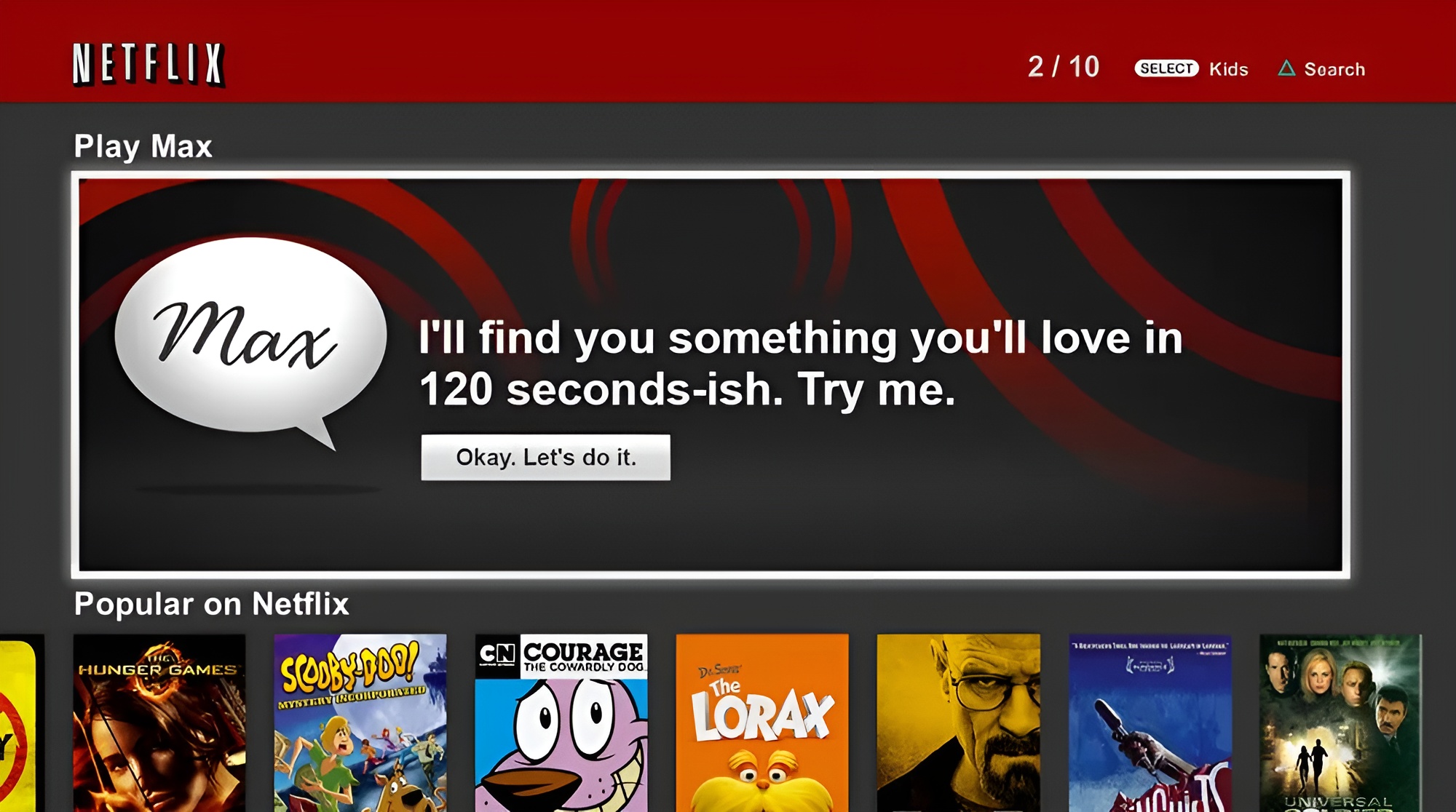
A video from the era, featuring Pedro Freitas, then Senior Manager of Product Innovation at Netflix, provides a valuable glimpse into Max’s user interface and the broader Netflix ecosystem of 2013. The video showcases a UI that looks significantly different from today’s, complete with the 5-star rating system, a stark contrast to the current thumbs-up/double-thumbs-up/thumbs-down model. It also highlights titles that are no longer available on Netflix, such as Disney’s The Avengers, Brother Bear 2, and Cars, a testament to how content licensing agreements have reshaped streaming libraries over the past decade. Furthermore, the presence of a "Popular on Facebook" row, complete with user avatars linked to their Facebook profiles, serves as a nostalgic reminder of a period when social media integration was a ubiquitous feature across many applications, including streaming services. This Facebook integration was another attempt to leverage social connections for content discovery, albeit in a more passive way than Max’s interactive approach.
The Decline and Discontinuation: When Quirky Met Complexity
Despite its innovative and engaging premise, Max’s tenure was relatively brief. By May 2015, less than two years after its launch, users began to notice its quiet disappearance from their PlayStation 3 apps. Netflix customer service representatives eventually confirmed that the feature had been officially retired, citing a lack of widespread adoption and engagement from the subscriber base.
Several factors contributed to Max’s eventual discontinuation. Foremost among them was the inherent friction in its design. While novel, Max required active participation from the user. In an era where streaming was increasingly synonymous with passive consumption and instant gratification, the multi-step, game-like process of Max proved to be a barrier for many. Most users, after a long day, simply wanted to hit a button and "zone out," not engage in a dialogue or play a mini-game to find content. The "too much active participation" aspect directly clashed with the core user desire for effortless entertainment.
Furthermore, as a Reddit user pointed out years later, Max’s recommendation pool often felt limited and repetitive. If a user engaged with Max multiple times, they would frequently encounter suggestions from a relatively small collection of movies and shows. This rigidity was a significant drawback, especially when compared to Netflix’s continually improving, data-driven algorithms, which could dynamically surface a far wider array of personalized content based on subtle viewing patterns and preferences. Max, with its pre-scripted dialogue and likely more constrained recommendation logic, struggled to keep pace with the sheer volume and diversity of Netflix’s expanding library. Maintaining and updating Max’s character, scripts, and integrating new content into its interactive framework would have also been a resource-intensive endeavor for a feature that wasn’t gaining significant traction. The promised expansion to other devices like the iPad never materialized, indicating that performance or adoption metrics likely fell short of internal expectations.
The Enduring Legacy: Max’s Echoes in Modern Content Discovery
While Max himself is long gone, the fundamental problem he sought to solve—the persistent challenge of choice paralysis—remains a central focus for Netflix and the broader streaming industry. The lessons learned from Max’s interactive, personality-driven approach have subtly influenced subsequent content discovery features, even if they manifest in different forms.
Max’s most direct spiritual successor was arguably the "Play Something" button, often referred to as "Surprise Me," which Netflix introduced in 2021. This feature allowed users to simply click a button and have Netflix immediately play a show or movie it thought they would like, based on their viewing history. While it shared Max’s goal of alleviating choice, "Play Something" was a passive solution, removing the interactive dialogue and mini-games. It aimed for immediate gratification rather than gamified engagement. However, "Play Something" itself was quietly discontinued in early 2023, indicating that a purely random or semi-random shuffle, even if algorithmically informed, might still not fully meet user expectations for personalized, effortless discovery.
The latest iterations of Netflix’s content discovery efforts include features like its vertical video feed. Inspired by the addictive short-form video formats of platforms like TikTok, this feed presents users with bite-sized, engaging clips and trailers from various Netflix titles. The goal is to quickly capture attention and provide a dynamic preview, encouraging users to jump into a full show or movie. This approach prioritizes visual engagement and rapid content sampling over interactive questioning or character-driven pitches.
Looking ahead, Netflix is reportedly testing AI search capabilities, moving towards a more sophisticated, natural language processing approach to content discovery. This signifies a return to a more direct, yet highly intelligent, search mechanism, allowing users to articulate their desires in natural language, a far cry from Max’s scripted, game-show host persona.
Max’s legacy is a testament to Netflix’s continuous innovation and its willingness to experiment, even if those experiments don’t always succeed commercially. It taught the company valuable lessons about user interaction, the limits of gamification in a passive entertainment context, and the critical importance of seamless, intuitive content discovery. While Max’s quirky character and interactive games are now a fond memory for a niche group of PlayStation 3 streamers, his spirit of tackling choice paralysis lives on in the ongoing evolution of Netflix’s user experience, as the company tirelessly works to ensure that subscribers spend less time searching and more time watching.
Do you remember Max? Did his quirky pitches help you find your next binge-watch, or did you prefer the traditional browsing experience? Share your thoughts in the comments below.