Netflix’s latest foray into the science fiction genre, The Boroughs, arrives with an undeniable echo of its predecessor, Stranger Things. From its opening sequence, the eight-part drama signals its intent to capture a similar spirit of youthful adventure, albeit transplanted into a community of seasoned residents. The series centers on a group of quirky senior citizens who find themselves entangled in the mysterious happenings within their exclusive gated retirement community. In a television landscape often criticized for its limited and stereotypical portrayals of older characters and the multifaceted realities of aging, The Boroughs stands out for its commitment to depicting its senior protagonists as complex, three-dimensional individuals, each possessing unique emotional journeys and personal histories.
The involvement of the Duffer Brothers, the creative minds behind the global phenomenon Stranger Things, undoubtedly serves as a significant draw for many viewers. The brothers also served as executive producers on the series, a role they previously held for the critically divisive yet popular horror series, Something Very Bad Is Going to Happen. While their involvement in The Boroughs is again primarily as producers, the new series feels more intrinsically aligned with their established creative sensibilities than Something Very Bad ever did. Developed by Jeffrey Addiss and Will Matthews, The Boroughs cultivates a strong sense of found family, offering what can be best described as a Stranger Things narrative tailored for the retirement demographic. This thematic resonance is even humorously underscored by the show’s visual substitution of the iconic bicycles of Stranger Things with designer motorized golf carts, a subtle yet effective nod to the generational shift at the heart of the story.
The Boroughs also embraces a distinctively old-school science fiction aesthetic, drawing inspiration from cinematic touchstones like Cocoon and E.T.. These visual and thematic influences underscore the series’ exploration of deeply human concerns such as friendship, grief, love, and loss. The show masterfully incorporates vintage technology, with an array of cathode ray tube television sets contributing to a magical, sparkling visual that evokes the early days of Stranger Things, particularly the memorable Christmas light communication scenes in Hawkins. Much like its influential predecessor, The Boroughs‘ overarching monstrous mystery may not withstand intense scrutiny upon close examination. However, by the time the narrative reveals the secrets lurking at the heart of this seemingly idyllic retirement community, the audience is likely to be more invested in the intricate relationships and evolving dynamics between the residents.
Genesis of the Mystery: An Idyllic Setting Unravels
The narrative arc of The Boroughs commences with the arrival of retired engineer Sam Cooper, portrayed by Alfred Molina, in the picturesque New Mexico community known as The Boroughs. This exclusive retirement destination presents itself as an idyllic haven, promising its elderly residents an unparalleled quality of life. With its meticulously maintained golf courses, a charming community center, advanced AI home assistants, and cul-de-sacs filled with potential new friends, the community’s offerings appear genuine and fulfilling. However, as is often the case in compelling storytelling, the veneer of perfection begins to crack, revealing that all is not as idyllic as it initially seems within The Boroughs.
Sam, a widower still grappling with the recent loss of his beloved wife, Lilly (Jane Kaczmarek), initially wants no part of life in The Boroughs. It was Lilly, he recalls, who championed their move, and in the wake of her death, he is eager to dissolve their contract and depart. His perspective begins to shift, however, after encounters with several of his boisterous and unconventional neighbors. These interactions compel him to re-examine his own desires for the remainder of his life and the importance of companionship. The narrative takes a darker turn with the unsettling intrusion of an escaped dementia patient (Ed Begley Jr.) from the community’s facility. This individual breaks into Sam’s home – his former residence – to issue a cryptic warning about alleged "owls" hidden within the walls. The true emotional core of Sam’s awakening, however, is jolted by the unexpected death of one of The Boroughs’ most popular residents, an event that shakes him profoundly.

Assembling the Senior Squad: A Ragtag Investigation
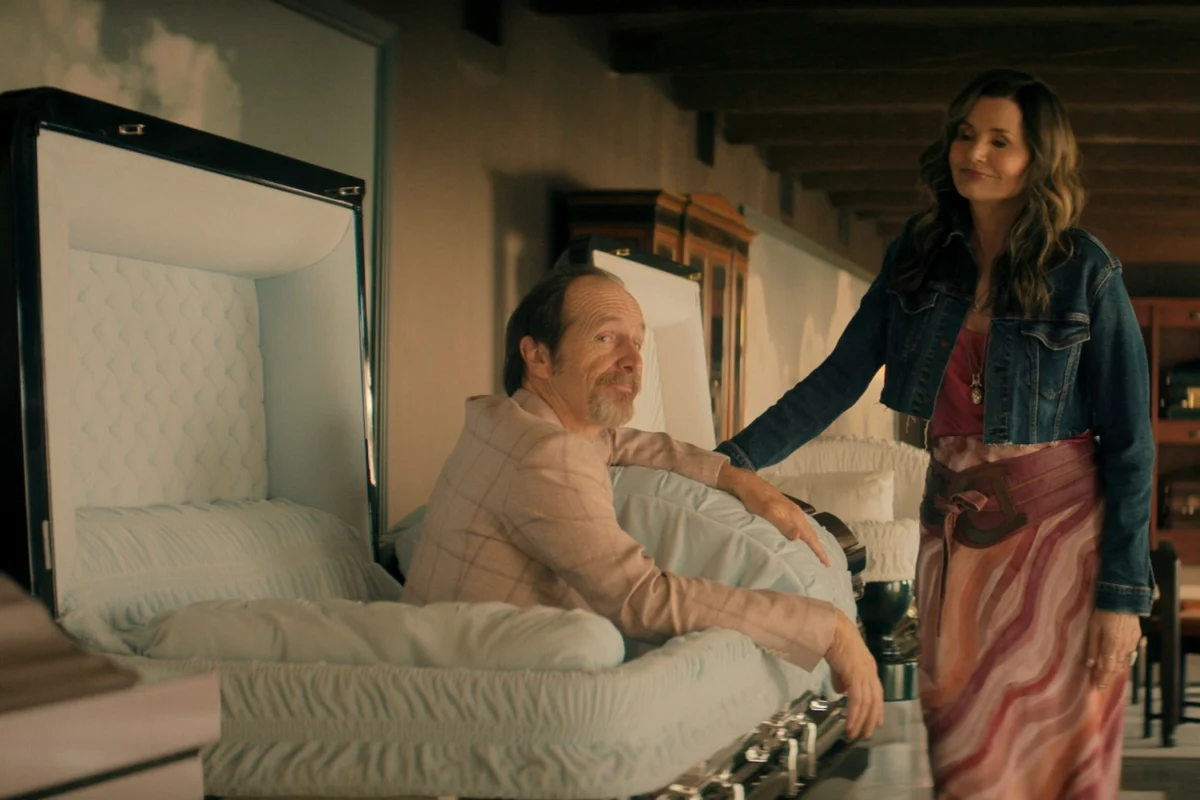
The Boroughs is refreshingly upfront about the presence of dark creatures lurking in the shadows of these seemingly tranquil homes. Consequently, when Sam experiences a frightening encounter with a disturbing, multi-limbed monster, the audience is not left to question the veracity of his vision. This direct confrontation propels him into an unlikely investigation, forming a makeshift team with his fellow seniors. This ragtag group of amateur sleuths includes investigative journalist Judy (Alfre Woodard), her marijuana-enthusiast husband Art (Clarke Peters), a doctor battling cancer, Wally (Denis O’Hare), and the cynical music manager Renee (Geena Davis).
The gang’s pursuit of the truth unfolds with a blend of cheesy charm and genuine intrigue. The series interweaves glimpses into the opaque professional operations and mysterious history of The Boroughs with the deepening interpersonal dynamics and relationship arcs of its central characters. The show truly shines when its primary ensemble members share the screen, whether they are hunting for clues, devising elaborate plans, or simply engaging in casual camaraderie. The casting department deserves significant commendation for cultivating such a palpable and natural chemistry among the group, making their interactions feel lived-in and authentic.
Examining the Narrative Arc and Character Performances
While delving into the specifics of the series’ broader plot risks spoiling its central twists, it is safe to say that many of them are foreshadowed, allowing astute viewers to anticipate certain developments. The Boroughs does make an effort to imbue its primary antagonists with a degree of pathos through complicated backstories, yet these characters often remain somewhat stiff and one-dimensional. In line with other projects associated with the Duffer Brothers, The Boroughs occasionally suffers from an extended runtime; the narrative could arguably be condensed to six or even five episodes without sacrificing crucial story progression. Furthermore, the show’s overarching messages are not always delivered with subtlety.
The series’ strength lies significantly in its robust ensemble cast, whose members are more than capable of elevating material that can sometimes feel mundane or repetitive. Alfred Molina imbues Sam Cooper with a soulful melancholy, his pervasive loneliness and fresh sense of loss shaping the narrative’s emotional landscape. Alfre Woodard and Clarke Peters are a charming on-screen couple, convincingly navigating the complexities of a long-term marriage. However, it is Denis O’Hare who truly steals the show as Wally. O’Hare transforms a character who, by all rights, could have been a mere caricature – essentially the professional version of a "sassy gay friend" who delivers all the best one-liners – into a figure of remarkable depth. He layers Wally with intricate complexities of grief and rage, providing a standout performance.
Ensemble Strengths and Supporting Roles
If there is a perceived weakness in the ensemble, it regrettably lies with Geena Davis as Renee. Her character is primarily relegated to a sweet, yet ultimately insubstantial, romance with a Boroughs security officer (Carlos Miranda), leaving little room for broader development. While the inclusion of a mature woman pursuing love in a prominent television property is commendable and an area the industry should continue to explore, it is difficult not to feel that the Renee character could have been afforded more narrative agency. The scenes shared between Davis and O’Hare are electric, hinting at a much richer potential for Renee’s character and her life outside The Boroughs, with only fleeting suggestions of her past relationships. Similarly, Bill Pullman delivers a delightful, scene-stealing performance as the boisterous neighborhood playboy Jack. However, his limited screen time necessitates that more about his clandestine relationship with Judy is explained rather than shown, leaving viewers wanting more direct engagement with his storyline.
Thematic Resonance and Broader Implications
The Boroughs is unlikely to replicate the massive global fandom that Stranger Things cultivated. However, as a throwback summer adventure designed for television, it offers a charming and engaging distraction. The series’ exploration of aging, loss, and the search for purpose in later life resonates deeply. By placing these themes within a science fiction framework, The Boroughs provides a unique lens through which to examine the anxieties and wonders of growing older, while simultaneously delivering on the promise of a thrilling mystery. The deliberate pacing and thematic depth suggest an intention to connect with an audience seeking more than just superficial entertainment, offering a thoughtful commentary on the enduring human need for connection and purpose, regardless of age. The show’s success in translating the adventurous spirit of youth-oriented sci-fi to a senior demographic also opens doors for future productions to explore similar underserved narrative spaces. The "found family" trope, so central to the series, highlights the critical importance of community and chosen relationships in navigating life’s challenges, a message that holds universal appeal. The visual callbacks to classic sci-fi further position the series within a lineage of storytelling that has consistently explored humanity’s relationship with the unknown and the transformative power of shared experience.