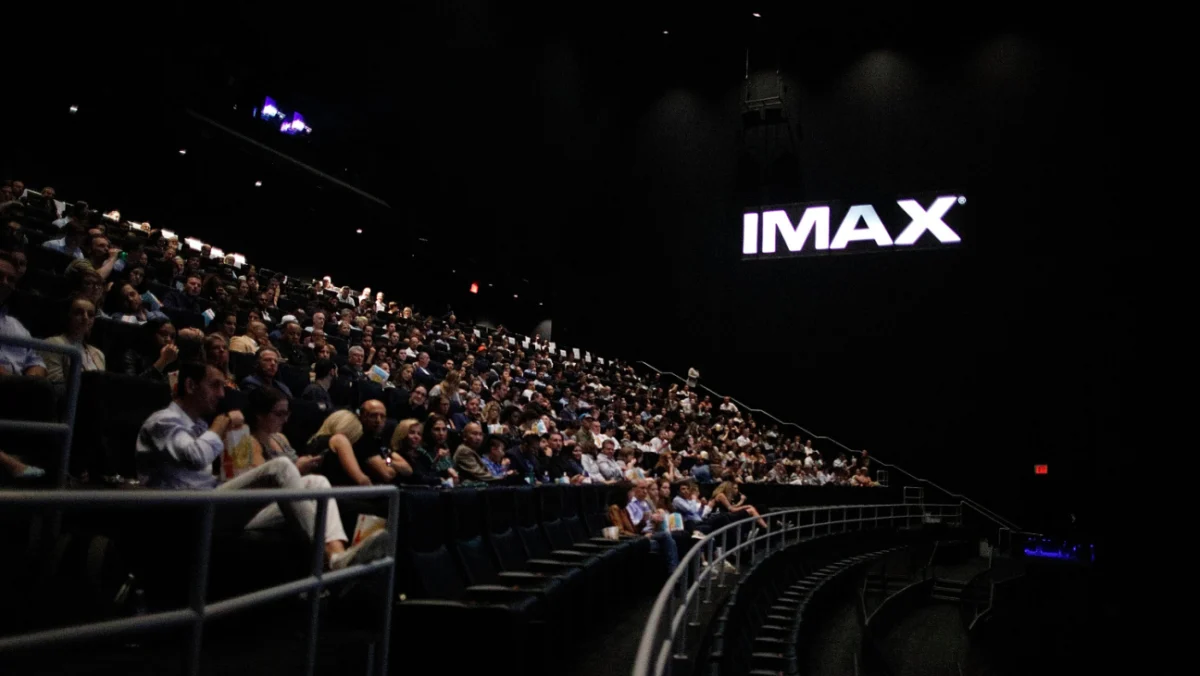
Imax Corporation, the Canadian-based pioneer in large-format cinema technology, has reportedly entered early-stage discussions regarding a potential sale of the company, a move that has sent ripples through both the entertainment industry and financial markets. As the company engages with potential suitors, Wall Street analysts have begun a rigorous evaluation of the logical candidates capable of absorbing the premium entertainment brand. The list of prospective buyers is notably diverse, spanning traditional cinema exhibitors, private equity firms, and global technology titans for whom such an acquisition would represent a minor line item on a massive balance sheet. This development comes at a pivotal moment for the theatrical industry, as studios increasingly pivot toward "event" cinema and premium large-format (PLF) experiences to lure audiences back to theaters in a post-streaming-revolution landscape.
The speculation surrounding Imax’s future was catalyzed by recent reports of takeover interest, which saw the company’s stock price surge as investors weighed the possibility of a lucrative exit. Led by CEO Richard Gelfond since 1994, Imax has long occupied a unique niche in the media ecosystem. It is not merely a theater chain, but a vertically integrated technology platform that encompasses specialized cameras, proprietary post-production software, and a global network of over 1,700 theater systems. Because Imax operates as a technology licensor rather than a traditional landlord for all its locations, its business model offers higher margins and a different risk profile than standard exhibitors like AMC or Cinemark, making it an attractive target for a wide array of strategic and financial buyers.
The Landscape of Potential Suitors and Strategic Fit
Financial analysts have categorized potential buyers into three distinct groups: strategic industry players, technology giants, and financial sponsors. David Joyce, an analyst at Seaport Research Partners, noted that while Imax remains a formidable standalone entity, a sale could provide the necessary capital to accelerate its global expansion. Joyce highlighted traditional exhibitors such as Cinemark or AMC Theatres as logical acquirers from an operational standpoint, though he cautioned that such a deal would likely need to be all-cash to satisfy investors. The primary concern with an exhibitor-led acquisition is the potential for conflict of interest; if one chain owns the Imax brand, rival chains might be less inclined to host Imax screens, potentially shrinking the company’s global footprint.
Conversely, Alicia Reese of Wedbush Securities pointed toward technology and streaming giants like Apple, Amazon, and Netflix, as well as Sony Corporation. Reese argued that for a company like Apple, which boasts a cash pile exceeding $160 billion, the acquisition of Imax would be a "rounding error" on its balance sheet. However, the strategic value would be significant. Apple TV+ has increasingly moved toward prestige theatrical releases, such as Martin Scorsese’s Killers of the Flower Moon and Ridley Scott’s Napoleon. Owning the premier platform for high-end cinema would solidify Apple’s status as a dominant force in the "prestige" content space.
Sony remains a unique candidate because, unlike its peers Disney or Warner Bros. Discovery, it does not operate a major general-interest streaming service in the United States. Sony has remained steadfastly committed to the theatrical window, and its acquisition of the Alamo Drafthouse cinema chain earlier this year signals a growing interest in controlling the exhibition environment. Integrating Imax’s technology and brand could provide Sony with a significant competitive advantage in the high-stakes world of summer blockbusters.
The Neutrality Dilemma and Private Equity Interest
One of the most significant hurdles in any potential sale to a major movie studio—such as Disney or Comcast’s NBCUniversal—is the issue of platform neutrality. Imax currently serves as a neutral ground where all major studios compete for lucrative two-to-three-week windows on premium screens. If Disney were to acquire Imax, rival studios like Warner Bros. might fear that their tentpole films, such as the Dune or Batman franchises, would be deprioritized in favor of Disney-owned Marvel or Star Wars titles.
This "platform conflict" is a primary reason why analysts like Eric Wold of Texas Capital Securities believe a studio acquisition could be counterproductive. Wold argued that if the neutrality of the Imax brand is compromised, the value of the network could erode as other studios seek alternative premium formats like Dolby Cinema or ScreenX. This tension makes private equity firms particularly attractive suitors. A private equity buyer would have no inherent bias toward specific film slates, allowing Imax to maintain its collaborative relationships with all Hollywood stakeholders while focusing on aggressive international growth and technological innovation.
Benchmark Equity Research analyst Mike Hickey echoed this sentiment, suggesting that the "buyer universe" for Imax is unusually broad because the company functions more like a technology platform than a theater chain. Hickey’s list of potential suitors included Sphere Entertainment, the company behind the revolutionary Las Vegas Sphere. Given Imax’s expertise in immersive, large-scale visual experiences, a merger with Sphere Entertainment could create a powerhouse in the emerging "experience economy."
Financial Performance and the Post-Pandemic "Oppenheimer" Effect
The timing of these sale talks is not accidental. Imax is currently riding a wave of renewed relevance following the massive success of Christopher Nolan’s Oppenheimer in 2023. The film, shot on Imax 15/70mm film, became a cultural phenomenon that highlighted the brand’s unique value proposition. In 2023, Imax reported a total box office of over $1 billion for only the third time in its history. The company’s revenue for the full year 2023 reached approximately $375 million, a 25% increase over the previous year, with net income showing a significant recovery from the pandemic-era lows.
Imax’s financial health is further bolstered by its asset-light business model. Unlike traditional exhibitors that struggle with high rent and labor costs, Imax generates a significant portion of its income through technology sales, maintenance fees, and a percentage of the box office. This "razor and blade" model—where the installation of the system leads to recurring revenue from every ticket sold—makes it a highly scalable business. Furthermore, Imax’s expansion into local-language markets, particularly in China, Japan, and India, has diversified its revenue streams, reducing its reliance on the health of the North American domestic box office.
A Chronology of Imax: From World’s Fairs to Wall Street
To understand the significance of a potential sale, one must look at the company’s nearly 60-year history.
- 1967: Imax is founded by Graeme Ferguson, Roman Kroitor, Robert Kerr, and William C. Shaw. The technology is debuted at Expo 67 in Montreal.
- 1970: The first permanent Imax projection system is installed at the Fuji Pavilion in Osaka, Japan.
- 1994: A group of investors led by Richard Gelfond and Bradley Wechsler acquires Imax, taking the company public and shifting its focus from institutional documentaries (museums and science centers) to commercial Hollywood releases.
- 2002: The release of Apollo 13: The IMAX Experience marks the first time a major Hollywood film is digitally remastered into the Imax format.
- 2008: Christopher Nolan’s The Dark Knight becomes the first major feature film to be partially shot with Imax cameras, fundamentally changing how directors approach the format.
- 2011: Imax China is established as a separate subsidiary to capitalize on the explosive growth of the Chinese cinema market.
- 2023: Oppenheimer generates over $180 million in Imax theaters alone, proving the format’s ability to drive massive ticket sales for non-franchise films.
- 2024: Amidst a consolidating media landscape, Imax enters preliminary talks for a potential sale or strategic merger.
Broader Industry Implications and the Future of Cinema
The potential sale of Imax is indicative of a broader trend in the media industry: the flight to quality. As streaming services face "subscriber fatigue" and the cost of content production continues to rise, the theatrical experience has bifurcated. Mid-budget films are increasingly moving to streaming, while "event" films—those that require a massive screen and high-fidelity sound—are thriving.
If Imax is acquired by a tech giant like Amazon or Apple, it could signal a permanent shift in how those companies view the theatrical window. Rather than seeing theaters as a secondary market to their streaming platforms, they may begin to view high-end exhibition as a primary revenue driver and a critical tool for brand building. For the consumer, a sale could lead to increased investment in Imax technology, including more rapid deployment of "Imax with Laser" systems and potentially a more integrated digital experience that links theater-going with home streaming ecosystems.
However, some analysts, such as Steve Frankel of Rosenblatt Securities, remain cautious. Frankel argued that Imax’s best path forward might be to remain an independent, standalone company. He noted that the company’s current trajectory—characterized by margin expansion, a diversifying film slate, and growing influence with top-tier filmmakers—is already delivering strong value to shareholders. For Frankel, the risk of a takeover is that it might disrupt the delicate balance Imax has maintained with its various studio partners.
As the discussions continue, the industry will be watching closely to see if a formal bid materializes. Whether Imax remains an independent pioneer or becomes the crown jewel of a tech giant’s media empire, its role in the future of cinema is undisputed. In an era where "watching a movie" can happen on a smartphone in a subway, Imax has successfully convinced the global public that some stories are still meant to be experienced on a screen eighty feet tall. For a potential buyer, that level of brand equity and consumer loyalty is a rare and valuable asset in an increasingly fragmented media world.