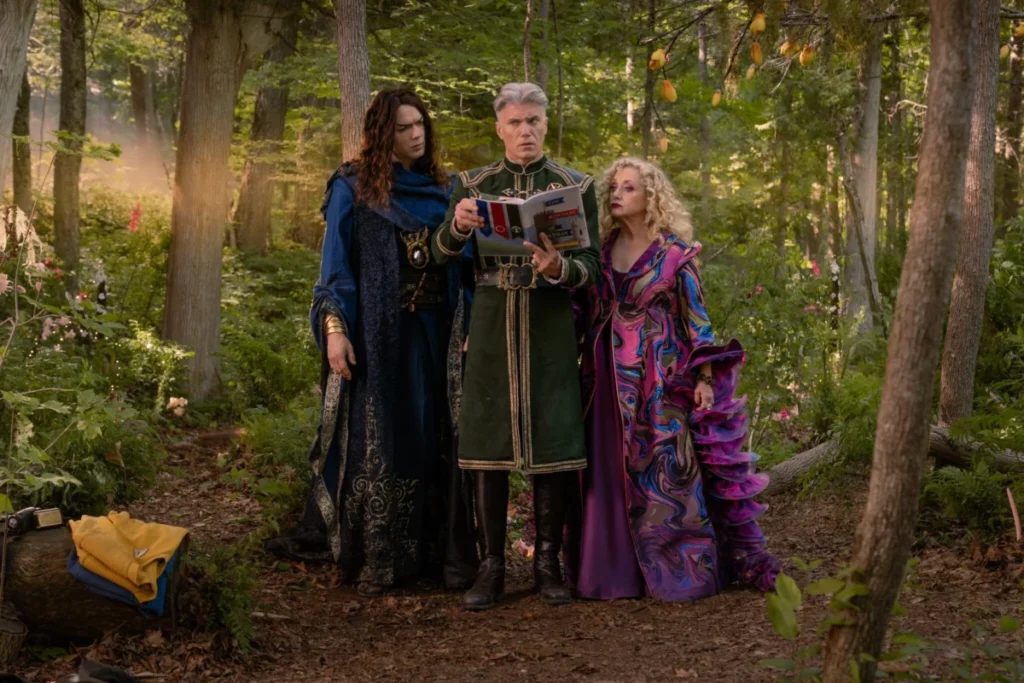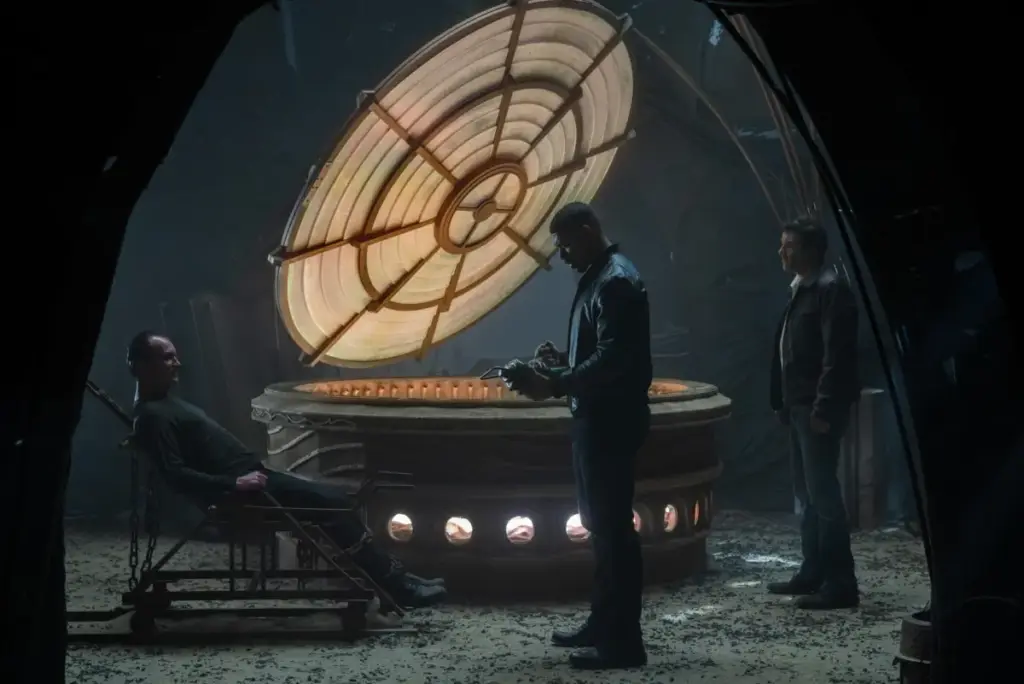
The highly anticipated cinematic release of The Mandalorian and Grogu, marking a significant expansion of the beloved Star Wars universe onto the big screen, has arrived, coinciding with a flurry of activity across the entertainment landscape. While the immediate draw is the return of Din Djarin and Grogu to theaters, this release also serves as a timely anchor for discussions on evolving media consumption, the enduring power of established franchises, and the evolving landscape of talent within the science fiction and fantasy genres. The film’s theatrical debut, initially perceived by some as potentially closer to an extended television episode in scope, underscores a broader industry trend where the lines between streaming and cinematic releases continue to blur, challenging traditional distribution models and audience expectations.
Tatiana Maslany’s "Maximum Pleasure Guaranteed" Draws Acclaim
Beyond the galaxy far, far away, actress Tatiana Maslany, renowned for her groundbreaking performance in Orphan Black and her recent turn as Jennifer Walters in Marvel’s She-Hulk: Attorney at Law, is generating significant buzz for her role in the new Apple TV+ series, Maximum Pleasure Guaranteed. While not a science fiction or fantasy production, the series’ inclusion of Maslany has positioned it as a point of interest for fans of the genre, given her established track record of delivering compelling and multifaceted performances.
Early critical reception, as highlighted by publications like The AV Club, suggests that Maslany is delivering one of her most powerful performances since her Emmy-winning portrayal of multiple clones in Orphan Black. The series, described by Apple TV as following a newly divorced mother named Paula who descends into a "dangerous rabbit hole of blackmail, murder, and youth soccer," presents a narrative that, while seemingly grounded, hints at darker, more complex themes. This narrative structure, juxtaposing the mundane with the perilous, is a hallmark of many successful thrillers and dramas, and Maslany’s involvement suggests a potential for a nuanced exploration of character under duress. The critical acclaim for her performance indicates that Maximum Pleasure Guaranteed may offer a substantial showcase for her dramatic range, addressing a sentiment among fans that her post-Orphan Black roles have not always provided her with sufficient depth.
Paige Lewis’s "Canon" Reimagines Divine Narratives
In the literary sphere, Paige Lewis’s novel Canon is emerging as a highly anticipated release, drawing attention for its ambitious premise and its engagement with foundational mythological and religious texts. The novel’s synopsis, readily available, only hints at its scope, but a review from Brooklyn Rail offers a particularly striking encapsulation of its core concept: "For millennia, God has been recycling the same tropes that we all know from Homer, Virgil, Dante, and the Bible. By the time we get to the action in Canon, the schtick is getting stale."
This provocative statement suggests a narrative that actively interrogates and subverts established archetypes and divine narratives. The idea of "God’s schtick getting stale" points towards a meta-fictional approach, potentially reinterpreting or even satirizing the grand narratives that have shaped Western literature and thought. The novel’s setting in the 1990s further enriches its appeal, positioning it as historical fiction with a contemporary twist, a genre that often allows for profound commentary on societal shifts and enduring human themes.
The narrative is described as featuring a clear demarcation between "Good Guys and Bad Guys," a classic trope that Lewis may be employing to then dismantle or complicate. Central to the plot is Yara, a nonbinary hero chosen to save the day, a casting choice that reflects a growing trend towards diverse representation in speculative fiction. However, the presence of a prophet who believes she should be the one to save the day introduces an element of internal conflict and potential philosophical debate within the narrative. The endorsement from author Karen Russell, who described the book as "an unprecedented page-turner," underscores its potential to captivate readers with its innovative approach to storytelling and its exploration of familiar, yet recontextualized, mythologies. This level of praise from a respected literary figure suggests that Canon is poised to make a significant impact on the literary scene.
The Unsettling Origins of Monopoly: A Critique of Capitalism
The recent opening of a Monopoly-themed steakhouse, described as offering a "high-end culinary experience complemented by the luxurious aesthetic of the Monopoly universe," has, paradoxically, brought to light the fascinating and often unsettling true history of the iconic board game. This commercial venture, which leans into the game’s association with wealth accumulation and property ownership, stands in stark contrast to the original intent of its creator, Elizabeth Magie.
Magie, an anti-monopolist and Georgist, patented her "Landlord’s Game" in 1903, envisioning it as a tool to educate the public about the detrimental effects of land monopolization and unchecked capitalism. In an excerpt from Mary Pilon’s book, The Monopolists: Obsession, Fury, and the Scandal Behind the World’s Favorite Board Game, it is revealed that Magie designed two sets of rules for her game: one that rewarded collective prosperity and another that prioritized the creation of monopolies and the crushing of opponents. Her intention was to illustrate the consequences of the latter, a "practical demonstration of the present system of land-grabbing with all its usual outcomes and consequences."
Tragically, Magie’s cautionary tale was largely misinterpreted or deliberately subverted. The monopolist rules, designed to expose the flaws of the system, were the ones that ultimately captured the public’s imagination and became the foundation for the game we know today. Furthermore, Magie never profited significantly from her invention; the game was eventually sold to Parker Brothers by Charles Darrow, who received widespread recognition and royalties for a concept that was not entirely his own. This historical narrative serves as a powerful commentary on how revolutionary ideas can be co-opted and commercialized, often losing their original critical edge. The ongoing popularity of Monopoly, now detached from its critical origins and rebranded as a symbol of aspirational wealth, highlights a significant cultural disconnect. The story of Elizabeth Magie’s Landlord’s Game stands as a potent reminder of the importance of understanding the historical context and original intent behind cultural phenomena.
Matthew Rhys’s Masterclass in On-Screen Suffering in "Widow’s Bay"
In a display of compelling dramatic performance, actor Matthew Rhys continues to captivate audiences with his portrayal of Mayor Tom Loftis in the series Widow’s Bay. While the series itself is noted for its atmospheric creepiness and strong supporting cast, including Kate O’Flynn and Stephen Root, it is Rhys’s character’s unwavering commitment to his town’s prosperity, even in the face of escalating supernatural or unsettling events, that provides a unique and darkly comedic throughline.
Rhys’s character, Mayor Loftis, is driven by a singular vision: to put his town on the national map, attracting tourists and economic growth. However, this ambition often blinds him to the increasingly bizarre and dangerous circumstances unfolding around him. Whether he is being pursued by mysterious figures or witnessing parties that spiral into chaos, Loftis consistently chooses to ignore reality in favor of his carefully constructed perception of progress. This stubborn refusal to acknowledge the obvious, even when confronted with terrifying phenomena like "scary ladies hunting him in his bathtub," creates a rich vein of dramatic irony and dark humor.
The relevance of watching a minor government official so resolutely reject reality in favor of his preferred narrative is particularly resonant in the current socio-political climate. Loftis’s character serves as a potent, albeit fictionalized, examination of denialism and the willful ignorance that can accompany the pursuit of personal or political agendas. His performance in Widow’s Bay is not merely about witnessing suffering; it is about observing the intricate ways in which individuals can compartmentalize and rationalize away uncomfortable truths, a performance that is both spooky and remarkably pertinent. The series, by grounding its fantastical elements in the relatable struggle of a town official trying to boost tourism, creates a unique and darkly humorous commentary on the human tendency to prioritize certain narratives over verifiable facts, especially when those facts threaten established goals. The success of Rhys’s portrayal lies in his ability to imbue Loftis with a sense of earnestness that makes his obliviousness both frustrating and perversely understandable, offering a nuanced character study that transcends genre conventions.