The enduring allure of samurai warriors and their martial prowess has captivated audiences for generations. While childhood fascination often centered on the disciplined art of karate, the modern landscape of speculative fiction presents a compelling evolution of this archetype, blending the iconic samurai ethos with elements of science fiction, fantasy, and horror. This exploration delves into seven notable works that reimagine the samurai in extraordinary settings, from post-apocalyptic wastelands to distant planets, demonstrating the genre’s capacity for innovative storytelling and thematic depth.
From Classic Cinema to Futuristic Frontiers: The Evolving Samurai Narrative
The foundation of the samurai’s cinematic legacy is undeniably Akira Kurosawa’s 1954 masterpiece, Seven Samurai. This epic tale of village protectors, renowned for its profound influence on filmmaking worldwide, serves as a critical touchstone. However, contemporary creators are increasingly transplanting the samurai spirit into realms far removed from feudal Japan. This shift allows for examinations of honor, duty, and combat within contexts that challenge traditional perceptions, incorporating advanced technologies, mystical powers, and extraterrestrial threats. The following selections represent a cross-section of this vibrant subgenre, showcasing its diverse applications across various media.
Into the Badlands: A Post-Apocalyptic Crucible of Combat
The AMC series Into the Badlands (2015-2019) plunges viewers into a desolate, post-apocalyptic future where technology is scarce and power is consolidated under ruthless barons. Each baron commands a private army, controlling vital resources like opium and oil, and maintaining an iron grip on their territories. At the apex of this brutal hierarchy is Sunny (Daniel Wu), the highly skilled enforcer for the most formidable baron. Renowned for his mastery of martial arts and swordsmanship, Sunny’s unwavering loyalty and formidable abilities are put to the ultimate test with the arrival of a mysterious teenage boy, gifted with extraordinary powers.
The series garnered significant attention for its high-octane action sequences and compelling character drama. The fight choreography, in particular, stands out, with Daniel Wu’s performance as Sunny often cited as a highlight. The intricate swordplay and fluid martial arts sequences are not merely spectacles; they are integral to the narrative, reflecting the characters’ internal struggles and the harsh realities of their world. The show’s success underscores the audience’s appetite for visually stunning combat presented within a rich, albeit bleak, speculative framework. The production reportedly invested heavily in stunt coordination and fight design, aiming for a unique blend of Eastern and Western martial arts influences.

The Sword of Kaigen: A Fantasy Epic of Ice and Honor
M.L. Wang’s novel The Sword of Kaigen (2019) transports readers to the Kaigenese Empire, a realm where warrior families, including the Matsuda, are tasked with safeguarding the nation. Their prowess lies not only in their exceptional swordsmanship but also in their unique ability to manipulate ice. The narrative centers on two members of the Matsuda family: fourteen-year-old Mamoru, a young warrior undergoing rigorous training, and his mother, Misaki, who carries the weight of a hidden samurai past.
Mamoru’s rigidly constructed worldview is systematically dismantled by the intrusion of an outsider, forcing him to confront truths beyond his martial indoctrination. Meanwhile, Misaki, married into the Matsuda clan, possesses a broader understanding of the world but is compelled to suppress her own history as a samurai. The novel is lauded for its dynamic combat sequences, which are imbued with emotional depth through the characters’ personal transformations. Both Mamoru and Misaki embark on profound journeys of self-discovery, grappling with the devastating consequences of war on individual lives and societal structures. The Sword of Kaigen functions as both an epic war story and an intimate family drama, with each element amplifying the other. The novel’s intricate world-building and exploration of themes like duty, sacrifice, and the corrupting influence of conflict have earned it critical acclaim within the fantasy literature community.
Blue Eye Samurai: Animated Vengeance in Alternate 17th-Century Japan
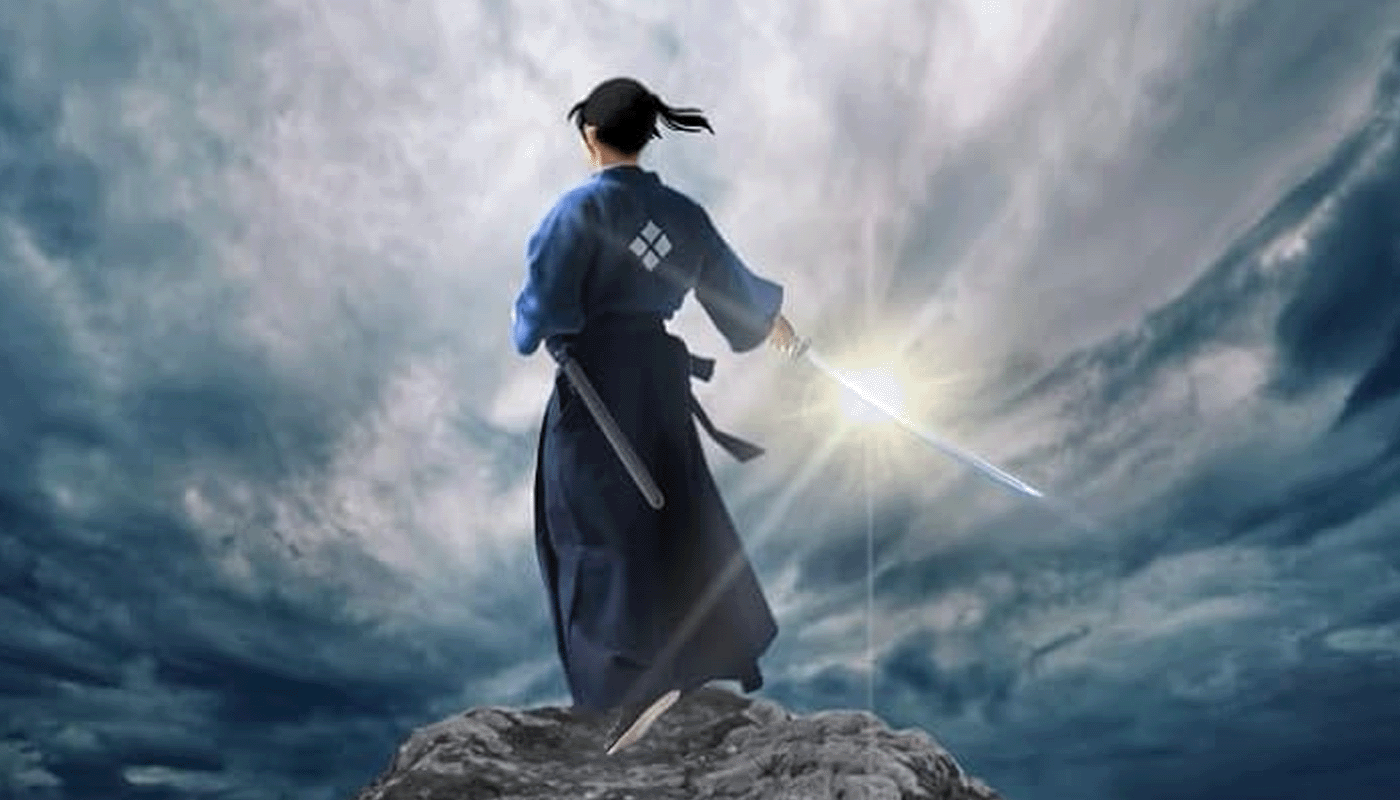
The critically acclaimed animated series Blue Eye Samurai (2023-Present) offers a visually striking and emotionally resonant portrayal of vengeance in an alternate 17th-century Japan. The series, initially developed with minimal plot reveals to heighten audience intrigue, follows Mizu (voiced by Maya Erskine), a mixed-race samurai of white and Japanese heritage. Disguised as a man, Mizu embarks on a relentless quest for retribution.
The series is celebrated for its breathtaking animation, particularly its meticulously choreographed sword fights. The fluid, brutal, and visually arresting combat sequences are set against richly detailed backdrops. Beyond the impressive action, the narrative’s strength lies in its compelling protagonist. Mizu is a complex character driven by profound rage and self-loathing, yet she retains an underlying core of compassion and moral integrity. The first season, comprising eight episodes, has been met with widespread critical praise, leading to the swift renewal for a second season. The accessibility of the first episode, made available for free on YouTube, has contributed to its broad reach, with subsequent episodes accessible via Netflix. The series’ success has been noted as a significant achievement in adult animation, demonstrating the genre’s potential for mature storytelling and sophisticated character development.
A Samurai in Time: A Modern Comedy of Eras
A Samurai in Time (2024) presents a lighthearted, fish-out-of-water comedy centered on Kosaka Shinzaemon (Makiya Yamaguchi), an Edo-era samurai. During a duel, a freak lightning strike engulfs his raised katana, transporting him to a bewildering 21st-century movie set. Disoriented and unable to return to his own time, Shinzaemon finds an unconventional path utilizing his unique skill set: he becomes a stuntman in jidaigeki (Japanese period dramas).

The film eschews detailed scientific explanations for its time-travel premise, opting instead to focus on Shinzaemon’s humorous struggles to adapt to a technologically advanced and culturally alien world. The narrative is characterized by its endearing charm and its affectionate homage to the jidaigeki genre. The juxtaposition of ancient samurai discipline with modern filmmaking practices provides ample comedic fodder, while also exploring themes of identity and belonging. The film’s reception has highlighted its appeal as a feel-good cinematic experience that cleverly blends historical fantasy with a meta-commentary on filmmaking.
Predator: Killer of Killers: Intergalactic Hunter Meets Feudal Warriors
Within the established lore of the Predator franchise, the animated anthology film Predator: Killer of Killers (2025) features a segment titled "The Sword." This segment transports the iconic extraterrestrial hunter to 17th-century Japan, pitting it against a samurai and his ninja brother. The story focuses on Kenji and Kiyoshi (both voiced by Louis Ozawa Changchien), estranged siblings whose reunion is violently interrupted by the arrival of a Predator.
The narrative of "The Sword" is deliberately sparse on dialogue, amplifying the visual storytelling and the intensity of the action sequences. The brothers must employ their combined martial arts skills and tactical acumen to survive the hunt. Despite the lack of extensive verbal exposition, the characters’ internal conflicts and emotional turmoil are vividly conveyed through their expressions and actions. This stylistic choice underscores the primal nature of the conflict and the sophisticated character work achieved through non-verbal performance. The segment’s inclusion of samurai and ninja archetypes within the Predator universe represents a bold creative choice, blending disparate genres to create a unique and thrilling encounter.
Japanese Gothic: A Dual-Timeline Horror of Haunting Legacy
Kylie Lee Baker’s novel Japanese Gothic (2026) weaves a chilling tale across two distinct timelines, both anchored by a mysterious, isolated house in Japan. The contemporary timeline, set in 2026, follows college student Lee, who seeks refuge at his estranged father’s secluded residence following a disturbing incident involving his roommate. The second timeline unfolds in 1877, chronicling the brutal training of a young samurai named Sen under her demanding father, within the same ancestral home. As both Sen and Lee find themselves inexplicably slipping between their respective timelines, they forge an unlikely and crucial bond.
The novel is described as a slow-burn horror that builds to a powerful climax. Its atmospheric dread and heart-wrenching tragedy stem not from supernatural jump scares, but from the deeply unsettling circumstances that ensnare both protagonists. The exploration of familial trauma, inherited curses, and the psychological toll of their respective worlds positions Japanese Gothic as a compelling entry in the gothic horror genre, with a unique samurai-infused twist. The dual-timeline structure allows for a nuanced examination of how historical events and personal traumas can echo through generations.

The Last Contract of Isako: Sci-Fi Noir on a Distant World
Fonda Lee’s novel The Last Contract of Isako (2026) is set on a distant planet, severed from Earth for centuries, where humanity struggles to survive amidst dwindling resources. The inhabitants face a critical juncture, with hopes pinned on terraforming the planet or re-establishing contact with their homeworld. The titular character, Isako, a seasoned "longknives-woman" – a protector and advisor to influential figures – finds herself in her fifties, keenly aware of the physical toll her demanding profession has taken. Retirement, in this world, means a perilous exile into the frozen wastelands. However, she is drawn into one final, unexpectedly complex contract.
While the narrative leans heavily into corporate espionage, the limited but impactful fight scenes are noted for their excellence. Isako’s longknife, though not constantly in use, delivers devastating blows when deployed. The mystery at the heart of the contract, involving intricate webs of intrigue, prompts profound questions about honor, loyalty, and the nature of identity. The novel’s setting and its focus on a seasoned protagonist facing her twilight years offer a mature and compelling take on the warrior archetype, blending elements of science fiction with noir-like suspense. The world-building, particularly the descriptions of the planet’s harsh environment and societal stratification, adds significant depth to Isako’s personal struggles.
The Continuing Evolution of the Samurai in Speculative Fiction
The works presented here—spanning television, novels, and film—demonstrate the remarkable adaptability of the samurai archetype. From the gritty realism of post-apocalyptic combat to the ethereal manipulation of ice in fantasy realms, and even to interstellar conflicts, the core tenets of honor, discipline, and martial excellence continue to resonate. The integration of science fiction and fantasy elements not only revitalizes these classic tropes but also allows for fresh explorations of universal human themes within innovative narrative frameworks. As creators continue to push the boundaries of genre, the samurai’s journey through speculative fiction promises to remain a compelling and evolving landscape for audiences worldwide. The ongoing inclusion of diverse voices and perspectives within these narratives further enriches the genre, ensuring its continued relevance and appeal.