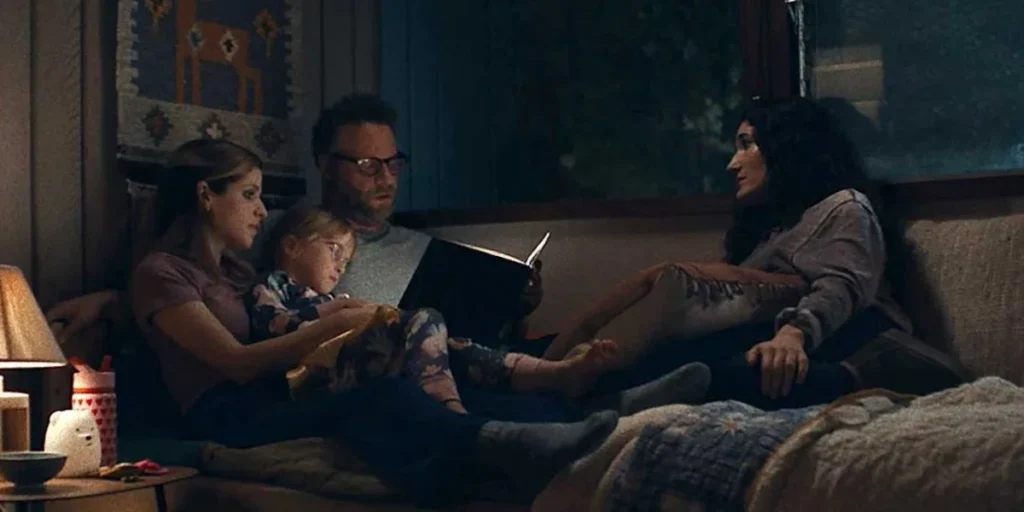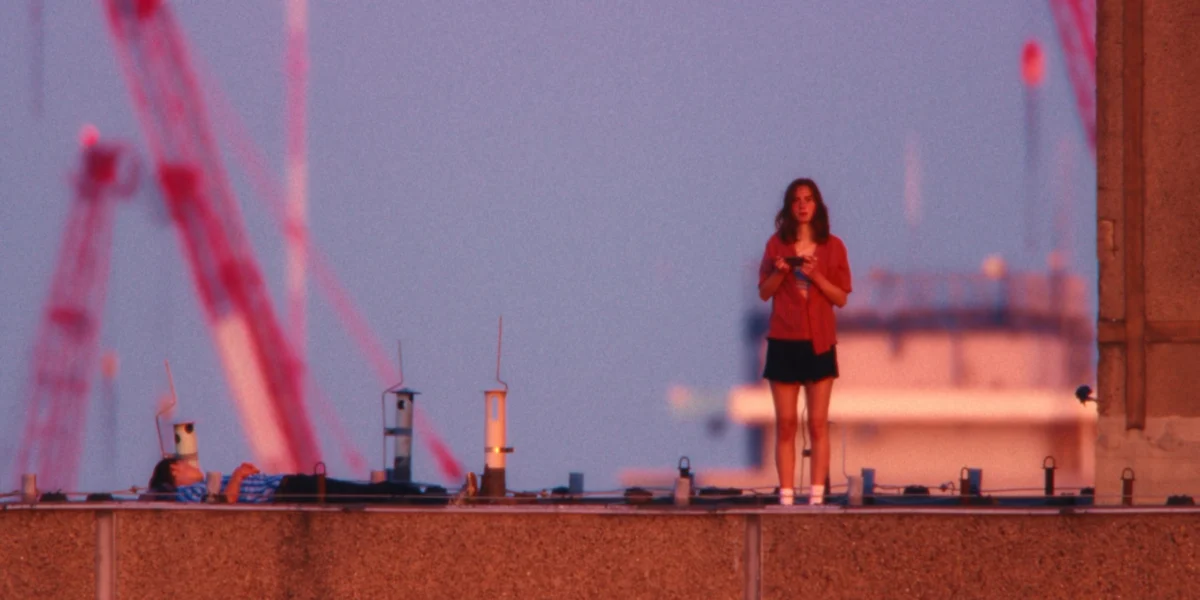
Everytime marks the cinematic return of Austrian filmmaker Sandra Wollner, a director whose previous work ignited significant international debate regarding the boundaries of provocative storytelling and the ethical responsibilities of film festivals. Following a six-year hiatus from the festival circuit, Wollner’s latest feature shifts its focus from the unsettling intersections of artificial intelligence and patriarchal abuse to a more grounded, though no less complex, exploration of familial grief, reconciliation, and the persistent weight of memory. Starring Birgit Minichmayr, Tristán López, Lotte Shirin Keiling, and Carla Hüttermann, the 121-minute production delves into the aftermath of a family tragedy, tracing the journey of a mother and daughter as they attempt to find closure through a holiday that was never intended to be taken in their current state of mourning.
Historical Context and the Legacy of The Trouble With Being Born
To understand the anticipation surrounding Everytime, one must examine the controversy that defined Wollner’s earlier career. In 2020, during the height of the global pandemic, Wollner’s sophomore feature, The Trouble With Being Born, became a flashpoint for censorship and artistic freedom. The film, a science-fiction parable centered on a child-like android designed for the sexual gratification of an adult man, was programmed for the Melbourne International Film Festival (MIFF). However, the festival ultimately rescinded the invitation and refused to screen the film.
This decision followed reports from forensic psychologists who argued that the film’s depiction of an android child in a sexualized context could potentially normalize pedophilic interests among viewers. The removal sparked a significant backlash from the Australian film community. Noted critics such as Peter Krausz, Tom Ryan, and David Stratton publicly denounced the festival’s decision, viewing it as an infringement on artistic expression and an overreach of administrative caution. Despite the controversy—or perhaps because of it—the film was recognized at the Berlin International Film Festival, where it won the Special Jury Prize in the Encounters section. This historical backdrop established Wollner as a filmmaker who refuses to shy away from uncomfortable subject matter, a reputation that informs the reception of Everytime.
Narrative Structure and the Mechanics of Grief
Everytime diverges from the futuristic, clinical aesthetics of Wollner’s previous work, opting instead for a contemporary setting that emphasizes the "ordinary rituals" of domestic life. The narrative begins by establishing the bond between two sisters, Melli (Lotte Shirin Keiling) and Jessie (Carla Hüttermann). Through a series of vignettes—Melli interrupting Jessie’s math-tutoring sessions with loud piano playing, and Jessie retaliating by filming her sister sleeping—Wollner builds a portrait of sibling camaraderie that feels both authentic and lived-in.
The film’s central conflict arises from the sudden and permanent absence of Jessie. This tragedy serves as the catalyst for the film’s second act, which follows the mother (Birgit Minichmayr) and Melli as they are joined by a teenage boy (Tristán López) on a trip to Tenerife. This journey is framed as the fulfillment of a "family holiday that never happened," a concept that underscores the characters’ inability to move forward without first confronting the physical spaces their lost loved one was meant to inhabit.
Wollner’s screenplay avoids the traditional "blame game" often found in bereavement dramas. Instead, it focuses on the "peaceful rekindling" of relationships. The trio, though unlikely in their composition, finds common ground in their collective guilt. The director utilizes tonal shifts to navigate this heavy subject matter, occasionally inserting moments of levity—including observational humor and "fart jokes"—to break the narrative tension. This "tonal tight-rope" is a hallmark of Wollner’s style, allowing the film to oscillate between emotional devastation and the mundane reality of human interaction.
Visual Language and Cinematographic Collaboration
A significant portion of the film’s impact is attributed to its visual direction. Working in collaboration with cinematographer Gregory Oke, Wollner employs a technique defined by "expressionistic longevity." The film utilizes complex "oners"—long, uninterrupted takes—that allow the audience to sit with the characters in their moments of stillness. By holding the frame for several seconds longer than traditional editing would dictate, Wollner creates a sense of "poetic prolongation," foreshadowing the tragedy to come by emphasizing the fragility of the present moment.
The color palette of Everytime is described as vibrant, contrasting the somber themes of the story with the bright, sun-drenched landscapes of Tenerife. This visual irony serves to highlight the internal isolation of the characters; while they are surrounded by the beauty of a vacation destination, they remain trapped in the gray areas of their own grief. Industry analysts have noted that Oke’s camera choreography in Everytime represents some of the most visually sophisticated work in contemporary European cinema, favoring patience over rapid exposition.
The Role of Technology and the Digital Divide
A recurring theme in Sandra Wollner’s filmography is the intersection of human emotion and digital technology. In Everytime, this is manifested through the use of Minecraft, the popular sandbox game by Mojang. The film depicts Melli using the game as a form of "personal escape" and a method for processing her grief. The screen-capture footage of her gameplay offers a window into her mental state that her outward dialogue often obscures.
However, some critics have pointed out a "bewildering scripted choice" regarding the absence of other modern technologies. Despite being a film about 21st-century teenagers, social media is largely absent from the narrative. Analysts suggest that the incorporation of digital footprints—such as Jessie’s social media profiles—could have provided a more multifaceted look at her character before her death. While the film’s synthetic score by David Schweighart utilizes electronic and abstract tones to mirror the digital age, the narrative itself remains somewhat distanced from the technological realities of modern youth, focusing instead on more traditional forms of connection.
Performance and Character Analysis
The success of Everytime relies heavily on the performance of Birgit Minichmayr. As the matriarch of the family, Minichmayr is tasked with portraying a woman who must mask her "overpowering grief" for the sake of her remaining child. One pivotal scene highlights her "purposeful dramatic restraint" when she accidentally encounters a group of her daughter’s former friends. Her performance in this moment is cited as a masterclass in subtlety, conveying a complex road to forgiveness without the need for excessive dialogue or melodrama.
The rapport between the younger cast members, Keiling and Hüttermann, is equally vital. Their early scenes provide the emotional stakes for the rest of the film. By establishing a convincing sisterly bond, the film ensures that the "permanent absence" felt in the later acts is palpable to the audience. Tristán López, as the teenage boy who joins the family on their trip, serves as a bridge between the past and the present, representing the "unlikely" nature of the trio’s reconciliation.
Magical Realism and the Enigmatic Third Act
As Everytime reaches its conclusion, the narrative shifts from a grounded drama into the realm of magical realism. The third act explores the "liminality of memory," where the boundaries of space and time begin to overlap. Wollner uses this expressionistic finale to manifest nostalgia physically, allowing the characters to interact with their perceptions of the past.
This stylistic choice has been compared to a "luminous, life-affirming cinematic voyage." By embracing the "beauty and strangeness" of the unknown, the film suggests that peace is found not in the total understanding of a tragedy, but in the acceptance of its mysteries. The finale serves as a thematic bookend to the film’s earlier preoccupation with rituals, suggesting that the "family holiday" is not a destination, but a state of mind necessary for collective healing.
Broader Implications for the Film Industry
The release of Everytime signifies a shift in Sandra Wollner’s trajectory as a director. While she remains an "iconoclastic" figure, this latest work demonstrates a maturation of her thematic interests. The transition from the "skin-crawling" provocation of The Trouble With Being Born to the "patient storytelling" of Everytime suggests a filmmaker who is refining her ability to challenge audiences through emotional depth rather than just shock value.
Furthermore, the film’s production and festival run serve as a reminder of the resilience of the independent film circuit. After the disruptions of 2020, Everytime emerges as a testament to the importance of "slow-moving and absorbing" cinema in an era often dominated by rapid-fire content. The film’s focus on "self-actualization" and "mutual understanding" reflects a broader trend in European cinema toward exploring the psychological long-term effects of loss in a post-pandemic world.
In summary, Everytime is a multifaceted examination of grief that leverages sophisticated cinematography, a synthetic soundscape, and restrained performances to explore the complexities of the human condition. While it may leave some technological questions unanswered, its commitment to "luminous" visual storytelling and its refusal to engage in the "blame game" position it as a significant entry in Sandra Wollner’s evolving body of work. The film stands as a 121-minute meditation on the "mysteries and miracles of life," challenging viewers to find beauty in the aftermath of heartbreak.