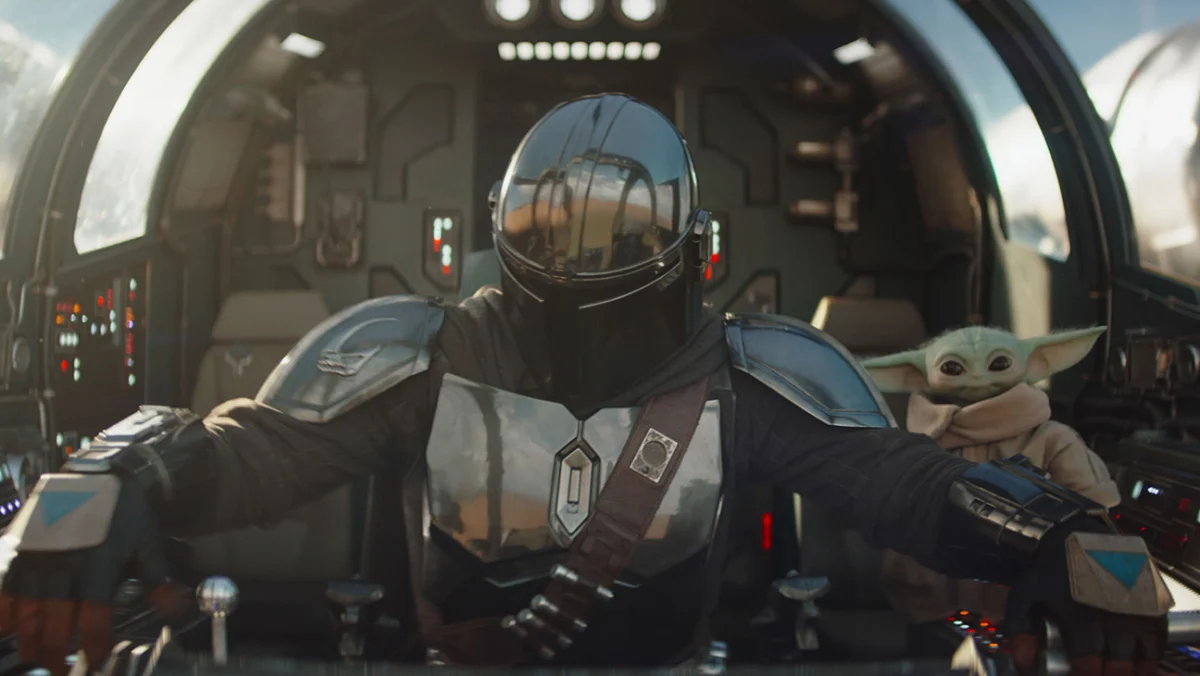
After an opening day that initially sparked concerns within industry circles, Star Wars: The Mandalorian and Grogu has demonstrated a significant box office rebound, propelled by overwhelmingly positive audience reception and strong weekend walk-up business. The feature film adaptation of Jon Favreau’s critically acclaimed Disney+ series, marking the first Star Wars cinematic release in seven years, is now projected to achieve a robust domestic opening of $102 million over the four-day Memorial Day weekend, with a global forecast of $165 million. This turnaround follows initial anxieties on Friday, where the film’s performance suggested it might record the lowest opening for a Star Wars title since Disney’s acquisition of Lucasfilm in 2012.
A Rollercoaster Opening: From Apprehension to Optimism
The journey for The Mandalorian and Grogu began with a degree of trepidation on Friday. The film garnered an estimated $33 million from 4,300 domestic theaters on its opening day. This figure, unadjusted for inflation, trailed behind the $35.4 million opening day gross of 2018’s Solo: A Star Wars Story, a film widely considered a commercial disappointment for the franchise. The comparison immediately placed executives at Disney and Lucasfilm on alert, recalling the challenges Solo faced, which ultimately concluded its theatrical run with less than $400 million globally – a low point for the iconic saga. Industry tracking services had initially estimated a four-day domestic opening in the range of $82 million, with some exhibitors projecting figures as low as $70 million or as high as $95 million. These preliminary estimates were largely based on pre-sales data and typical Friday performance, which often sees a drop-off into Saturday.
However, the narrative began to shift dramatically on Saturday. Strong walk-up business, particularly from families and younger demographics, saw The Mandalorian and Grogu outperforming Solo for the day. This surge prompted a swift re-evaluation of projections. By Saturday morning, Disney insiders indicated the film was on track for a better-than-expected $92 million to $96 million for the extended holiday weekend, including an estimated $77 million for the traditional three-day period. Rival studios, often more bullish in their forecasts, went further, predicting a four-day domestic opening between $95 million and $100 million. The ultimate performance on Sunday, especially among the notoriously hard-to-track family audience, remains the "wild card" that could push these numbers even higher.
The Power of the Audience: A Franchise-Best Reception
A critical factor in the film’s resurgence has been its exceptional audience reception. Star Wars: The Mandalorian and Grogu achieved a franchise-best audience score of 89 percent on Rotten Tomatoes among Star Wars films released under Disney’s stewardship. This score surpassed all prior Disney-era Star Wars theatrical releases, signalling a profound connection with viewers. This strong audience sentiment was mirrored in other post-screening metrics. The film received an equally robust exit score on PostTrak, with particularly enthusiastic responses from younger viewers, underscoring Grogu’s continued appeal as he transitioned from the small screen to the cinematic landscape. Disney insiders are now optimistic that Mando could emerge as the most family-friendly Star Wars film in modern times, an attribute that is proving invaluable during a holiday weekend.
Delving deeper into audience demographics, the film resonated profoundly with children, especially boys under the age of 13, who awarded it an A CinemaScore and a perfect 5/5 stars in PostTrak exit polling. Parents echoed this sentiment, also giving it 5/5 stars. General audiences bestowed the film with an A- CinemaScore and a stellar 4/5 stars on PostTrak. This overwhelming positive sentiment from the core demographic, particularly families, highlights the strategic success of adapting the beloved Disney+ series for a broader theatrical release.
In stark contrast, critical reception, while not as effusive as the audience scores, showed a degree of fluctuation. The critics’ score on Rotten Tomatoes initially rose several points by Friday morning to 64 percent before settling at 62 percent. This stands in comparison to Solo: A Star Wars Story, which fared better with critics at 69 percent but suffered from a dreadful 63 percent audience score. The dichotomy between critical and audience reception for The Mandalorian and Grogu suggests that the film successfully tapped into the existing fanbase and broader family audiences, who prioritize the characters and narrative established in the series over potentially more nuanced critical evaluations.
From Small Screen to Silver Screen: The Mandalorian’s Journey and Grogu’s Impact
The Mandalorian and Grogu represents a significant milestone for the Star Wars franchise, being the first film to grace theaters in seven years since Star Wars: The Rise of Skywalker (2019). It continues the story of Din Djarin, the enigmatic bounty hunter portrayed by Pedro Pascal, and his inseparable ward, Grogu. The original The Mandalorian series, created by Jon Favreau, was a monumental success for Disney+, serving as a tentpole launch title for the streaming service and rapidly becoming a cultural phenomenon. Its introduction of "Baby Yoda," later revealed as Grogu, captivated global audiences just before the onset of the pandemic, offering a beacon of hope and quickly evolving into a merchandising juggernaut estimated to be worth over $1 billion.
The decision to transition The Mandalorian to the big screen underscores Disney’s evolving strategy for its premier intellectual properties. While the series has been a cornerstone of Disney+’s subscriber growth, the move to theatrical release aims to leverage the established popularity of its characters and narrative to re-engage cinematic audiences and expand the franchise’s reach beyond streaming subscribers. This strategy also acknowledges the unique draw of characters like Grogu, whose appeal transcends age groups and demographic boundaries, making the film a potent offering for the family-oriented holiday weekend.
Navigating the Memorial Day Landscape and Historical Context
The Memorial Day weekend is historically a significant period for blockbuster releases, often attracting diverse audiences, including a substantial family segment. The long weekend provides an extended window for moviegoing, making walk-up business on Saturday and Sunday particularly crucial for a film like The Mandalorian and Grogu that appeals to families. This context is vital in understanding the rapid shift in box office projections.
When examining the broader historical context of Star Wars films under Disney, the comparison to Solo: A Star Wars Story is inevitable. Solo‘s underperformance was attributed to several factors, including its release just five months after The Last Jedi, potential audience fatigue, and reported production troubles, including a director change mid-production. Its $103 million four-day Memorial Day opening, while higher than initial projections for Mando, ultimately led to a disappointing global total of under $400 million, marking a low point for the modern Star Wars era.
In contrast, other Disney-era Star Wars films have achieved monumental success. Star Wars: The Force Awakens (2015) shattered records with a $247.9 million opening weekend. Rogue One: A Star Wars Story (2016) opened to $155 million, and Star Wars: The Last Jedi (2017) to $220 million. Even Star Wars: The Rise of Skywalker (2019), which received a more mixed critical reception, still opened to $177 million. These figures highlight the immense potential of the Star Wars brand when it connects with audiences, and the current trajectory of The Mandalorian and Grogu, while not reaching those stratospheric heights, indicates a positive path for a film derived from a streaming series.
Lucasfilm’s Strategic Re-evaluation and Broader Implications
Disney and Lucasfilm executives have consistently positioned The Mandalorian and Grogu as an "entirely different proposition" from previous saga films or stand-alone features. They emphasize its origins on the small screen and its introduction of new characters not directly tied to the Skywalker saga. This framing manages expectations while also highlighting the film’s potential to broaden the Star Wars audience.
The studio also recognizes that box office performance is but one component of a larger revenue ecosystem. A successful theatrical run for Mando is expected to generate a halo effect across the entire Star Wars franchise. This includes increased merchandise sales, particularly for Grogu-related products, and potentially a surge in Disney+ subscriptions or viewership for the original series. The film’s family-friendly appeal, coupled with its strong audience scores, suggests it could have "long legs" at the box office, mirroring the sustained success of other recent audience hits.
The strategic importance of The Mandalorian and Grogu extends to the future direction of Lucasfilm. Following Kathleen Kennedy’s departure earlier this year, Dave Filoni, a protégé of George Lucas, was elevated to oversee the creative direction of Lucasfilm as president and chief creative officer. Filoni, who co-wrote the script for Mando with Favreau and Noah Kloor, played a pivotal role in the success of The Mandalorian series and is now tasked with guiding the broader Star Wars cinematic and television universe. The film’s success under his expanded creative leadership could influence future decisions regarding the theatrical adaptations of other popular Disney+ Star Wars series, such as Ahsoka or Andor.
Creative Helm and Narrative Arc
Under Jon Favreau’s direction, The Mandalorian and Grogu sees Pedro Pascal return as Din Djarin. The film’s narrative finds the Mandalorian tasked by Sigourney Weaver’s Colonel Ward of the New Republic to rescue Rotta the Hutt, voiced by Jeremy Allen White. The cast also features a memorable vocal performance from Martin Scorsese as a four-armed food stand chef, adding an unexpected and intriguing element to the galactic tapestry. The creative team, led by Favreau, has been instrumental in crafting a story that retains the spirit of the series while expanding its scope for the big screen.
The film’s plot, while offering a contained adventure, also contributes to the ongoing expansion of the Star Wars lore in the post-Return of the Jedi era. It continues to explore themes of found family, responsibility, and the evolving political landscape of the New Republic, resonating with both long-time fans and newcomers alike.
The Wider Weekend Box Office Landscape
While The Mandalorian and Grogu dominated headlines for its dramatic box office turnaround, the Memorial Day weekend saw other notable performances. Curry Barker’s horror hit Obsession, from Focus Features and Blumhouse-Atomic Monster, continued its impressive run, projected to secure the No. 2 spot in its sophomore outing with an estimated $22.4 million. This represents an almost unheard-of 30 percent increase over its opening weekend, underscoring the film’s strong word-of-mouth and genre appeal.
Additionally, Lionsgate’s Michael Jackson biopic continued to defy expectations, crossing the $300 million mark domestically. With a global cumulative gross exceeding $700 million, the film has proven to be a significant commercial success, demonstrating the enduring appeal of the King of Pop.
As the Memorial Day weekend concludes, all eyes remain on the final box office figures for Star Wars: The Mandalorian and Grogu. The film’s initial stumble and subsequent surge illustrate the dynamic nature of the modern theatrical market, where audience engagement and positive word-of-mouth can swiftly alter a film’s trajectory, cementing its place as a significant entry in the venerable Star Wars saga.