The Cannes Film Festival recently played host to the world premiere of The End of It, a thought-provoking sci-fi comedy-drama that marks the feature debut of Catalan writer-director Maria Martinez Bayona. Anchored by a compelling performance from the perennially captivating Rebecca Hall, the film delves into a chillingly plausible near-future where advanced technology offers immortality to a select few, but at a profound existential cost. Despite its tonal irregularities and an ambitious 142-minute runtime, the film has garnered attention for its unique vision, strong visual sensibility, and the promising emergence of Bayona as a significant new voice in cinema.
A Near-Future Dystopia of Prolonged Life
The End of It immediately immerses viewers in a world that feels unsettlingly close to our own, echoing contemporary headlines and anxieties about technological advancement and societal stratification. The film posits a near future where sophisticated blood dialysis techniques and other vaguely defined high-tech "wizardry" have effectively conquered aging and disease, granting a select elite the gift of indefinite life. This immortality, however, is not universally accessible; it is a privilege reserved for a very few, hinting at a world order where resources and longevity are unevenly distributed, a stark reflection of present-day global disparities.
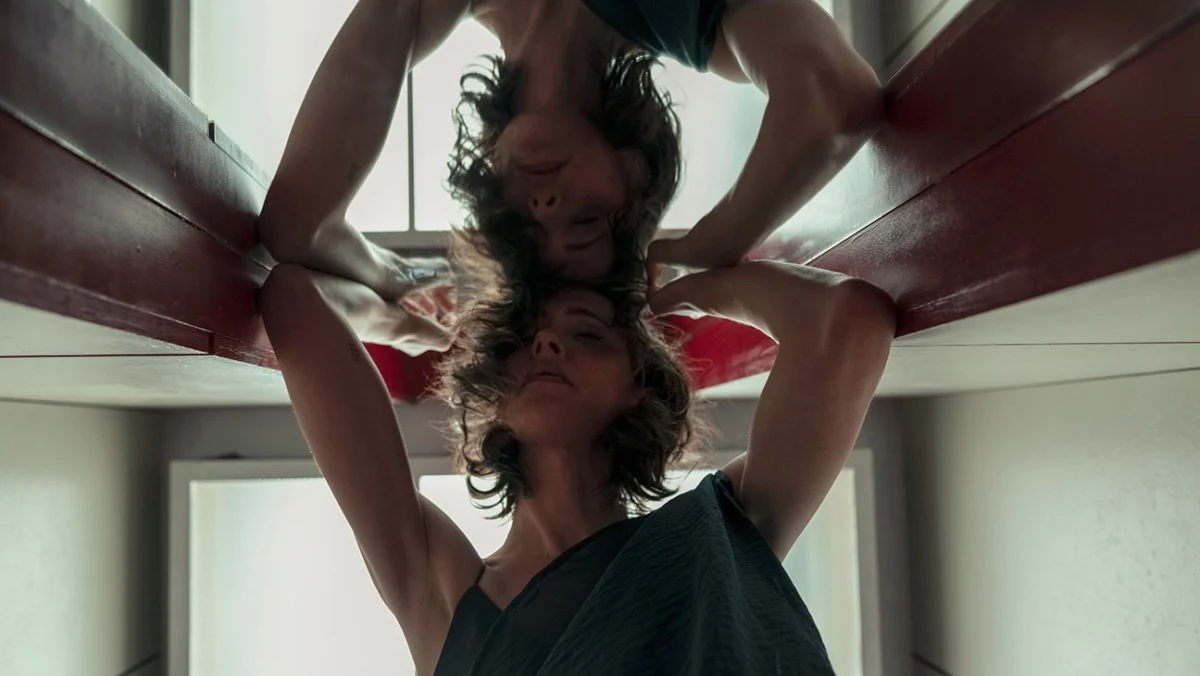
At the heart of this world is Claire, portrayed by Rebecca Hall, a 250-year-old artist who retains the elegant appearance of a woman in her thirties. Her extended lifespan has seen her evolve from an acclaimed, avant-garde artist to a designer of lucrative, albeit less intellectually fulfilling, jewelry. This shift subtly underscores one of the film’s central themes: the potential for profound ennui and a loss of purpose when the natural cycle of life and death is disrupted. The film’s design aesthetic, underplayed yet resonant, contributes significantly to this believable near-future, avoiding overt futurism in favor of a subtly unsettling familiarity.
Rebecca Hall’s Central Performance: Navigating Existential Boredom
Rebecca Hall’s performance as Claire is the undeniable lynchpin of The End of It. Known for her ability to infuse complex characters with depth and nuance, Hall navigates Claire’s journey from a state of permanent, hedonistic ennui to a radical decision to embrace mortality. Her portrayal captures the quiet desperation of a woman who has, quite literally, seen and done it all. Claire’s 250th birthday, a milestone marked by a cake laden with candles she can barely be bothered to extinguish, serves as the catalyst for her decision. Having just replaced her last remaining natural bone, she takes stock of a life that has become a protracted exercise in anhedonia – the inability to feel pleasure.
Hall masterfully conveys Claire’s spiky wit and underlying charisma, making her somewhat problematic choice to die feel both understandable and deeply personal. Even when the script veers into moments of "overegged satire" or struggles with its narrative endgame, Hall’s consistent commitment to the character grounds the film. Her ability to convey profound emotional wallop and pathos, particularly in the film’s shocking final moments, is crucial in elevating the material beyond its occasional flaws. Critics anticipate that her performance will be a significant talking point, solidifying her reputation as one of the most watchable actors working today.
The Immortality Protocol: A Zero-Sum Game
The film introduces a chilling regulatory aspect to its version of immortality: the right to a prolonged life, or even to have a child, is contingent on someone else’s death. With natural causes of death like cancer and other diseases now cured, and organs replaceable like "car parts," individuals only die through freak accidents or by taking their own lives. This creates a fascinating and morally complex societal structure where life is a finite resource, even for the immortal. Claire’s decision to "let nature take its course" by ceasing her life-extending treatments thus becomes more than a personal choice; it carries societal implications, potentially opening a slot for another to join the ranks of the immortal or to procreate.
This aspect of the narrative provides a unique lens through which to examine themes of population control, resource allocation, and the inherent value of individual life versus the collective. It forces the audience to confront uncomfortable questions about the ethics of longevity research and the potential for a profoundly stratified future where biological existence itself becomes a commodity.
Reactions to a Radical Choice: Family, AI, and Social Circles
Claire’s decision to forgo immortality treatments elicits a spectrum of reactions from her immediate circle, each response shedding light on different facets of the human (and humanoid) condition.
Her husband, Diego (Gael García Bernal), struggles to comprehend her reasoning, perceiving her choice as a personal rejection of their shared, unending life. Bernal, known for his nuanced portrayals of complex male characters, brings a poignant confusion to Diego, a man accustomed to an eternity with his beloved, suddenly confronted with its voluntary end. His reaction highlights the challenge of empathy and understanding when one’s partner embarks on such a radical, existential path.
Beanie Feldstein delivers a memorable performance as Sarah, Claire’s android personal assistant. Sarah is programmed with a prime directive to keep Claire alive and happy, and her relentlessly perky, golden retriever-like demeanor masks an inability to compute Claire’s desire to undermine her core function. Feldstein’s portrayal injects moments of dark comedy, as Sarah grapples with the paradox of fulfilling her mistress’s happiness by accepting her decision to die. This dynamic explores the evolving relationship between humans and AI, and the limitations of programmed empathy in the face of ultimate human choice.
Perhaps the most complex reaction comes from Claire’s 180-year-old daughter, Martha, played by Noomi Rapace. Martha, who hasn’t seen her mother in 50 years, appears surprisingly at peace with Claire’s decision. However, her acceptance is revealed to be rooted in a calculating self-interest: she sees her mother’s impending death as an opportunity to take her place as a "breeding female" within their society, bringing along an android baby for practice. Rapace, adept at playing intense and unconventional characters, embodies Martha as an overgrown pre-teen, all frills and bright colors, whose peevish sparring with Claire highlights a deeply dysfunctional parent-child dynamic. The fact that Hall and Rapace are close in age adds a clever meta-textual layer to their portrayal of a relationship stuck in an adolescent loop, underscoring the idea that even centuries of life don’t necessarily lead to emotional maturity or resolution.
Visual Storytelling: The Canary Islands as a Paradoxical Utopia
A significant element contributing to the film’s unique atmosphere is its principal shooting location: the Canary Islands. The region’s searing, glaring Tropic-of-Cancer-adjacent light, its freakishly black volcanic soil, and its distinctive mid-century-modernist architecture create a visually striking backdrop. This choice is not merely aesthetic; it suggests a future where the worst climatic disasters have either been avoided or, more pointedly, where the wealthy elite have carved out cushy enclaves to live forever, insulated from the world’s ecological woes. The contrast between the stark, almost alien landscape and the opulent, sheltered lives of the immortals reinforces the film’s commentary on privilege and environmental escapism.
Pau Aulié’s costume design further enriches this world-building. The attire of Claire’s social circle, described as a mix of Comme des Garçons and Cos, with semi-minimalist cuts, funky details, and interesting textures, is both witty and "oddly covetable." This precise tailoring and subtle color palette reflect the curated, seemingly effortless existence of the immortal elite, where even fashion is an extension of their perpetual state of hedonistic ennui.
Navigating Tonal Shifts and Satirical Intent
The End of It is characterized as tonally irregular, a common challenge for films that attempt to blend disparate genres like sci-fi, comedy, and drama. While consistently thoughtful and compelling, the script occasionally struggles to find its footing, particularly in its endgame. The review notes "jarring flashes of spongey, overegged satire," suggesting that some of the comedic elements, especially those targeting artistic pretension, don’t always land effectively. Claire’s decision to make her death a public spectacle in pursuit of future fame, for instance, is intended as a satirical jab at the art world but may come across as vainglorious selfishness to some viewers, especially given her initial portrayal as "never terribly nice."
This unevenness in tone and the perceived limitations in exploring the wider societal view (possibly due to budget constraints, as inferred by the reviewer) contribute to the film’s "slightly flawed" nature. Such challenges are not uncommon for a debut feature, particularly one tackling such ambitious themes and requiring extensive world-building.
Cannes Premiere and Future Implications
The selection of The End of It for a Cannes Premiere is a significant endorsement for Maria Martinez Bayona, signaling her emergence as a promising talent on the international stage. Premiering at Cannes, one of the world’s most prestigious film festivals, provides invaluable exposure and credibility, particularly for a debut director. The festival’s "Bottom Line" assessment – "Augurs a potentially interesting career" – is a strong vote of confidence, highlighting Bayona’s "strong visual sensibility and skills with actors."
While the review speculates that the film might not be a massive theatrical box office hit, it confidently predicts its success as a "streaming entity." This observation reflects current industry trends where unique, thought-provoking genre films often find a wider audience and critical acclaim on streaming platforms, allowing them to bypass the pressures of traditional theatrical distribution. The film’s compelling premise, strong performances, and striking visuals make it well-suited for a streaming audience seeking original content.
The Broader Impact: Existentialism in the Age of Longevity
The End of It arrives at a time of escalating global interest in longevity science, anti-aging research, and the philosophical implications of extending the human lifespan. The film serves as a potent cinematic exploration of these real-world aspirations and anxieties. It challenges the inherent assumption that immortality is universally desirable, posing questions about purpose, meaning, and connection when the ultimate deadline is removed. Claire’s anhedonia and her choice to embrace mortality resonate with existentialist philosophies that emphasize the importance of finitude in defining human experience and value.
The film’s exploration of a deeply stratified society, where immortality is a privilege rather than a right, also offers timely commentary on wealth inequality and access to advanced healthcare. It prompts viewers to consider the ethical frameworks that would need to be in place should such technologies become viable, and the potential for a future where biological existence itself is a marker of extreme privilege.
In conclusion, The End of It, despite its tonal complexities and occasional narrative stumbles, stands out as a bold and compelling debut. Rebecca Hall’s anchoring performance, coupled with Maria Martinez Bayona’s distinctive directorial vision, creates a film that is both intellectually stimulating and emotionally resonant. Its exploration of immortality, ennui, and the radical act of choosing one’s own end leaves a lasting impression, cementing Bayona’s position as a director to watch and The End of It as a significant entry in contemporary sci-fi cinema.