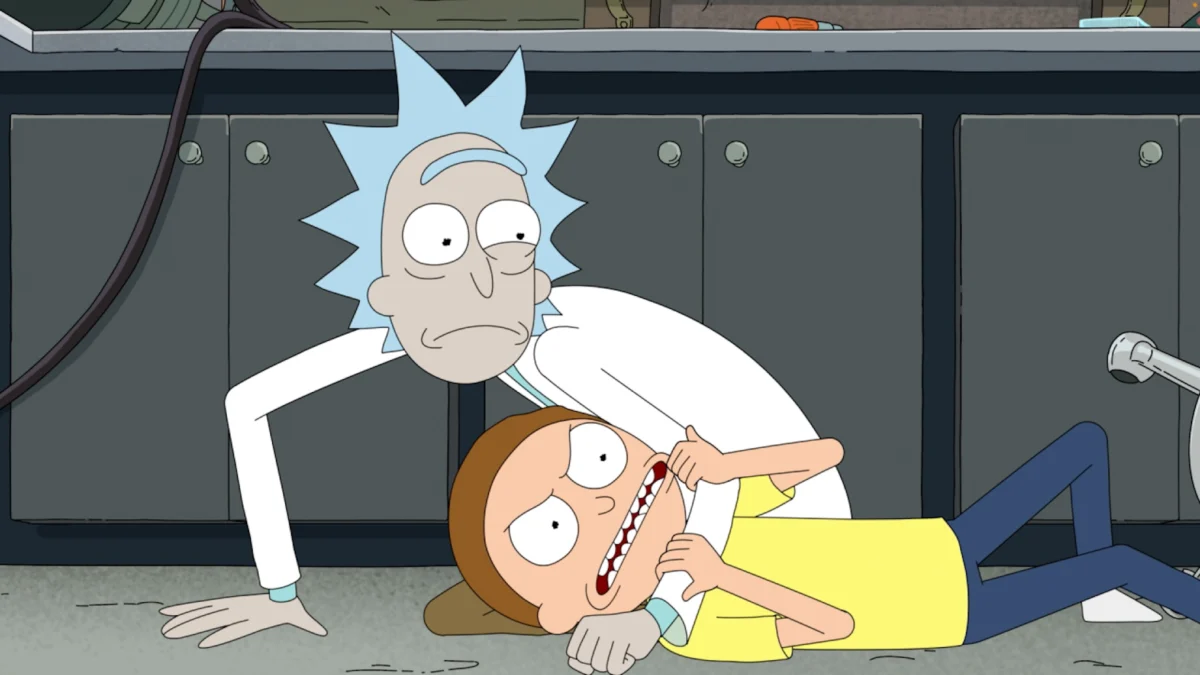
The long-anticipated premiere of Rick and Morty Season 9, titled There’s Something About Morty, has officially debuted, signaling a seismic shift in the series’ overarching narrative and the power balance between its central protagonists and their most formidable adversary. Following the high-stakes conclusion of the previous season, the premiere immediately addresses the lingering fallout of the Citadel’s destruction and the persistent threat posed by the variant known as Evil Morty. For longtime viewers, the episode represents a return to serialized storytelling, focusing on the complex legacy of Rick C-137 and the intellectual rivalry that has defined the series’ multiversal stakes. This report provides a comprehensive analysis of the episode’s events, the historical context of the characters involved, and the broader implications for the future of the Adult Swim franchise.
The Return of Evil Morty and the Omega Device Blackmail
The narrative arc of the Season 9 premiere begins with a revelation that fundamentally alters the relationship between Rick Sanchez (voiced by Ian Cardoni) and his grandson, Morty Smith (voiced by Harry Belden). The episode reveals that Rick has maintained secret communication with Evil Morty, the hyper-intelligent variant who previously dismantled the Central Finite Curve. Unlike the standard iterations of Morty Smith found throughout the multiverse, Evil Morty possesses an intellect that rivals, and occasionally surpasses, that of Rick C-137. His primary motivation has historically been the total rejection of the "Rick-centric" multiverse, a goal he achieved by breaching the barrier that isolated universes where Rick was the dominant intelligence.
The tension in the premiere is driven by Evil Morty’s possession of the Omega Device. This weapon, a remnant of the conflict involving Rick Prime, is capable of erasing every variant of a specific individual across all infinite dimensions simultaneously. By holding the Smith family hostage under the threat of total erasure, Evil Morty effectively coerces Rick into serving as his "errand boy." This dynamic subverts the traditional power structure of the show, placing Rick in a subordinate position and forcing him to participate in missions dictated by a version of his grandson.
Chronology of the Conflict: From The Collective to the Bunker
The episode’s primary mission involves an encounter with an entity known as The Collective, voiced by Academy Award-winner Tilda Swinton. The Collective is described as a cosmic being that sustains itself by consuming entire universes, absorbing their matter and consciousness into its own being. Rick and Evil Morty are forced into an uneasy alliance to neutralize this threat. Despite a near-catastrophic error by the standard Morty, Rick and Evil Morty successfully manipulate The Collective into a self-absorbing loop, effectively eliminating the entity.
However, the resolution of the external threat serves only to heighten the internal friction within the trio. During a subsequent confrontation at a diner, Evil Morty openly mocks the standard Morty, highlighting his newfound partnership with Rick. While Rick denies any genuine affinity for Evil Morty, claiming his cooperation is strictly the result of blackmail, the psychological damage to Morty is evident. This leads to a fractured retreat, with Rick and Morty departing in anger.
The turning point of the episode occurs when Evil Morty returns to his personal sanctuary only to find it destroyed. It is revealed that Rick C-137 executed a sophisticated counter-maneuver by embedding the blueprints for the Omega Device within the device’s own operational framework. By triggering the destruction of the device, Rick ensured that the plans were also permanently deleted, thereby stripping Evil Morty of his primary leverage.
In the ensuing escalation, the Smith family retreats to a bunker dimension to evade an enraged Evil Morty. The conflict culminates in a brutal physical confrontation where Evil Morty utilizes advanced technology to dismantle Rick’s physical form. Despite the severity of the assault—which includes the removal of Rick’s brain—the stalemate remains unresolved due to the near-immortality of both characters’ technological enhancements.
The Intervention of the Fourth-Dimensional Time Cops
The resolution of the premiere introduces a critical narrative element: the return of the Fourth-Dimensional Time Cops, voiced by Keegan-Michael Key and GaTa. Throughout the series, time travel has been a notable taboo, with Rick Sanchez famously avoiding the practice due to its inherent instability and the bureaucratic interference it attracts. When Evil Morty attempts to utilize time-freezing technology to execute the Smith family, he inadvertently triggers a response from the time-stream’s guardians.

The Time Cops intervene before Evil Morty can complete his assault, placing him under arrest for temporal violations. This development effectively removes Evil Morty from the immediate board, though it leaves the door open for future appearances. The episode concludes with a meta-commentary from Rick, acknowledging the start of Season 9 and the indefinite nature of their continued adventures, a nod to the massive 70-episode renewal deal Adult Swim signed with creators Dan Harmon and Justin Roiland in 2018.
Production Background and Voice Cast Continuity
Season 9 continues the tenure of Ian Cardoni and Harry Belden as the titular characters. The two actors joined the production in Season 7 following the departure of series co-creator Justin Roiland. Their performances in the premiere have been noted for maintaining the established vocal identity of the characters while navigating the more dramatic and existential themes of the new season.
The inclusion of Tilda Swinton as a guest star follows the show’s tradition of featuring high-profile talent in pivotal roles. Previous guest stars have included Susan Sarandon, Werner Herzog, and Peter Dinklage. The return of Keegan-Michael Key as the Time Cop also provides a sense of continuity, as the character first appeared in the Season 2 premiere, "A Rickle in Time."
Historical Context: The Central Finite Curve and Rick Prime
To understand the weight of the Season 9 premiere, one must look at the history of the Central Finite Curve. Introduced early in the series, the Curve was a walled-off portion of the multiverse designed by Ricks to ensure they remained the "smartest man in the universe" within those specific realities. Evil Morty’s initial rise to power involved the systematic slaughter of Ricks and the eventual destruction of this Curve, which allowed him to escape into the wider, uncontrolled multiverse.
Furthermore, the "Omega Device" mentioned in the premiere is a direct link to the Rick Prime arc. Rick Prime was the original antagonist of Rick C-137, responsible for the death of C-137’s original wife and daughter. The Omega Device was Rick Prime’s ultimate weapon, used to erase variants of Diane Sanchez from every corner of existence. By claiming this technology, Evil Morty had positioned himself as the successor to Rick Prime’s reign of terror, a status that Rick C-137 has now successfully dismantled.
Fact-Based Analysis of Implications
The events of There’s Something About Morty suggest several key shifts in the series’ trajectory:
- The Neutralization of the Omega Threat: With the blueprints for the Omega Device destroyed, the threat of "total erasure" has been removed from the narrative. This lowers the existential stakes for the Smith family variants but increases the focus on individual character conflicts.
- Evil Morty’s Emotional Vulnerability: For the first time, the narrative suggests that Evil Morty’s actions are driven by more than just cold logic. Morty’s observation that Evil Morty is "lonely" and possesses an "obsession" with Rick introduces a psychological layer to the character that may be explored in future seasons.
- The Return of Bureaucratic Antagonists: The arrest of Evil Morty by the Time Cops suggests that the series may move away from singular "big bad" villains in favor of returning to the chaotic, law-enforcement-driven obstacles of earlier seasons.
- Rick’s Strategic Dominance: Despite the physical toll of the battle, Rick C-137’s ability to outmaneuver Evil Morty intellectually reaffirms his status as the series’ primary protagonist, even when faced with a younger, more ruthless version of himself.
Future Outlook
As Rick and Morty enters its ninth season, the show continues to balance episodic "high-concept sci-fi rigmarole" with deeply serialized character development. The premiere’s focus on the fallout of the Evil Morty arc suggests that while the series is willing to provide closure to long-running storylines, it remains committed to reinventing its internal dynamics. With the Smith family now relocated to a bunker dimension and Evil Morty in the custody of temporal authorities, the stage is set for a season that explores the consequences of a multiverse where the old rules no longer apply.
The series remains a cornerstone of Adult Swim’s programming. While viewership patterns have shifted toward streaming platforms like Max, the cultural impact of Rick and Morty remains significant. The Season 9 premiere demonstrates a continued willingness to deconstruct its own mythology, ensuring that even as the show approaches its tenth year, the relationship between its lead characters remains as volatile and unpredictable as ever.