The internal financial mechanisms of Elon Musk’s sprawling industrial empire have been brought into sharp focus following the public disclosure of SpaceX’s S-1 registration statement. The filing, a prerequisite for the company’s anticipated initial public offering (IPO), offers an unprecedented look at the financial trajectory of X (formerly Twitter) and its integration into a broader technological ecosystem. While Musk’s acquisition of the social media platform in 2022 was initially met with skepticism and a subsequent advertising exodus, the new data suggests a strategic pivot is underway. The documents reveal that after a multi-year decline in advertising revenue, X has begun a modest recovery, coinciding with SpaceX’s aggressive expansion into global connectivity, artificial intelligence, and interplanetary logistics.
The Dealbook Pivot: From Defiance to Recovery
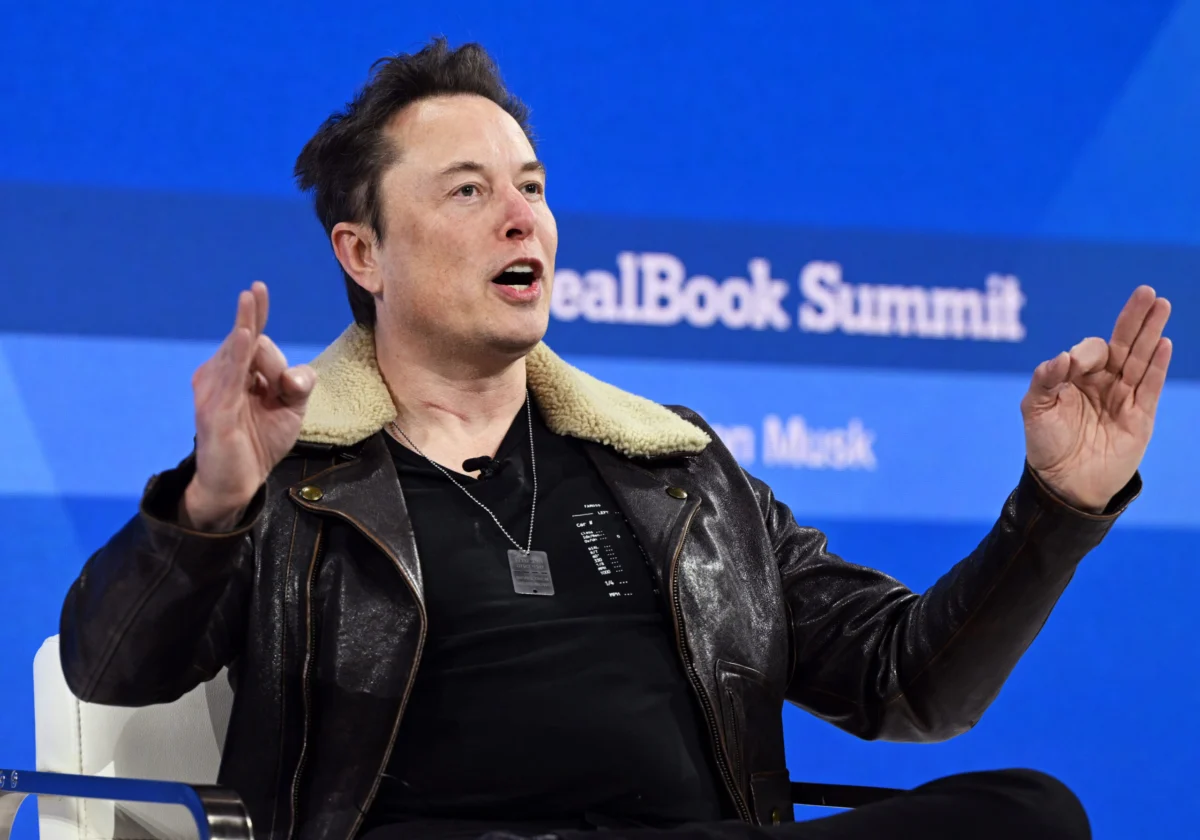
The narrative of X’s financial instability reached a climax in late November 2023 at the New York Times Dealbook Summit. Following a period of significant structural changes—including the overhaul of the verification system and a controversial stance on content moderation—major advertisers began pausing expenditures. When questioned about the boycott, Musk famously rebuffed marketers, stating, “If someone is going to try and blackmail me with advertising? Blackmail me with money? Go fuck yourself.”
The immediate fallout of this stance was stark. Internal financials now confirm that advertising revenue, which stood at over $4 billion in 2021 during Twitter’s final full year as a public entity, plummeted to $2.3 billion in 2023. The decline continued into 2024, with revenue hitting a nadir of $1.73 billion. However, the 2025 fiscal year marked a turning point. For the first time under Musk’s ownership, X reported an uptick in ad revenue to $1.84 billion. This recovery occurred despite a $100 million disruption in the first quarter of 2025, which the company attributed to a comprehensive overhaul of its advertising technology stack.

The company is currently positioning 2026 as the beginning of its “creator era.” Mitchell Smith, X’s global head of content partnerships, has indicated that the platform is prioritizing video content and creator monetization to foster a more robust digital economy. This shift is designed to align X with the broader industry trend of performance-based advertising and AI-driven targeting.
The SpaceX S-1: A Blueprint for Global Dominance
The SpaceX S-1 filing outlines ambitions that extend far beyond rocket launches. The document describes what the company calls the “largest actionable total addressable market (TAM) in human history.” This includes a $1.6 trillion opportunity in global connectivity, split between $870 billion in Starlink Broadband and $740 billion in Starlink Mobile. By positioning itself as a direct competitor to terrestrial telecom giants like Comcast, Charter, Verizon, and T-Mobile, SpaceX is attempting to capture a significant share of the $760 billion consumer subscription market.
Furthermore, the filing clarifies that X is no longer viewed as a standalone social network but as a core monetization channel for the company’s AI segment. The integration of Grok, an AI assistant, and "Imagine," a generative image and video system, is central to this strategy. In the first quarter of 2026, the Imagine system reportedly produced approximately 10 billion images and over 2 billion videos per month. Musk has signaled an intent to "double down" on these capabilities, particularly following the closure of rival projects like OpenAI’s Sora.
Starlink’s Ascent: Disrupting the Telecom Status Quo
Starlink remains the primary engine of SpaceX’s current revenue growth. As of March 31, 2026, the satellite internet service reported 10.3 million subscribers, a significant increase from 4.4 million at the end of 2024. This growth translated into $1.2 billion in income for the first quarter of 2026 alone, on an annualized revenue run rate of $11 billion.

To sustain this momentum, SpaceX has significantly increased its marketing budget. In 2025, the company spent $69 million on advertising, more than double the $31 million spent the previous year. This included high-profile placements during the Super Bowl, March Madness, and the Daytona 500. According to Tyler Bobin, director of brand solutions at iSpot, Starlink’s strategy involves balancing high-reach sporting events with lower-cost placements on syndicated sitcoms and dramas to maximize audience awareness across diverse demographics.
The commercial aviation sector has emerged as a key battleground for Starlink. A partnership with United Airlines aims to replace legacy in-flight Wi-Fi with high-speed satellite connectivity. Andrew Nocella, United’s executive VP and chief commercial officer, noted that the combination of Starlink technology and seatback entertainment systems would "unlock a world of possibilities" for passenger engagement and streaming services.
The Convergence of AI and Media: Grok’s Content Engine
The financial viability of X is increasingly tied to its role as a data source and distribution hub for Musk’s AI ventures. The S-1 filing notes that advertising remains a "core monetization channel" for the AI segment, with revenue driven by the ability to deliver "highly relevant ads" through AI-driven targeting and measurement. The ultimate goal is to integrate advertisements so seamlessly that they "feel like content," aligned with real-time conversations and user interests.
Subscription revenue, while currently a smaller portion of the total, is also on an upward trajectory. X and Grok now boast 6.3 million active paid subscribers. This includes 4.4 million X Premium and Premium+ users and 1.9 million subscribers across the various tiers of SuperGrok. While these figures are modest compared to streaming giants like Netflix, they represent a growing stream of recurring revenue that reduces the platform’s total reliance on traditional advertising.

However, the push into generative AI is not without significant risk. The S-1 includes a detailed "risk factors" section regarding features like "Spicy" Imagine Mode and "Unhinged" Voice Mode. These modes, designed to be more "irreverent and harsher" than standard AI offerings, present heightened risks of reputational harm, misinformation, and intellectual property infringement. The company admitted that the availability of such features could increase regulatory scrutiny and lead to backlash from both users and advertisers.
Market Reactions and the Future of Legacy Media
The aggressive expansion of the Musk ecosystem has sent ripples through the stock market, particularly affecting legacy media and telecommunications companies. Over the past year, Comcast stock has declined by nearly 24 percent, while Charter Communications has seen a staggering 64 percent drop. AT&T and T-Mobile have also faced downward pressure, falling 8 percent and 21 percent, respectively.
Market analysts are divided on whether this trend represents a permanent shift or a temporary overreaction. Brian Wieser, an analyst at Madison and Wall, observed that marketers are no longer shying away from platforms previously deemed "brand unsafe." He suggested that the need to reach consumers wherever they are, combined with legal and commercial considerations, has led to a pragmatism that favors X’s return to the advertising fold.
Conversely, some financial institutions view the current downturn in legacy telecom stocks as a potential buying opportunity. Michael Funk, an analyst at Bank of America, argued that low Earth orbit (LEO) providers like Starlink are "complimentary rather than competitive" to wireless operators. Funk suggested that while LEO platforms pose a genuine threat to rural DSL and cable providers, the threat to major terrestrial wireless networks may be overstated in the short term.

Broader Impact and Long-term Implications
The integration of X, SpaceX, and AI represents a significant consolidation of media, technology, and infrastructure. If Musk’s broader ambitions for a "lunar economy and interplanetary industrialization" are to be realized, the foundational work currently being done in connectivity and AI-driven media will be essential.
The strategy appears to be a multi-pronged attack on the "middlemen" of the digital age. By owning the satellites (Starlink), the social distribution network (X), and the content generation tools (Grok), Musk is building a vertically integrated empire that bypasses traditional gatekeepers in the telecom and media industries. The success of this model depends on X’s ability to maintain its advertising recovery while SpaceX scales Starlink to meet the demands of a global—and eventually interplanetary—market. As the company moves toward its IPO, the transparency provided by the S-1 filing suggests that the "go fuck yourself" moment of 2023 was not the end of X, but rather the catalyst for its absorption into a much larger, more ambitious corporate vision.