Versant Media Group, the media conglomerate recently established as a spinoff from Comcast and the current parent company of cable mainstays USA Network and Syfy, has officially announced a strategic minority investment in GammaTime. GammaTime is a burgeoning streaming platform specializing in the "microdrama" format—ultra-short-form, vertically oriented narrative content designed primarily for mobile consumption. The investment is part of a Series A funding round intended to accelerate GammaTime’s production capabilities and integrate Versant’s established intellectual property into the rapidly growing short-form video market. While the specific financial terms of the transaction were not publicly disclosed, the deal represents a significant shift in how legacy media assets are being repurposed for contemporary digital audiences.
Under the terms of the agreement, Versant will collaborate with GammaTime to adapt stories and themes from its portfolio of entertainment brands into bite-sized, vertical series. This partnership specifically targets the libraries of USA Network and Syfy, known for high-concept genre programming and procedural dramas. However, the agreement explicitly excludes Versant’s news and business information divisions, such as CNBC and MS NOW, which will continue to operate under their existing digital strategies. The move is widely viewed by industry analysts as an attempt to capture the attention of a younger demographic that increasingly favors mobile-first, snackable content over traditional long-form television.
Strategic Objectives and the Microdrama Pivot
The investment by Versant Media Group underscores a broader industry trend where traditional media entities are seeking to hedge against the decline of linear television by diversifying into high-growth digital niches. Microdramas, which typically consist of episodes lasting between 60 and 90 seconds, have seen a meteoric rise in popularity, particularly in Asian markets, and are now gaining significant traction in North America. These series are often characterized by high-stakes cliffhangers, melodrama, and vertical cinematography optimized for smartphone screens.
Mark Lazarus, CEO of Versant, emphasized the innovative nature of the partnership in a statement released Tuesday. According to Lazarus, GammaTime is at the forefront of reimagining short-form storytelling for a new generation of viewers. He noted that GammaTime’s mobile-first approach and commitment to original content make it a natural partner for Versant as the company seeks to extend the reach of its "iconic brands" and "deep content library." For Versant, the goal is not merely to redistribute existing content, but to use its creative DNA to build new experiences within the GammaTime ecosystem.
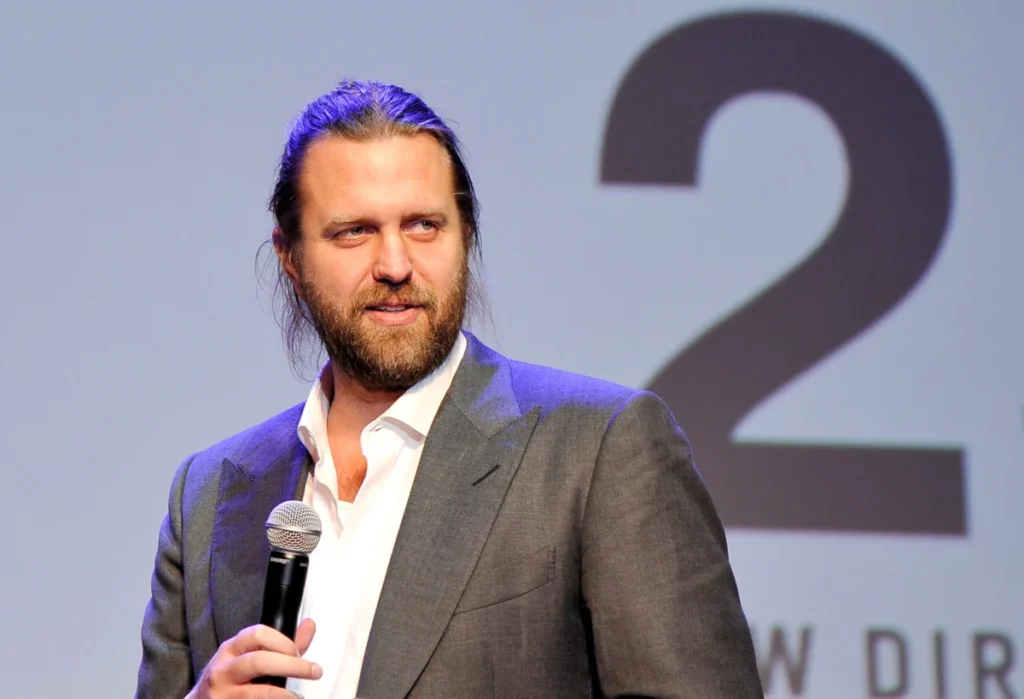
The infusion of capital will allow GammaTime to leverage Versant’s professional showrunners and creative infrastructure. Bill Block, the founder and CEO of GammaTime and former head of Miramax, described the investment as a "turning point" for both his company and the microdrama category at large. Block highlighted that the partnership pairs GammaTime’s audience engagement metrics with the premium marketing and brand equity of a major media house. By utilizing Versant’s intellectual property, GammaTime aims to elevate the production value of the microdrama genre, which has occasionally been criticized for its "content mill" approach to storytelling.
Chronology of GammaTime’s Market Entry
GammaTime’s rise within the digital media landscape has been swift, marked by high-profile backing and aggressive content acquisition strategies. The platform first gained significant industry attention prior to its official launch in October 2025, when it successfully closed a $14 million seed round. This initial funding attracted a diverse group of high-net-worth investors and venture capitalists, including media personalities Kim Kardashian and Kris Jenner, as well as Reddit co-founder Alexis Ohanian.
The involvement of the Kardashian-Jenner family was seen as a strategic endorsement of the platform’s potential to dominate the "social-thriller" and "romance" verticals, which align with their massive social media followings. Following the seed round, GammaTime focused on building a robust slate of original programming across three primary genres: romance, true crime, and fantasy. These genres have proven to be the most lucrative in the microdrama space, often utilizing a "freemium" model where the first few episodes are free, and subsequent chapters require micro-transactions or ad-viewing to unlock.
In a move to secure a steady stream of narrative source material, GammaTime also struck a deal with the owners of the National Enquirer. This agreement granted the platform access to the publication’s extensive archives, allowing producers to mine decades of sensationalist reporting and "stranger than fiction" stories for adaptation into scripted microdramas. The addition of Versant’s portfolio—including the sci-fi expertise of Syfy and the "Blue Skies" procedural history of USA Network—further diversifies GammaTime’s content pipeline as it moves into its next phase of growth.
Leadership and Operational Structure
The leadership team at GammaTime combines traditional Hollywood expertise with Silicon Valley’s technical and monetization strategies. Bill Block, whose tenure at Miramax and involvement in films like District 9 and Halloween provided him with a deep understanding of content distribution, leads the creative vision. Complementing Block is co-founder Slava Mudrykh, who serves as the Chief Revenue Officer. Mudrykh joined GammaTime following a successful stint as a gaming executive at Google, where he specialized in monetization and user acquisition—skills that are critical for a platform reliant on the micro-transactional nature of short-form apps.
This combination of talent suggests that GammaTime is being positioned not just as a video app, but as a hybrid between a streaming service and a mobile game. The "gamification" of content consumption, where users "level up" or unlock episodes through engagement, is a core component of GammaTime’s revenue model. The partnership with Versant adds a third pillar to this structure: premium brand integration. By involving Versant’s showrunners, the platform hopes to bridge the gap between the viral, low-budget feel of typical social media videos and the high-production standards of traditional television.
Supporting Data: The Growth of the Microdrama Market
The investment by Versant comes at a time when the microdrama market is experiencing exponential growth. According to industry reports from 2024 and early 2025, the global market for short-form vertical dramas is projected to reach several billion dollars in annual revenue by 2027. Apps like ReelShort and DramaBox have already demonstrated the viability of the model, often outperforming traditional streaming giants in terms of daily active user growth in specific demographics.
Data suggests that the average user of microdrama apps spends approximately 45 minutes per day on the platform, typically in short bursts during commutes or breaks. This consumption pattern is highly attractive to advertisers, who find it difficult to reach younger audiences on traditional linear channels or through ad-free premium tiers on services like Netflix or Disney+. Versant’s decision to align its brands with "bite-sized dramatic content" is a direct response to these shifting advertising trends. By creating vertical series that are "built for the scroll," Versant can offer its advertising partners more targeted and integrated placement opportunities.
Furthermore, the cost-to-revenue ratio of microdramas is significantly more favorable than traditional television. A standard 22-episode television season can cost tens of millions of dollars to produce and months to bring to market. In contrast, a 60-episode microdrama (totaling roughly 90 minutes of content) can be produced in a fraction of the time for a fraction of the cost, allowing for rapid testing of concepts and quicker pivots based on real-time viewer data.
Broader Industry Implications and Analysis
The Versant-GammaTime deal serves as a bellwether for the "unbundling" and "re-bundling" of media assets in the 2020s. As Comcast and other major telecommunications companies spin off their linear cable assets, these new independent entities (like Versant) must find ways to prove their long-term viability outside of the traditional cable bundle. By investing in GammaTime, Versant is essentially building a bridge between its "legacy" IP and the future of mobile distribution.
From a strategic standpoint, the exclusion of CNBC and MS NOW from the deal is noteworthy. It suggests that Versant views its news assets as having a distinct digital trajectory—likely focused on live-streaming and long-form journalism—while its entertainment brands are seen as more "malleable" and suitable for the experimental nature of microdramas. This bifurcation of strategy allows the company to protect the journalistic integrity of its news brands while aggressively pursuing experimental revenue streams with its entertainment properties.
The move also places pressure on other legacy media companies to address the "TikTok-ification" of narrative content. If Versant is successful in turning a Syfy-branded property into a viral vertical hit, it could provide a blueprint for how other studios manage their back catalogs. The challenge, however, remains in maintaining quality control. The microdrama format relies on rapid-fire pacing and often leans into tropes that might clash with the more sophisticated storytelling associated with premium cable. The success of the Versant-GammaTime partnership will largely depend on whether they can elevate the format without losing the addictive qualities that drive its current popularity.
As GammaTime prepares to deploy its new capital, the industry will be watching closely to see how the first "Versant Originals" perform on the platform. If the integration of high-tier Hollywood IP can successfully coexist with the impulsive consumption habits of mobile users, it may signal a permanent shift in the hierarchy of digital entertainment, where the line between a "TV show" and a "social video" becomes increasingly blurred. For now, Versant’s minority stake represents a calculated bet on a future where the smallest screens command the biggest influence.