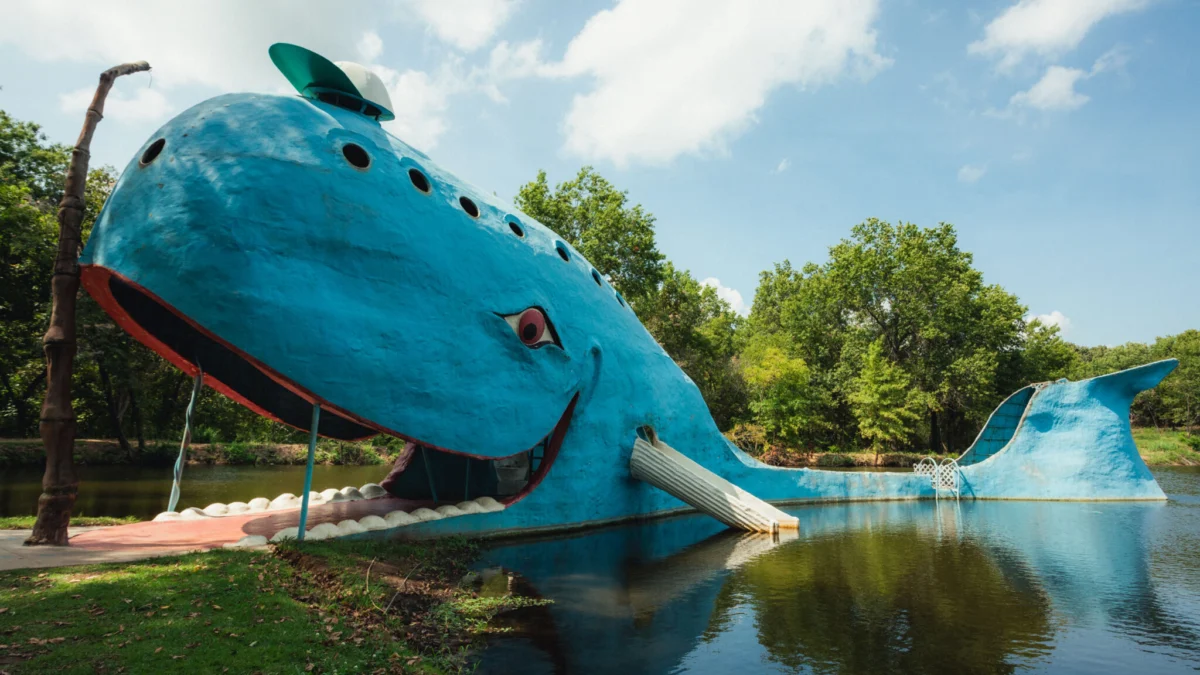
The storied history of U.S. Route 66, affectionately known as the Mother Road, is inextricably linked with the whimsical and the kitschy, and perhaps no landmark embodies this spirit more than the Blue Whale of Catoosa. As the 100th anniversary of the historic highway approaches in 2026, Oklahoma state officials and local preservationists have unveiled an ambitious redevelopment plan designed to transform this roadside curiosity into a world-class tourism destination. The project marks a significant shift for the landmark, transitioning it from a beloved but aging relic into a modern hub for travelers with the addition of a comprehensive visitor center, enhanced amenities, and its first-ever neon signage.
Evolution of an Icon: From Private Gift to Global Landmark
The Blue Whale of Catoosa was never originally intended to be a commercial enterprise or a global tourist attraction. Its origins are deeply personal, rooted in the creative vision of Hugh S. Davis, a former director of the Tulsa Zoo. In the early 1970s, Davis embarked on a two-year project to build a unique swimming dock for his grandchildren. He spent his retirement years hauling buckets of sand and bags of cement, hand-applying the mixture over a complex iron pipe framework. The result was a 20-foot-tall, 80-foot-long blue whale that appeared to be leaping from the waters of a spring-fed pond.
Completed in 1972, the whale quickly outgrew its status as a private family retreat. As travelers on Route 66 caught sight of the massive blue structure, they began to stop, take photographs, and eventually picnic on the grounds. Recognizing the public’s fascination, the Davis family opened the "Nature’s Acres" attraction, which included a reptile farm and a trading post. For decades, the site served as a quintessential example of the "roadside attraction" phenomenon that defined mid-century American travel.
However, following the death of Hugh Davis in 1990 and the subsequent passing of his wife, Zelta, in 2001, the site fell into a period of decline. The pond was closed to swimming due to safety concerns, and the iron-and-concrete structure began to weather under the harsh Oklahoma elements. It was only through the concerted efforts of the Catoosa Chamber of Commerce, the City of Catoosa, and a dedicated band of volunteers—including Davis’s children—that the site was restored and preserved for future generations.
Infrastructure and Modernization: The 2026 Vision
The newly announced revitalization project represents the most significant investment in the Blue Whale’s infrastructure since its inception. Central to this transformation is the construction of the Blue Whale Visitor Center, a facility designed to meet the demands of modern tourism while honoring the site’s historical integrity. Scheduled to open officially on May 30, 2026, the center will serve as the primary gateway for the thousands of international and domestic travelers who traverse the Oklahoma stretch of Route 66 annually.
The new facility will move beyond the traditional gift shop model. While it will feature an expanded retail space offering curated Route 66 memorabilia, it will also function as a museum of sorts. Plans include the display of historical artwork, original blueprints, and rare photographs documenting the whale’s construction and the Davis family’s tenure. These exhibits aim to provide travelers with a deeper understanding of the "folk art" movement that flourished along the highway during its golden age.
Perhaps the most symbolic addition to the site is the installation of a custom neon sign. While neon lighting is a hallmark of Route 66 aesthetics—evoking the glow of mid-century diners and motels—the Blue Whale has never historically featured neon. By introducing this element, project planners are bridging the gap between the whale’s 1970s origin and the broader visual language of the Mother Road. The sign is expected to become a secondary landmark in its own right, providing a vibrant photo opportunity for travelers arriving after dusk.
Chronology of the Blue Whale: A Timeline of Resilience
To understand the importance of the 2026 centennial update, one must look at the timeline of the site’s development and preservation:
- 1970–1972: Hugh Davis constructs the Blue Whale using iron piping and hand-poured concrete as an anniversary gift for his wife.
- 1972: The site opens to the public as "Nature’s Acres," becoming a staple of Route 66 travel.
- 1988: Hugh Davis retires from active maintenance of the site, and the attraction begins to see fewer visitors.
- 1990: Hugh Davis passes away; the site remains open but begins a slow period of deterioration.
- 2002: The City of Catoosa and local volunteers launch a major restoration effort to repair the concrete "skin" of the whale and repaint it its signature bright blue.
- 2020: The Blue Whale is featured prominently in regional tourism campaigns, experiencing a surge in "pandemic-era" road trip traffic.
- 2024: Final plans for the 2026 Centennial expansion are greenlit, including the Visitor Center and event space.
- May 30, 2026: Scheduled grand opening of the new facilities and the Route 66 Centennial celebration.
Economic and Cultural Significance of Route 66 Tourism
The revitalization of the Blue Whale is more than a local beautification project; it is a strategic economic move aimed at capturing a larger share of the burgeoning Route 66 tourism market. According to data from the Oklahoma Tourism and Recreation Department, Route 66 remains the state’s most significant international tourism draw. Travelers from the United Kingdom, Germany, and Japan frequently cite the Mother Road as their primary reason for visiting the American Midwest.
In Oklahoma alone, Route 66 spans over 400 miles, the longest drivable stretch of the original highway in any state. Economic impact studies suggest that heritage tourism along this corridor generates millions of dollars in annual revenue for small municipalities like Catoosa. By upgrading the Blue Whale’s facilities to include a meeting hall and event space, the city is positioning the site as a venue for weddings, corporate retreats, and community gatherings, thereby diversifying its revenue streams beyond seasonal tourism.
Furthermore, the inclusion of updated traveler amenities—such as modern restrooms, a concession area, and improved parking—addresses a common critique of historic roadside stops. By providing a "full-service" experience, the Blue Whale can encourage longer stay times, which correlates directly with increased spending at local gas stations, restaurants, and hotels in the Catoosa area.
The Centennial Celebration: A New Chapter for Catoosa
The grand opening on May 30, 2026, is poised to be one of the marquee events of the Route 66 Centennial year. Organizers have designed the celebration to be a multi-generational event that reflects the community spirit of the road. The festivities are expected to begin with a certified 5K fun run, attracting fitness enthusiasts and "run-tourists" who seek out unique race environments.
Following the race, the grounds will host a variety of vendors and food trucks, showcasing Oklahoma’s culinary offerings. Official remarks from state and local dignitaries will precede a formal ribbon-cutting ceremony, signaling the start of the Visitor Center’s operations. The evening will conclude with live musical performances and a fireworks display, intended to mirror the celebratory atmosphere of the highway’s original commissioning in 1926.
This event serves as a focal point for the Route 66 Centennial Commission, which has been tasked with coordinating celebrations across the eight states the highway traverses. The Blue Whale’s update is being viewed as a model for how private-public partnerships can preserve historic landmarks while adapting them for 21st-century needs.
Broader Impact and Implications for Heritage Preservation
The transformation of the Blue Whale of Catoosa offers a case study in the evolving philosophy of heritage preservation. For many years, the goal of preservation was simply to keep structures standing. However, the "Mother Road" model suggests that for a landmark to survive, it must remain relevant to the modern traveler’s experience.
By adding a meeting hall and a concession area, the project acknowledges that today’s tourists seek more than just a passive viewing experience; they seek engagement and convenience. The integration of historical archives within the visitor center also ensures that the story of Hugh Davis and his labor of love is not lost to time. It contextualizes the whale not just as a "weird" object, but as a piece of significant American folk art.
Moreover, the project highlights the importance of "slow travel" in the digital age. As travelers increasingly seek authentic, off-the-beaten-path experiences to share on social media, landmarks like the Blue Whale gain renewed cultural currency. The new neon sign, in particular, is a nod to the visual "Instagrammability" that drives modern tourism trends.
As the 2026 centennial approaches, the Blue Whale of Catoosa stands as a testament to the enduring allure of the American road trip. Through this major update, the "Mother Road" ensures that one of its most famous inhabitants will continue to welcome travelers for another hundred years, proving that even the most whimsical of dreams can become a permanent part of the national landscape.